
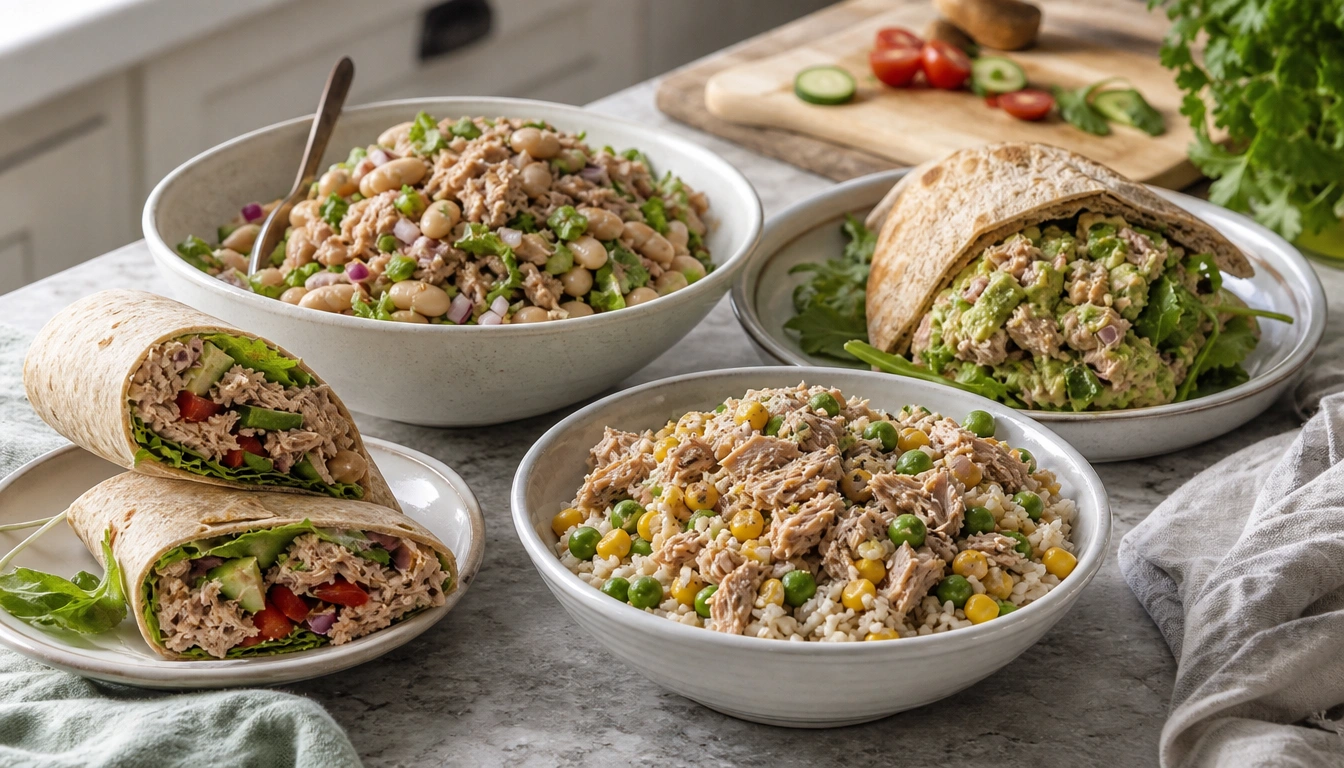
The fastest healthy tuna lunch ideas are the ones that start with drained tuna and a few pantry or fridge staples: a Greek yogurt tuna wrap, a white bean and tuna toss, avocado tuna pockets, or a warm tuna rice bowl. For most families, canned light tuna is the better everyday choice because it is lower in mercury than albacore. Pregnant people and children should follow FDA/EPA guidance closely and use smaller portions.
Key Takeaways
- Canned tuna is a budget-friendly, shelf-stable protein that can turn into lunch in minutes with very little cleanup.
- Canned light tuna is the lower-mercury everyday option; albacore or white tuna should be limited more carefully.
- You do not need mayonnaise to make tuna taste good—Greek yogurt, avocado, beans, lemon, and vinegar all work well.
- A filling tuna lunch usually needs a fiber-rich partner such as whole grains, beans, vegetables, or fruit.
- Pregnant people, breastfeeding parents, and children ages 1 to 11 should follow FDA/EPA fish guidance closely and use smaller portions.
- Water-packed tuna, pre-washed greens, and microwaveable grains make tuna lunches easier to pull together on busy days.
Why tuna works for busy-parent lunches
Busy-parent lunches need to check a lot of boxes at once: fast, affordable, filling, and easy to clean up. Tuna fits that job well because it is shelf-stable, ready to eat after draining, and easy to combine with whatever is already in the kitchen. A can or pouch of tuna can become a wrap, salad, rice bowl, or snack plate without a full cooking session.
It also brings meaningful nutrition for very little effort. Tuna is a concentrated source of protein, and that helps a lunch feel more satisfying than crackers or a plain sandwich. It also provides nutrients such as vitamin D, selenium, and omega-3 fats. For parents juggling work and childcare, the appeal is practical: one protein can support multiple lunch formats across the week.
Another reason tuna works is that it adapts to different food styles. If you want a cold lunch, it can be mixed and packed. If you want something warm, it can be added to rice or grains. If you are feeding kids, it can be tucked into smaller portions with familiar sides. That flexibility makes it easier to repeat without getting bored.
How to choose the right tuna
The most useful first decision is the type of tuna. For a regular lunch routine, canned light tuna is generally the better everyday choice because it is lower in mercury than albacore. Albacore, also called white tuna, has a milder flavor and firmer texture, but it is higher in mercury and should be used more sparingly.
Water-packed tuna is often the easiest option for everyday lunches because it keeps the meal lighter and makes it simpler to control added fat. Oil-packed tuna can still work if that is what you have; just drain it well. If sodium is a concern, check the label and look for lower-sodium options when possible, especially if the tuna will be paired with salty condiments, cheese, or packaged sides.
It helps to think of tuna as a base ingredient, not a full meal by itself. The best version for your household depends on the rest of the lunch. If you plan to add avocado, yogurt, or olive oil, water-packed tuna often makes the most sense. If you want a richer flavor with minimal extras, oil-packed tuna can be fine in moderation.
The fast tuna lunch formula
A simple formula keeps tuna lunches from feeling repetitive: protein + crunch or vegetables + a fiber-rich base + a flavor booster. Start with tuna, then add something crisp or fresh, then anchor the meal with a base that lasts, such as whole-grain bread, beans, brown rice, quinoa, or a tortilla. Finish with a small flavor booster like lemon, mustard, herbs, salsa, pepper, or vinegar.
This pattern matters because tuna alone is filling for a short time, but it is usually more satisfying when paired with fiber and texture. Crunchy vegetables like celery, cucumber, bell pepper, or shredded carrots keep the lunch interesting. Whole grains, beans, and greens help it feel like a real meal rather than a protein add-on.
That formula also makes lunch assembly easier. Instead of searching for a perfect recipe, you can assemble from what is available: tuna plus spinach and whole-grain toast, tuna plus beans and tomatoes, or tuna plus rice and cucumbers. Once the pattern is familiar, lunch becomes a quick decision instead of a new task every day.
Simple tuna lunch ideas that work fast
Greek yogurt tuna wrap: Mix drained light tuna with plain Greek yogurt, lemon juice, black pepper, and chopped celery or green onion. Spoon into a whole-wheat tortilla with spinach or shredded lettuce. The yogurt gives creaminess without relying on mayonnaise, and the wrap is easy to eat one-handed if you are packing lunch between errands.
Mediterranean white bean and tuna toss: Combine tuna with rinsed canned white beans, cherry tomatoes, cucumber, and a splash of olive oil and vinegar. Add parsley if you have it. This version is especially helpful when you want a mayo-free lunch that feels substantial. The beans add fiber and staying power, while the vegetables make it feel fresh.
Avocado smash tuna pockets: Mash avocado with tuna, lime juice, and a pinch of garlic powder, then tuck it into a whole-wheat pita or serve with crackers and sliced peppers. Avocado brings richness and helps replace the heavy texture many people expect from tuna salad. It is a strong option when you want something creamy without mayonnaise.
Warm spicy tuna and rice bowl: Heat a pouch of microwaveable brown rice or quinoa, then top it with tuna mixed with a little low-sodium soy sauce or another quick seasoning you like. Add pre-washed greens, cucumber, or edamame. This is a useful work-from-home lunch because it feels warm and complete with almost no active cooking.
Each of these ideas is flexible. If your child prefers milder flavors, keep the seasoning simple. If you want more texture, add sunflower seeds, diced apple, or shredded carrots. If you need a lunch that travels well, pack the wet ingredients separately and assemble at the last minute.
Make it more filling without extra fuss
One of the easiest ways to improve a tuna lunch is to add a second source of fiber or slow-digesting carbs. Beans are especially useful because they are cheap, shelf-stable, and easy to rinse and add. Whole grains such as whole-wheat wraps, brown rice, quinoa, or whole-grain bread can make tuna feel more like a real meal. Even pre-cooked grains from the refrigerator or freezer can save time.
Vegetables also do a lot of work here. Crunchy ones like celery, cucumber, carrots, and bell peppers add texture, while greens like spinach, arugula, or romaine increase volume without much prep. If you want something more kid-friendly, fruit can balance the plate well: apple slices, grapes, orange segments, or berries pair nicely with tuna lunches on the side.
For creamy texture, you do not need mayo. Plain Greek yogurt adds tang and protein, avocado adds richness, and a little hummus can work in some wraps or pitas. These swaps keep the meal food-first and help avoid the heavy feeling that some mayo-based tuna salads leave behind.
A practical way to think about it: tuna is the anchor, but beans, grains, vegetables, and fruit are what turn it into a lunch that keeps you going through pickup, meetings, or afternoon errands.
Portion and safety notes for adults, pregnancy, breastfeeding, and children
For most adults, fish can be part of a healthy pattern several times a week, but the type of tuna matters. According to the FDA and EPA, canned light tuna is a better everyday choice because it is lower in mercury. Albacore or white tuna is higher in mercury and should be limited more carefully. If you choose albacore, keep it to one 6-ounce serving in a week and avoid other high-mercury fish that same week.
Pregnant people, people who are breastfeeding, and those planning pregnancy should follow the FDA/EPA chart closely because mercury matters more during periods of fetal and early-child development. For children ages 1 to 11, the same chart is important, but portions should be smaller and tailored to age and appetite. A toddler will need much less than an older child, and the safest approach is usually to keep servings modest and use lower-mercury fish more often.
If you are serving tuna to kids, think small portions and simple flavors. A few spoonfuls of tuna salad on toast, a small pita pocket, or a modest serving mixed into pasta or rice is often enough. Fish is a common allergen, so introduce it carefully and pay attention to any reaction. If a child has a known fish allergy, tuna should be avoided unless a clinician advises otherwise.
Sodium also deserves attention. Canned fish and packaged add-ins can add up quickly, so lighter seasonings and lower-sodium products are useful when possible. If you are managing blood pressure or building lunches for someone with special dietary needs, the label matters as much as the recipe.
Smart prep and storage tips for meal-prep success
The easiest tuna lunches are the ones with almost no decision-making at lunchtime. Keep tuna, a few wraps or bread options, and one or two quick mix-ins on hand. Pre-washed greens, microwaveable grains, canned beans, and shelf-stable seasonings make the whole process much faster. You can also keep a small lunch box kit with a fork, napkins, and a can opener if needed.
Drain tuna before mixing, especially if you want a less watery wrap or bowl. If you are making a lunch for later in the day, keep wetter components separate from bread or greens until serving time. That helps avoid soggy sandwiches and makes the meal feel fresher. For example, pack tuna salad in one container and add it to a wrap or crackers just before eating.
Food safety matters too. Keep tuna and other perishable ingredients refrigerated until lunchtime, and do not let them sit at room temperature for long stretches. If you are packing lunch for school or work, an insulated bag or ice pack can make a big difference. For meal prep, think in short loops: mix tuna for one or two days, not an entire week, so texture stays better and the routine feels manageable.
Most importantly, build a repeatable system rather than trying to create a new recipe every day. A can of tuna, one fresh ingredient, one fiber-rich base, and one simple seasoning is enough to make a lunch that is fast, balanced, and realistic for family life.
Frequently Asked Questions
Is canned light tuna or albacore better for a weekly lunch routine?
Canned light tuna is usually the better everyday choice because it is lower in mercury. Albacore, or white tuna, can still fit occasionally, but it should be used less often and in smaller amounts.
How much tuna is safe for adults, pregnant people, breastfeeding parents, and children?
Adults can include fish several times a week within FDA/EPA guidance. Pregnant people, breastfeeding parents, and children should follow the FDA/EPA chart closely and choose lower-mercury tuna more often. Children need smaller portions than adults.
What are tuna lunch ideas that do not rely on mayonnaise?
Greek yogurt tuna wraps, white bean and tuna tosses, avocado tuna pockets, and warm tuna rice bowls all work well without mayonnaise. Lemon, vinegar, mustard, herbs, and spices can add flavor instead.
How can I make a tuna lunch more filling with pantry staples?
Add beans, whole grains, or pre-cooked rice or quinoa. Canned vegetables, corn, olives, or shelf-stable pouches of grain can help too. A mix of protein plus fiber usually keeps lunch more satisfying.
What should I avoid when serving tuna to kids or during pregnancy?
Avoid treating albacore tuna like an everyday protein, and be careful with other high-mercury fish in the same week. Also watch sodium, keep portions age-appropriate, and use extra caution if there is any fish allergy history.
The Bottom Line
Simple tuna lunch ideas are most useful when they are built from the same few pieces: tuna, a fiber-rich base, vegetables, and a quick flavor booster. That keeps lunch fast without making it boring.
For most families, canned light tuna is the easiest everyday option. Save albacore for less frequent use, and keep pregnancy and children’s servings aligned with FDA/EPA guidance. The less you have to think at noon, the more likely lunch will actually happen.
Medical disclaimer
Medical disclaimer: This content is for educational and informational purposes only and is not a substitute for professional medical advice, diagnosis, or treatment. Dietary needs and supplement suitability vary by individual.
Sources
- U.S. Food and Drug Administration (FDA) — fda.gov. Accessed October 2026.
- Mayo Clinic — mayoclinic.org. Accessed October 2026.
