
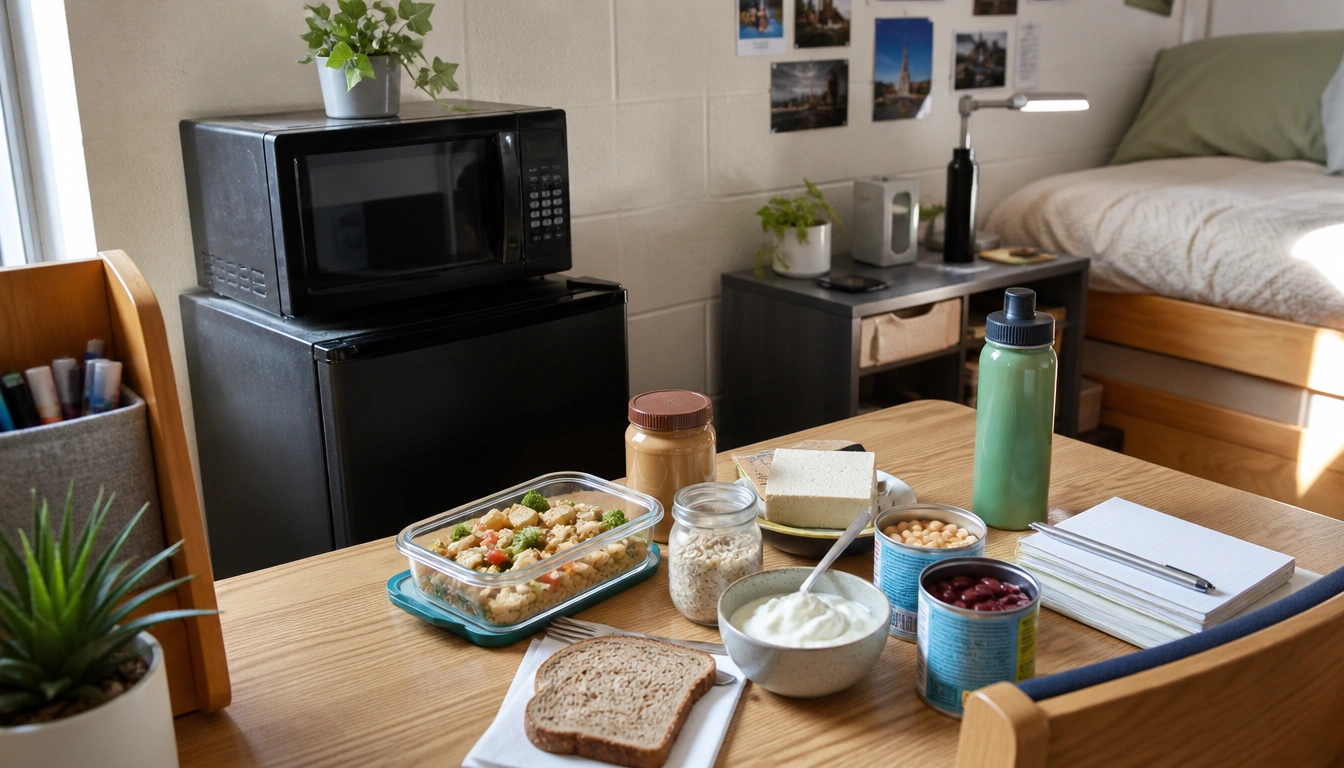
The easiest high-protein vegetarian foods for college students are the ones that need little or no cooking: Greek yogurt, cottage cheese, eggs, tofu, tempeh, canned beans, lentils, edamame, nut butter, milk or fortified soy milk, and protein-rich convenience foods like microwavable grain bowls. If you’re short on time and money, focus on foods you can eat straight from the package, microwave in minutes, or keep in a mini-fridge, then build meals around them.
Key Takeaways
- You do not need a full kitchen to eat enough protein on a vegetarian diet; shelf-stable, refrigerated, and microwave-friendly foods can cover most student needs.
- Plant proteins do not have to be combined perfectly in one meal. A varied mix across the day is enough for most people.
- If stress or a tight budget makes you eat less overall, protein intake usually drops too, so total calories matter.
- Vegetarian students should watch more than protein: B12, iron, zinc, calcium, and vitamin D deserve attention too.
- Beans and lentils are excellent, but increase them gradually so your gut can adapt and bloating stays manageable.
- Convenience foods can help, but whole and minimally processed proteins are usually the better default than sodium-heavy meat substitutes.
Dorm-friendly protein strategy without a full kitchen
If you’re trying to eat more easy vegetarian protein sources for college students, start by choosing foods that fit your real campus setup: a mini-fridge, a microwave, a communal kitchen, or sometimes just a shelf and a spoon. The best options are the ones you can actually use on a rushed weekday, not the ones that sound ideal in theory.
A practical protein-first approach means asking: What can I eat in the dorm, between classes, after practice, or while studying late? That often points to Greek yogurt, cottage cheese, milk or fortified soy milk, eggs if you have access to them, tofu, tempeh, canned beans, lentils, edamame, hummus, nut butter, and cheese. The USDA’s vegetarian patterns emphasize these kinds of foods because they are flexible, filling, and easy to mix into regular meals.
Think in terms of convenience tiers. No-cook foods include yogurt, cottage cheese, peanut butter, roasted edamame, trail mix, and many ready-to-eat tofu or soy products. Microwave-friendly foods include canned beans, frozen edamame, instant rice cups, pre-cooked lentils, and microwavable grain bowls. Foods that benefit from a little prep include eggs, plain tofu, and tempeh. That mix gives you protein without requiring a stovetop every day.
For best results, keep a few “anchor” proteins on hand at all times. If your fridge is empty, your choices shrink fast. A few reliable staples can keep your meals from turning into random snacks that leave you hungry an hour later.
Budget and prep formats that actually work
College budgets reward foods that are inexpensive per serving and easy to stretch across multiple meals. Canned beans and lentils are often the cheapest protein building blocks because they store well, require no chopping, and can be added to almost anything. Rinsed chickpeas can go into salads, burrito bowls, pasta, soup, or toast. Black beans work in microwave rice bowls, quesadillas, or mashed onto bread.
Frozen edamame is another strong option because it keeps well and cooks quickly in a microwave. Dry-roasted edamame is even more dorm-friendly because it needs no refrigeration and functions like a crunchy snack. Tofu can be one of the best value foods in the refrigerator section, especially if you choose firm or super-firm blocks that can be cubed into bowls, wraps, and noodle dishes.
Refrigerated staples like Greek yogurt, cottage cheese, and milk or soy milk are helpful because they can turn a low-protein breakfast into something more filling. Shelf-stable items such as nut butter, canned beans, roasted chickpeas, oats, and plant milk boxes make it easier to keep protein available even when shopping trips are rare.
Grab-and-go convenience foods can help during exam weeks, but read labels with a student budget in mind. Some “high-protein” snacks are expensive for the amount of protein they provide. Whole-food staples often give better value, more fiber, and less sodium than highly processed alternatives.
How much protein college students actually need
For most sedentary adults, the Dietary Reference Intakes use a baseline of about 0.8 grams of protein per kilogram of body weight, or about 0.36 grams per pound. College students who are active, lift weights, play sports, or train regularly usually need more than that baseline. The exact amount depends on body size, activity level, and total calories, so it is not useful to guess from social media trends or compare yourself to someone else’s meal plan.
One of the biggest mistakes vegetarian students make is focusing only on protein grams while not eating enough overall food. If stress, busy schedules, or a tight budget push total calories too low, protein intake usually drops as well. A person cannot reliably hit protein goals on a diet that is too small to sustain them. That is why regular meals matter more than perfect macros.
You do not need to combine plant proteins in one meal to make them “complete.” The body handles amino acids across the day, and the liver maintains an amino acid pool that helps cover needs over time. In practice, that means a lunch of beans and rice does not have to be “fixed” in the same sitting. Variety across the day is enough for most healthy people, which makes vegetarian eating less complicated than older diet myths suggest.
That said, consistent variety still matters. Beans, lentils, soy foods, dairy, eggs, nuts, seeds, and whole grains each contribute different nutrients. Mixing them across meals makes it easier to meet protein needs without obsessing over food pairings.
Simple meal and snack building blocks
Students usually need protein at breakfast, a real lunch, something to carry them through the afternoon, and a late-night option that does not rely only on chips or candy. The easiest strategy is to build meals around one protein source and then add one carb and one produce item if possible.
For breakfast, try Greek yogurt with oats and fruit, cottage cheese with toast and tomatoes, peanut butter on whole-grain bread, overnight oats made with milk or fortified soy milk, or a microwave egg cup if your housing allows it. These are all low-effort and more filling than a sweet snack alone.
For lunch or dinner, think bowl format: microwavable rice plus beans, tofu, salsa, and frozen vegetables; noodles with edamame and peanut sauce; a wrap with hummus, cheese, greens, and chickpeas; or a salad with lentils and seeds. Dining hall meals can work too if you start with a protein source first and then add grains, vegetables, and fruit.
For late-night studying, choose something that is convenient but still substantial: yogurt, a cheese stick with crackers, peanut butter on toast, roasted edamame, trail mix, or a small bean-and-rice bowl. These options support energy better than sugary snacks that spike and crash.
If appetite is low, smaller but more frequent protein-containing snacks may be easier than a large meal. That can be especially helpful during exams, after workouts, or when stress blunts hunger.
Micronutrients vegetarian students should not ignore
Protein gets the attention, but vegetarian students also need to think about vitamin B12, iron, zinc, calcium, and vitamin D. These nutrients matter for energy, blood health, bone health, and normal body function. The USDA and other public health guidance consistently point to fortified foods and varied patterns as practical ways to cover the gaps.
Vitamin B12 is the biggest one to watch because it is not reliably available from unfortified plant foods. Dairy, eggs, and fortified foods can help, and many students who eat little or no animal food may need fortified plant milks, breakfast cereals, or a supplement discussed with a clinician.
Iron is found in beans, lentils, tofu, seeds, and fortified grains, but plant iron is less readily absorbed than iron from meat. Pairing iron-rich foods with vitamin C-rich foods such as citrus, strawberries, bell peppers, or tomatoes can improve absorption.
Zinc supports immune function and is found in beans, nuts, seeds, dairy, and whole grains. Calcium and vitamin D matter for bone health and can come from dairy or fortified plant milks, yogurt, fortified foods, and sensible sunlight exposure when appropriate. Using fortified foods is especially useful when campus eating is inconsistent.
If you feel tired all the time, vegetarian eating may not be the only issue. Low calories, poor sleep, stress, iron deficiency, or B12 deficiency can all overlap, which is why symptoms deserve attention rather than guesswork.
Digestive comfort when you add more beans and lentils
Beans and lentils are some of the cheapest and most useful vegetarian proteins, but they can cause gas or bloating if you jump from very little fiber to a lot of fiber overnight. That does not mean they are a bad choice. It usually means your digestive system needs time to adapt.
The easiest fix is gradual increase. Add a small serving of beans or lentils to one meal, then build up over time instead of trying to overhaul everything in a week. If you are new to higher-fiber eating, start with smaller portions and combine them with foods you already tolerate well. Rinsing canned beans can also make them easier to digest for some people.
Hydration matters too. Fiber works best when fluid intake is adequate, and students often underdrink during classes, shifts, or long study blocks. If beans are causing discomfort, it can also help to choose softer options at first, such as lentil soup, hummus, refried beans, or blended bean spreads.
There is no prize for forcing huge portions of fiber early. A steady ramp-up is more realistic, more comfortable, and more likely to stick during a busy semester.
Processed meat alternatives: useful, but not the default
Vegetarian meat substitutes can absolutely help college students meet protein goals when time is tight. Frozen veggie burgers, meatless nuggets, deli-style plant slices, and ready-to-heat patties are convenient during finals week or in a shared kitchen where cooking is limited. They can make a vegetarian diet easier to follow, especially in dining halls or group meals.
Still, convenience does not always equal best default choice. Many highly processed meat alternatives are sodium-heavy and may not be as nutrient-dense as beans, lentils, tofu, eggs, dairy, or edamame. Some are fine as occasional backups, but relying on them for most meals can crowd out foods that give you more fiber, minerals, and better long-term value.
A good rule for campus life is to let whole or minimally processed proteins do most of the work, then use processed options when schedules demand it. That gives you flexibility without turning every meal into a packaged product. If a meat substitute is the easiest way to get dinner on a chaotic day, use it. Just do not make it your only strategy.
Campus shopping, storage, and dining hall tactics
Stocking a dorm kitchen is easier when you shop by use case instead of by recipe. For the mini-fridge, prioritize tofu, yogurt, cottage cheese, milk or fortified soy milk, hummus, cheese, and leftovers. For the freezer, keep shelled edamame, frozen vegetables, and maybe a few frozen vegetarian entrées for emergency meals. For the shelf, keep canned beans, lentils, nut butter, oats, whole-grain crackers, trail mix, and canned soup.
Dining halls can work well if you scan the room before filling your plate. Start by identifying the strongest protein options: beans, tofu, eggs, yogurt, milk, cheese, lentil dishes, or any soy-based entrée. Then add grains and vegetables around that. If the main entree is weak, combine smaller items to create a better meal rather than settling for a plate of side dishes alone.
Shared kitchens often reward simple tools: a microwave-safe bowl, a fork, a knife, a lid or plate cover, and a reusable container. Those are enough to turn canned beans, rice cups, frozen vegetables, and tofu into real meals. If money is tight, remember that a few cheap staples used repeatedly will beat a cart full of specialty foods you never finish.
Most of all, keep your system realistic. The best student protein plan is the one you can repeat during a busy week, not the one that only works on a perfect Sunday afternoon.
Frequently Asked Questions
How much protein does a college student need if they’re vegetarian?
A basic adult target is about 0.8 grams per kilogram of body weight, and active students often need more. The exact amount depends on size, training, and total calories. If you are under-eating, protein intake usually falls too, so food quantity matters as much as protein math.
Do plant proteins need to be combined in the same meal to be complete?
No. Current physiology shows that your body handles amino acids across the day, not only within one meal. Eating a variety of plant proteins over the course of the day is usually enough, so you do not need to micromanage every plate.
What are the best no-cook or microwave vegetarian protein options for dorm life?
Greek yogurt, cottage cheese, milk or fortified soy milk, hummus, roasted edamame, canned beans, pre-cooked lentils, nut butter, and some ready-to-eat tofu products are among the easiest. Frozen edamame and microwave rice bowls also work well when you only have a microwave.
How can I get enough protein on a tight student budget without relying on protein powders?
Lean on low-cost staples like beans, lentils, tofu, peanut butter, oats, eggs, and yogurt if you eat dairy. These foods usually give more nutrition per dollar than specialty bars or powders and are easier to build into meals and snacks throughout the week.
What nutrients besides protein do vegetarian students need to watch?
Vitamin B12, iron, zinc, calcium, and vitamin D deserve special attention. Fortified foods, dairy or fortified plant milks, beans, lentils, seeds, and vitamin C-rich foods can help. If fatigue, dizziness, or weakness keeps happening, it is worth getting checked.
The Bottom Line
The easiest vegetarian protein strategy for college is to keep a few dependable foods on hand: beans, lentils, tofu, edamame, yogurt, cottage cheese, eggs, nut butter, and fortified soy milk. These fit dorm life, budget constraints, and irregular schedules better than complicated meal plans.
You do not need to combine proteins perfectly in one meal, and you do not need protein powders to do well. Focus on total food intake, build meals around one or two protein anchors, and use shelf-stable or microwave-friendly options when time is tight.
If you are constantly tired, losing weight unintentionally, or struggling with dizziness or weakness, do not assume it is just college stress. Low calories, iron deficiency, or B12 deficiency can play a role, and campus health services or a registered dietitian can help sort that out.
Medical disclaimer
Medical disclaimer: This content is for educational and informational purposes only and is not a substitute for professional medical advice, diagnosis, or treatment. Dietary needs and supplement suitability vary by individual.
Sources
- U.S. Government / Health Authority — usda.gov. Accessed November 2026.
- U.S. Government / Health Authority — health.gov. Accessed November 2026.
- Academic Research Institution — dartmouth.edu. Accessed November 2026.
- Academic Research Institution — colostate.edu. Accessed November 2026.
