
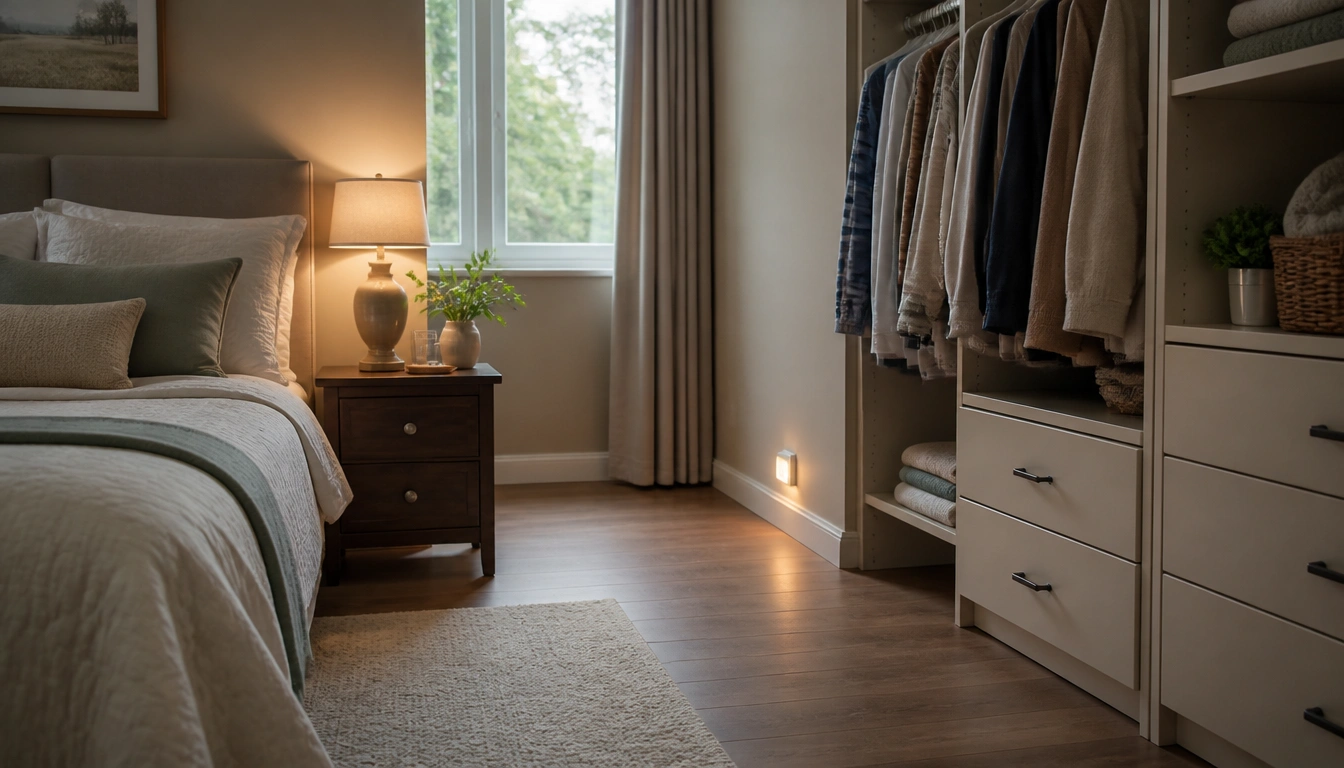
Start with the changes that lower risk and reduce stimulation: clear the floor and bathroom path, remove cords and loose clutter, simplify the nightstand, and switch to low, warm nightlighting instead of bright overhead light. Keep frequently used items within easy reach, and pair the reset with a cool, dark room and a consistent wake time. Bedroom decluttering helps sleep, but it will not fix issues like sleep apnea, nocturia, pain, or menopause-related symptoms on its own.
Key Takeaways
- Adults over 50 often sleep more lightly, so visual clutter, noise, and bright light can feel more disruptive than they did earlier in life.
- The safest bedroom changes are the ones that reduce fall risk: clear walkways, remove cords, and make bathroom trips easier to manage in the dark.
- Keep the nightstand simple. Too much paperwork, electronics, and random objects can make the room feel alerting instead of restful.
- Choose storage that does not require deep bending, heavy lifting, or frequent under-bed digging if you have arthritis, back pain, or balance concerns.
- A decluttered room works best alongside sleep basics such as a cool temperature, darkness, less evening screen exposure, and a steady wake time.
- If you snore loudly, wake often, have nighttime urination, pain, reflux, or hot flashes, bedroom cleanup may help but should not replace medical evaluation.
Why bedroom clutter matters more after age 50
Bedroom decluttering for sleep becomes more valuable after 50 because sleep often gets lighter and easier to interrupt with age. The National Institute on Aging and the CDC describe a shift in sleep timing and sleep quality in older adults, including earlier sleepiness in the evening and earlier waking in the morning. That means small disturbances can matter more. A pile of clothes, a glowing device, or a messy surface can pull attention at the exact moment your brain is trying to settle.
Clutter also affects safety. If you wake to use the bathroom, you may be moving through the room while sleepy, dark-adapted, and less steady than usual. A clear room reduces both mental load and physical risk. That is why a sleep-friendly bedroom is not just about appearance. It is about lowering stimulation, making movement safer, and reinforcing the idea that the bed is for rest.
Three goals guide the reset:
- Calmer mind: fewer visual distractions can make it easier to wind down.
- Safer movement: a clear room lowers the chance of tripping at night.
- Fewer alerting cues: less clutter helps the room feel linked to sleep, not activity.
A helpful mindset is to remove anything that does not support rest, safety, or a simple nighttime routine.
Clear the floor and walking paths first
Start with the direct path from the bed to the door and bathroom. Remove shoes, open bags, laundry baskets, pet toys, exercise gear, and anything else that can catch your foot in low light. If there are loose cords, route them tightly along the wall or behind furniture so they do not cross a walkway. The goal is not perfect design. The goal is a floor you can cross safely half-asleep.
Next, look at the space around the bed. If you need to stand up quickly, turn, or use a cane or walker, make sure there is enough room to move without brushing into furniture. A tighter, more crowded layout can be especially frustrating for adults who wake during the night more often.
Then reduce nightstand clutter to true essentials only. A lamp with a warm bulb, glasses, a glass of water, and a reading item are reasonable. Stacks of mail, unpaid bills, tablets, and extra gadgets belong elsewhere. Paperwork and screens tend to keep the brain in task mode, which works against sleep.
Also remove stimulating items from view: workout equipment, hobby projects, and decorative pieces that create visual busyness. You do not need a bare room. You do want a room that looks quiet enough to sleep in.
Make storage easier on joints and mobility
For adults with arthritis, back pain, or limited balance, the best decluttering plan is one that does not require repeated bending, lifting, or reaching into awkward places. Store commonly used items at waist-to-chest height whenever possible. That applies to pajamas, medications that belong in the bedroom, reading glasses, and extra blankets.
Avoid making the area under the bed your main storage solution if it requires heavy bins or frequent crouching. Deep under-bed storage can become a source of strain and a source of clutter if it is difficult to access. If you use it at all, keep it light, labeled, and reserved for items you truly do not need often.
Choose containers that are easy to lift with one hand and easy to open without twisting. Clear bins can help, but only if they are light enough to move safely. A small change that often helps is to keep everyday items where they can be reached without kneeling or climbing onto furniture.
If your body aches at the end of the day, the right storage system should make bedtime easier, not add one more task that you dread.
Optimize sleep-supportive conditions
Decluttering works best when it is paired with the basic conditions that support sleep. The bedroom should be dark, quiet, and cool enough to feel comfortable. The CDC and NIH both emphasize the value of steady sleep habits, and clinical sleep guidance supports using the bed mainly for sleep and intimacy so the brain keeps a strong rest cue.
Light is especially important. Bright overhead lighting during a night waking can make the brain feel more alert and can signal that morning has arrived. A better option is a low-level, warm nightlight placed near the floor or along the path you use at night. That gives enough visibility to move safely without flooding the room with light.
Noise matters too. If outside sounds or a partner’s snoring wake you easily, try to reduce what you can control: close doors, soften hard surfaces when possible, and remove items that rattle or create clutter-related noise. A calmer room tends to support a calmer nervous system.
Temperature can also affect sleep quality. Many people sleep better in a cool room, though comfort varies. The point is to avoid a bedroom that feels stuffy, overheated, or too variable across the night.
Nighttime safety setup for adults over 50
Nighttime safety is a major reason to declutter the bedroom after 50. If you get up to use the bathroom, your safest route is one that does not depend on memory alone. Keep the path from bed to bathroom free of cords, floor clutter, floor lamps with exposed bases, and low furniture corners you tend to bump into.
Use warm, low-glare lighting close to the floor. Motion-activated lights can be useful if they switch on gently rather than suddenly. Avoid bright overhead lights unless you truly need them for a specific reason. Harsh light can feel jarring and may make it harder to fall back asleep.
Make the route predictable. Keep shoes where they will not block the path. If you use assistive devices, leave enough room for them at the bedside. If getting up is common, consider whether the layout of the room should prioritize one clear, unobstructed walkway over decorative furniture placement.
These are small changes, but they matter because they reduce the chance that a sleepy, half-awake moment turns into a fall.
How to adapt the plan for arthritis, back pain, balance issues, or limited mobility
If bending, squatting, or carrying heavy bags is difficult, decluttering should be done in short sessions. Break the project into small zones: floor, nightstand, dresser top, closet edge, and under-bed area only if needed. Sit while sorting whenever possible. Use a chair, a bed edge, or a rolling hamper to reduce strain.
Ask for help with the tasks that are physically risky, such as moving heavy bins or reaching high shelves. The right decluttering plan should reduce stress on your joints, not ask you to push through pain. If you rely on walkers, canes, or grab support at night, make sure those items have a clear parking spot beside the bed.
Be cautious with “hidden storage” solutions that look tidy but are hard to use. A hard-to-open ottoman, a deep trunk, or a heavy under-bed bin can become a daily burden. Easier access usually beats maximum storage.
If a room change increases pain, that is a sign to simplify the plan rather than force it.
When bedroom decluttering is not enough
Bedroom cleanup can support better sleep, but it does not treat the common medical reasons older adults sleep poorly. If you snore loudly, wake gasping, feel very sleepy during the day, or have repeated awakenings, ask a healthcare professional about sleep apnea or another sleep disorder. The NIH and CDC both support seeking evaluation when sleep problems are persistent or affect daily functioning.
Frequent nighttime urination, chronic pain, reflux, hot flashes, and restless legs can all break up sleep even in a well-organized bedroom. In those cases, the environment may help around the edges, but it will not solve the underlying cause. That is also true for long-lasting insomnia that continues most nights for weeks.
Pay attention to patterns. If you can fall asleep but wake many times, if you feel unrefreshed despite enough time in bed, or if your partner notices breathing pauses, medical evaluation is more useful than another round of organizing. Decluttering is a support tool, not a substitute for diagnosis and treatment when symptoms point to a sleep disorder.
Practical one-week reset plan
Use one week to make the room safer and simpler without trying to transform everything at once. On day one, clear the floor and the bathroom path. On day two, remove cords and relocate anything that blocks movement. On day three, clean the nightstand down to essentials. On day four, move electronics and paperwork out of the bedroom. On day five, adjust storage so the items you use most are easiest to reach. On day six, test lighting and replace bright bulbs or overhead use with softer nighttime options. On day seven, check the whole room for anything that still creates clutter, glare, or a trip hazard.
As you finish the reset, pair it with two sleep habits that strengthen the result: keep the bedroom cool and dark, and wake at about the same time each morning. Add less screen exposure before bed if you can. A bedroom that is calm, safe, and easy to navigate works best when your daily routine also tells your brain that night is for sleep.
If you share the room with a partner, aim for changes that reduce both clutter and conflict. Separate charging stations, quieter storage, and a more organized bedside area can make shared sleep feel less chaotic.
Frequently Asked Questions
What bedroom clutter most disrupts sleep for adults over 50?
The biggest offenders are usually floor clutter, bright or blinking electronics, paperwork, and crowded nightstands. These items increase visual stimulation and can make nighttime movement less safe. Anything that blocks the walkway or reminds you of tasks tends to work against sleep.
How can I declutter the bedroom without aggravating arthritis, back pain, or mobility limits?
Work in short sessions, sit while sorting, and avoid heavy lifting or deep bending. Keep frequently used items at waist-to-chest height, and ask for help with bulky bins or furniture. The safest plan is the one that reduces strain instead of creating it.
What are the safest nightlight and walkway setup ideas for nighttime bathroom trips?
Use low-level, warm nightlights placed near the floor or along the path to the bathroom. Keep the walkway free of cords, shoes, baskets, and other obstacles. Avoid bright overhead lights, which can be harsh and can make it harder to fall back asleep.
How much do bedroom changes help if I also snore, wake frequently, or have nocturia?
Bedroom changes may make sleep more comfortable and reduce some nighttime disruptions, but they will not fix a sleep disorder or a medical cause of waking. Loud snoring, gasping, frequent urination, pain, or repeated awakenings should be discussed with a healthcare professional.
What should stay on the nightstand and what should be moved out of the bedroom entirely?
Keep only the essentials on the nightstand, such as a lamp, water, glasses, and perhaps a book. Move paperwork, tablets, phones, charging cords, exercise gear, and visual clutter out of the room if possible. A simpler bedside area is usually more restful.
The Bottom Line
For adults over 50, the best bedroom declutter plan starts with safety and then supports sleep. Clear the floor, simplify the nightstand, remove cords, and use soft, low lighting so nighttime movement is easier and less alerting.
Then build the room around sleep: keep it cool, dark, and quiet, and pair the reset with a consistent wake time. Those basics work better when the bedroom itself feels calm and uncluttered.
If you still wake often, snore loudly, have frequent bathroom trips, or struggle with pain, reflux, hot flashes, or leg discomfort, use decluttering as support and get medical input for the underlying problem.
Medical disclaimer
Medical disclaimer: This content is for educational and informational purposes only and is not a substitute for professional medical advice, diagnosis, or treatment. Dietary needs and supplement suitability vary by individual.
Sources
- National Institutes of Health (NIH) — nih.gov. Accessed November 2026.
- Centers for Disease Control and Prevention (CDC) — cdc.gov. Accessed November 2026.
- National Institutes of Health (NIH) — nih.gov. Accessed November 2026.
- National Institutes of Health (NIH) — nih.gov. Accessed November 2026.
- National Institutes of Health (NIH) — nih.gov. Accessed November 2026.
- Centers for Disease Control and Prevention (CDC) — cdc.gov. Accessed November 2026.
