
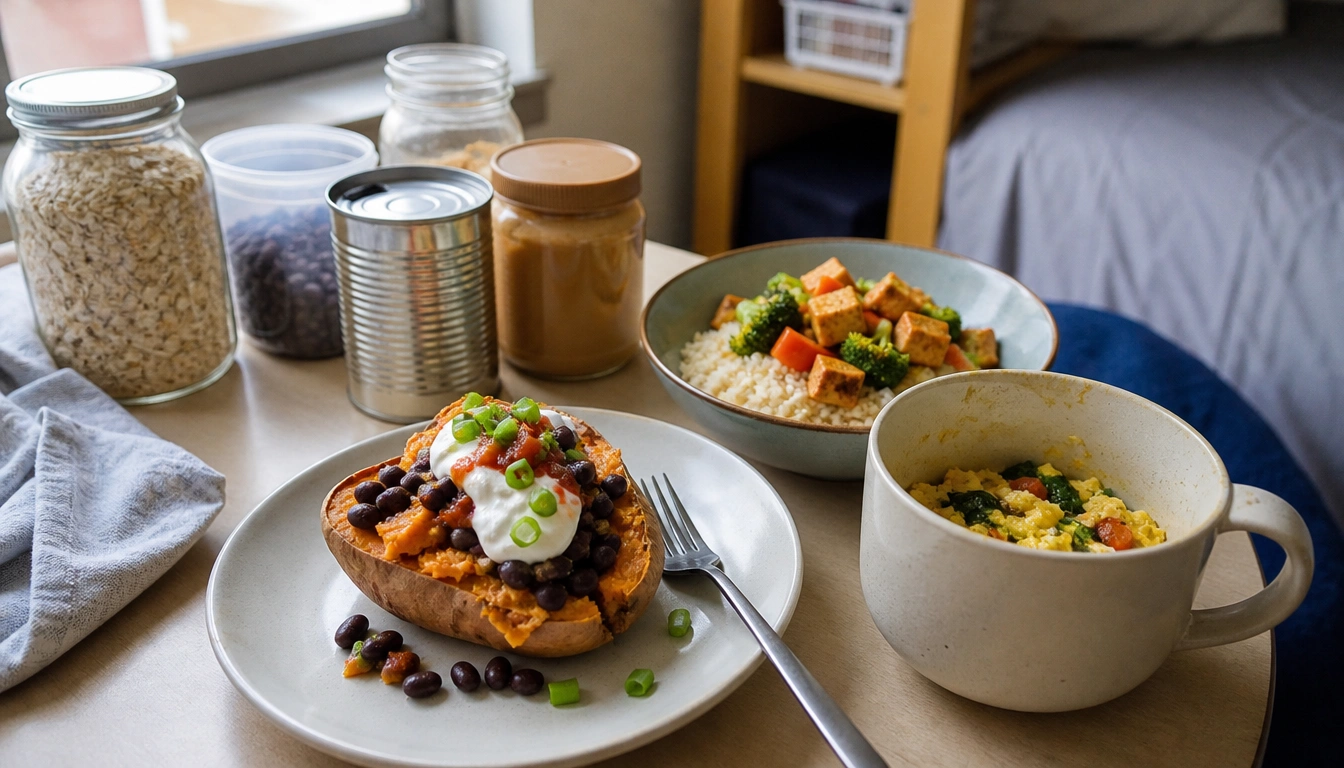
Yes—you can make healthy microwave meals in college with just a microwave and a mini-fridge. The easiest options are meals built from shelf-stable and refrigerated basics like oats, eggs, beans, frozen vegetables, microwave grains, canned tuna, tofu, and yogurt. The most balanced meals combine complex carbohydrates, lean protein, healthy fats, and fiber-rich produce so they keep you full, support steady energy, and fit a student budget.
Key Takeaways
- Microwaving can help preserve water-soluble nutrients because it usually uses less water and less time than boiling.
- Instant ramen and similar convenience foods are fast, but they often trade away fiber and protein while packing in a lot of sodium.
- A balanced dorm meal usually starts with a complex carb, then adds protein, fat, and a produce source for fiber and micronutrients.
- Cheap staples like oats, peanut butter, beans, canned tuna, eggs, and frozen vegetables can cover breakfast, lunch, and dinner.
- Mini-fridge food safety matters: store leftovers in shallow containers, reheat thoroughly, and toss cooked proteins after 3 to 4 days.
- Student athletes often need larger portions and more calories than a light microwave meal provides, especially during heavy training weeks.
Dorm cooking reality check and a simple meal-building framework
For many students, healthy microwave meal ideas for college students have to work within a very small kitchen footprint: one microwave, a crowded mini-fridge, and not much time between classes. That reality is why convenience foods become the default. The problem is not the microwave itself; it is relying on meals that are mostly refined starch, salt, and sauce with little fiber or protein.
A more durable approach is to build meals from four parts. Start with complex carbohydrates such as oats, brown rice, quinoa, sweet potatoes, beans, or whole-grain bread. Add lean protein such as eggs, Greek yogurt, tofu, canned tuna, chicken, or cottage cheese. Include healthy fats from peanut butter, nuts, seeds, avocado, or olive oil. Finish with fiber-rich produce such as frozen vegetables, baby spinach, salsa, berries, or fruit.
That pattern matters because it tends to be more filling than a carb-only snack and usually gives you a steadier energy curve for studying. It also gives you flexibility: the same ingredients can become breakfast, lunch, or dinner depending on what is on hand.
Why microwaving can help preserve nutrients
Microwaving has a bad reputation, but the concern is usually misplaced. Water-soluble vitamins, including vitamin C and some B vitamins, are more likely to be lost when food is boiled in a lot of water or cooked for a long time on the stovetop. A microwave often uses less water and less time, so it can help preserve those nutrients better than some traditional methods.
That does not make every microwave meal automatically healthy. Nutrient quality still depends on the ingredients. A frozen vegetable medley heated in the microwave is very different from a salty instant noodle cup. The cooking method can help protect nutrients, but the food you choose still matters most.
For best results, avoid overcooking. Heat just until the food is hot, tender, and safe to eat. Use short intervals, stir when possible, and let food sit briefly after cooking so the heat distributes evenly. That helps both texture and nutrient retention.
Budget-friendly staples that make repeatable meals possible
A dorm-friendly pantry does not need to be fancy. The most useful foods are the ones that are affordable, shelf-stable, and easy to combine with a few refrigerator staples. Oats are useful for breakfast and snacks. Beans and lentils add fiber and plant protein. Peanut butter brings calories and staying power. Canned tuna, salmon, or chicken can quickly turn grains or vegetables into a real meal. Frozen vegetables are especially helpful because they keep longer than fresh produce and usually microwave well.
Other low-cost basics include eggs, whole-grain wraps, microwave rice or quinoa pouches, salsa, canned tomatoes, fruit cups packed in juice, and plain Greek yogurt. If you have room, keep a small container of nuts or seeds for adding crunch and fat to simple meals.
The most practical strategy is to repeat ingredients in different combinations. For example, oats can be breakfast with peanut butter and fruit, or savory oats with an egg and vegetables. Beans can become a sweet potato topping, a burrito filling, or a grain bowl protein. Repetition keeps costs down and reduces food waste, which matters when fridge space is limited.
Three easy microwave meal ideas you can actually repeat
Mug omelet or veggie frittata: Beat two eggs in a microwave-safe mug or bowl, then stir in spinach, diced peppers, a spoonful of shredded cheese, or leftover vegetables. Microwave in short bursts, stirring between rounds, until the eggs are just set. Eggs cook fast, so the goal is gentle heat rather than a long blast that turns them rubbery. Add fruit, toast, or a small side of oats if you need a more complete breakfast.
Loaded microwave sweet potato: Pierce a sweet potato several times with a fork and microwave until soft. Split it open, fluff the center, and top it with rinsed black beans, salsa, and plain Greek yogurt. You get slow-digesting carbohydrate, fiber, protein, and a creamy finish without needing sour cream. If you have avocado or pumpkin seeds, those can add healthy fats and extra texture.
Microwave grains with vegetables and protein: Use a pouch of brown rice or quinoa, then add steamed frozen vegetables and a protein such as tofu, canned tuna, chicken, or a microwave-safe fish fillet if you have access to one. A little olive oil, soy sauce, lemon, or seasoning can make the bowl feel more complete without turning it into a sodium bomb. This pattern is useful because it scales up or down depending on your hunger and budget.
For all three meals, the formula stays the same: carb base, protein, produce, and a small amount of fat. That is what makes a microwave meal feel like food, not just a snack between classes.
How to improve instant meals without making them complicated
Instant ramen, mac and cheese cups, and many frozen entrées are convenient, but they often have the wrong balance for everyday use. They can be high in sodium while offering little fiber or protein, which may leave you full for a short time and hungry again soon after. That combination can make it harder to focus during the afternoon or recover after a long day.
You do not have to give those foods up completely. A better approach is to upgrade them. Add frozen vegetables to ramen, then stir in an egg, tofu, or leftover chicken. Mix peas, broccoli, or spinach into mac and cheese cups. Serve a frozen entrée with a side of fruit, yogurt, or a bag of steamed vegetables so the meal is not just starch and sauce.
If a packaged meal comes with a seasoning packet, consider using only part of it at first. That can lower sodium without making the meal bland. You can replace some of the flavor with garlic powder, pepper, chili flakes, lime, or salsa. The goal is not perfection. It is making a cheap convenience meal more filling and more balanced.
Food safety and storage rules for a mini-fridge
Mini-fridge living makes food safety more important, not less. Use microwave-safe glass, ceramic, or clearly labeled heat-safe plastic containers. Regular takeout containers are not always made for repeated reheating. Cover food loosely so steam can escape, and always pierce foods with skins or membranes, such as potatoes or whole eggs, before heating them.
Cooked leftovers should be cooled promptly and stored in shallow containers so they chill faster. Keep the fridge as cold as possible and avoid overcrowding it, since poor airflow can make temperature control worse. If you are reheating a protein dish, heat it until it is steaming hot throughout, not just warm in the center.
As a practical dorm rule, discard cooked proteins after 3 to 4 days in the refrigerator. If something smells off, looks slimy, or has been sitting in a shared fridge longer than you can clearly track, it is safer to throw it out. That is especially important for meat, fish, eggs, and mixed dishes.
What changes for student athletes and highly active students
Student athletes and other highly active students often need more total calories, more carbohydrate, and more protein than a light microwave meal provides. A small bowl of vegetables with a little tofu may be fine for a sedentary afternoon, but it may not be enough before or after practice. Under-fueling can show up as fatigue, poor recovery, low concentration, or feeling unusually hungry later at night.
For these students, the same microwave framework still works, but portions usually need to grow. Add a larger grain base, a bigger protein serving, and a second fat source if needed. For example, a rice bowl can become a more substantial recovery meal with extra chicken or tofu, edamame, avocado, and a full serving of vegetables. Oatmeal can be upgraded with peanut butter, yogurt, nuts, and fruit.
Training volume, body size, and sport demands all matter. A swimmer, distance runner, or lifter may need very different meal sizes from a student who is active only a few times a week. If you are training hard, the question is not just whether a meal is healthy; it is whether it is enough.
When microwave meals are not enough
Microwave cooking works well for many students, but it cannot solve every nutrition problem. If you are losing weight without trying, feeling exhausted most days, getting dizzy, missing meals often, or using food rules that feel stressful or rigid, you may need individualized help rather than another meal idea.
The same is true if campus life makes it hard to eat enough, if food insecurity is limiting your choices, or if you have a medical condition that affects digestion, blood sugar, or training recovery. A university health center, campus dietitian, or other qualified clinician can help you build a plan that fits your schedule, budget, and health needs. That kind of support is especially useful if you are an athlete, have a history of disordered eating, or notice that your energy keeps dropping even when you think you are eating enough.
For most students, the first step is simple: keep a short list of dependable microwave meals, stock a few flexible staples, and repeat the combinations that you can actually afford and prepare. Consistency usually matters more than culinary variety.
Frequently Asked Questions
How can I make microwave meals more filling and balanced without much cooking equipment?
Use the simple dorm formula: complex carbohydrate plus lean protein plus healthy fat plus fiber-rich produce. For example, pair oats with peanut butter and fruit, or build a rice bowl with beans, vegetables, and tuna or tofu. This combination usually helps with fullness and steadier energy.
Are microwave meals actually healthy, or do they destroy nutrients?
Microwaves do not automatically destroy nutrients. In many cases, quick cooking with little water can help preserve water-soluble vitamins better than boiling. The bigger issue is the food itself: a vegetable bowl is very different from a salty instant noodle cup.
What cheap dorm staples work best for healthy microwave cooking?
The most useful staples are oats, peanut butter, canned beans, canned tuna or salmon, eggs, microwave rice or quinoa, frozen vegetables, salsa, fruit, and plain Greek yogurt. These ingredients are affordable, flexible, and easy to combine into filling meals.
How do I keep microwave meals safe in a dorm mini-fridge?
Use microwave-safe containers, cool leftovers promptly, and store food in shallow containers so it chills faster. Reheat until steaming hot, pierce potatoes or similar foods before cooking, and discard cooked proteins after 3 to 4 days in the fridge.
How should student athletes adjust microwave meals to avoid under-fueling?
Athletes often need larger portions and more total calories than a light microwave meal provides. Add more grains, a larger protein serving, and healthy fats such as avocado, nuts, or olive oil. If training is intense, a campus dietitian can help fine-tune portions.
The Bottom Line
Healthy microwave meals for college students are less about complicated recipes and more about repeating a few reliable building blocks. If you keep beans, oats, eggs, frozen vegetables, yogurt, and a few proteins on hand, you can make meals that are affordable, filling, and much better balanced than convenience food alone.
Microwaving can fit a healthy eating pattern when you choose the right ingredients, watch sodium, and store food safely. If your schedule, appetite, or training demands are more complex than a basic dorm plan can cover, individualized guidance is worth getting.
Medical disclaimer
Medical disclaimer: This content is for educational and informational purposes only and is not a substitute for professional medical advice, diagnosis, or treatment. Dietary needs and supplement suitability vary by individual.
Sources
- Academic Research Institution — winona.edu. Accessed November 2026.
- Academic Research Institution — bu.edu. Accessed November 2026.
- Academic Research Institution — wisc.edu. Accessed November 2026.
