
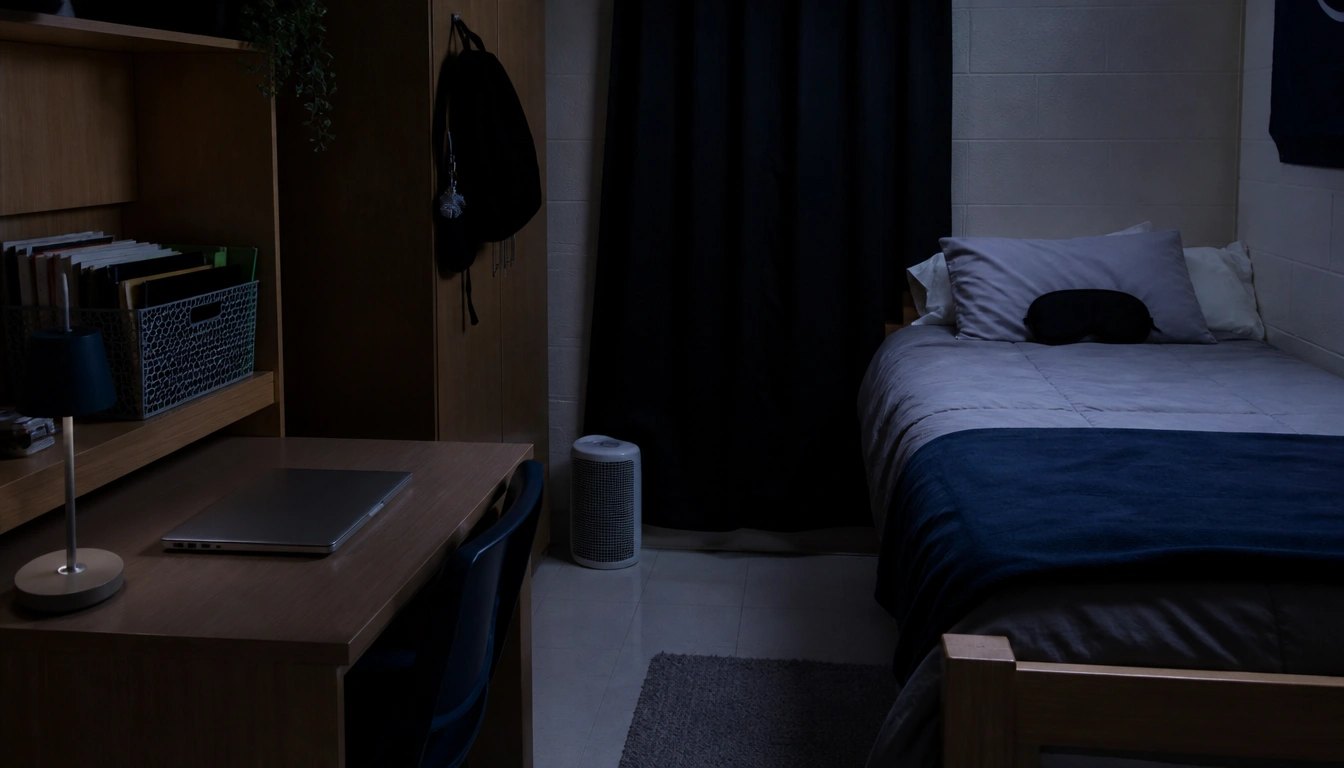
Start by making your bed a sleep-only zone, clearing the floor and visible clutter, and separating study supplies from the mattress. Then add the basics that help sleep in a shared room: darkness, less noise, and a cooler, calmer setup. A one-time weekend reset plus a short nightly shutdown routine can improve sleep tonight, but if you still cannot sleep well after several weeks, you may need medical evaluation rather than more decluttering.
Key Takeaways
- Clutter matters most when it turns your bed into a study, snack, or scrolling zone, because your brain starts linking the bed with wakefulness.
- A dorm sleep reset works best in three parts: clear the bed, clear the floor, and separate desk items from sleep space.
- Small environmental fixes can help a lot: taping over LEDs, using a sleep mask, white noise, earplugs, and keeping the room cool and dark.
- A nightly shutdown routine is more realistic than a one-time cleanup alone; the goal is to make sleep the default mode each night.
- Decluttering supports sleep, but it cannot replace medical care if you have long-lasting insomnia, loud snoring, gasping, or major daytime sleepiness.
Why clutter hits harder in a dorm room
In a dorm or small shared apartment, clutter does more than look messy. It turns the room into a mixed-message environment. The bed may also be your desk, dining spot, social hangout, and laundry drop zone. That kind of overlap makes it harder for your brain to switch into sleep mode at night.
Sleep organizations and public health agencies emphasize that college-aged adults generally need 7 to 9 hours of sleep each night, but the room itself can either help or fight that goal. A bedroom with visible piles, open laptops, and scattered supplies keeps reminding you of unfinished work. That steady visual friction can raise stress and make it harder to settle down.
Decluttering is not about perfection or minimalism. For students, it is about reducing the cues that keep your nervous system on alert. A calmer room gives your body a better chance to cool down, slow your thoughts, and connect the bed with sleep instead of study time.
How clutter changes the way your brain uses the bed
Behavioral sleep medicine uses a principle called stimulus control. The idea is simple: your brain learns from repeated patterns. If you study, snack, text, or scroll in bed, the bed stops feeling like a place for sleep and starts feeling like a place for being awake.
That learning matters because your brain does not separate “I am lying down” from “I am trying to work” unless you give it clear signals. A mattress covered with notebooks, chargers, or takeout containers sends one message. A clear bed with dim light and no active screen sends another.
Clutter also adds cognitive load. Even if you are not actively thinking about every pile, your brain notices unfinished tasks. That background pressure can keep you mentally “on,” which is the opposite of what you want before sleep. For many students, the biggest win is not buying a product. It is removing the cues that keep the bed linked to wakefulness.
That does not mean you can never read in bed or use your laptop there during the day. It means those activities should not be the normal bedtime pattern. The closer you can get to “bed equals sleep,” the easier it is to fall asleep when you actually need rest.
The weekend reset that makes the biggest difference
A realistic reset works better than vague cleaning goals. Focus on one weekend and divide the room into three zones: the bed surface, the floor and pathways, and the desk-versus-bed split. This is the fastest way to make a dorm feel sleep-ready without reorganizing your entire life.
Bed surface: remove clothing, school supplies, food wrappers, extra blankets, and anything else that is not needed for sleep. If possible, wash sheets and pillowcases so the bed feels genuinely different when you get into it. Clean bedding is not magic, but it removes dust, sweat, and stale odors that can make the bed less inviting.
Floor and pathways: clear obvious clutter from around the bed and the path to the door. Shoes, backpacks, gym bags, and loose laundry are visual distractions and physical hazards. Put them in a closet, under-bed storage, or a bin so they are not the first things you see when you lie down.
Desk versus bed: gather study materials into one place instead of letting them spread across the room. Use a vertical organizer, a drawer, or a lidded bin if storage is tight. The goal is not to hide everything forever. The goal is to make the study zone easy to close at night so the bed can become the quieter zone.
If the room is extremely small, work from the viewpoint of the bed. Anything you can see from the pillow is part of the sleep environment. If it looks like coursework, snacks, or laundry, it is probably adding mental noise.
How to create functional zoning in a tiny room
Functional zoning means giving the room separate jobs even when the room itself is one square box. In a dorm, that often means using visual and behavioral boundaries rather than walls. You are trying to make the bed feel like a different space from the desk.
Simple cues can do a lot. Keep study supplies on one side of the room and sleep items on the other. Store the laptop, chargers, and notebooks out of direct sight when you are done studying. If your desk is close to your bed, try to face the bed away from the most active part of the study setup so it is less visually “on” at night.
Use containers that close. A lidded bin, tote, or drawer makes it easier to end the day because you do not have to decide about every item one by one. If you live in a shared apartment, the same idea works in a common room: keep a small sleep kit by the bed and let the rest of your supplies live elsewhere.
Some students also benefit from a simple visual cue such as a folded throw blanket or a pillow arrangement that only appears at night. The point is not decoration. The point is to give your brain a consistent signal that the bed’s job has changed.
Sleep upgrades that fit a student budget
Once the room is less cluttered, a few environmental fixes can make sleep easier in shared housing. Light, temperature, and noise are the three biggest levers.
For light, start with the obvious offenders. Tape over bright LEDs on chargers, speakers, and electronics. Close blinds or curtains if you have them. If hallway light or a roommate’s lamp still leaks in, a sleep mask can be a low-cost fix that works immediately. According to the CDC and sleep medicine guidance, darkness supports the body’s normal melatonin release and circadian timing.
For temperature, cooler is usually better for sleep. Public health and sleep organizations commonly recommend a cool room, often around 60°F to 67°F. If you cannot control the thermostat, use lighter bedding, a fan, or a more breathable sleep setup. Avoid turning the bed into a heat trap with extra layers you do not need.
For noise, use whatever is realistic for your space. A fan, white noise, or a white noise app can soften hallway chatter and door slams. Earplugs can help if you can tolerate them comfortably. These tools do not make a room silent, but they can reduce the sharp, unpredictable sounds that wake you up or keep you from drifting off.
These fixes are supportive, not fancy. They matter because they reduce the small interruptions that add up in a dorm setting where you do not fully control the environment.
A nightly shutdown routine that actually sticks
A one-time cleanup helps, but sleep usually improves more when the room gets a short nightly reset. Build a routine that tells your brain the day is over. Keep it brief enough that you will still do it when classes are busy.
Start with a 30-minute digital sunset. Put your phone on Do Not Disturb or Night Mode, close the laptop, and stop active schoolwork at least 30 minutes before bed if you can. Then return study tools to the desk area or storage bin. The goal is to remove the sense that you are still “on duty.”
Next, make the bed look finished. Put away food, trash, and loose papers. Turn off or cover bright lights and check for glowing electronics. If you need a final pass, do it standing up so you do not slide back into bed and restart scrolling.
If you are in bed and still wide awake after about 20 minutes, get out of bed and do something quiet in dim light. Read a physical book, sit in a chair, or do a low-stimulation activity until sleepiness returns. This helps preserve the bed as a sleep cue instead of a frustration zone.
That may sound small, but it is one of the most useful parts of stimulus control. The bed should not become the place where you practice being awake.
Roommate-proofing sleep without starting a conflict
Shared housing adds problems you cannot fix alone, especially light, sound, and schedule mismatch. If your roommate studies late, uses bright lights, or keeps the room noisy, a direct but calm conversation is usually the best first step.
Try to talk about specific behaviors rather than personal habits. Instead of “you keep me up,” say “could we agree on quieter time after a certain hour” or “could the desk lamp be angled away from the beds.” That keeps the conversation practical and less defensive.
Low-friction workarounds help too. A sleep mask can solve light without involving anyone else. Earplugs or white noise can soften unpredictability. If your roommate has different sleep hours, use your own small setup rather than trying to redesign the whole room. A bedside bag for sleep items, a labeled storage bin, or a shared quiet-hours agreement can reduce repeat conflicts.
If you are off campus with roommates, the same logic applies. You may not be able to control the living room or kitchen, but you can still create a personal sleep zone. The more predictable your own routine is, the less every small roommate behavior will throw off your night.
When decluttering helps—and when it is not enough
Decluttering can improve sleep by lowering stress, reducing visual distractions, and making the bed feel like a sleep-only space. It can also make a small room easier to live in, which matters when classes, work, and social life already use up a lot of mental energy. But decluttering is a support strategy, not a cure for every sleep problem.
If you still have trouble sleeping after several weeks of better habits, that may point to something else. Chronic insomnia, anxiety, depression, sleep apnea, restless sleep, or a circadian rhythm problem can all affect college students. Warning signs include loud snoring, gasping or choking at night, severe morning headaches, extreme daytime sleepiness, or ongoing trouble falling asleep and staying asleep even when the room is set up well.
Also pay attention to safety and basics. If your mattress is uncomfortable, your sheets are due for a wash, or your bedding is too warm, those practical issues may be part of the problem. And if you are relying on alcohol or over-the-counter sleep aids to force sleep, that is a sign to step back and reassess rather than keep experimenting on your own.
For many students, the right answer is a combination of better sleep environment, better routine, and, when needed, professional evaluation. Decluttering can open the door, but it cannot diagnose a sleep disorder.
Frequently Asked Questions
What clutter matters most for sleep in a dorm room?
The biggest problems are items on the bed, piles visible from the pillow, and study materials that stay within arm’s reach. Those cues keep your brain in “awake mode” and make it harder to treat the bed as a sleep-only space.
How do I separate my bed from my study space in a small room?
Create a clear desk zone and a clear sleep zone. Keep notebooks, chargers, and your laptop grouped at the desk and off the mattress. Close containers, turn the bed away from study clutter if possible, and make the bed look finished at night.
What bedtime cleanup routine is realistic for a busy college student?
Aim for a 5- to 10-minute shutdown: clear the bed, put food and trash away, close the laptop, stash school materials, and switch to dim light. A small nightly reset is more sustainable than trying to deep-clean every evening.
How can I reduce light and noise in a shared dorm room?
Use a sleep mask for light, tape over bright LEDs, and try earplugs or white noise for sound. A fan can help mask sudden noises. These fixes do not make the room perfect, but they can make it much easier to fall asleep.
When is poor sleep more than a declutter problem?
If you still sleep poorly for weeks after improving your room and routine, or if you have loud snoring, gasping, severe daytime sleepiness, or repeated trouble falling asleep, talk with a healthcare professional. That may signal a sleep disorder or another condition.
The Bottom Line
A dorm room does not need to be spotless to support sleep. It needs to send clear signals: bed for sleep, desk for work, and the rest of the room kept simple enough that your brain can power down.
The fastest wins are usually practical: clear the bed, remove floor clutter, separate school supplies from sleep space, and add low-cost fixes for light and noise. Pair that with a short nightly shutdown routine so the room resets every day.
If sleep is still poor after several weeks of better habits, do not keep blaming the room alone. Ongoing insomnia, snoring, gasping, or major daytime sleepiness deserves medical attention.
Medical disclaimer
Medical disclaimer: This content is for educational and informational purposes only and is not a substitute for professional medical advice, diagnosis, or treatment. Dietary needs and supplement suitability vary by individual.
Sources
- Centers for Disease Control and Prevention (CDC) — cdc.gov. Accessed November 2026.
- Centers for Disease Control and Prevention (CDC) — cdc.gov. Accessed November 2026.
- Academic Research Institution — stanford.edu. Accessed November 2026.
- Academic Research Institution — harvard.edu. Accessed November 2026.
- Academic Research Institution — ncsu.edu. Accessed November 2026.
- Academic Research Institution — colorado.edu. Accessed November 2026.
