
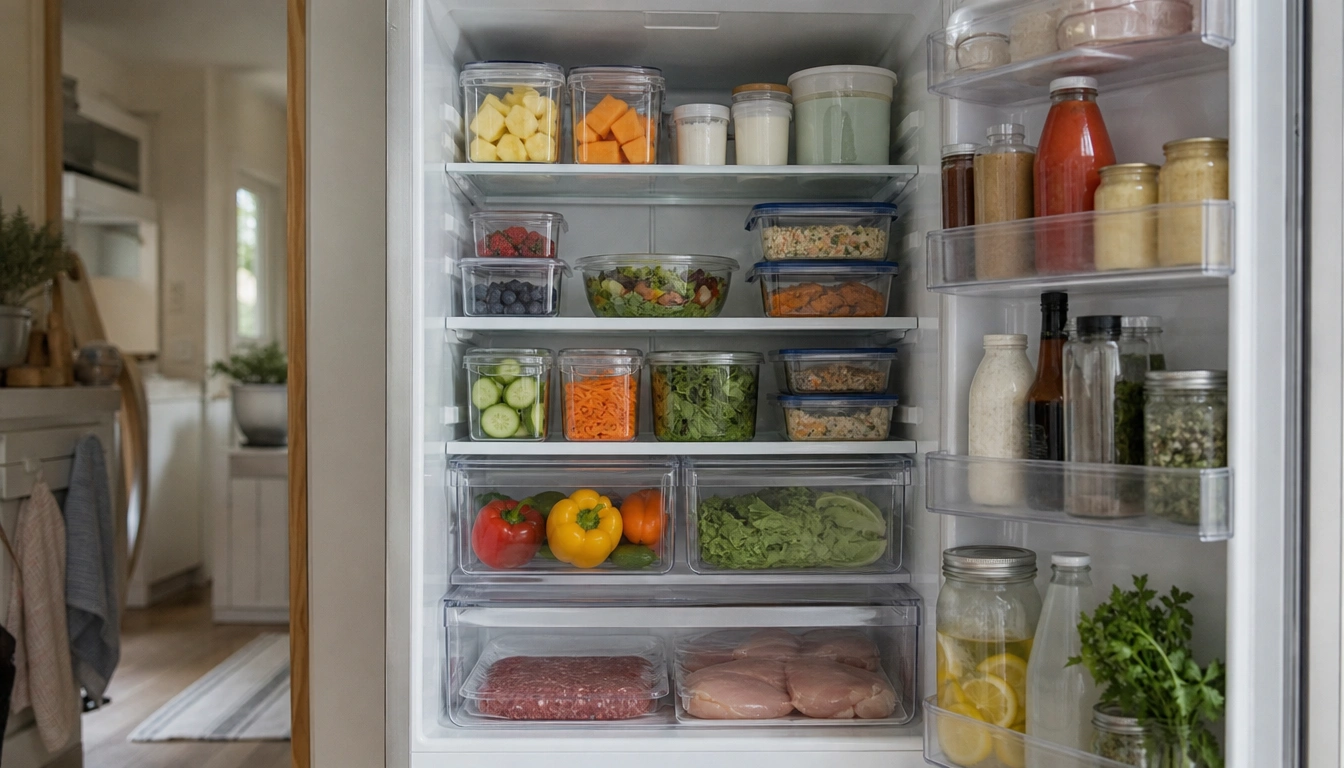
Organize your fridge so the healthiest grab-and-go foods are the most visible, easiest to reach, and already ready to eat. Put washed produce, yogurt, leftovers, and other healthy options at eye level; keep less nutritious snacks less visible and slightly less convenient; and use clear labels, safe temperature zones, and simple rotation habits so good choices require less effort during a workday.
Key Takeaways
- Put ready-to-eat produce, yogurt, and leftovers at eye level so they win during quick work breaks.
- Use friction on ultra-processed snacks by storing them in opaque bins, back corners, or less convenient spots.
- Keep your fridge at 40°F (4°C) or below, with a thermometer placed near the center, not the door.
- Use clear containers and labels to reduce decision fatigue, especially if you have ADHD, burnout, or a hectic schedule.
- A Sunday reset and first-in-first-out rotation help prevent food waste and keep healthy foods visible longer.
How fridge design shapes what you eat during a work break
Remote work turns the kitchen into a high-traffic space. You may not be making a formal meal decision so much as reacting to what is easiest to see and grab. That is the core idea behind fridge organization for healthier eating: the items with the strongest visual cues and the least effort tend to get eaten first.
Choice architecture matters because most break-time eating is fast and habitual. If the first thing you see is a bowl of cut fruit or a container of yogurt, that option becomes the default. If the first thing you see is dessert or a bag of snack food, that becomes the path of least resistance. The goal is not perfection. It is to shape the fridge so the healthy choice is the easy choice.
For work-from-home routines, that means designing for “grab and go.” Put foods you want to eat more often at eye level and as close to the front as possible. Put foods you want to eat less often where they are still available, but not visually dominant. This is a practical way to reduce mindless grazing without relying on willpower at every break.
A shelf-by-shelf fridge zone that supports healthier eating
A shelf plan works best when it matches both food safety and behavior. Think of the refrigerator as a set of zones, each with a job. That keeps your food safe and also helps your brain make quicker decisions during the workday.
Top and eye-level shelves: Use these for ready-to-eat foods. Good options include washed fruit, cut vegetables, single-serve yogurt, hummus, healthy leftovers, and prepped meals. These are the foods you want to see first because they require the least effort to eat.
Middle shelves: Keep meal ingredients here, such as eggs in their carton, cheese, dairy, tofu, or other items you will combine later. This zone works well for foods that are safe and useful, but not necessarily immediate snack choices.
Crisper drawers: Reserve these for produce that benefits from cooler, more controlled storage. Store items in a way that makes them visible enough to be used, not buried until they spoil. If you shop less often, this zone is especially important for stretching freshness.
Bottom shelf: Put raw meat, poultry, and seafood here, in sealed leak-proof containers. This protects ready-to-eat foods from drips and cross-contamination. Food safety should shape the layout as much as convenience does.
Door shelves: Use these for condiments, drinks, and other items that can better handle temperature swings. The door is the warmest and most variable part of the fridge, so it should not be the home for perishables that need steadier cooling.
If you share a fridge, assign shelves or bins by category or person. A simple visual system works better than complicated rules. The more obvious the layout, the less likely healthy food gets pushed to the back and forgotten.
Build a low-friction default for healthy foods
The best fridge setup removes barriers from healthy foods before you are tired, rushed, or distracted. That means doing a little prep once so your future self can eat well with almost no thinking.
Start with ready-to-eat prep. Wash fruit, chop vegetables, portion leftovers, and move useful foods into clear containers. When carrots, grapes, or cooked grains are visible and easy to take, you are more likely to choose them during a break than if they are hidden in produce bags or deep in the crisper drawer.
Portioning also helps. A large container can be psychologically easy to ignore because it feels like work to open, serve, and put away. A smaller clear container with a few servings inside feels more immediate. That does not mean every healthy food must be pre-portioned, but the foods you reach for most often should be easy to access.
Use visibility as a rule: if a food is meant to be eaten soon, place it in a transparent container and keep it at the front. If a food is meant to be used later, store it in a labeled container or behind the ready-to-eat items. This simple contrast helps distinguish “use now” from “save for later.”
For people trying to eat more vegetables, this can be the difference between intent and follow-through. The extra minute spent after grocery shopping often saves time later because you are not deciding, washing, or chopping in the middle of a work break.
Create healthy friction for snacks and desserts
You do not need to ban snacks to eat better. In many homes, that approach backfires. A more sustainable strategy is to make less nutritious snacks slightly harder to grab while keeping them available in a deliberate way.
Friction can be small. Store chips, cookies, and sweets in an opaque container. Move them to a lower shelf, back corner, or a section that is less visually prominent. Keep them in one place instead of scattered across the fridge. These changes reduce cue-driven eating because the food is no longer the first thing your eyes land on.
At the same time, reduce friction for healthier options. Put ready-to-eat produce, yogurt, and leftovers in containers that open easily and can be seen right away. Healthy eating becomes more likely when it requires less opening, searching, and rearranging than the snack foods do.
If you prefer to keep treats visible because hiding them leads to overeating later, use a middle path: keep a modest amount in a clear but non-prominent bin, with portions that are easy to notice but not automatic to grab. The right setup depends on what actually happens in your kitchen, not on an idealized rule.
The same logic works for drinks. If you tend to snack while looking for something refreshing, keep water, seltzer, or unsweetened beverages in the most convenient spot. That way, the fridge supports the pause you need without turning every break into a food decision.
Keep food safe and fresh in a work-from-home kitchen
Fridge organization is not only about behavior. It also protects food quality and safety. According to the U.S. Food and Drug Administration, your refrigerator should be kept at 40°F (4°C) or below. That temperature slows bacterial growth and helps food stay safe longer.
A reliable thermometer matters because built-in displays and guesses are not enough. Place an independent appliance thermometer near the center of the fridge, not in the door. The center is a better read on typical storage conditions, while the door reflects temperature swings from frequent opening and closing.
Airflow also matters. When shelves are packed too tightly, cold air cannot circulate evenly. That can create warmer spots and uneven cooling. Leave enough space around containers so the fridge can do its job. If your fridge is small, this may mean storing fewer items at once or using stackable containers more intentionally.
First-in-first-out rotation helps reduce waste and keeps older food from disappearing behind new groceries. When you unpack, move older items to the front and place new items behind them. This is especially useful for produce, leftovers, yogurt, and other foods that lose quality quickly.
Food safety also supports better eating indirectly. When healthy food stays fresh longer, you are more likely to use it. When vegetables wilt or leftovers get forgotten, convenience food becomes the fallback. Good storage protects both your budget and your habits.
Adapt the system for small fridges, shared households, and busy days
Not every remote worker has a large private fridge. In a small or shared kitchen, the best system is the one that still works when space is limited and other people are using the same shelves.
If space is tight, focus on one visible healthy zone rather than reorganizing everything. A single shelf or bin for ready-to-eat foods can make a real difference. Use stackable clear containers so you can see what you have without spreading it across the fridge.
In a shared household, labels reduce confusion. Mark containers with contents and dates, especially for leftovers, meal prep, and produce that may be used by more than one person. Transparent containers do some of the work, but labels remove doubt and help prevent the “I thought that was yours” problem.
For irregular schedules, build around the times you usually open the fridge. If you tend to snack between meetings, keep your most useful foods in the place you naturally reach first. If evenings are the danger zone, make dinner ingredients and a healthy ready-to-eat option visible before the workday ends.
On high-stress days, the best plan is the one that asks the least of you. That may mean keeping a few simple fallback foods ready: yogurt, fruit, cut vegetables, soup, or leftover grains and protein. A realistic fridge does not eliminate convenience; it redirects it.
Use labels, clear bins, and a Sunday reset to reduce mental load
For people with ADHD, burnout, or low executive function, a fridge should work like an external memory aid. If you cannot easily see it, you may forget it exists. That is why clear containers and visible labels are not just neatness strategies; they are cognitive offloads.
Transparent bins help you identify food without opening multiple containers. Labels help you know what something is, when you stored it, and whether it should be eaten soon. This reduces decision fatigue and prevents healthy food from becoming invisible waste at the back of the fridge.
A simple Sunday reset can keep the system from unraveling. After grocery shopping, take a short block of time to wash produce, move leftovers into clear containers, check what needs to be used first, and shift older items forward. You do not need a perfect plan. You need a repeatable one.
Try this basic workflow:
- Throw out spoiled food and wipe obvious spills.
- Move older items to the front and new items behind them.
- Put ready-to-eat foods at eye level.
- Label leftovers and shared items.
- Use one visible bin for snacks and one for healthy grab-and-go foods.
The point is to make the fridge easier to read at a glance. If your brain is tired after work, the setup should still guide you toward the food you want to eat more often.
Over time, a consistent layout becomes a habit cue. You stop having to rediscover the system each week, and that lowers the mental cost of eating well at home.
Frequently Asked Questions
What foods should go on each fridge shelf for healthier eating?
Put ready-to-eat foods such as cut fruit, vegetables, yogurt, and leftovers at eye level. Store meal ingredients like eggs, dairy, and tofu on middle shelves. Keep raw meat, poultry, and seafood on the bottom shelf in leak-proof containers, and reserve the door for condiments and drinks.
How can I make unhealthy snacks harder to grab without banning them completely?
Use mild friction instead of restriction. Keep snacks in an opaque container, place them lower or farther back, and store them in one defined spot. At the same time, make healthy foods more visible and easier to reach so they become the default choice during breaks.
What fridge temperature is safest for storing food?
The U.S. Food and Drug Administration says a refrigerator should be at 40°F (4°C) or below. Use an independent thermometer placed near the center of the fridge, not the door, because the door warms up more often when it opens and closes.
How do I keep produce fresh longer when I work remotely and shop less often?
Wash and portion produce soon after shopping, then store it in clear containers so you can see it easily. Use the crisper drawers for fruits and vegetables, rotate older items to the front, and avoid overstuffing the fridge so cold air can circulate well.
What fridge organization tips help if I have ADHD, burnout, or low executive function?
Use transparent containers, simple labels, and a predictable layout so the fridge acts like an external memory aid. A short Sunday reset can help: toss spoiled food, move older items forward, label leftovers, and restock the visible healthy zone so decisions take less effort during the week.
The Bottom Line
If you work from home, the fridge should support the choices you want to make when you are busy, distracted, or tired. Put healthy ready-to-eat foods where you can see them first, and make less useful snacks a little less effortless to grab.
Keep the system safe as well as convenient: maintain 40°F (4°C) or below, use the center of the fridge for temperature checks, and store raw meat low and sealed. Small habits like clear containers, labels, and first-in-first-out rotation can make the setup easier to maintain without requiring extra motivation.
Medical disclaimer
Medical disclaimer: This content is for educational and informational purposes only and is not a substitute for professional medical advice, diagnosis, or treatment. Dietary needs and supplement suitability vary by individual.
