
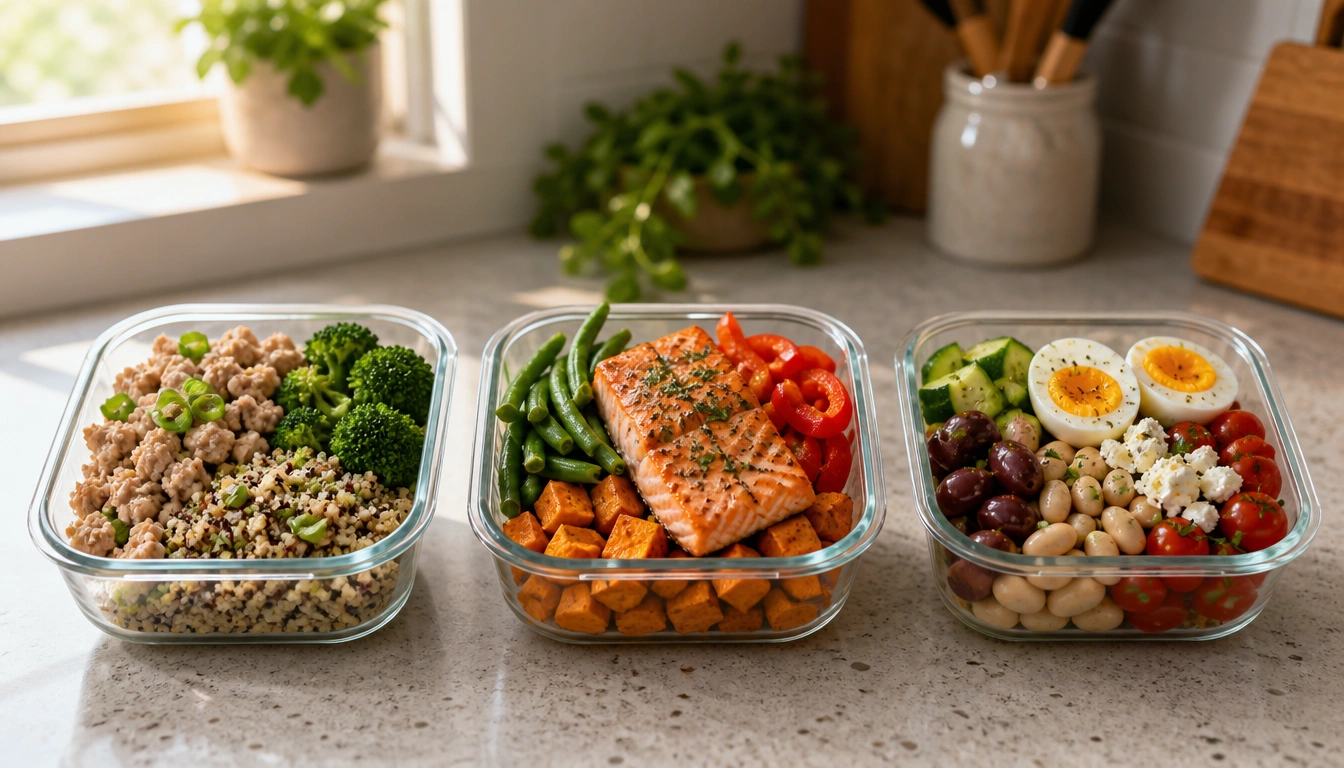
Yes—healthy microwave meals can be an easy starting point for meal-prep beginners. The simplest approach is to build balanced bowls with vegetables, lean protein, high-fiber starches, and a little healthy fat. Use frozen vegetables, canned beans, and pre-cooked grains to save time, then reheat with a splash of water or broth, a loose cover, and a stir halfway through. Store meals safely and reheat until steaming hot.
Key Takeaways
- Use the plate method: half vegetables, one-quarter lean protein, one-quarter whole grains or another high-fiber starch, plus a small amount of healthy fat.
- Frozen vegetables, canned beans, and pre-cooked grains are beginner-friendly because they cut prep time without forcing you to rely on ultra-processed foods.
- Microwave meals stay better textured when you add a little moisture, cover loosely, and stir or rotate halfway through heating.
- For safety, refrigerate cooked food within 2 hours, eat it within 3 to 4 days, and reheat until steaming hot or 74°C (165°F).
- You do not need complicated recipes to meal prep well; a few mix-and-match bowls can cover lunches or dinners for most of the week.
Why microwave meal prep is a realistic place to start
If you are new to meal prep, the microwave can make the whole process feel much less intimidating. It can steam vegetables, warm grains, and reheat cooked proteins with very little equipment. That matters when your goal is to eat better on busy days without learning a long list of cooking techniques first.
Public health guidance from the U.S. Dietary Guidelines and the NHS both support a pattern built around vegetables, fruits, whole grains, lean proteins, and healthy fats. A microwave-friendly routine fits that pattern well because you can use simple ingredients and still build meals that are filling and balanced. According to the CDC, good food safety also depends on cooling and reheating food correctly, so a beginner plan should include storage habits from the start.
The easiest way to think about microwave meal prep is not as “cooking from scratch every night,” but as assembling a few reliable parts that reheat well. That keeps the workload manageable and helps you avoid the common beginner mistake of making a meal that tastes fine on day one but turns dry, bland, or mushy later.
Build balanced microwave meals with the plate method
A simple microwave bowl can follow the plate method without calorie counting. Aim for half the container to be non-starchy vegetables, one-quarter lean protein, and one-quarter high-fiber starch. Add a small amount of healthy fat after heating or near the end of cooking. This framework is practical because it gives you a visual guide for portion balance instead of forcing you to measure every spoonful.
For the vegetable half, think broccoli, peppers, spinach, green beans, zucchini, cauliflower, or mixed frozen vegetables. For the protein quarter, choose chicken breast, turkey, eggs, tofu, beans, lentils, tuna, or salmon. For the starch quarter, use brown rice, quinoa, whole-wheat couscous, oats, barley, or sweet potato. Healthy fats can come from olive oil, avocado, sesame seeds, pumpkin seeds, or a spoonful of tahini.
That structure is useful because it naturally supports fiber and protein at the same meal. It also gives you flexibility: you can swap ingredients based on what is in the freezer or pantry without changing the basic pattern. For beginners, that kind of repeatable structure is often easier to keep than following a new recipe every day.
Choose ingredients that microwave well
The best ingredients for microwave meal prep are the ones that tolerate reheating without becoming rubbery, watery, or dry. Frozen vegetables are especially helpful because they are already washed, chopped, and portioned. Canned beans work well because they add protein and fiber with almost no prep beyond rinsing and draining. Pre-cooked grains, microwaveable brown rice, and quick-cooking quinoa also make the process easier for beginners.
Some foods are naturally better suited to reheating than others. Chicken breast, turkey, fish, eggs, tofu, edamame, chickpeas, and lentils usually work well if they are not overcooked in the first place. Sweet potatoes, quinoa, brown rice, couscous, and oats also reheat well because they hold moisture better than very delicate starches. For vegetables, frozen broccoli, spinach, peas, carrots, green beans, and mixed blends are reliable choices.
If you are trying to avoid soggy texture, it helps to keep watery ingredients from overwhelming the bowl. Tomatoes, cooked mushrooms, and leafy greens can still be part of the meal, but they work best when paired with a drier base such as grains or sweet potato. The goal is not perfection; it is choosing ingredients that make leftovers more likely to taste good the next day.
Three beginner-friendly microwave meal ideas
Quick steam turkey and quinoa grain bowl: Start with cooked quinoa or brown rice, add cooked lean turkey, and top with frozen broccoli and diced bell peppers. Add a tablespoon or two of water or broth, then cover loosely and microwave until steaming hot. Stir halfway through. This bowl works because the grain absorbs flavor, the vegetables soften evenly, and the lean protein stays moist when it is not overheated.
Salmon and edamame sweet potato mash: Microwave a whole sweet potato until tender, then mash it with a little olive oil and black pepper. Add canned salmon or shelled edamame and a side of frozen mixed vegetables. The sweet potato acts like a built-in moisture source, which helps keep the fish or beans from drying out. If the bowl seems dense, add a spoonful of water, broth, or plain yogurt after heating.
Mediterranean egg and bean power bowl: Combine rinsed chickpeas with scrambled eggs or egg whites, then add frozen spinach or canned chopped tomatoes with oregano and garlic powder. Serve over whole-wheat couscous or another pre-cooked grain. Because couscous rehydrates quickly, it is a good option when you want a fast meal with very little skill required. Finish with a drizzle of olive oil or a sprinkle of seeds if you want extra richness.
These meals are meant as templates, not rigid rules. You can swap turkey for tofu, salmon for tuna, broccoli for green beans, or quinoa for brown rice. The main job is to keep the basic structure: vegetables, protein, starch, and a little fat.
Set up a simple batch-prep workflow for the week
The easiest meal-prep routine is to cook components instead of fully assembling every meal in one style. For example, make one grain, one protein, and two vegetable options on a prep day, then combine them in different containers. That gives you variety without multiplying your work.
A beginner one-week plan might look like this: cook a pot of quinoa or brown rice, microwave or steam a large bag of frozen vegetables, and prepare one main protein such as turkey, tofu, eggs, or canned fish. Then make three to four combinations from those ingredients. You might build one turkey bowl, one salmon bowl, and one bean-and-egg bowl while keeping the same grain base.
Mix-and-match prep also reduces waste. If you have extra vegetables, add them to the next bowl. If you are short on protein one day, use beans or eggs instead. This is where frozen and canned ingredients are especially useful: they are dependable, affordable, and easier to keep on hand than fresh produce that may spoil before you use it.
Use microwave techniques that prevent dryness and cold spots
Microwaves heat food unevenly, so texture depends on how you pack the container. Add a small splash of water or broth when reheating grains, vegetables, or lean proteins. Cover the container loosely with a lid or microwave-safe wrap so steam can circulate, but do not seal it tightly. Stir halfway through heating to move the colder food toward the hotter center.
Standing time matters too. After the microwave stops, let the food sit briefly before eating so the heat can spread more evenly. This is especially helpful for bowls with rice, beans, or dense proteins. If one part feels cool, stir again and heat in short bursts rather than running a long cycle that dries out the edges.
Container choice makes a difference. Use microwave-safe glass or other labeled microwave-safe containers, and leave enough space at the top for steam. Shallow containers reheat more evenly than very deep ones. If you are reheating fish or eggs, keep the heating time modest and check early so the food stays tender instead of tough.
Keep food safe from fridge to microwave
Food safety is just as important as flavor. According to the CDC, cooked food should be refrigerated within 2 hours of cooking. After that, most home-prepared meals should be eaten within 3 to 4 days. If you do not plan to eat them in that window, freeze portions instead of leaving them in the fridge too long.
For freezing, portion meals into containers that leave a little room for expansion and cool the food before freezing. Thaw frozen meals in the refrigerator when possible, then reheat thoroughly in the microwave. The safest target is 74°C (165°F) or steaming hot throughout. If your microwave has hot and cold spots, stir, rotate, or rearrange the food halfway through heating so the whole meal warms evenly.
Do not rely on appearance alone. Food can look hot on top while still being cool in the middle. That is why a stir-and-check approach is more reliable than a single long blast. If a meal smells off, has been stored too long, or sat out on the counter too long, it is safer to discard it.
When to personalize the plan or ask for medical advice
Most healthy adults can use these meal-prep ideas as a practical starting point. But personalization matters if you have a health condition, food allergy, chewing or swallowing issues, or a history of foodborne illness risk. People managing diabetes, chronic kidney disease, gastrointestinal disorders, or other dietary restrictions may need different portions, ingredients, or food-safety steps. A registered dietitian or clinician can help tailor the plan.
Pay attention to symptoms that may signal foodborne illness after eating stored food. Persistent vomiting, high fever, bloody stools, or signs of dehydration deserve prompt medical attention. Food safety guidance is useful for everyone, but it is especially important if you are pregnant, older, immunocompromised, or making meals for someone who is medically vulnerable.
If a specific food consistently causes symptoms such as nausea, bloating, hives, or trouble breathing, treat that as an individual issue rather than a meal-prep problem. In that case, seek medical advice about the ingredient before trying it again.
Frequently Asked Questions
How do I build a balanced microwave meal-prep bowl using the plate method?
Use half non-starchy vegetables, one-quarter lean protein, and one-quarter high-fiber starch, then add a small amount of healthy fat. That structure works well in bowls and containers because it is easy to eyeball, repeat, and adjust without tracking calories.
What ingredients work best in microwave meal prep without getting soggy or rubbery?
Frozen vegetables, canned beans, cooked chicken or turkey, tofu, eggs, quinoa, brown rice, couscous, and sweet potatoes are reliable choices. They tend to hold texture better than very delicate ingredients, especially when you reheat them with a little moisture and do not overcook them first.
How long can meal-prepped microwave meals safely stay in the fridge?
Most cooked meal-prep foods should be refrigerated within 2 hours and eaten within 3 to 4 days. If you want to keep them longer, freeze portions instead of stretching fridge storage beyond that window.
How do I reheat meal-prep food evenly in the microwave?
Use a microwave-safe container, add a splash of water or broth if needed, cover loosely, and heat in short bursts. Stir or rotate halfway through, then let the food stand briefly so the heat can spread before you eat it.
What are easy microwave meal-prep ideas using frozen or canned ingredients?
Try a turkey and quinoa bowl with frozen broccoli, a salmon and sweet potato bowl with frozen vegetables, or a chickpea and egg bowl with spinach or canned tomatoes. Frozen vegetables and canned beans make it easier to prep healthy meals with little chopping or cleanup.
The Bottom Line
Healthy microwave meal prep does not need to be complicated. If you build bowls around vegetables, lean protein, and high-fiber starches, you can make meals that are filling, flexible, and beginner-friendly.
Frozen vegetables, canned beans, and pre-cooked grains are especially useful because they reduce prep time and still fit evidence-based healthy eating patterns. Add a little moisture, cover loosely, and stir halfway to keep food from drying out.
For safety, refrigerate cooked food within 2 hours, use it within 3 to 4 days, and reheat until steaming hot or 74°C (165°F). If you have a medical condition or symptoms of foodborne illness, get individualized advice from a healthcare professional.
Medical disclaimer
Medical disclaimer: This content is for educational and informational purposes only and is not a substitute for professional medical advice, diagnosis, or treatment. Dietary needs and supplement suitability vary by individual.
Sources
- Centers for Disease Control and Prevention (CDC) — cdc.gov. Accessed November 2026.
- National Health Service (NHS) — cntw.nhs.uk. Accessed November 2026.
- Centers for Disease Control and Prevention (CDC) — cdc.gov. Accessed November 2026.
- Centers for Disease Control and Prevention (CDC) — cdc.gov. Accessed November 2026.
