
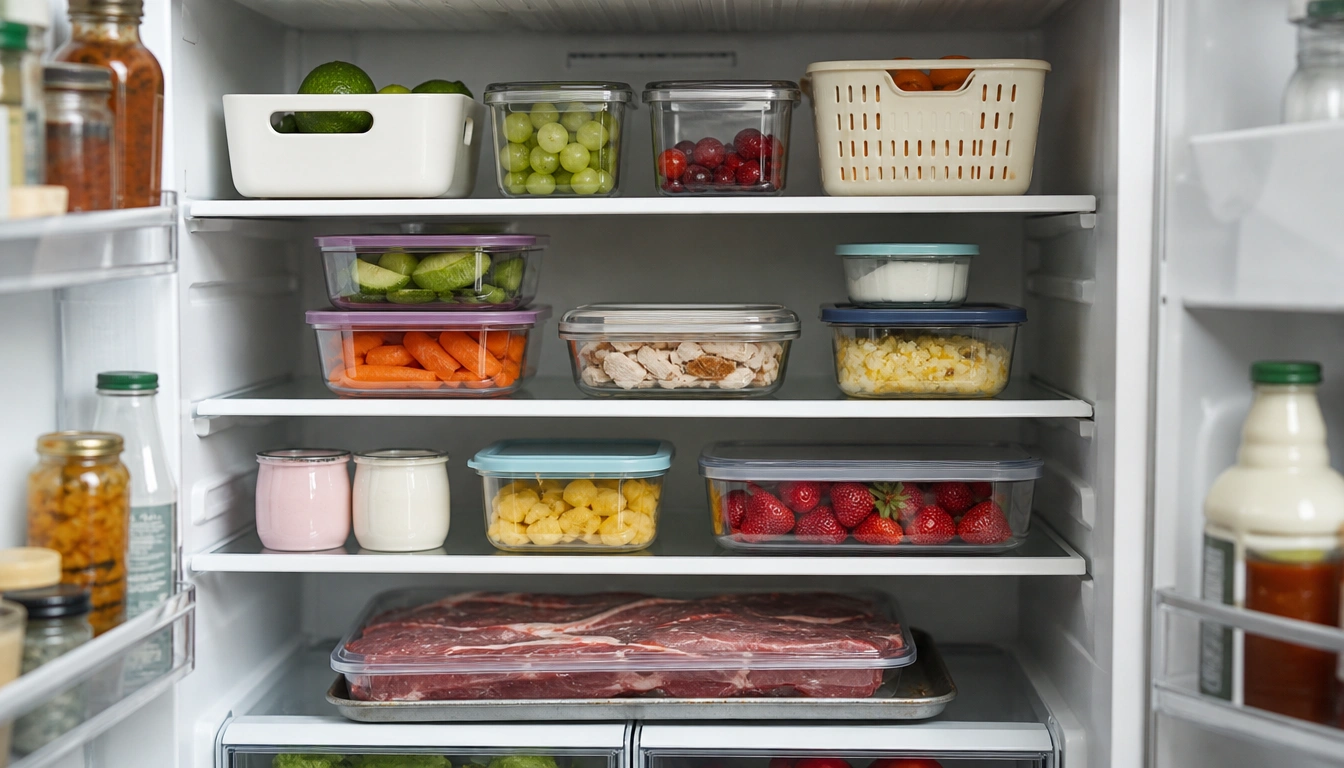
Organize your fridge so the healthiest ready-to-eat foods are the easiest to see and grab first, while raw meats stay sealed on the bottom shelf and leftovers are labeled, dated, and placed in a clear “eat first” zone. That setup supports better choices, reduces waste, and helps food stay safe longer without spending more money.
Key Takeaways
- Put washed produce, leftovers, and other ready-to-eat healthy foods at eye level so they are the first items seen and used.
- Keep raw meat, poultry, and seafood on the bottom shelf in leak-proof containers to prevent drips and cross-contamination.
- Use a simple FIFO system: older food goes in front, newer food goes behind, or move soon-to-expire items into an “eat first” bin.
- Store produce thoughtfully; some fruits give off ethylene gas that can speed ripening and spoilage in sensitive foods.
- Refrigerate leftovers promptly, cool them safely, and generally use them within 3 to 4 days if kept cold enough.
- Families with pregnant people, older adults, young children, or immunocompromised members should be stricter about temperature, separation, and timing.
Why fridge organization changes what gets eaten and what gets wasted
Fridge organization is not just about neat shelves. It changes behavior. People tend to eat what they can see quickly and reach easily, especially when they are tired, rushed, or deciding between a snack and dinner ingredients. That is why ready-to-eat healthy foods do better when they are placed at eye level and kept visible in clear containers.
For budget-conscious households, this matters twice. First, visible healthy food is more likely to be eaten before it spoils. Second, less spoilage means fewer groceries thrown away. When produce, leftovers, and cooked grains disappear behind taller containers or condiments, they are easy to forget. A simple visual system helps families use what they already bought before shopping again.
This is one of the easiest ways to support healthier eating without relying on more willpower, more money, or a perfect meal plan. You are making the better choice the easiest choice.
Best first step: make the foods you want eaten first the most visible foods in the fridge.
That means placing washed fruit, cut vegetables, leftover vegetables, cooked grains, yogurt, hummus, and other ready-to-eat items at the front of a middle shelf. Put less urgent items behind them. If the fridge is full, it is usually better to reorganize by priority than to buy storage gadgets.
A simple shelf-by-shelf fridge zoning system
A shelf plan helps a shared household keep food safe and easier to find. Public health guidance from the USDA and FoodSafety.gov supports keeping food cold, separating raw animal foods from ready-to-eat foods, and using the fridge structure to reduce cross-contamination.
Top shelves: leftovers, prepared meals, washed fruit, herbs, and foods that are ready to eat without more cooking. This is also a good place for the “eat first” bin.
Middle shelves: dairy, eggs if your household stores them in the fridge, tofu, and opened packaged foods that need to stay cold and visible.
Bottom shelf: raw meat, poultry, and seafood in sealed packaging or leak-proof containers, ideally on a tray. This is the safest place because any drips stay below other foods.
Crisper drawers: produce that benefits from humidity control, such as leafy greens, carrots, and many other vegetables. If your fridge has more than one drawer, use one for produce and one for fruit if that helps prevent bruising and spoilage.
Door: condiments and items that are less sensitive to small temperature swings. The door is usually the warmest part of the fridge, so it is not the best place for milk or raw foods.
If your fridge is small, do not try to make every shelf perfect. Aim for three things: cooked foods above raw foods, the most perishable foods in front, and enough space for cold air to circulate.
Eat first bin idea: use one clear bin or basket on an eye-level shelf for food that needs attention soon. Put leftover vegetables, opened fruit, half-used herbs, and soon-to-expire yogurt there.
FIFO at home: use older food before newer food
FIFO means first in, first out. It is a simple rotation system used in food service, and it works well at home too. The idea is to use older food before newer food so groceries do not get buried and forgotten.
When you unpack groceries, move older items to the front and place new items behind them. If you bring home duplicate items, keep the older one where it is easiest to grab. This matters most for foods that spoil quickly, such as berries, cooked leftovers, salad greens, yogurt, and opened sauces.
A more visible version of FIFO is the “eat first” shelf or bin. Put foods there that should be used in the next day or two. That bin can hold a half onion, cooked rice, opened fruit, a partial rotisserie chicken, or leftover vegetables. The point is not to store everything there forever; the point is to create a short list of foods that need to be used up.
Budget benefit: FIFO protects grocery money because it lowers the chance that a second bag of spinach gets bought while the first bag wilts in the back of the drawer.
For shared households, a sticky note on the bin or shelf can help. Write “use first” or the date items were opened. The less people need to guess, the more likely they are to choose the right food quickly.
Low-cost prep that makes healthy food easy to grab
A fridge system works best when the food inside is already partly ready to eat. The goal is not fancy meal prep. The goal is to remove the few small barriers that make healthy food harder to choose than a packaged snack.
Affordable foods are often the best candidates for quick prep: carrots, celery, cabbage, lettuce, apples, oranges, grapes, cooked beans, boiled eggs, plain yogurt, brown rice, oats, and store-brand frozen vegetables. These are low-cost items that can become lunches, snacks, or side dishes if they are easy to see and easy to use.
Wash produce soon after shopping if that helps the household eat it faster. Chop some vegetables into containers. Portion fruit into clear containers if that prevents it from being ignored. Cook a batch of grains or beans and store them in shallow containers so they cool faster and are easier to portion later.
Keep prep realistic. A household with little time may only need to wash grapes, trim carrots, or separate salad greens into one container. That small amount of prep can still shift eating habits because it turns “extra effort” into “open and eat.”
Do not prep more than the family can actually use. Prepping is useful only when it lowers waste, not when it creates another forgotten container.
What belongs in the fridge, the freezer, and the crisper
Not every food belongs in the fridge, and not every cold food belongs in the same spot. Some items last better in the freezer, while others need more specific conditions inside the refrigerator.
| Food type | Best place | Why it helps |
|---|---|---|
| Leftovers, cooked grains, cooked vegetables | Fridge | Kept cold, easy to see, and ready to eat soon |
| Extra portions you will not use soon | Freezer | Slows spoilage and protects grocery money |
| Leafy greens, carrots, fresh herbs | Crisper drawer | Helps reduce drying and bruising |
| Raw meat, poultry, seafood | Bottom shelf | Prevents drips onto ready-to-eat foods |
| Condiments | Door or shelf edge | Less sensitive to small temperature changes |
Produce also needs nuance. Some fruits and vegetables release ethylene gas, which can speed ripening in nearby foods. Apples, bananas, and tomatoes are common ethylene producers. Some foods are more sensitive to that gas and may spoil faster if stored too close together.
That does not mean everything must be separated into perfect science-project bins. It means you should avoid packing ethylene-producing fruit tightly with sensitive produce if you want it to last longer. A simple fix is to keep highly ripening fruit in one area and tender greens in another.
Think about the produce you buy most often. If bananas ripen fast, keep them away from leafy greens. If herbs wilt quickly, give them space and keep them visible. The best setup is the one your household will maintain.
Leftovers, cooked grains, and raw proteins: the safest timing
Food safety is part of budget planning because spoilage and illness both cost money. The USDA and CDC recommend keeping the refrigerator at or below 40°F, and leftovers should be cooled and refrigerated promptly. Food left out too long should be discarded.
A useful home rule is this: if perishable food has been at room temperature for more than 2 hours, throw it out. If the room is very hot, the safe window is even shorter. Hot food should not sit out while you wait for the fridge to cool it later. Divide it into shallow containers so it cools faster, then refrigerate it.
For leftovers and cooked grains like rice, quinoa, or pasta, the usual guidance is to use or freeze them within 3 to 4 days if kept cold enough. Mark the date on the container if your household forgets easily. That small habit prevents guessing later.
Raw meat, poultry, and seafood need even stricter handling. Keep them sealed, on the bottom shelf, and away from anything that will be eaten without cooking. If a package leaks, clean the area right away so juices do not spread to produce or leftovers.
When in doubt, trust the food, not the smell alone. Some dangerous bacteria do not make food look or smell spoiled right away.
Extra caution for vulnerable household members
Some households need stricter fridge habits than others. Pregnant people, young children, older adults, and people with weakened immune systems are more likely to get seriously ill from foodborne infections. In those homes, fridge organization is not just about convenience; it is a safety measure.
For these households, use an appliance thermometer instead of guessing the temperature. Keep the fridge consistently at or below 40°F. Be especially careful with raw meat placement, leftover timing, and foods that are eaten without reheating.
Also be stricter about discarding uncertain food. If a leftover may have sat out too long, or if a container is unlabeled and no one remembers when it was made, it is better to throw it away than take a risk. This is especially important for foods commonly eaten cold, such as deli items, cut fruit, and leftovers.
In high-risk homes, the safest approach is to reduce ambiguity. Label more often, store food more clearly, and keep the fridge less crowded so cold air can move freely.
How to keep the system working week after week
A fridge only works if the system stays simple enough to repeat. A weekly reset takes less time than constantly rescuing forgotten food.
Pick one low-stress time each week, often before shopping. Check the “eat first” bin, move older items forward, and discard anything that is clearly past its safe window. Wipe spills before they become sticky and hard to ignore. Make space before new groceries arrive.
Label containers with the food name and the date if your household commonly forgets what was cooked. You do not need a label maker. Masking tape and a marker are enough.
When shopping, buy with the fridge in mind. Choose only what the household can realistically store, see, and finish before it spoils. Bulk buying works best when there is a plan for portioning and freezing, not just a plan to save money at checkout.
Finally, keep the system realistic for shared habits. If one person opens a new yogurt before finishing the older one, the system should make the older one easier to spot. If a shelf is too crowded, simplify it. A small, repeatable setup beats an elaborate one that no one keeps using.
Frequently Asked Questions
Where should leftovers, produce, dairy, and raw meat go in the fridge?
Put leftovers and ready-to-eat foods on upper or middle shelves where they are easy to see. Keep dairy on a shelf, produce in crisper drawers, and raw meat, poultry, and seafood on the bottom shelf in leak-proof containers to prevent drips.
How can I use an ‘eat first’ bin to reduce food waste?
Choose one clear bin or basket and place it at eye level. Put foods there that need to be used soon, such as opened fruit, leftover vegetables, yogurt, or cooked grains. Check it before cooking or shopping so items do not get forgotten.
What fridge temperature should I keep to protect food safety?
Keep the fridge at or below 40°F (4°C) and verify it with an appliance thermometer if possible. That helps slow bacterial growth and protects both food quality and safety.
Which fruits and vegetables should not be stored together?
Some fruits give off ethylene gas as they ripen, which can speed up spoilage in sensitive produce. Apples, bananas, and tomatoes are common examples, so avoid storing them tightly together with leafy greens or other delicate produce if you want it to last longer.
How long do leftovers and cooked grains last in the fridge?
A common food-safety guideline is to use or discard leftovers and cooked grains within 3 to 4 days if they have been kept cold enough. If food sat out for more than 2 hours, or if you are unsure how long it was unrefrigerated, it is safer to throw it away.
The Bottom Line
A healthier fridge does not need expensive containers or a complicated routine. Put ready-to-eat healthy foods where people can see them, keep raw meat sealed on the bottom shelf, and use an “eat first” area so older food gets used before it is forgotten.
For budget-conscious households, the win is not perfection. It is fewer spoiled groceries, fewer unsafe leftovers, and fewer moments when the easiest snack is also the least healthy one. A simple shelf system, a little labeling, and a weekly reset can make a real difference.
Medical disclaimer
Medical disclaimer: This content is for educational and informational purposes only and is not a substitute for professional medical advice, diagnosis, or treatment. Dietary needs and supplement suitability vary by individual.
Sources
- U.S. Government / Health Authority — usda.gov. Accessed November 2026.
- U.S. Government / Health Authority — foodsafety.gov. Accessed November 2026.
- U.S. Government / Health Authority — usda.gov. Accessed November 2026.
- Academic / Medical Research Institution — heart.org. Accessed November 2026.
