
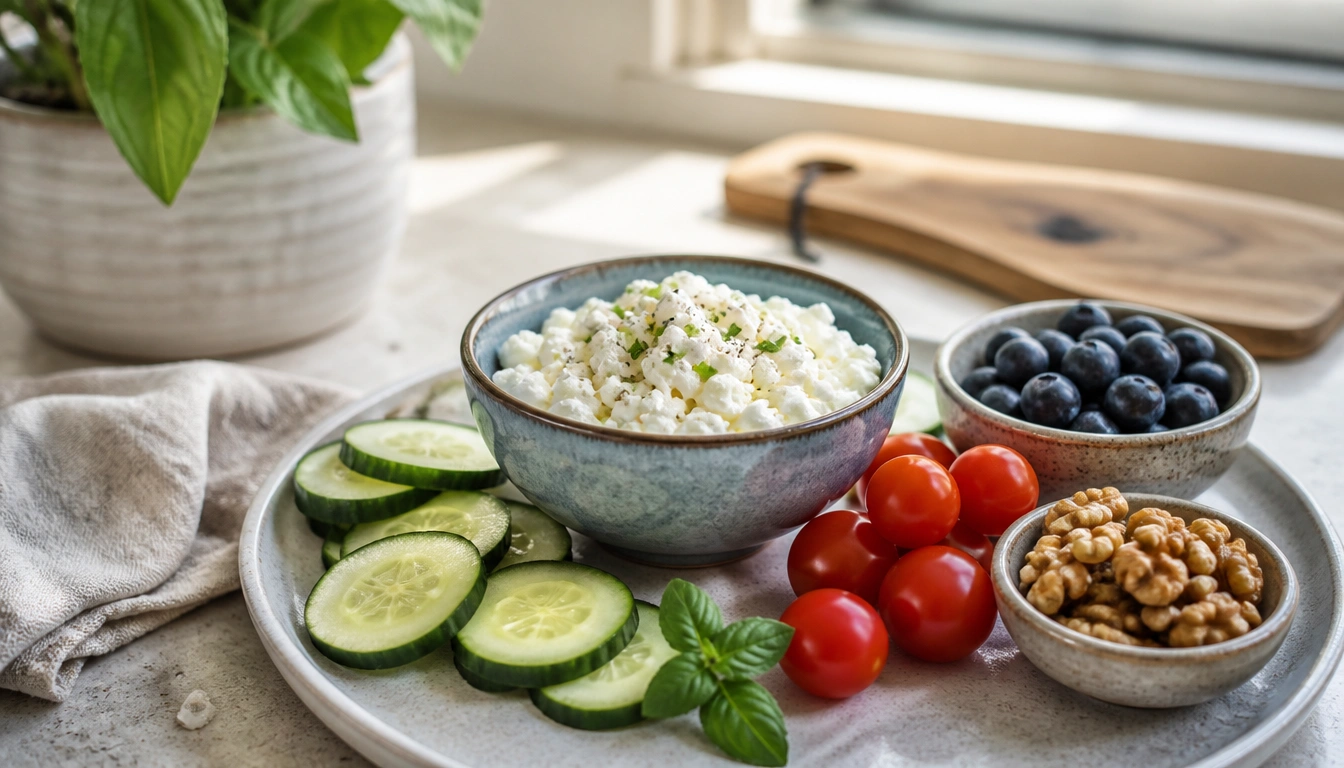
The best cottage cheese snack ideas for adults over 50 are balanced, low-effort combinations that add protein, fiber, and healthy fats. Cottage cheese can help support muscle maintenance and fullness because it is rich in slow-digesting casein protein, and it also contributes calcium for bone health. The most useful snacks are simple: savory bowls with vegetables, fruit-and-nut mixes, or softer options for people who need easier textures.
Key Takeaways
- Cottage cheese is a practical protein snack after 50 because its casein digests slowly, which can help with satiety between meals.
- Adults 51 and older often need more protein and calcium than they may get from a typical diet, so snacks can help fill the gap.
- Look for lower-sodium or lactose-free cottage cheese if blood pressure or lactose sensitivity is a concern.
- Pair cottage cheese with produce, seeds, nuts, or whole grains so the snack has fiber, healthy fats, and better staying power.
- Soft, spoonable cottage cheese snacks can work well for chewing challenges, but dysphagia guidance from a clinician should always come first.
Why cottage cheese is a smart snack choice after 50
Cottage cheese is popular for a reason: it is easy to use, relatively inexpensive, and naturally rich in protein. For adults over 50, that matters because protein needs often rise as muscle maintenance becomes a bigger priority. Expert guidance commonly suggests older adults aim higher than the basic protein minimum, especially if they want to preserve strength, mobility, and independence. A serving of cottage cheese can make a meaningful contribution without requiring a full meal.
Its protein is mostly casein, a slow-digesting milk protein. That slower digestion can help keep amino acids available for longer, which is one reason cottage cheese is often used as a filling snack. It is not a cure for age-related muscle loss, but it can be a useful food-first tool alongside regular activity and overall balanced eating.
Cottage cheese can also support bone health as part of an overall diet. It contains calcium and phosphorus, and adults 51 and older generally need more calcium than younger adults. Pairing cottage cheese with other calcium-rich foods, vitamin D sources, and a varied diet gives it more value than eating it on its own.
How to choose the right cottage cheese
Start with the label. Cottage cheese varies widely in fat, sodium, and texture, so the best choice depends on your health goals and preferences. Low-fat versions are common, but some people prefer full-fat cottage cheese for flavor and satiety. Either can fit into a healthy pattern; the better option is usually the one you will actually enjoy and use consistently.
Sodium is the main thing to watch. Some brands are quite salty, and that can matter for adults managing high blood pressure or fluid retention. If you eat cottage cheese often, choose a lower-sodium product when possible and compare labels instead of assuming all brands are similar. Flavored versions may also contain extra sodium or added sugar.
If lactose tends to bother you, look for lactose-free cottage cheese or test a small portion with a meal. Fresh cheeses usually contain more lactose than aged cheeses, so some sensitive adults notice bloating, gas, or loose stools. People who know they react to dairy should treat tolerance as individual, not automatic.
Choosing guide:
- For protein and fullness: choose the version you tolerate best and pair it with fiber-rich foods.
- For blood pressure: compare sodium per serving and favor lower-sodium options.
- For lactose sensitivity: try lactose-free cottage cheese or a very small test portion.
- For taste: plain cottage cheese is more flexible than sweetened or heavily flavored varieties.
Protein-friendly cottage cheese snack formulas for older adults
The most useful cottage cheese snack ideas are not just “more protein.” They combine protein with fiber, produce, or healthy fat so the snack feels more satisfying and supports steadier energy. That is especially helpful if you tend to snack because meals are delayed, appetite is smaller, or you want something that holds you until the next meal.
A practical formula is simple: cottage cheese plus one produce item and one optional add-on. Produce gives vitamins, minerals, color, and fiber. Nuts, seeds, olive oil, or avocado add healthy fat and can improve satiety. If you need a snack after exercise or between meals, this kind of combination is usually more useful than cottage cheese alone.
Think of cottage cheese as the protein base, not the whole snack. That keeps the meal pattern more balanced and makes it easier to use cottage cheese for bone and muscle support without relying on it as your only nutrition strategy.
Savory cottage cheese snack ideas for everyday eating
Savory snacks work well if you want something simple and not too sweet. They are also a good fit when you want to avoid a rapid rise and fall in energy that can happen with refined-carb snacks. These ideas are easy to scale up or down depending on appetite.
Try these combinations:
- Cucumber and herb bowl: cottage cheese with diced cucumber, dill, black pepper, and a drizzle of olive oil.
- Tomato and avocado cup: cottage cheese topped with chopped tomato, avocado, and a pinch of oregano.
- Seed crunch mix: cottage cheese with pumpkin seeds or sunflower seeds for crunch and extra minerals.
- Everything-style plate: cottage cheese with sliced radishes or bell pepper and a light sprinkle of seasoning.
- Smoked salmon option: cottage cheese with a small amount of salmon, lemon, and fresh herbs for a more substantial snack.
When sodium is a concern, rely more on lemon, vinegar, herbs, garlic powder, pepper, or seed mixes for flavor instead of adding salt. If you prefer a softer texture, finely dice the vegetables or choose tender produce such as ripe avocado.
Sweet cottage cheese snack ideas without a sugar crash
Sweet cottage cheese snacks can feel more satisfying than a plain dessert because the protein helps slow down how quickly the meal leaves you hungry again. The key is to choose naturally sweet ingredients instead of sugary toppings or syrups.
Good sweet pairings include:
- Berry bowl: cottage cheese with blueberries, raspberries, or strawberries and a few chopped walnuts.
- Apple cinnamon cup: cottage cheese with thinly sliced apple and cinnamon, or lightly warmed apples for a softer snack.
- Peach and flax mix: cottage cheese with sliced peach and ground flaxseed.
- Banana walnut option: a small amount of banana with cottage cheese and chopped walnuts for a creamier texture.
- Unsweetened cocoa twist: cottage cheese with cocoa powder, cinnamon, and a few berries if you want a more dessert-like flavor without added sugar.
If blood sugar control is part of your nutrition goal, keep the fruit portion moderate and pair it with nuts, seeds, or another fiber source. That combination usually works better than cottage cheese mixed with sweetened granola or fruit preserves.
Texture-friendly and easy-to-chew options
Cottage cheese is naturally soft, which makes it useful for adults who prefer easy-to-chew foods. Still, the texture can be improved further if chewing is tiring or if you want a smoother snack. The goal is comfort and safety, not forcing a particular texture.
For a softer snack, blend cottage cheese until creamy and then mix in mashed fruit such as banana, ripe peach, or berries. You can also stir in unsweetened applesauce, pumpkin puree, or a little nut butter for a smoother finish. These versions are gentle, filling, and easy to spoon.
If swallowing is difficult, texture matters more than convenience. Professional dysphagia guidance should override general snack advice, including recommendations about thickness, mixed textures, and bite size. If a clinician has advised a specific texture level, follow that plan rather than experimenting at home.
How to fit cottage cheese into a day of eating
Cottage cheese works best when it supports the rest of the day instead of replacing other meals. For some adults over 50, it can serve as a mid-morning snack. For others, it fits better in the afternoon, after a walk, or as a small evening snack if appetite is low at dinner.
If you already eat enough protein at meals, cottage cheese can be a light add-on rather than a large serving. If your meals are sometimes small, it can help fill gaps between breakfast, lunch, and dinner. The point is to use it strategically, not automatically.
For people watching sodium, read labels across the day. If lunch and dinner are already salty, choose a lower-sodium cottage cheese snack and keep the toppings fresh. If you are trying to boost protein, combine cottage cheese with another protein food only when it makes sense for your overall intake. More is not always better, especially when appetite, kidney health, or calorie needs are changing.
Easy timing ideas:
- Morning: cottage cheese with fruit when breakfast was light.
- Afternoon: cottage cheese with vegetables and seeds to bridge the gap to dinner.
- Evening: a small bowl of cottage cheese with berries or cinnamon if you want a light, high-protein option.
When cottage cheese may not be the right choice
Cottage cheese is useful for many adults over 50, but it is not the best fit for everyone. If you are lactose sensitive, a standard serving may cause bloating, cramping, or gas. In that case, lactose-free cottage cheese may work better, or you may need a different snack entirely. Tolerance can change with age, so it is worth paying attention to your own pattern rather than assuming dairy is the problem in every case.
People with chronic kidney disease should be cautious about using cottage cheese as a frequent protein snack without individualized guidance. Protein needs can differ widely in kidney disease, and the right amount depends on the stage of disease and the care plan from the medical team. A renal dietitian or clinician should guide regular use if kidney function is reduced.
Adults with swallowing problems should also be careful. Even soft foods can be risky if swallowing is not coordinated well, and the safest texture depends on the underlying issue. If choking, coughing, or food sticking happens often, get professional evaluation before making cottage cheese a regular choice.
For most other adults, cottage cheese is a practical food, not a miracle food. It works best when it fits your health needs, your taste preferences, and the rest of your daily eating pattern.
Frequently Asked Questions
How much cottage cheese can an older adult eat as a snack to support protein goals?
A common snack portion is about half a cup to one cup, depending on appetite and the rest of the day’s protein intake. The right amount is individual. If you are trying to increase protein, use cottage cheese as one part of the day rather than the only protein source.
What are the best savory cottage cheese snack combinations for older adults?
Good savory pairings include cucumber and herbs, tomato and avocado, radishes with seasoning, or a small amount of smoked salmon. These combinations add fiber, healthy fats, and flavor while keeping the snack simple and practical.
What are the best sweet cottage cheese snack ideas that avoid added sugar?
Fresh berries, sliced apple with cinnamon, peaches, banana in a small portion, or unsweetened cocoa are all good choices. Adding nuts or seeds can make the snack more satisfying and may help steady energy better than sweetened toppings.
Is cottage cheese a good snack for adults over 50 with lactose sensitivity?
Sometimes, but it depends on the person. Fresh cheese can contain enough lactose to trigger symptoms in sensitive adults. Lactose-free cottage cheese is often a better option, or you may need to choose a different snack if symptoms continue.
What should people with high blood pressure or kidney disease know before eating cottage cheese regularly?
Look closely at sodium if you have high blood pressure, since some brands are salty. If you have kidney disease, do not make cottage cheese a regular high-protein snack without personalized medical advice, because protein needs can be different for kidney health.
The Bottom Line
Cottage cheese can be one of the easiest high-protein snacks for adults over 50. It is especially useful when you pair it with vegetables, fruit, nuts, seeds, or other whole foods that add fiber and healthy fats. That makes the snack more satisfying and more useful for bone and muscle support.
Choose the version that matches your needs: lower sodium if blood pressure matters, lactose-free if dairy bothers you, and softer preparations if chewing is difficult. If you have kidney disease or swallowing problems, get individualized guidance before making cottage cheese a regular habit.
Medical disclaimer
Medical disclaimer: This content is for educational and informational purposes only and is not a substitute for professional medical advice, diagnosis, or treatment. Dietary needs and supplement suitability vary by individual.
Sources
- National Institutes of Health (NIH) — nih.gov. Accessed November 2026.
- U.S. Government / Health Authority — acl.gov. Accessed November 2026.
- Mayo Clinic — mayoclinic.org. Accessed November 2026.
