
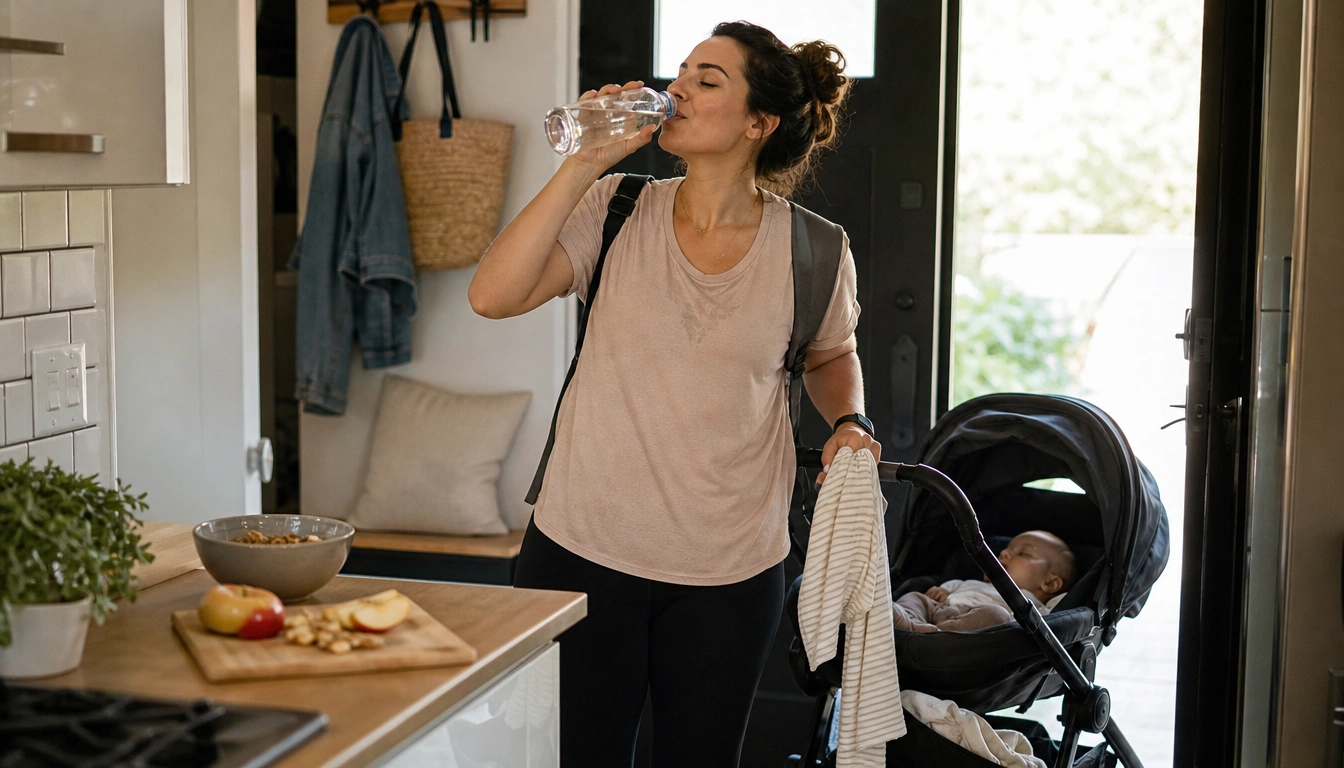
Right after a long walk, spend about 10 minutes gradually cooling down, drinking water, and eating a simple carbohydrate-plus-protein snack if you need one. Keep movement gentle, not intense: ease off your pace, do a few light stretches, and use slow breathing to shift out of workout mode. If you have postpartum pelvic heaviness, sharp pain, swelling, dizziness, chest discomfort, or unusual shortness of breath, stop and get medical advice.
Key Takeaways
- A short cooldown helps your heart rate, breathing, and muscles settle before you jump into parenting tasks.
- You do not need a complicated recovery plan; a few minutes of gentle mobility, water, and a simple snack is often enough.
- A food-first refuel can be as simple as yogurt, milk, toast with cheese, fruit with peanut butter, or another easy household combo.
- If you pushed a stroller, climbed hills, or carried a child, your calves, hips, and lower back may need a little more care.
- Postpartum parents should be especially cautious about pelvic heaviness, core weakness, and over-stretching.
- Sharp pain, swelling, dizziness, chest discomfort, or unusual breathlessness are not normal recovery symptoms and deserve medical attention.
Why a long walk can leave busy parents unusually stiff or wiped out
A long walk after a busy day can feel simple while you are moving, then suddenly leave you heavy-legged, tight through the hips, or mentally drained once you stop. That happens because walking is repetitive work: calves keep pushing you forward, hips and hamstrings keep stabilizing each step, and your body has been using energy stores for longer than a short errand walk. The National Health Service and the CDC both treat walking as valuable aerobic activity, but a longer session still deserves a brief recovery phase.
Parents often feel the effects more strongly because they rarely stop completely after exercise. You may be unstrapping a child, carrying groceries, lifting a toddler, or shifting straight into dinner and bedtime tasks. That abrupt change can make your muscles feel tighter and your nervous system feel less settled. A short reset after the walk helps your body move from exercise mode into family mode without carrying that “worked hard” feeling into the rest of the evening.
There is also a sleep connection. Physical activity can support better sleep overall, but if you end a long walk and immediately move into stress, noise, and decision-making, it can be harder to feel fully recovered later. The goal is not to create a perfect athlete routine. The goal is to reduce stiffness, restore energy, and keep the transition home as smooth as possible.
The parent-friendly recovery goal and a 10-minute routine at the door
The best recovery routine after a long walk for busy parents is short, predictable, and easy to do before childcare duties start. Think of it as a transition, not a workout. The sequence matters: cool down first, then refuel, then settle your nervous system. If you try to stretch hard or skip straight to chores, your body never gets the cue that the walk is over.
Minutes 1 to 3: cool down and gentle lower-body mobility. Slow your pace before you stop completely. If you are at the front door, take a few easy steps, march in place, or stand and breathe for a moment. Then do light mobility for the calves, hips, and hamstrings. A gentle calf stretch against a wall or stroller handle, a small hip-flexor lunge, or an easy hamstring reach can help reduce that tight, “locked up” feeling. Keep every stretch comfortable; the aim is a mild pull, not intensity.
Minutes 3 to 5: quick hydration and food-first refuel. Drink water first if you are thirsty or have been out in warm weather. Then choose something you already have at home that combines carbohydrate and protein. Good options include fruit with peanut butter, toast with cheese, yogurt with cereal, a banana with milk, or crackers with hummus and a boiled egg. According to clinical guidance summarized by the NIH and NHS, this kind of combination supports energy replacement and muscle repair after endurance activity.
Minutes 5 to 10: nervous-system reset. Sit down if you can. Drop your shoulders, unclench your jaw, and take slow breaths through your nose with a longer exhale than inhale. If you like, rest your hands on your ribs or belly to feel the breath slow down. This is not meditation homework; it is a practical signal to your body that the walk is finished and the next task is parenting, not exertion. Even a few quiet minutes can make the rest of the day feel less abrupt.
How pace, stroller walks, hills, and carrying kids change recovery needs
Not every long walk stresses the body in the same way. A flat, easy stroll is different from a brisk walk with hills, a stroller walk with extra resistance, or a walk that includes lifting a toddler in and out of the stroller. The harder the walk, the more likely you are to feel tight calves, tired hips, or a lower-back ache afterward.
If you pushed a heavy stroller, carried a child, or walked with a loaded bag, your posture may have shifted forward without you noticing. That often means your hip flexors, glutes, upper back, and grip muscles were working more than they would on a solo walk. In that case, your cooldown can stay short, but you may benefit from a little more mobility for the front of the hips, the calves, and the upper back after you get home.
Hills and brisk pace also matter because they raise effort even if the walk still feels “low impact.” If the walk left you breathing harder than usual, spend a little longer easing back to a normal pace before you start lifting or carrying children. Parents do not need to treat every long walk like a training session, but it helps to match recovery to effort instead of assuming all walks recover the same way.
If you notice repeated soreness after stroller walks, the fix is usually not more forceful stretching. It may be a mix of shorter strides, a less aggressive pace, better shoes, or a smaller dose of post-walk load at home. Small adjustments can matter more than trying to “push through” stiffness.
Postpartum considerations: when to be gentler after walking
Postpartum recovery changes how you should think about stretching and effort. If you are still healing after birth, your pelvic floor, abdominal wall, and joints may be more sensitive than they were before pregnancy. Extra flexibility does not always mean you should stretch harder. In postpartum bodies, the better question is whether the movement feels stable and controlled.
If you notice pelvic heaviness, leaking, core weakness, or a sense that your pelvis is not holding up well, scale back the walk next time and be gentler with stretching. Walking should not leave you feeling as if something is dropping, pulling, or bulging. That is a signal to reduce distance or intensity and consider evaluation by a clinician or pelvic health professional. The NHS and similar clinical sources advise paying attention to pain, pressure, and unusual discomfort rather than assuming it is just routine soreness.
For postpartum parents, the recovery routine should feel easy on the abdomen and pelvis. Favor calm breathing, upright posture, and very gentle mobility. Avoid forcing deep stretches or long holds if your joints feel loose or your core feels weak. If a stretch increases pelvic symptoms, skip it. The goal is recovery, not proving flexibility.
| If you feel this after the walk | Try this instead |
|---|---|
| Pelvic heaviness | Reduce distance next time, keep stretches very gentle, and rest upright for a few minutes |
| Core weakness or pressure | Use breathing and posture reset rather than deeper stretching |
| Joint discomfort | Shorten stride, slow down, and avoid forcing range of motion |
What soreness is normal versus when pain is a warning sign
Some muscle fatigue after a long walk is normal. You might feel tired calves, mild stiffness in the hips, or a general “I worked out” heaviness that shows up later in the day or the next morning. Delayed soreness can happen after unfamiliar distance, hills, faster pace, or walking more than usual. That kind of soreness should feel broad and manageable, not sharp or alarming.
Warning signs are different. Stop walking and seek medical advice if you have sharp pain, pain that worsens instead of easing, obvious swelling, dizziness, chest discomfort, or unusual shortness of breath. Those symptoms are not ordinary recovery signals. The same is true if a joint feels unstable, if one side is much more painful than the other, or if you cannot carry out normal parenting tasks because of the discomfort.
If you are unsure whether something is normal, err on the side of caution. A little muscle tightness after a long walk is common; a body symptom that feels off is worth attention. Recovery should make you feel more settled over the next hour, not progressively worse.
How to make recovery habits easier on busy days
Busy parents usually do better with a recovery routine that is almost automatic. The more steps you need to remember, the less likely you are to do them when a toddler is waiting at the door. So build the routine around things already nearby: water in the kitchen, a stool or wall for stretching, and snack foods you routinely keep on hand.
One helpful approach is to prepare a “post-walk shelf” in the fridge or pantry with easy options such as yogurt, cheese, milk, hummus, fruit, crackers, bread, or nut butter. That way, you are not deciding from scratch when you are tired. You can also pair recovery with an existing habit: change shoes, drink water, eat something, then start childcare tasks. Linking the routine to a fixed trigger makes it easier to repeat.
If quiet time is impossible, shorten the nervous-system reset instead of skipping it entirely. Even two slow breaths while standing at the counter can help. And if you know the walk will be longer than usual, plan for a slightly larger snack afterward so you are less likely to crash later. The aim is not perfection; it is making recovery realistic enough to happen on an ordinary weekday.
When to seek medical advice after walking if symptoms feel off
Seek medical advice if your symptoms are more than routine soreness or if they do not settle with rest. A healthcare professional should evaluate pain that is sharp, swelling that is new or one-sided, dizziness, chest discomfort, or shortness of breath that feels unusual for you. Those symptoms can point to something beyond exercise recovery.
Postpartum parents should also ask for help if walking brings on pelvic pressure, worsening pelvic pain, or a feeling that the core or pelvic floor is not supporting well. If your symptoms are getting worse over time, return more quickly than expected, or stop you from caring for your child normally, that is another reason to check in. Clinical guidance from NHS sources and the NIH supports taking symptoms seriously rather than trying to stretch through them.
It is reasonable to have minor fatigue after a long walk. It is not reasonable to ignore symptoms that feel out of proportion, unusual, or persistent. Recovery should help you function better, not leave you worried about what your body is telling you.
Frequently Asked Questions
How long should I cool down after a long walk?
For most busy parents, a few minutes is enough. Aim for a gradual slowdown and brief gentle mobility rather than stopping abruptly. If the walk was brisk, hilly, or stroller-heavy, give yourself a little extra time before jumping into lifting, carrying, or housework.
What should I eat or drink after a long walk?
Start with water, then choose an easy snack that combines carbohydrate and protein if you need one. Good household options include yogurt, milk, toast with cheese, fruit with nut butter, hummus with crackers, or an egg with fruit. Keep it simple and practical.
Do I need stretching after a long walk, or can I skip it?
You can keep it brief. A short cooldown with gentle stretching is helpful, but you do not need a long routine. If you are tired, do a few light movements for the calves, hips, and hamstrings and skip anything that feels forceful or uncomfortable.
How can I recover after a long walk when I have a toddler to care for immediately?
Use a 10-minute transition routine at the door: slow down, do a few gentle stretches, drink water, grab a quick snack if needed, and take a few slow breaths before you fully switch into parenting mode. The routine should fit around your child, not compete with them.
What signs after a walk mean I should stop and get medical advice?
Get medical advice for sharp or worsening pain, new swelling, dizziness, chest discomfort, or unusual shortness of breath. If you are postpartum, also pay attention to pelvic heaviness, leaking, or a feeling that your core is not supporting you well.
The Bottom Line
A long walk does not need a long recovery plan. For busy parents, the most useful approach is a brief cooldown, a little water, an easy food-first refuel if needed, and a short nervous-system reset before the day’s next demands take over.
Adjust the routine to the kind of walk you had. Stroller pushes, hills, brisk pace, carrying kids, and postpartum recovery can all change how much mobility, rest, and caution you need. If symptoms feel sharp, unusual, or worsening, stop and get medical advice instead of trying to stretch them away.
If you make the routine repeatable, it becomes easier to recover well without losing time to parenting tasks. That is usually the real win: less stiffness later, steadier energy, and a smoother handoff from exercise to family life.
Medical disclaimer
Medical disclaimer: This content is for educational and informational purposes only and is not a substitute for professional medical advice, diagnosis, or treatment. Dietary needs and supplement suitability vary by individual.
Sources
- National Health Service (NHS) — www.nhs.uk. Accessed November 2026.
- National Institutes of Health (NIH) — nih.gov. Accessed November 2026.
- National Health Service (NHS) — newcastle-hospitals.nhs.uk. Accessed November 2026.
