
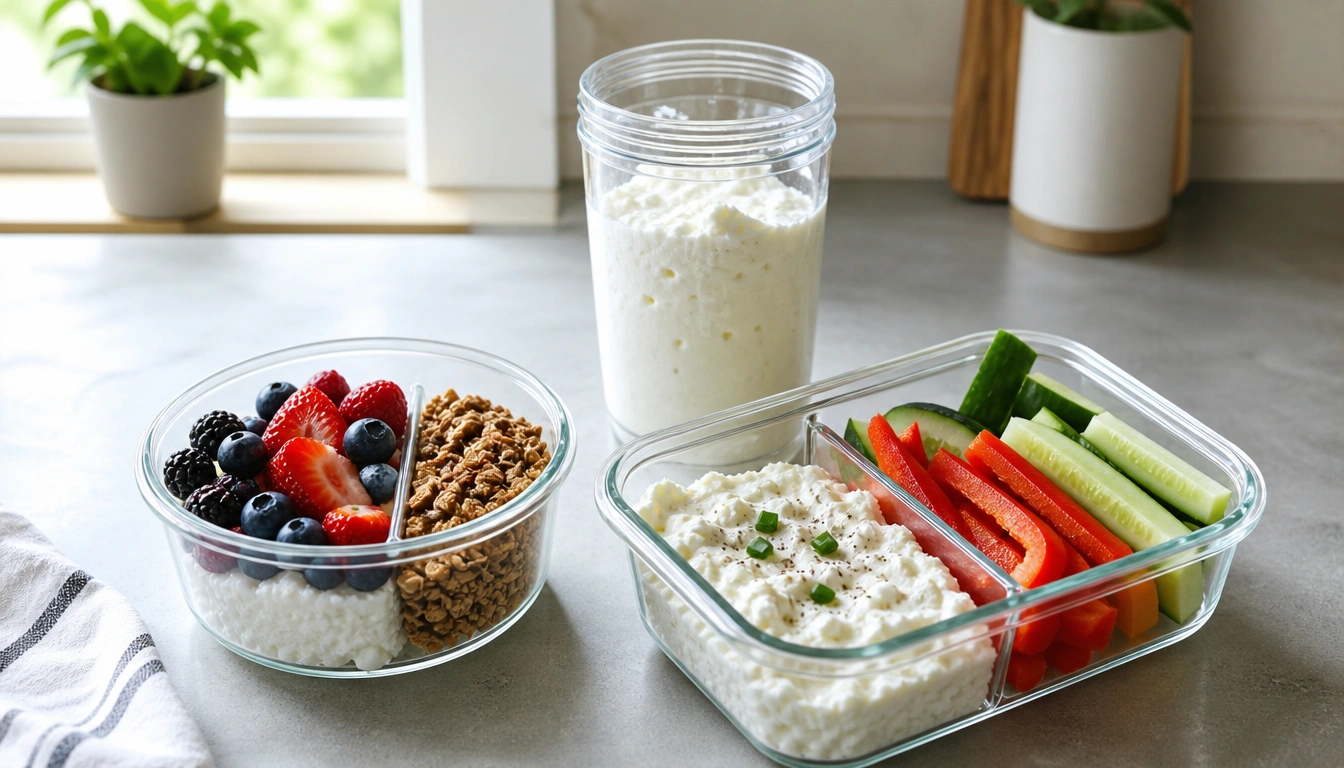
The easiest cottage cheese snack ideas for meal-prep beginners are simple no-cook bowls, dips, and fruit pairings that you assemble ahead of time and finish just before eating. If you do not like the curd texture, blending cottage cheese for about 30 seconds makes it smooth and creamy. Use clean utensils, keep it refrigerated, and plan to finish opened cottage cheese within about 4 to 5 days.
Key Takeaways
- Cottage cheese works well for beginners because it is filling, portable, and easy to pair with fruit, vegetables, nuts, crackers, or seasoning.
- Blending cottage cheese briefly can turn the curds into a smooth base that feels more like ricotta or yogurt.
- For better meal prep, store wet and dry ingredients separately so toppings stay crunchy and snacks do not get watery.
- Choose low-sodium or no-salt-added cottage cheese if you are watching blood pressure or overall sodium intake.
- People with a milk protein allergy should avoid cottage cheese; some people with lactose intolerance may tolerate it better, especially in smaller amounts.
Why cottage cheese works so well for beginner snack prep
Cottage cheese is one of the simplest cottage cheese snack ideas for meal-prep beginners because it already comes ready to eat. There is no cooking step unless you want one, and that makes it useful for busy weeks when you want a snack that feels more substantial than a handful of crackers. It is also easy to portion into small containers, which helps you build a routine without spending much time in the kitchen.
Another reason it fits meal prep is its protein content. Cottage cheese provides a satisfying mix of protein, moisture, and mild flavor, so it can work as a snack base instead of a one-note dairy cup. According to the USDA nutrition database, a half-cup serving of low-fat cottage cheese offers a meaningful amount of protein for a relatively small calorie count. That makes it practical for readers who want a snack that holds them over between meals.
The texture is the part that turns many beginners away, but it is also the easiest thing to customize. If you like the curds, you can leave them alone. If you do not, a quick blend gives you a smoother, creamier base that pairs well with fruit, herbs, or seasoning.
Choose the right tub before you prep anything
A good first move is to keep shopping simple. Start with a plain cottage cheese tub rather than a flavored cup, because plain gives you more flexibility for both sweet and savory snacks. If you are new to the ingredient, a 16-ounce tub is a smart test size. It is large enough to try several snack combinations but small enough that you are less likely to waste food if the habit does not stick. If you use it regularly, larger tubs usually make more sense for cost and convenience.
Fat level is mostly a matter of preference. Nonfat, 2%, and whole-milk versions can all work in snack prep. The main difference for most beginners is taste and texture, so choose the version you will actually eat. If you are watching sodium, look for low-sodium or no-salt-added cottage cheese when available. That matters for anyone trying to keep daily sodium intake in check, especially if blood pressure is a concern.
If you are deciding between plain and flavored varieties, plain is usually the better base for meal prep. It gives you control over sweetness, saltiness, and texture. Flavored versions can be convenient, but they may also add extra sugar or make the snack less flexible across the week.
Easy sweet cottage cheese snack ideas
The sweet route is often the easiest starting point because fruit softens the tang of cottage cheese and makes the snack feel familiar. The trick is to keep the toppings separate until you are ready to eat. That preserves texture and helps fruit stay fresh.
Berry crunch cup
Use cottage cheese as the base, then add strawberries, blueberries, or raspberries in a separate container. Pack a small portion of granola or chopped nuts on the side. When you are ready to eat, spoon the fruit on top and add the crunchy topping last. This gives you a snack that feels layered without becoming soggy.
Peach or pineapple bowl
Pair cottage cheese with sliced peaches, diced mango, or drained pineapple. These fruits work well because they bring enough sweetness to balance the dairy flavor. If you are using canned fruit, drain it well so the bowl does not turn watery. For extra texture, add a sprinkle of chia seeds or sunflower seeds just before eating.
Apple-cinnamon cup
Mix cottage cheese with diced apple, cinnamon, and a small handful of chopped walnuts or pecans. This version is especially useful in lunch boxes because it holds up well if you keep the apple pieces separate until snack time. If you want a smoother texture, blend the cottage cheese first so it feels more like a creamy dip for the fruit.
For sweet snacks, portion the dairy into one container and the fruit or crunchy toppings into another. That tiny extra step is what keeps the snack from turning mushy.
Easy savory cottage cheese snack ideas
Savory snacks work especially well for readers who do not want something sugary between meals. Cottage cheese can take on herbs, spice blends, and vegetables very easily. You do not need to cook anything to make these work.
Everything bagel veggie dip
Blend cottage cheese for a smoother dip, then stir in everything bagel seasoning and black pepper. Pack cucumber slices, bell pepper strips, or baby carrots separately. This is one of the best beginner snack ideas because the ingredients are familiar and the prep is fast.
Cucumber and dill bowl
Spoon cottage cheese into a container and top it with chopped cucumber, dill, and a little cracked pepper. If you want more flavor, add a squeeze of lemon just before eating. Keep the cucumber in a separate compartment if you are prepping several days ahead, since watery vegetables can loosen the texture.
Tomato-herb snack box
Combine cottage cheese with halved cherry tomatoes, basil, and a pinch of salt-free seasoning or dried oregano. Add whole-grain crackers on the side if you want more staying power. This snack works well for work or school because it tastes fresh without requiring a stove.
Avocado and pepper cup
Pair cottage cheese with diced avocado and sliced pepper, then finish with chili flakes or a squeeze of lime. Avocado adds creaminess, which can help people who are not used to the curd texture. If you are prepping ahead, add the avocado close to eating time so it stays fresher and more appealing.
How to meal prep without watery or soggy snacks
The easiest meal-prep system is the container method: keep the cottage cheese in one section and wet or crunchy add-ins in another. That way the snack stays balanced when you finally open it. A divided container is useful, but two small containers also work if that is what you already own.
Think in layers. Put cottage cheese in the main compartment, then store fruit, chopped vegetables, crackers, granola, nuts, or seeds separately. If you like blended cottage cheese, store the blended base the same way; blending does not change the need to keep crunchy toppings dry until snack time. This matters most for work or school snacks, because texture breakdown happens quickly once moisture and crunch mix.
If you are building several snacks at once, portion them all before adding toppings. That helps prevent overfilling and makes it easier to grab one container per day. For the best texture, add ingredients like granola, toasted nuts, and crackers right before eating. Fresh fruit can usually wait a little longer, but juicy fruit and tomatoes are still better kept separate until you are ready.
Safety and freshness basics you should not skip
Cottage cheese is a fresh dairy food, so the food-safety rules matter just as much as the recipe ideas. Use clean spoons and containers every time you scoop from the tub. Do not eat directly from the container if you plan to store the rest for later, because that can introduce bacteria and shorten shelf life.
Keep cottage cheese refrigerated promptly after opening and return it to the fridge after each use. For meal prep, plan to finish opened cottage cheese within about 4 to 5 days. If it smells sour in an unusual way, shows mold, changes color, or develops an off texture, discard it. When dairy has been sitting out at room temperature for too long, it is safer to throw it away than to try to rescue it.
People with a milk protein allergy should avoid cottage cheese altogether. That is different from lactose intolerance. Some people who are lactose intolerant may tolerate cottage cheese better than fluid milk because it is lower in lactose than milk, but tolerance varies. If dairy usually bothers you, start cautiously or use a lactose-free option if available. People with chronic kidney disease or other conditions that affect protein or mineral intake should follow individualized medical advice.
Ways to customize cottage cheese for your taste and budget
If you want the snack to stick, make the texture and flavor fit your habits instead of forcing a formula. For a smoother base, blend cottage cheese for about 30 seconds. That short blend is enough to make it feel creamy and more familiar to beginners who dislike curds, while still keeping the snack simple. You can then flavor it with cinnamon, vanilla extract, lemon zest, herbs, or seasoning.
For sweet snacks, swap in whatever fruit is in season or on sale. Frozen berries that thaw in the fridge can work too, though they are best added when you plan to eat the snack soon. For savory snacks, use whatever crunchy vegetables you already buy for lunches, such as carrots, celery, cucumber, or peppers. If you want more staying power, add nuts, seeds, or whole-grain crackers in a separate compartment.
Budget-wise, cottage cheese is flexible because it can stand in for more expensive snack ingredients. A tub plus a few pantry toppings can create several different snacks across the week. If you are trying to keep costs down, choose one sweet formula and one savory formula rather than buying many specialty add-ins.
A quick way to choose the right snack for the day
If you want something refreshing, choose a sweet fruit bowl. If you want something more lunch-like, choose a savory dip or veggie cup. If texture is your main issue, blend the cottage cheese first. If you already like curds, keep it plain and use simple toppings instead of overcomplicating the snack.
For work or school, single-serve containers with separate add-ins are usually the best choice. For home use, batch-prepped tubs with toppings ready in the fridge can save time. Once you find one or two combinations you actually enjoy, repeat them often. That is usually the easiest way for beginners to turn cottage cheese into a reliable snack routine.
Frequently Asked Questions
How long does opened cottage cheese last in the fridge for meal prep?
Plan to finish opened cottage cheese within about 4 to 5 days if it has been refrigerated properly and handled with clean utensils. If it smells off, changes color, or shows mold, discard it sooner.
What are the best sweet and savory toppings for cottage cheese snacks?
For sweet snacks, fruit, cinnamon, chia seeds, and a small amount of granola or nuts work well. For savory snacks, cucumber, tomatoes, herbs, black pepper, everything bagel seasoning, and vegetable sticks are easy options.
How can I make cottage cheese smoother if I do not like the curd texture?
Blend it for about 30 seconds until smooth. That creates a creamier texture closer to ricotta or yogurt and makes it easier to pair with fruit, herbs, or seasonings.
Is cottage cheese a good high-protein snack for weight management or satiety?
It can be a useful snack for satiety because it is protein-rich and easy to portion. Many people find it filling between meals, especially when paired with fiber-rich fruit or vegetables.
What should I know about sodium, lactose, or food safety before meal-prepping cottage cheese snacks?
Look for low-sodium or no-salt-added versions if you are watching sodium intake. People with milk protein allergy should avoid cottage cheese, while some people with lactose intolerance may tolerate it better. Keep it refrigerated, use clean utensils, and discard it if it looks or smells wrong.
The Bottom Line
Cottage cheese is an easy place to start if you want a high-protein snack without cooking. The simplest wins are plain bowls, fruit cups, and veggie dip containers built with separate toppings so the texture stays pleasant until you eat.
If you dislike curds, blend the cottage cheese first. If you are watching sodium, shop for lower-sodium options. If you are meal-prepping for the week, keep the safety basics in mind: clean utensils, refrigeration, and a 4- to 5-day window after opening.
Medical disclaimer
Medical disclaimer: This content is for educational and informational purposes only and is not a substitute for professional medical advice, diagnosis, or treatment. Dietary needs and supplement suitability vary by individual.
Sources
- Academic Research Institution — columbia.edu. Accessed November 2026.
- Academic Research Institution — harvard.edu. Accessed November 2026.
- Health & Clinical Editorial — webmd.com. Accessed November 2026.
- health.clevelandclinic.org — clevelandclinic.org. Accessed November 2026.
