
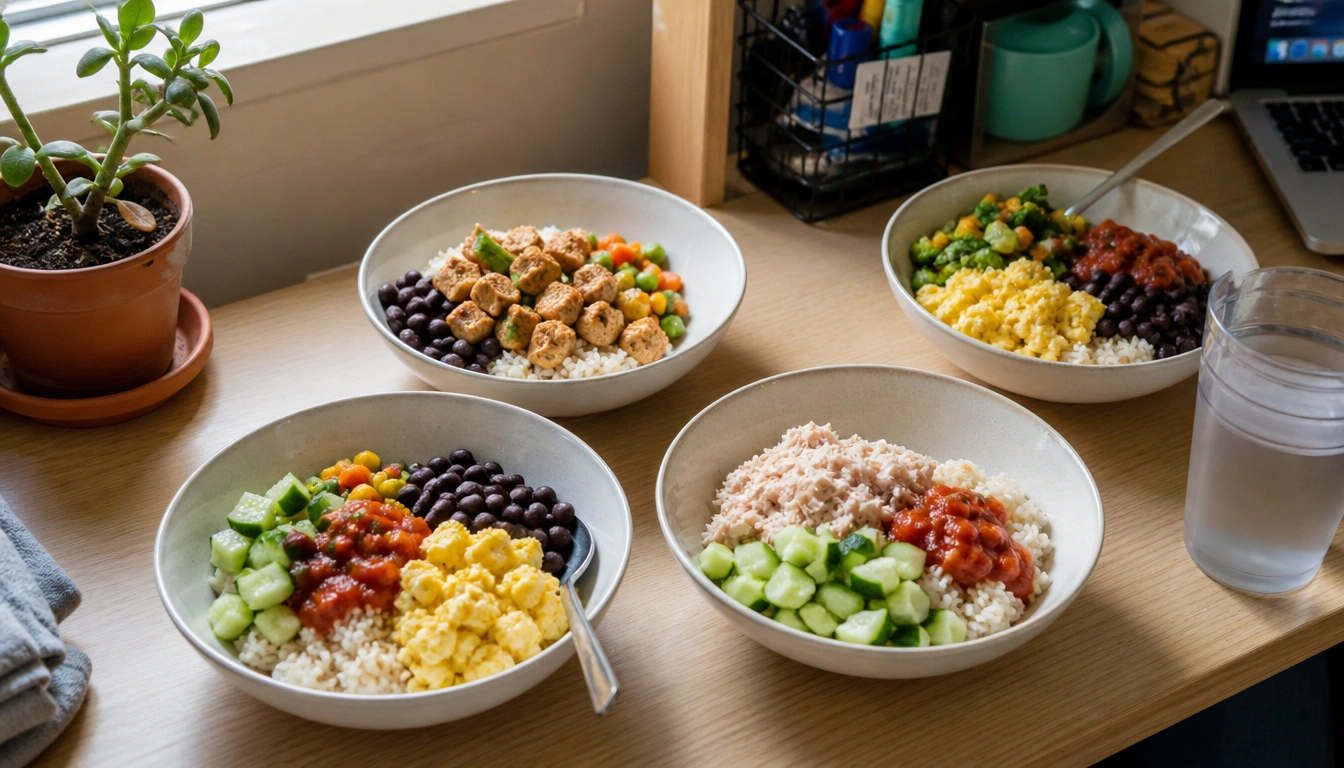
A cheap, filling rice bowl starts with a simple formula: use rice or another grain for energy, add a protein source, pile on vegetables, and finish with a small amount of healthy fat or a flavorful sauce. For college students, the easiest versions rely on microwave rice, canned beans or tuna, frozen vegetables, eggs, tofu, and leftover cooked rice handled safely.
Key Takeaways
- Use a plate-method approach: about half vegetables, one quarter protein, and one quarter grains for a balanced bowl.
- Frozen and canned fruits and vegetables can be practical, budget-friendly choices when fresh produce is hard to store.
- Dorm-friendly proteins include eggs, beans, lentils, tofu, edamame, canned fish, Greek yogurt, and rotisserie chicken.
- Higher-activity days can use more rice for extra carbohydrate energy; lower-activity days usually work better with more vegetables and protein.
- Cooked rice needs safe cooling, refrigeration, and thorough reheating to reduce foodborne illness risk.
- Simple flavor boosters like salsa, citrus, vinegar, herbs, sesame seeds, and a little oil can improve taste without heavy sauces.
How to build a balanced rice bowl with the plate method
A balanced rice bowl is easier to make when you stop thinking of rice as the whole meal and start treating it as one part of the plate. Public health models such as USDA MyPlate and the Harvard Healthy Eating Plate both emphasize proportion, variety, and color. For a student meal, that usually means a bowl built around three parts: vegetables, protein, and grains, with a small amount of fat or sauce for flavor.
A good visual guide is simple. Fill about half the bowl with vegetables or fruit, about a quarter with protein, and about a quarter with grains. That structure helps the meal feel filling without becoming overly heavy on refined carbs alone. It also helps stretch budget ingredients. A scoop of rice becomes more satisfying when it sits under beans, eggs, chicken, tofu, or fish plus a generous layer of vegetables.
This approach is flexible enough for a dorm room, shared kitchen, or meal prep container. You do not need perfect ingredients. A bowl with rice, frozen broccoli, scrambled eggs, and sesame seeds is still a balanced meal. So is brown rice with black beans, salsa, and shredded cabbage. The goal is a steady mix of energy, fiber, protein, and produce, not a complicated recipe.
Best rice and grain bases for students
Rice is popular for good reasons: it is inexpensive, easy to portion, and pairs with almost anything. White rice is usually the fastest and cheapest option, and many students prefer it because it cooks quickly and reheats well. Brown rice brings more fiber and a nuttier texture, which can help some people stay full longer. Quinoa blends can add variety and a little extra protein, though they are often pricier than plain rice.
If you have limited time or only a microwave, microwave rice pouches can be worth the extra cost. They are especially useful on busy days, during exam week, or when you do not have a pot and stove available. Plain instant grains also work well because they reduce cleanup and prevent food waste when you need a single serving.
The best choice depends on your schedule and appetite. On days with class, work, and lots of walking across campus, a more carb-forward bowl can be useful. On quieter days, a smaller grain portion with more vegetables and protein may feel better. Students trying to save money can also mix grains: half white rice and half brown rice, or rice with a little quinoa, can stretch the budget while changing the texture.
Dorm-friendly protein options that actually work
Protein matters because it helps a rice bowl feel like a meal instead of a side dish. For students, the most realistic options are the ones that are cheap, shelf-stable, or easy to prepare with minimal equipment. Eggs are a strong choice because they cook quickly in a pan, pot, or even a microwave-safe container if your housing rules allow it. Canned tuna, salmon, sardines, and chicken can also be fast additions.
Plant-based options are just as workable. Canned beans, lentils, chickpeas, tofu, tempeh, and edamame are all easy to pair with rice. Greek yogurt can add creaminess in savory bowls, especially when mixed with herbs, lemon, or garlic. Rotisserie chicken from the grocery store is another smart option when you want several meals from one purchase.
If you are choosing among budget proteins, think about storage first. Canned fish and beans last well in a small dorm fridge or pantry. Tofu and yogurt need refrigeration but are still manageable if you plan to use them within a few days. For a more filling bowl, combine two protein sources, such as beans plus egg, or tofu plus edamame. That can improve both texture and satiety without making the meal expensive.
Vegetable shortcuts that save time and money
Vegetables make rice bowls more balanced, but they do not have to be fresh, perfectly crisp, or prepped from scratch. Frozen vegetables are one of the most practical student options because they are usually affordable, already chopped, and easy to store. Frozen broccoli, mixed vegetables, spinach, stir-fry blends, peas, and cauliflower all work well in bowls. They can be microwaved, sautéed, or stirred into hot rice.
Canned vegetables can also help when storage is tight. Look for lower-sodium versions when possible, then rinse them if needed. Corn, beans, carrots, and tomatoes can all fit into different rice bowl styles. Frozen and canned fruits and vegetables are not second-best choices; they are often just more realistic for students who do not have much time, space, or money.
Fresh produce still has a place, especially when you want crunch or bright flavor. Pre-washed greens, bagged slaw mix, cucumbers, baby carrots, scallions, and cherry tomatoes are student-friendly because they require little chopping and usually last longer than delicate produce. The easiest strategy is to mix methods: use frozen vegetables for the base, then add a handful of fresh or pre-cut produce on top for texture.
Flavor boosters that add nutrition without heavy sauces
A rice bowl can stay interesting without leaning on large amounts of creamy dressing or sugary sauce. Simple flavor boosters do a lot of work. Salsa adds acidity, tomatoes, and onion. Lemon or lime juice brightens beans, fish, or chicken. Vinegar, especially rice vinegar or apple cider vinegar, can sharpen a bowl that tastes flat. Herbs, garlic, ginger, chili flakes, and black pepper also help.
Healthy fats matter too, but a little goes a long way. A drizzle of olive oil, a few avocado slices, sesame seeds, or a spoonful of peanut butter or tahini can improve texture and help the meal feel more satisfying. These ingredients can also help the body absorb fat-soluble vitamins from vegetables.
For students, the best sauces are the ones you can use in small amounts and keep on hand easily. Low-sodium soy sauce, hot sauce, pesto, hummus thinned with water, or a quick mix of yogurt and seasoning can work well. The practical aim is flavor without turning the bowl into a sodium-heavy meal that overwhelms the other ingredients.
Three practical rice bowl templates for busy weeks
A template makes it easier to eat well when your schedule is unpredictable. The first option is a no-cook bowl. Start with microwave rice, then add canned tuna or chickpeas, pre-washed spinach, cherry tomatoes, cucumber, and a little olive oil or lemon. This is useful when you only have a microwave and a mini-fridge.
The second option is a budget bowl. Use batch-cooked rice, black beans, frozen corn, shredded cabbage or coleslaw mix, salsa, and a fried or boiled egg if you have time. This version is inexpensive, filling, and easy to scale up for more than one meal. It also uses ingredients that can be bought in small amounts or chosen from store brands.
The third option is a quick stir-fry bowl. Warm rice, frozen mixed vegetables, and tofu, chicken, or eggs in a pan or microwave-safe dish. Finish with soy sauce, sesame oil, garlic, or chili sauce. If you batch-cook rice, store it in shallow containers so it cools quickly, then portion it into bowls with different toppings across the week. That way one base turns into multiple meals without boredom.
When to adjust the bowl for athletes, vegan students, or lower-appetite days
Not every student needs the same bowl every day. Students with higher activity levels, especially athletes, often need more carbohydrate and overall calories to support training and recovery. For them, a larger portion of rice, extra beans, or an added second grain can make sense. A more substantial bowl can also be useful on days with long practices, walks across campus, or back-to-back classes.
Students with lower activity levels, or anyone who simply feels better with a lighter meal, may prefer the opposite balance: more vegetables and protein, less rice. That can help the bowl feel filling without becoming too heavy. The same idea applies if you are studying late and do not want a meal that makes you sluggish.
Vegan and vegetarian students can still make rice bowls complete and satisfying by combining legumes, tofu, edamame, nuts, seeds, and grains across the day. A single bowl does not have to do everything on its own, but it should include enough protein and fiber to keep you full. For lower-appetite days, smaller portions in a more concentrated bowl can be easier to finish than a giant container of food.
Rice bowl food safety and reheating basics
Rice bowls are practical only if leftovers are handled correctly. Cooked rice can support Bacillus cereus growth if it sits out too long at room temperature. That is why food safety agencies such as the FDA and CDC stress quick cooling and prompt refrigeration. The safest routine is to cool rice quickly, store it in shallow containers, and put it in the refrigerator within about an hour of cooking.
Once stored, cooked rice should be eaten within 3 to 4 days. Reheat it until it is steaming hot throughout, not just warm on the edges. If you are using a microwave, add a splash of water and cover the container loosely so the rice heats more evenly. Stir midway through if needed. Avoid leaving rice out on your desk or in a backpack for hours between classes.
These same rules matter for mixed bowls, especially when they include eggs, meat, or dairy. Keep cold toppings cold and hot components hot. If a bowl has been sitting out too long, do not try to rescue it with extra sauce. For students who batch-cook, the easiest safe pattern is to portion rice into small containers, chill it quickly, and reheat only what you plan to eat right away.
Frequently Asked Questions
What is the easiest formula for building a balanced rice bowl?
Use about half vegetables, one quarter protein, and one quarter rice or another grain. Then add a small amount of healthy fat or sauce for flavor. That simple structure works with fresh, frozen, canned, or leftover ingredients.
Which rice and grain options are best for steady energy and budget cooking?
Brown rice, white rice, and rice-quinoa blends can all work. Brown rice adds more fiber, while white rice is often cheaper and faster. Microwave pouches are useful when time or equipment is limited, even if they cost more per serving.
What are dorm-friendly protein choices for rice bowls?
Eggs, canned beans, lentils, tofu, edamame, canned tuna or salmon, Greek yogurt, and rotisserie chicken are all realistic options. Choose the ones that match your fridge space, budget, and cooking access.
How can I make rice bowls healthier without spending more money?
Use more vegetables, choose store-brand frozen or canned produce, and rely on simple toppings like salsa, lemon, vinegar, herbs, or a small amount of oil. Beans, eggs, and tofu are often cheaper protein choices than takeout or deli foods.
What are some no-cook or minimal-cook rice bowl combinations for students?
Try microwave rice with canned tuna, cucumber, and spinach; rice with black beans, salsa, and coleslaw mix; or rice with frozen vegetables and tofu. These combinations work well with a microwave, mini-fridge, and basic pantry staples.
The Bottom Line
A balanced rice bowl is one of the easiest ways for college students to eat well on a budget. Use rice as the base, then build around vegetables, protein, and a little healthy fat or flavor. That formula is flexible enough for dorm life, meal prep, and last-minute meals.
Frozen and canned produce, shelf-stable proteins, and microwave rice can all fit into a practical student routine. The most useful bowls are the ones you can repeat without getting bored and without needing special equipment.
If you batch-cook rice, store it safely and reheat it thoroughly. That small step makes the whole habit more useful and much safer over the school week.
Medical disclaimer
Medical disclaimer: This content is for educational and informational purposes only and is not a substitute for professional medical advice, diagnosis, or treatment. Dietary needs and supplement suitability vary by individual.
Sources
- Centers for Disease Control and Prevention (CDC) — cdc.gov. Accessed November 2026.
- U.S. Food and Drug Administration (FDA) — fda.gov. Accessed November 2026.
- National Health Service (NHS) — cuh.nhs.uk. Accessed November 2026.
- Academic Research Institution — harvard.edu. Accessed November 2026.
