
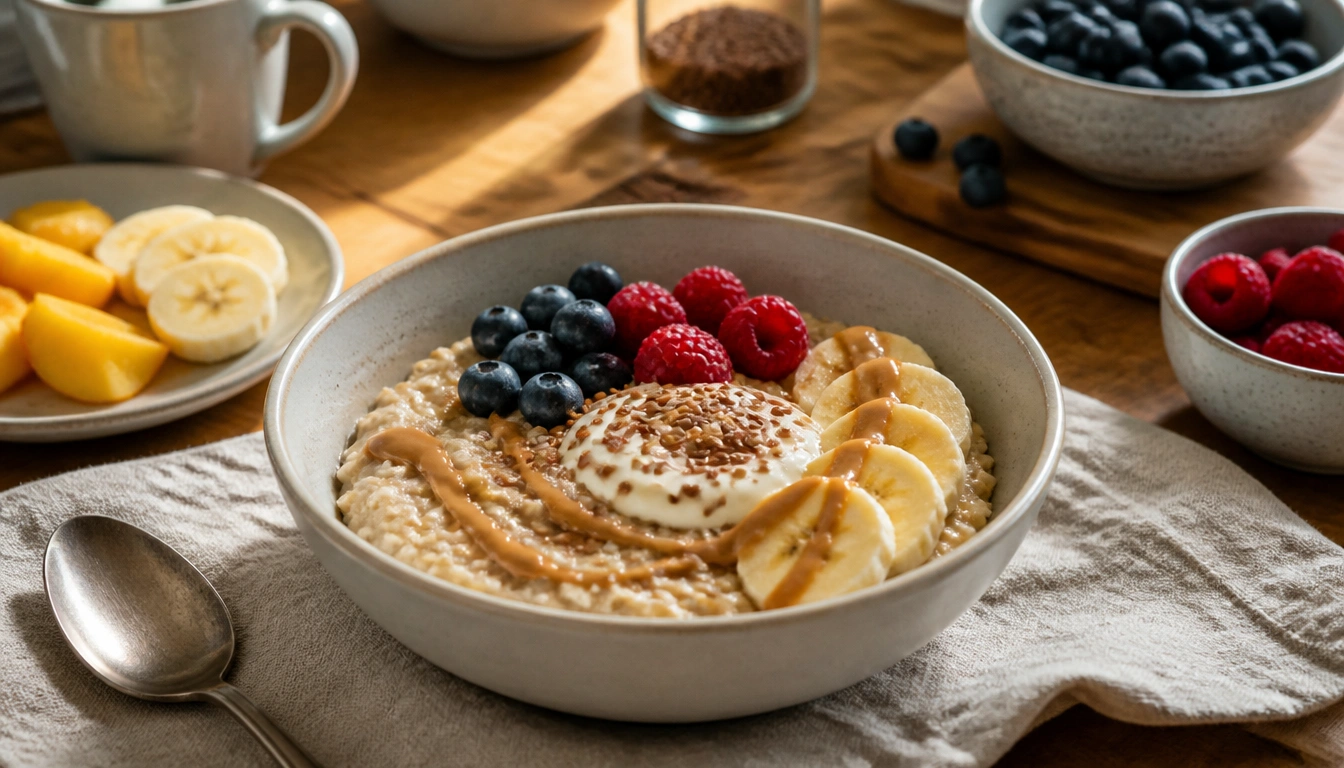
The best foods to add to oatmeal after age 50 are protein-rich foods, soft or ground healthy fats, and fruit that adds fiber and natural sweetness without much added sugar. Good options include Greek yogurt, egg whites, protein powder, collagen peptides, ground flaxseed, chia, hemp hearts, nut butter, berries, stewed apples or pears, and warm spices. The most helpful bowl is one that supports muscle, heart health, digestion, and steady blood sugar without becoming hard to chew or too heavy in calories.
Key Takeaways
- Plain oatmeal is a good base, but after 50 it is usually better when paired with protein and healthy fat for muscle support, fullness, and steadier blood sugar.
- Greek yogurt, egg whites, protein powder, and collagen peptides are practical ways to raise protein without making breakfast much larger.
- Ground flax, chia, hemp hearts, walnuts, almonds, pecans, and nut butter add healthy fats, but portions matter because they are calorie-dense.
- Berries, apples, pears, cinnamon, nutmeg, and cardamom can improve flavor and fiber without relying on sugar.
- If chewing is difficult, use softer toppings such as nut butter, ground seeds, or stewed fruit instead of hard nuts or dry add-ons.
- Adults with kidney disease or medication-timing concerns should get personalized advice before making a very high-fiber or mineral-heavy oatmeal routine.
Why oatmeal works well after 50
Oatmeal is a strong breakfast base for adults over 50 because it is easy to customize, usually soft enough to eat comfortably, and naturally rich in beta-glucan, a soluble fiber linked with heart-health benefits. According to Harvard Health, oats can help support healthier cholesterol levels as part of an overall diet pattern. That makes oatmeal especially useful for older adults who want a breakfast that does more than simply fill the plate.
It also fits a common problem after midlife: appetite may be smaller, but nutritional needs do not shrink in the same way. A plain bowl of oats can provide carbohydrate and fiber, yet it often falls short on protein and some key nutrients. That matters because older adults generally benefit from meals that help preserve muscle, support satiety, and avoid a fast rise in blood sugar. Oatmeal gives you a soft base that can be upgraded in many directions without much extra prep.
The best approach is not to load oats with everything at once. It is to build a bowl that matches your health goal, chewing ability, and calorie needs.
How to build a better bowl with protein, fiber, and fat
A useful oatmeal formula after 50 is simple: fiber from oats, protein from a dairy or protein add-in, and healthy fat from nuts, seeds, or nut butter. That mix helps slow digestion and can reduce the blood sugar spike that a plain carb-heavy breakfast may cause. It also tends to keep you full longer, which is helpful if you do not want to snack soon after breakfast.
For protein, plain Greek yogurt is one of the easiest choices because it adds creaminess and works well after cooking. Egg whites can be stirred into oats while they cook for a fluffier texture and more protein. Unflavored or lightly flavored protein powder is another convenient option when you want a quick breakfast. Collagen peptides dissolve easily too, although they are not a complete protein in the same way as dairy, eggs, or whey-based products. The most practical choice depends on taste, digestion, and how much protein you want to fit into the meal.
For many adults over 50, plain oatmeal is not enough protein by itself. The bowl becomes more useful when it does more than provide fiber. It should also help support muscle maintenance and keep you satisfied.
Best healthy fats and crunchy toppings
Nuts and seeds add texture, flavor, and staying power. Walnuts are especially popular because they bring unsaturated fats and a pleasant bitterness that pairs well with oats. Almonds and pecans add crunch and richness. Chia seeds and ground flaxseed are especially useful because they are easy to mix in and add fiber without much effort. Hemp hearts are another soft option that adds a mild nutty flavor and a little extra protein.
Nut butter is often the best choice when chewing is an issue. A spoonful of peanut, almond, or cashew butter melts into warm oats and gives the bowl a richer taste and more staying power. For older adults trying to balance heart health with calories, portion size matters. These foods are nutritious, but they are also energy-dense, so a little can go a long way.
If you want crunch, use it strategically. A small sprinkle of chopped nuts can be enough for texture. If chewing is comfortable, that can make breakfast more satisfying. If not, the softer options usually work better and are easier to digest.
Best fruit and spice add-ins for flavor without much sugar
Fruit can make oatmeal more appealing without turning it into a sugar-heavy meal. Berries are one of the best choices because they add color, flavor, and antioxidants with relatively little sugar compared with many other sweet toppings. Blueberries, raspberries, and strawberries all work well, fresh or frozen. Apples and pears are also excellent, especially when diced small or cooked until soft. Stewed fruit can be a good option if raw fruit is too firm.
Spices can do more than add taste. Cinnamon, nutmeg, and cardamom help oatmeal taste sweeter without needing syrups, brown sugar, or honey. That can be useful for adults who are trying to limit added sugar or simply want breakfast to taste good without making it dessert-like. A bowl with fruit and spices often feels much more complete than plain oats, but still keeps the nutrition profile in a good place.
If blood sugar is a concern, fruit is usually better than fruit juice or sweetened dried fruit. Whole fruit brings more fiber and tends to be more filling. Pairing it with protein and fat can further soften the glucose response.
How to adapt oatmeal for chewing or dental problems
Adults with dentures, sensitive teeth, missing teeth, or other chewing challenges can still use oatmeal as a useful breakfast. The main adjustment is to choose softer toppings. Smooth nut butter, ground flaxseed, chia, hemp hearts, and stewed fruit are easier to manage than hard nuts or thick, dry toppings. Greek yogurt can also add creaminess and make the bowl easier to swallow.
If you still want nut flavor, use finely chopped nuts or a nut butter instead of whole pieces. If you want seeds, ground flax usually works better than a large handful of whole seeds. Warm oats can soften many toppings quickly, so texture can be controlled by how long you let the bowl sit before eating.
This is also a good reason to avoid turning oatmeal into a crunchy granola bowl if chewing is difficult. The best bowl is the one you can eat comfortably and consistently.
Common oatmeal mistakes to avoid
One common mistake is adding too much sugar. Sweetened yogurt, flavored oatmeal packets, syrup, brown sugar, and sugary dried fruit can quickly change a healthy bowl into a dessert-style breakfast. Another mistake is adding too many calorie-dense toppings at once. Nuts, seeds, and nut butters are healthy, but large portions can push the meal far beyond your intended energy needs.
A third mistake is increasing fiber too quickly. Oats already contribute fiber, and adding several seeds or a lot of fruit at once can be a big jump for someone not used to it. According to Harvard Health and academic nutrition guidance, older adults should build fiber gradually and increase fluids at the same time. Without enough fluid, more fiber can worsen bloating or constipation instead of helping it.
That means oatmeal should be introduced carefully if your current diet is low in fiber. Give your digestion time to adapt, and pay attention to how your body responds.
Kidney disease and medication timing cautions
Some toppings are not a fit for everyone. Adults with chronic kidney disease may need to watch potassium and phosphorus intake more closely, especially if they use a lot of nuts, seeds, dairy, bananas, or other mineral-rich add-ins. The right amount can vary widely, so a renal dietitian or clinician should guide those choices.
There is also a practical medication issue. Very high-fiber meals can affect how some oral medicines are absorbed if everything is taken at the same time. That does not mean fiber is unsafe, but it does mean timing can matter. If you take important medications in the morning, ask a pharmacist whether your oatmeal routine should be separated from them by a few hours.
If you notice swelling, changes in urination, ongoing constipation, swallowing trouble, or digestive symptoms that do not settle down, it is worth getting individualized medical advice rather than trying to solve it with more add-ins.
Simple oatmeal combinations for different goals
For heart health, use oats with berries, walnuts or ground flaxseed, and a spoonful of Greek yogurt. This keeps the bowl focused on fiber, unsaturated fats, and protein. For more protein, pair oats with egg whites, Greek yogurt, or protein powder, then add cinnamon and a few berries for flavor. For better digestion, keep the toppings soft: chia, ground flax, stewed apples or pears, and enough fluid so the bowl is not overly thick.
If your goal is lower sugar, choose plain oats, unsweetened yogurt, berries, and spices instead of sweetened toppings. If your goal is a more filling breakfast, add nut butter or hemp hearts along with protein. The best oatmeal bowl after 50 is not the most elaborate one. It is the one that supports your health goals, fits your chewing ability, and is easy to repeat most mornings.
When in doubt, start with one protein source, one fat source, and one fruit or spice. That gives you a balanced bowl without making breakfast complicated.
Frequently Asked Questions
What protein can I add to oatmeal to help older adults meet protein needs?
Good options include Greek yogurt, egg whites, protein powder, and collagen peptides. Greek yogurt and egg whites are especially useful because they add more complete protein. Protein powder is convenient, while collagen mixes in easily but should not be your only protein source.
Which oatmeal toppings are best for heart health and cholesterol support?
Oats themselves are a heart-friendly base because of beta-glucan. Good add-ins include walnuts, ground flaxseed, chia, berries, and plain yogurt. These choices add unsaturated fats, extra fiber, and less sugar than many sweet toppings.
What fruits are best in oatmeal for adults over 50 with blood sugar concerns?
Berries are usually one of the best choices because they add flavor and fiber with less sugar than many fruits. Apples and pears also work well, especially when cooked until soft. Pair fruit with protein and fat to help slow digestion.
How can adults with dental issues or dentures make oatmeal toppings easier to chew?
Use soft toppings such as nut butter, ground flaxseed, chia, hemp hearts, Greek yogurt, or stewed fruit. If you want nuts, choose finely chopped pieces instead of whole ones. Softer toppings are easier to eat and usually easier to tolerate.
How much fiber can I add to oatmeal before it starts causing bloating or constipation?
There is no single number that fits everyone, but the risk rises when fiber goes up quickly without enough fluid. Add fiber gradually, especially if your diet was low in it before, and drink enough water. If bloating or constipation keeps happening, scale back and ask a clinician for guidance.
The Bottom Line
The best foods to add to oatmeal after age 50 are the ones that improve protein, healthy fats, fiber, and flavor without creating new problems. In practice, that usually means Greek yogurt, egg whites, protein powder, collagen peptides, berries, soft fruit, ground seeds, nut butter, and a few spices.
If chewing is difficult or appetite is small, softer toppings often work better than crunchy ones. If blood sugar, calories, kidney disease, or medication timing are concerns, the healthiest bowl is the one adjusted to your situation rather than built from every “superfood” at once.
Medical disclaimer
Medical disclaimer: This content is for educational and informational purposes only and is not a substitute for professional medical advice, diagnosis, or treatment. Dietary needs and supplement suitability vary by individual.
Sources
- Academic Research Institution — harvard.edu. Accessed November 2026.
- Academic Research Institution — okstate.edu. Accessed November 2026.
