
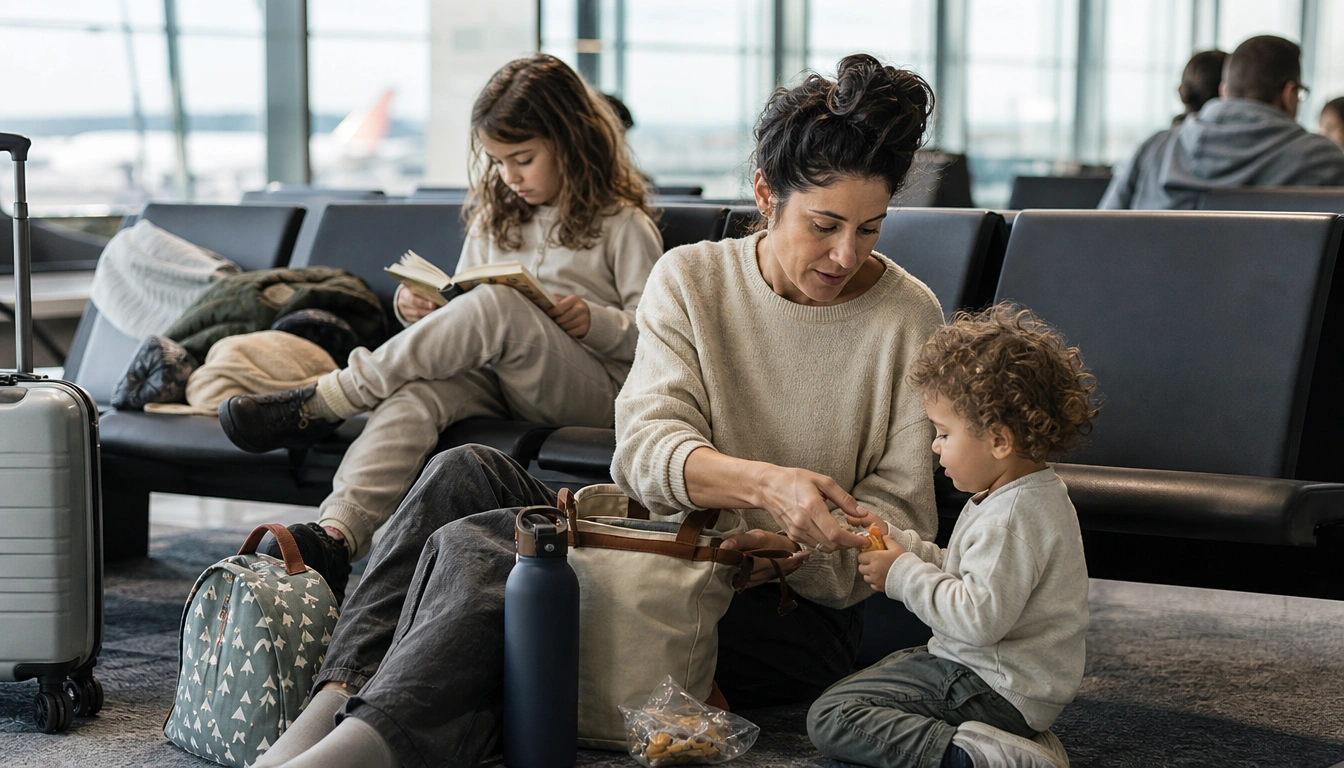
A healthy routine during travel for busy parents works best when you protect a few basics instead of trying to replicate home life. Focus first on water, regular food, short movement breaks, and sleep continuity. Those habits help children and adults stay calmer, reduce energy crashes, and make delays or schedule changes easier to handle. Perfection is not the goal; consistency around the most important needs is.
Key Takeaways
- Start with hydration, food, movement, and sleep. Those four supports matter more than an ideal schedule when travel gets messy.
- Pack simple foods and drinks before you leave so airports, gas stations, and rest stops are backup options, not your only plan.
- Build in small movement breaks for everyone, especially on long flights or road trips, to reduce restlessness and sedentary strain.
- Keep familiar sleep cues for children, such as a bedtime book, blanket, or sound machine, even if the location changes.
- Parents need food and water too. A more regulated caregiver is usually better able to handle delays, meltdowns, and transitions.
- For international travel, food and water safety, insect protection, and prompt medical care for red-flag symptoms matter more than a perfect routine.
Protect the basics first
A healthy routine during travel starts with a simple priority order: keep everyone hydrated, fed, moving a little, and sleeping as well as the trip allows. Travel often disrupts circadian rhythm, hunger cues, and energy regulation, so children and adults may feel hungrier, more tired, or more irritable than usual. That is not just a convenience issue. When sleep and meals are irregular, mood and self-control often slip, which can make delays and transitions harder for the whole family.
The easiest version is not a rigid schedule. It is a short checklist you can repeat during the day: water, food, movement, rest. If you are trying to decide what to do next, check the basics first before adding extra activities or chasing a perfect routine. The Centers for Disease Control and Prevention emphasizes water over sugar-sweetened drinks, and that advice fits travel especially well because sugary drinks can fuel a quick burst of energy followed by a crash.
For families, it helps to think in buffers. Pack enough supplies that one missed meal, a delayed boarding time, or a crowded rest stop does not derail the whole day.
Make hydration easy on the road
Hydration is one of the most useful travel habits because it supports energy, digestion, and general comfort without adding much planning. Bring refillable water bottles for each family member and refill them when you can, such as after security or at rest stops. For younger children, keep water visible and easy to reach so they do not have to ask every time they are thirsty.
Try to treat water as the default drink and save sweet drinks for the rare exception, not the routine. Soda, sweet tea, and packaged juice can be tempting in airports and convenience stores, but they do not help much with steady energy. If a child expects a flavored drink, you can often reduce resistance by offering water first and pairing it with a snack or letting them choose a cup or bottle they like.
Parents often forget themselves while serving everyone else. That usually backfires. A tired, dehydrated caregiver is more likely to feel overwhelmed and less able to respond calmly. Keep your own bottle visible, and drink whenever the kids do. Small reminders matter more than willpower on a travel day.
Plan food for airports, cars, and rest stops
Food planning works best when it is portable, shelf-stable, and easy to eat without a full table. Airports, gas stations, and rest stops are designed to push convenience foods, so pre-packing creates a useful barrier against impulse purchases. Aim for simple options that combine protein, fiber, and staying power: whole fruit, whole-grain crackers, unsalted nuts if age-appropriate, trail mix, cut vegetables, cheese sticks in a cooler, or sandwiches that will hold up for the trip.
For kids, the most successful snacks are often familiar and low mess. A food that is boring at home can be exactly right in transit because it is predictable. If your child is prone to getting very hungry and then melting down, build in regular snack checks before that point. Small, paced eating is often better than waiting until everyone is starving.
If you are traveling by car, keep the easiest foods within reach and the rest packed for later. On flights, choose items that will not create a cleanup problem or strong smell. On layovers, use the time to refill bottles, share a snack, and reset before the next leg instead of relying on the first food court option you see.
Use movement to reset energy
Movement does not need to look like a workout to be helpful. On travel days, it mostly serves as a reset for stiff bodies, restless minds, and cranky moods. The CDC recommends at least 60 minutes of physical activity daily for children and adolescents, while younger children should stay active throughout the day. Travel may make that harder, so the goal is to break up long sitting periods whenever possible.
For flights, encourage walking the terminal when time allows, letting children carry a small item, or doing a short lap before boarding. For road trips, plan rest stops that include a brief walk, stretching, or a few jumps in place beside the car. For layovers, look for open space where kids can move safely instead of sitting at the gate for the entire wait.
The easiest movement plan is one that feels normal to the family. Some children like a challenge, such as counting steps, while others just need room to wiggle. The point is to interrupt sedentary travel traps before everyone becomes stiff, bored, and irritable.
Protect sleep without trying to recreate home exactly
Sleep is often the hardest routine to preserve on the road, but a few familiar cues can make a real difference. Keep the parts of bedtime that signal sleep to your child: a book, a blanket, a song, dimmed lights, or a sound machine. The National Institutes of Health notes that sleep matters for mood, thinking, and physical recovery, and travel can make sleep timing more fragile for both children and adults.
In hotels or relatives’ homes, do what you can to reduce stimulation before bed. Lower the lights, cut back on screens near bedtime, and keep the room as calm as possible. If time zones are involved, expect some adjustment rather than perfection on the first night. A child who falls asleep later or wakes earlier for a day or two is not failing at sleep; their body is adapting.
For infants and toddlers, familiar nap cues are especially important. A consistent blanket, pacifier if used, or short settling routine can help them recognize that rest time is coming even in a strange place. For older children, explain the plan simply so they know what to expect.
Adjust the plan by age
Infants and toddlers usually need the most routine support because they have fewer tools for coping with novelty. Try to keep nap timing, feeding rhythm, and familiar sleep cues as steady as the trip allows. A portable white-noise device, stroller nap, or quiet corner can help preserve some predictability. Even small familiar signals can make transitions easier.
School-aged children and teens can handle more responsibility, and involving them often improves cooperation. Let them choose between two snack options, help carry a water bottle, or track movement breaks. That small bit of control can reduce resistance and build buy-in.
Older kids may also understand the travel plan better if you explain it as a shared mission: eat before everyone is too hungry, move before everyone gets stiff, and rest before everyone gets cranky. That framing is practical, not preachy, and it works well for busy families.
Take care of the parent, not just the passengers
Parents often treat their own needs as optional on travel days, then wonder why everything feels harder. Hydration, food, and a few moments of quiet are not luxuries. They are part of the family system. If you are running on empty, it becomes harder to regulate your voice, solve problems, or respond patiently to repeated requests and meltdowns.
A realistic self-care plan is small and concrete. Eat something before you are starving. Drink water when you refill the kids’ bottles. Sit down for a minute when it is safe to do so. If another adult is present, trade off for a bathroom break or a short walk alone. If you are traveling solo, lower the standard: you do not need to supervise every moment to be a good parent.
What helps most is noticing the early signs of overload. Tight shoulders, irritability, rushing, or forgetting to eat usually mean it is time to pause and reset before the stress spreads.
Handle international travel safety separately from routine
International family travel adds a layer of safety concerns that routine alone cannot solve. Food and water precautions matter more when sanitation standards vary. The CDC advises using safe water and food practices, such as bottled or boiled water and thoroughly cooked foods. The simple travel rule often taught for lower-resource settings is to choose food that is boiled, cooked, peeled, or otherwise clearly safe.
Insect protection also matters in some destinations. Use an EPA-registered repellent and follow the label directions for age and use. The National Institutes of Health and CDC guidance both stress using repellents correctly rather than guessing. If your itinerary includes outdoor exposure, dress children in protective clothing when practical and avoid letting them handle unfamiliar animals.
Know the warning signs that need medical attention. Seek care promptly for persistent high fever, severe or bloody diarrhea, signs of dehydration such as very little urination or extreme lethargy, or a significant animal bite or scratch. Those symptoms deserve attention whether you are home or far away.
Put it together in one realistic travel day
A workable travel day might look like this: before leaving, everyone drinks water and eats something simple. You pack bottles, snacks, and one comfort item for each child. During transit, you aim for one snack window before anyone gets overly hungry, one movement break during the longest stretch, and one calm pause before the day gets too loud.
At the airport or rest stop, you choose the easiest safe food rather than the most perfect one. You refill water when possible. You let kids walk, stretch, or carry a small task. You keep bedtime cues for the end of the day, even if the rest of the schedule is off.
That kind of routine is enough. The goal is not to make travel feel like home. It is to keep the family regulated enough that the trip remains manageable, even when plans shift.
Frequently Asked Questions
What should busy parents prioritize first on travel days: sleep, hydration, food, or movement?
Start with hydration and food, then add movement and protect sleep as much as the schedule allows. If the day gets chaotic, water and regular meals usually help the most in the moment because they support energy and mood quickly.
How can I keep kids active during long car rides, flights, or layovers?
Break up sitting time whenever you can. Use rest stops for short walks or stretching, let kids walk the terminal, and build in movement before boarding or after landing. Even brief activity helps reduce restlessness and stiffness.
What are the best healthy travel snacks and drinks for families?
Choose portable foods that are easy to pack and eat, such as fruit, crackers, trail mix, vegetables, cheese, or sandwiches. Water should be the main drink. Try to keep sugary drinks as an occasional choice rather than the default.
How do I protect sleep routines for children in hotels or unfamiliar places?
Keep the parts of the bedtime routine that signal sleep: a book, a blanket, a song, dim lights, or a sound machine. Reduce screen time near bed and expect some adjustment if time zones or new surroundings are involved.
What travel health precautions matter most for international family trips?
Focus on safe food and water, correct insect repellent use, and quick attention to warning signs like high fever, severe diarrhea, dehydration, or a serious animal bite or scratch. These precautions matter more than trying to keep a perfect routine.
The Bottom Line
A healthy routine during travel does not need to be elaborate to work. If you protect water, food, movement, and sleep cues, the whole trip usually feels more manageable for both kids and adults.
The most helpful habit is to prepare for the moments that typically break routines: long lines, limited food, overheated or overstimulated kids, and tired parents. A small amount of planning goes a long way.
When travel is messy, lower the standard rather than abandoning the routine. Good enough is often exactly what a family needs on the road.
Medical disclaimer
Medical disclaimer: This content is for educational and informational purposes only and is not a substitute for professional medical advice, diagnosis, or treatment. Dietary needs and supplement suitability vary by individual.
Sources
- Centers for Disease Control and Prevention (CDC) — cdc.gov. Accessed November 2026.
- National Health Service (NHS) — forumhealthcentre.nhs.uk. Accessed November 2026.
- National Institutes of Health (NIH) — nih.gov. Accessed November 2026.
