
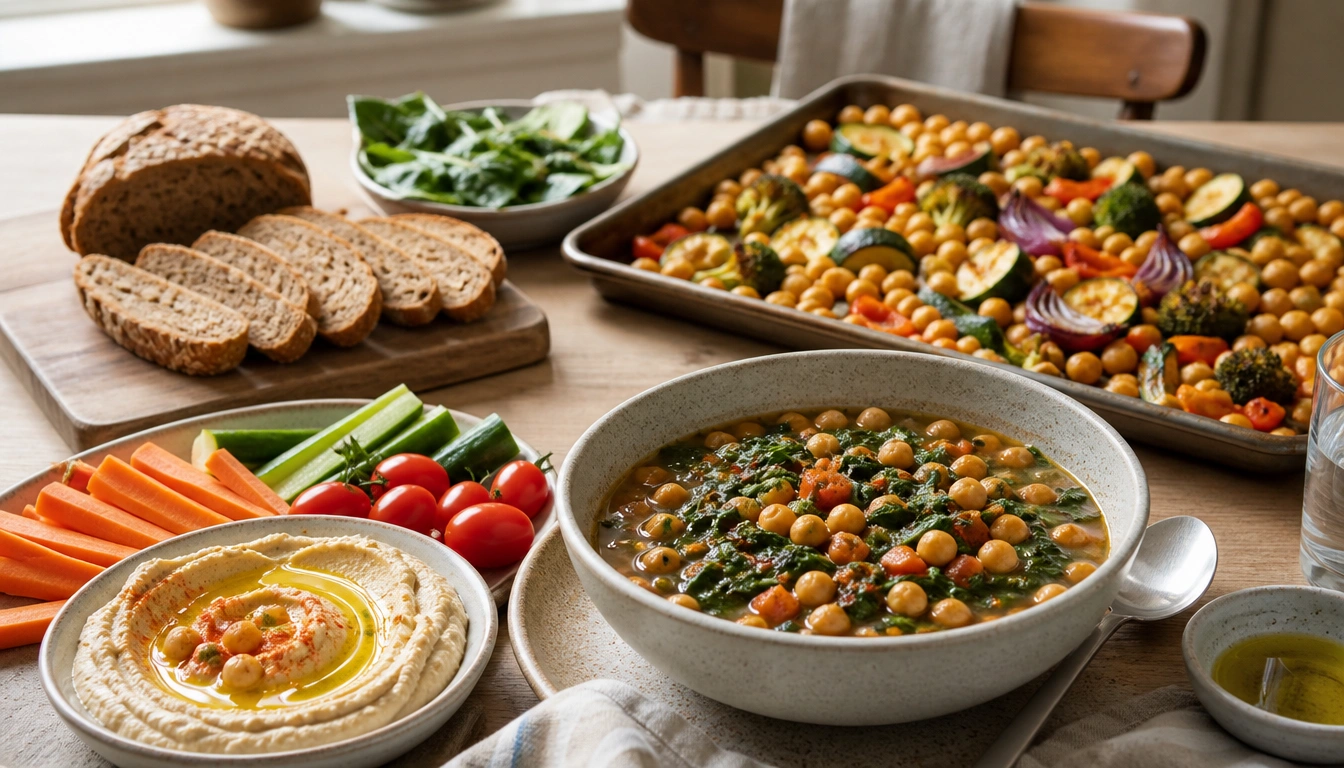
Yes—chickpeas can be an easy, tasty, and practical dinner choice for adults over 50. They provide plant protein, fiber, and slow-digesting carbs that fit heart-healthy eating patterns and can support steadier blood sugar. The best approach is to use tender, well-rinsed chickpeas in simple meals that are gentle to chew and easy to digest, especially if you are new to higher-fiber foods.
Key Takeaways
- Chickpeas bring protein and soluble fiber together, which makes them useful for muscle maintenance, heart health, and steadier blood sugar after 50.
- Canned chickpeas are convenient; rinsing them and choosing no-salt-added versions can help lower sodium.
- If you are new to legumes, start with small portions and increase gradually so your gut has time to adjust.
- Tender soups, mashes, skillet meals, and hummus-based plates are often easier to chew than dry, firm chickpeas.
- Easy chickpea dinners can be built from pantry staples, a few vegetables, and one additional protein if you want a more filling meal.
Why chickpeas make sense after 50
Easy chickpea dinner ideas for adults over 50 work well because chickpeas fit several goals at once: they are filling, budget-friendly, and useful for people who want more fiber without relying on complicated recipes. According to the National Institutes of Health, legumes are a strong fit for healthy eating patterns that emphasize plant foods, and the American Heart Association and the American Diabetes Association both support dietary patterns that feature beans and other legumes regularly.
Chickpeas are especially helpful because they combine plant protein with soluble fiber and slowly digested carbohydrates. That combination matters after 50, when preserving lean muscle becomes more important and blood sugar may be harder to keep steady. Chickpeas can also support heart health because soluble fiber helps the body move cholesterol out through digestion, while a legume-rich pattern tends to be lower in saturated fat than many meat-heavy dinners.
They are also a good fit for gut health. Chickpeas contain fermentable fibers and resistant starches that feed beneficial gut bacteria. That does not mean every stomach will love them immediately, but it does mean chickpeas can be a useful food to work into the dinner rotation in a gradual, manageable way.
How to choose and prep chickpeas for convenience and comfort
For most home cooks, canned chickpeas are the easiest place to start. They are already cooked, so they save time and work well in soups, skillets, salads, and mash-based dishes. If sodium is a concern, look for no-salt-added cans when possible. If you use standard canned chickpeas, drain and rinse them well in a colander under cool water before cooking or serving. That simple step improves flavor and can help reduce sodium exposure.
Dried chickpeas are cheaper per serving, but they need soaking and longer cooking. They make sense if you cook in batches and want a softer texture for soups or purees. For older adults who prefer tender food, cook chickpeas until very soft rather than leaving them firm and chewy. If the texture still feels too dense, mash them lightly with broth, blend them into a soup, or use them as a creamy base for a warm plate meal.
Texture matters as much as flavor. A chickpea dinner does not need to be crunchy or dry to be satisfying. Simmered chickpeas can be folded into tomato sauce, blended into soup, or mixed with olive oil and lemon until they feel softer and more spoonable. For many people, that is the most comfortable way to enjoy legumes regularly.
Recipe 1: Pasta e ceci with greens
This one-pot meal is a good starter recipe because it tastes familiar, uses pantry ingredients, and can be cooked in one pot. Begin with olive oil, chopped onion or garlic if you like them, and a can of rinsed chickpeas. Add low-sodium broth, a can of diced tomatoes, and a small handful of whole-grain pasta. Simmer until the pasta is tender and the broth has thickened slightly. Stir in spinach, kale, or chopped chard at the end so it wilts without becoming tough.
The texture lands between soup and stew, which makes it especially useful for adults who want a comforting dinner without heavy chewing. If you want more protein, add a little grated Parmesan or serve it with a side of Greek yogurt. If you want a lighter version, use extra broth and more greens.
This meal works because it combines a legume, whole grain, and vegetables in one bowl. It is filling enough for dinner, but it does not require a long ingredient list or separate side dishes.
Recipe 2: Sheet-pan roasted chickpeas and vegetables with a grain base
Sheet-pan dinners are useful when energy is low and cleanup needs to be minimal. Toss drained, rinsed chickpeas with chopped zucchini, bell peppers, red onion, broccoli florets, or cauliflower. Add olive oil, garlic powder, black pepper, and dried oregano or rosemary. Roast until the vegetables are tender and the chickpeas take on a lighter, more savory texture.
Serve the roasted mixture over a simple grain base such as brown rice, quinoa, farro, or even microwavable whole-grain rice. If chewing is a concern, choose vegetables that soften well in the oven and cut them into smaller pieces before roasting. A squeeze of lemon at the end brightens the flavor without needing a heavy sauce.
This format is flexible enough to match what is already in the refrigerator. It also works well for leftovers: the roasted chickpeas and vegetables can be reheated gently the next day and served over fresh grain or greens.
Recipe 3: Warm Mediterranean chickpea skillet with tomatoes, herbs, feta, and bread
For a fast stovetop dinner, warm olive oil in a skillet and add halved cherry tomatoes or chopped canned tomatoes. When they begin to soften, stir in rinsed chickpeas, chopped olives if you enjoy them, and a splash of water or low-sodium broth. Let everything simmer briefly until the chickpeas are hot and the tomatoes have made a light sauce. Finish with lemon juice, parsley, and a little crumbled feta.
Serve it with toasted whole-grain bread or a small portion of whole-wheat pita. If you need a softer texture, mash a few of the chickpeas right in the pan with the back of a spoon. That gives the sauce a thicker, more spoonable consistency without adding extra ingredients.
This kind of skillet dinner is especially useful when you want something savory and satisfying without turning on the oven. The tomato, herb, and lemon combination gives strong flavor, so a little feta can go a long way. If sodium is a concern, use less feta and lean on herbs, garlic, and citrus for taste.
Recipe 4: No-cook chickpea plate meal with hummus and lean protein
On low-energy nights, a plate meal can be easier than cooking a full recipe. Start with hummus as a spread or dip, then add soft vegetables such as cucumber, cherry tomatoes, sliced peppers, or shredded carrots. Add a source of lean protein, such as tuna, salmon, rotisserie chicken, hard-cooked eggs, or leftover grilled fish. Finish with whole-grain crackers, pita, or toast.
This style of meal is useful because chickpeas still play the central role even when you are not cooking them whole. Hummus tends to be easier to chew than intact chickpeas, and it pairs well with protein if you want more staying power at dinner. If you prefer a vegetarian plate, add extra hummus, sliced avocado, or a small side of yogurt with herbs.
For people who are busy, tired, or cooking for one, this is often the most realistic route. The goal is not a perfect plate; it is a dinner that is nourishing, easy to assemble, and easy to repeat.
A simple starter strategy for fiber adaptation
If you have not been eating many legumes, the biggest mistake is to jump in too fast. A smaller portion is usually the easiest way to start. Try chickpeas in a soup, a skillet, or a hummus-based plate and see how your digestion responds before increasing the amount. Over time, you can make chickpeas a more regular part of dinner.
Hydration matters too. Fiber works best when you are drinking enough fluid, so pair chickpea dinners with water, tea, or a broth-based dish rather than trying to “push through” discomfort. If you notice gas or bloating, it often helps to use chickpeas a few times a week in modest portions rather than making a very large serving your first try.
Another helpful strategy is frequency. Some people tolerate legumes better when they eat them regularly in small amounts instead of occasionally in large amounts. That gives the gut more practice and may make the food feel easier over time.
When chickpeas may not be the best fit
Chickpeas are useful for many adults over 50, but they are not ideal for every situation. If you have significant gas, bloating, cramping, or diarrhea after legumes, you may need a slower approach or a different preparation method. People with certain digestive conditions, including some forms of irritable bowel syndrome or inflammatory bowel disease, may need individualized guidance from a clinician or dietitian.
Chewing problems matter too. If whole chickpeas feel too firm, use softer preparations such as blended soup, hummus, mashed chickpea filling, or long-simmered stews. If swallowing is difficult, get medical advice rather than trying to work around it on your own.
You should also ask for help if you are changing your diet because of kidney disease, a restricted sodium plan, unexplained weight loss, or ongoing digestive symptoms. A clinician can help you fit chickpeas into your meals safely and in a way that matches your health goals.
Frequently Asked Questions
How much chickpea intake is reasonable for someone new to eating more fiber?
Start small. A modest portion at one meal is often easier to tolerate than a large serving, especially if your usual diet is low in fiber. Increase gradually over several meals or weeks, and pay attention to how you feel rather than forcing a big jump.
Are canned chickpeas healthy, and how should they be prepared to reduce sodium?
Yes, canned chickpeas can be a healthy convenience food. Drain them and rinse them under cool water before using them, and choose no-salt-added versions when you can. That keeps them easy to use while helping you control sodium.
What are the best ways to make chickpeas easier to chew or digest for older adults?
Cook them until very tender, and use softer formats such as soup, stew, mash, or hummus. Mashing some of the chickpeas can make a dinner feel gentler and less dry. If digestion is sensitive, smaller portions and gradual exposure help too.
How can chickpea dinners support muscle, heart, blood sugar, and gut health after 50?
Chickpeas offer plant protein for muscle support, fiber for heart health and cholesterol management, slow-digesting carbs for steadier blood sugar, and prebiotic fiber that supports beneficial gut bacteria. They work best as part of an overall balanced eating pattern.
What should adults over 50 do if chickpeas cause gas, bloating, or discomfort?
Scale back the portion, try softer preparations, and increase intake slowly. Make sure you are drinking enough fluid. If discomfort is persistent, severe, or linked to another digestive condition, talk with a healthcare professional or dietitian.
The Bottom Line
Chickpeas are a smart dinner staple after 50 because they are affordable, filling, and easy to adapt to different energy levels and chewing needs. They fit soups, skillets, sheet-pan meals, and no-cook plates, so they can work on both busy nights and low-energy nights.
If you are new to legumes, the best results usually come from small portions, well-rinsed canned chickpeas, and soft preparations that are easier to digest. Used that way, chickpeas can become a practical part of a heart-conscious, fiber-rich dinner routine without adding much stress to the kitchen.
Medical disclaimer
Medical disclaimer: This content is for educational and informational purposes only and is not a substitute for professional medical advice, diagnosis, or treatment. Dietary needs and supplement suitability vary by individual.
