
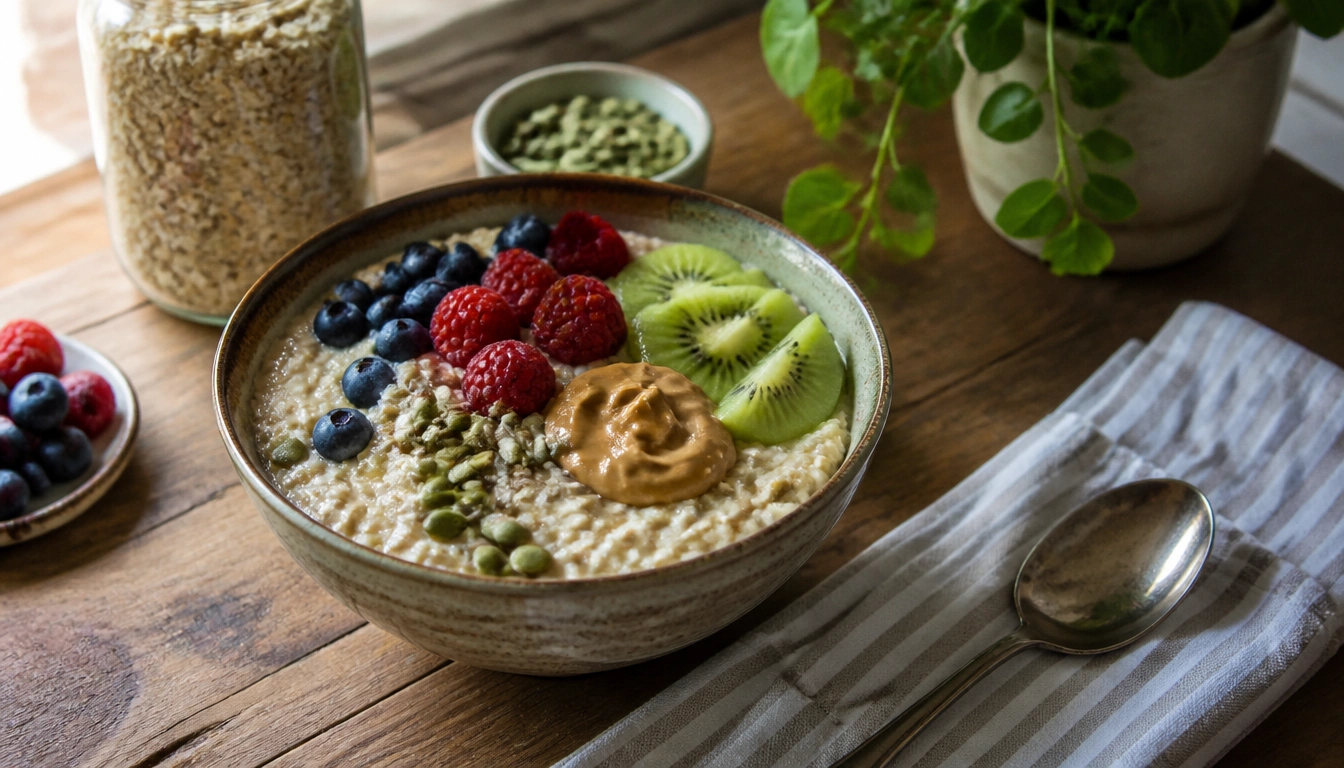
For vegetarian beginners, the easiest way to upgrade oatmeal is to build it as a base plus protein, a mineral-rich topping, vitamin C, and optional fat or sweetness. Good choices include soy milk, yogurt, nut butter, hemp or pumpkin seeds, flax, almonds, berries, kiwi, citrus, and a little blackstrap molasses. These additions can make oatmeal more filling and more nutrient-dense without turning breakfast into a project.
Key Takeaways
- Oatmeal is a strong base, but by itself it is usually light on protein and can be less efficient for iron and zinc because of phytates.
- Protein boosters include soy milk, yogurt, nut butters, hemp seeds, chia, and protein powder; choose based on your diet and texture preferences.
- Iron and zinc helpers include pumpkin seeds, blackstrap molasses, almonds, and flax, especially when paired with vitamin C-rich fruit.
- Vitamin C from berries, citrus, kiwi, or mango helps your body absorb non-heme iron from plant foods more effectively.
- Coffee or tea right with breakfast can reduce iron absorption, and people with higher iron needs may benefit most from intentional pairing.
Build the bowl: base plus protein, mineral source, vitamin C, and a finishing touch
A practical vegetarian oatmeal bowl is easiest to think about in layers. Start with oats as the base, then add a protein source, a food that contributes iron or zinc, a vitamin C-rich topping, and, if you want, a little fat or sweetness for taste and staying power. This framework works because oats bring fiber and steady carbohydrates, while the add-ins fill the nutrient gaps that matter most in a vegetarian breakfast.
That last part matters. According to the National Institutes of Health and the U.S. Department of Agriculture, vegetarians should pay attention to protein, iron, zinc, calcium, and vitamin B12. Oatmeal helps with energy and fiber, but it does not automatically cover those needs. A few intentional toppings can shift breakfast from “healthy” to more balanced.
For beginners, the simplest version is not a long ingredient list. One liquid for cooking, one protein source, one mineral-rich topping, and one fruit topping is enough. If you like a creamier bowl, use soy milk or yogurt. If you like a sweeter bowl, add fruit and cinnamon instead of turning to a lot of added sugar.
If you are overwhelmed, start with one upgrade at a time. For example, replace water with soy milk, or add berries to plain oats, or stir in peanut butter. A bowl does not need to be perfect to be useful.
Choose add-ins by purpose, not just by habit
Grouping toppings by what they do makes breakfast easier to assemble. Protein boosters help with fullness and muscle maintenance. Iron and zinc boosters improve the nutrient quality of the bowl. Absorption helpers make plant-based iron easier to use.
Protein boosters include soy milk, Greek yogurt, skyr, cottage cheese if you eat dairy, nut butters, hemp seeds, chia seeds, and protein powder. These are the most straightforward way to make oatmeal more filling for a vegetarian breakfast.
Iron and zinc boosters include pumpkin seeds, blackstrap molasses, almonds, and ground flaxseed. These are especially helpful if you are relying on plant foods for your mineral intake. Pumpkin seeds are one of the most useful all-around choices because they bring texture, minerals, and a mild flavor.
Absorption helpers are foods rich in vitamin C, such as strawberries, raspberries, blueberries, kiwi, oranges, mandarin segments, mango, and papaya. These do not add much protein, but they help your body absorb non-heme iron from oats and plant toppings more efficiently.
A useful beginner rule is this: if the topping is mostly creamy, it is probably helping protein; if it is crunchy and seed-like, it may help minerals; if it is bright fruit, it is probably helping iron absorption. Many ingredients do more than one job, which is why oats are such a flexible breakfast base.
Practical toppings that work well in real kitchens
Some foods are easier to use than others on busy mornings. The best toppings are the ones you will actually keep in your kitchen and enjoy enough to repeat.
- Hemp seeds: soft, mild, and easy to sprinkle on warm oatmeal; good for protein and healthy fats.
- Chia seeds: thickening and gel-like; useful if you like a pudding texture, but they can make oats heavier.
- Pumpkin seeds: crunchy and neutral; one of the best vegetarian add-ins for mineral support.
- Nut butters: peanut, almond, or cashew butter adds creaminess, calories, and protein.
- Greek yogurt or soy yogurt: works best stirred in after cooking or layered on top for a creamy contrast.
- Soy milk: an easy way to increase protein while cooking the oats or as a finishing splash.
- Blackstrap molasses: strong flavor, dark sweetness, and a useful iron-focused swap for part of the sweetener.
- Ground flaxseed: mild, budget-friendly, and easy to blend into the base without changing the flavor much.
- Berries or kiwi: bright, fresh, and especially useful for vitamin C.
- Banana: not a vitamin C leader, but useful for sweetness and texture when paired with another fruit.
Vegetarian compatibility is simple here: all of these work for lacto-ovo vegetarians, and most work for vegans except yogurt unless you choose a plant-based version. If you want a savory-leaning bowl, you can still use seeds, nut butter, and fruit sparingly, but most beginners prefer a naturally sweet profile.
Best combinations for more protein, more iron support, more calories, or dairy-free bowls
If your goal is more protein, build around soy milk, Greek yogurt, skyr, hemp seeds, chia seeds, or peanut butter. These ingredients make oatmeal feel less like a snack and more like a real breakfast. Soy milk is especially useful for vegan oatmeal because it adds protein without changing the flavor much.
If your goal is better iron support, pair oats with pumpkin seeds, ground flaxseed, almonds, or a small spoonful of blackstrap molasses, then add a vitamin C food on top. Strawberries and kiwi are especially easy because they also improve color and flavor. This is a good pattern for people who want a food-first iron strategy without turning to supplements.
If your goal is more calories and satiety, use nut butter, seeds, soy milk, and fruit together. Fat and protein slow digestion and help oatmeal keep you full longer. This can be useful for people who skip lunch, train in the morning, or simply need breakfast to last.
If you need a dairy-free bowl, soy milk is the easiest protein-rich liquid base, and plant-based yogurt can stand in for dairy yogurt. Combine it with berries, pumpkin seeds, and a little flax for a simple vegan bowl. If you eat dairy, yogurt remains a convenient option for adding creaminess and protein.
Here are a few easy combinations: oats with soy milk, peanut butter, and banana; oats with pumpkin seeds, strawberries, and a drizzle of molasses; oats with yogurt, chia, kiwi, and cinnamon; or oats with hemp seeds, almond butter, and blueberries. These are not rigid recipes. They are templates you can repeat and adjust.
Why vitamin C changes the value of plant-based iron
Plant foods contain non-heme iron, which is not absorbed as efficiently as heme iron from animal foods. That does not make plant iron useless. It means the meal needs smarter pairing. Vitamin C helps convert iron into a form that is easier for the gut to absorb.
That is why a bowl of oats with seeds is better when paired with fruit such as strawberries, kiwi, citrus, mango, or papaya. The fruit does not have to be fancy. Even a handful of berries can improve the usefulness of the iron in the bowl. If you use blackstrap molasses or pumpkin seeds, adding vitamin C becomes even more relevant.
This matters most for people with higher iron needs, including pregnant people, adolescents, premenopausal women, and endurance athletes. These groups are not the only ones who benefit, but they are more likely to need a thoughtful breakfast pattern that supports iron intake and absorption.
Vegetarian beginners sometimes assume that the answer is simply “eat more iron.” In practice, the meal pattern matters just as much as the ingredient. A small amount of vitamin C-rich fruit can make a plant-based breakfast more effective than a larger amount of iron-rich food eaten alone.
Coffee, tea, and other habits that can get in the way
One of the most common breakfast issues is timing coffee or tea too close to an iron-focused meal. Polyphenols in coffee and tea can reduce iron absorption when consumed with the meal. If iron support is a goal, spacing coffee or tea away from breakfast is a practical move.
You do not need to give up your morning drink. A simple solution is to have coffee or tea a little before or after the meal rather than alongside it. If you are not focused on iron, this matters less, but for people who are already working on vegetarian iron intake, the timing can make a difference.
Other habits matter too. Large amounts of bran or very high-fiber foods in the same meal can be a lot for some beginners, especially if they are newly increasing fiber. Oatmeal is already fiber-rich, so piling on seeds quickly may be uncomfortable if your body is still adjusting.
That is why gradual changes work best. Start with one or two add-ins, then increase slowly as your digestion adapts. Drinking enough fluid and keeping portions reasonable can help reduce bloating or gas while you build a more nutrient-dense breakfast routine.
How to make oatmeal fast, affordable, and beginner-friendly
The easiest oatmeal habit is the one that fits real mornings. Pantry staples are your friend here. Rolled oats, peanut butter, ground flaxseed, pumpkin seeds, frozen berries, cinnamon, bananas, and soy milk are all practical budget-friendly ingredients that can be used in many combinations.
Overnight oats can save time if you do not want to cook in the morning. Batch-prepping dry jars of oats plus seeds can also help. You can keep the fruit separate and add it fresh in the morning, or use frozen fruit that thaws as the oats sit. This keeps breakfast simple without relying on expensive specialty products.
Texture is another beginner challenge. If you do not like heavy oatmeal, use a lighter hand with chia or nut butter. If you want a creamier bowl, stir in yogurt or soy milk near the end. If you like crunch, keep some seeds on top instead of mixing everything in.
A practical budget trick is to use one “expensive” ingredient and let the rest be basic. For example, oats plus banana plus peanut butter is affordable and filling. Oats plus frozen berries plus flaxseed is another low-cost option. You do not need a long list of superfoods to make breakfast meaningful.
When food is not enough and you should get checked
Food upgrades are useful for general nutrition, but they do not treat iron deficiency or other medical problems. If you have persistent fatigue, dizziness, weakness, shortness of breath, or unusually low exercise tolerance, it is important to get medical evaluation rather than trying to fix the issue with breakfast alone.
People with heavy menstrual bleeding, known anemia, recent blood loss, pregnancy, digestive disorders, or a history of low iron may need individualized advice. In those situations, a clinician may recommend blood work and a more specific plan. Food still matters, but it should be part of a larger care plan if deficiency is suspected or already diagnosed.
Also remember that more fiber is not always better in the short term. If you jump from a low-fiber breakfast to a very seeded bowl overnight, your stomach may protest. Building slowly helps you stay consistent, and consistency is what makes a vegetarian breakfast routine work.
The goal is not to make oatmeal do everything at once. The goal is to turn a simple base into a breakfast that is easy, affordable, and better matched to a vegetarian diet.
Frequently Asked Questions
What are the best high-protein toppings for oatmeal for vegetarians?
The easiest high-protein choices are soy milk, Greek yogurt or plant yogurt, peanut butter, hemp seeds, chia seeds, and protein powder. If you want the simplest option, soy milk and nut butter are usually the most beginner-friendly because they are easy to stir in and do not require special prep.
How can I boost iron absorption from oatmeal with plant foods?
Pair iron-containing toppings like pumpkin seeds, flax, almonds, or blackstrap molasses with vitamin C foods such as strawberries, kiwi, oranges, or mango. That combination helps your body absorb non-heme iron more effectively than iron-rich plant foods eaten alone.
What foods help oatmeal taste better while still being nutritious?
Fruit, cinnamon, vanilla, nut butter, and a little molasses can improve flavor without turning breakfast into dessert. Berries and bananas are especially easy, and nut butter adds both taste and satiety. If you want creaminess, soy milk or yogurt can help too.
Can I use yogurt, soy milk, or protein powder in vegetarian oatmeal?
Yes. Yogurt works well for lacto-ovo vegetarians, soy milk is one of the easiest dairy-free protein boosters, and protein powder can be useful when you want a more concentrated protein hit. The best choice depends on your diet, texture preference, and budget.
Should I avoid coffee or tea with iron-rich oatmeal?
If iron support is a priority, it is better not to drink coffee or tea at the same time as your oatmeal. Their polyphenols can reduce iron absorption. You do not need to skip them entirely, but spacing them away from breakfast is a practical habit.
The Bottom Line
Oatmeal can be an excellent vegetarian breakfast base, but it works best when you build it with intention. Add a protein source, a mineral-rich topping, and a vitamin C food so the bowl is more balanced and more useful nutritionally.
For most beginners, the simplest upgrades are also the best: soy milk or yogurt, nut butter, pumpkin seeds, berries, kiwi, citrus, or a little blackstrap molasses. Keep the bowl affordable, repeatable, and comfortable for your digestion.
If you suspect iron deficiency or have symptoms that do not improve, food alone is not the answer. Use breakfast upgrades as a support strategy, and get medical guidance when needed.
Medical disclaimer
Medical disclaimer: This content is for educational and informational purposes only and is not a substitute for professional medical advice, diagnosis, or treatment. Dietary needs and supplement suitability vary by individual.
