
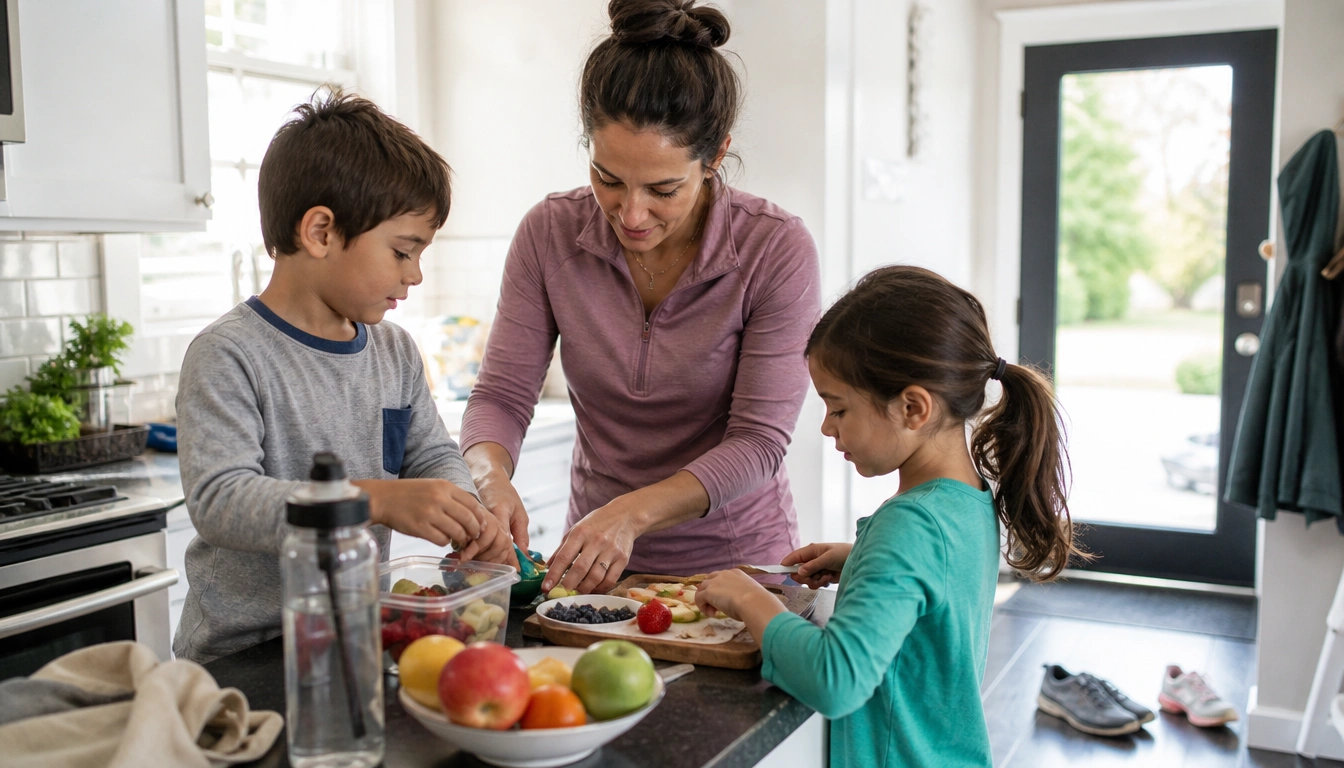
The easiest way to restart healthy habits as a busy parent is to make one small change that fits into an existing routine, then keep it simple long enough to become automatic. That usually works better than trying to overhaul meals, workouts, sleep, and schedules at once. Start with the habit that gives the biggest payoff for the least effort—often sleep, hydration, a short walk, or a better snack plan.
Key Takeaways
- Start with one micro-habit you can repeat on hard days, not a full reset that depends on extra time or motivation.
- Use habit stacking: attach the new habit to something you already do, such as breakfast, school drop-off, or bedtime.
- Sleep, stress, and food choices affect one another, so improving one small area can make the others easier.
- Family routines work best when they are flexible: shared walks, simple prep, and grab-and-go snacks reduce friction.
- Children notice what parents do more than what parents say, so your routine can shape the whole household.
- If exercise, diet changes, or exhaustion feel medically or emotionally complicated, check with a professional before pushing harder.
Why a full reset usually backfires for parents
For busy parents, the problem is rarely a lack of knowledge. It is a lack of spare time, energy, and decision-making capacity. A full lifestyle overhaul asks for too many changes at once, which is why it often collapses after a few days. Public health guidance from the CDC and the NHS supports the idea that sustainable health changes work best when they are gradual and realistic.
A better approach is to treat this as a restart, not a reinvention. If you try to change food, exercise, sleep, and the entire household schedule in one week, every task competes with school runs, work deadlines, laundry, and emotional overload. A smaller plan lowers the mental load. It also helps you keep going on the days when family life is messy, because the habit is designed to survive imperfect conditions.
That is especially important for parents, because your routine does not live in isolation. Your energy, mood, and consistency affect the people around you. A restart that respects real family life is more likely to last than a perfect plan that disappears the moment life gets busy.
Start with one micro-habit and stack it onto an existing routine
If you feel overwhelmed, choose the smallest change that almost feels too easy. That might be drinking a glass of water after brushing your teeth, stretching for two minutes while the kettle boils, or packing a piece of fruit into tomorrow’s bag while you clean up dinner. Small actions are not trivial when they are repeatable. They reduce the barrier to starting, which is often the hardest part.
Habit stacking makes the habit easier to remember. The formula is simple: after I do something I already do, I will do my new habit. For example, after school drop-off, take a five-minute walk. After loading the dishwasher, prep a snack box. After putting the kids to bed, lay out walking shoes for the next day. The existing routine becomes the trigger, so you do not have to rely on willpower alone.
Parents often need proof that a tiny habit counts. It does. A brief stretch, a short walk, or one more glass of water may not look dramatic, but it creates momentum. The goal in the first phase is not transformation. It is consistency that feels almost boring enough to keep.
Build around sleep, stress relief, and basic nutrition
Sleep, stress, and nutrition are tightly connected. When sleep is short or broken, appetite can shift, cravings can feel stronger, and energy for movement drops. The result is a familiar loop: you are tired, so you reach for quick food; the food choices do not make you feel rested; your energy stays low; then healthy routines feel even harder. Improving sleep does not solve everything, but it can unlock better choices across the rest of the day.
Start with the lowest-friction sleep support you can maintain. For some families, that means a screen cutoff before bed. For others, it means laying out tomorrow’s items earlier, dimming lights, or deciding on a simple nighttime sequence that helps the house settle. The NHS and CDC both emphasize the value of regular sleep routines and enough sleep for health, even though parents rarely get perfect conditions.
Stress relief also needs to be practical. A parent does not need an elaborate mindfulness routine to benefit from a pause. A few slow breaths in the car, five quiet minutes before the kids wake up, or a short walk outside can be enough to lower the sense of constant urgency. Pair that with basic nutrition: regular meals when possible, enough protein and fiber, and water as the default drink. The goal is steadiness, not dietary perfection.
Make movement and meals easier to fit into family life
Exercise works best when it stops competing with family life. You do not need a gym membership or a long block of free time to restart. A brisk walk after dinner, active time at the playground, a short body-weight routine while children play nearby, or a ten-minute home circuit can all count toward an active week. The CDC recommends at least 150 minutes of moderate activity per week for adults, but that target can be built through small pieces rather than one big session.
It helps to think of movement as part of the family environment, not as a separate project. Walking to the park, dancing in the kitchen, or doing a few squats while the pasta boils turns ordinary time into active time. If you wait until your schedule feels open, you may keep waiting. If you use the time already available, movement becomes more realistic.
Food works the same way. Family-style meal prep lowers friction because the healthy choice is already visible and ready. Keep washed fruit, cut vegetables, yogurt, cheese, hummus, eggs, beans, or other easy options within reach. Build meals from simple parts instead of trying to cook differently for every person. When children can serve themselves from the table, they are more likely to try what is available, and you spend less energy making separate meals. The goal is not strict control; it is making nourishing food easier to reach than the nearest packaged snack.
Why your habits shape your child’s habits
Parents and caregivers are the main models children watch every day. Public health agencies such as the CDC and the NHS note that children learn eating patterns, activity levels, and coping behaviors by observing adults. That means your restart is not only about your own health. It also shapes the home environment your children grow up in.
This does not mean you need to be perfect. It means your ordinary choices send a message. A parent who drinks water regularly, takes a walk after work, sits down for meals when possible, and recovers from setbacks without shame teaches a child that health is part of normal life. A parent who uses screens to unwind occasionally, moves their body in ways that feel manageable, and comes back to routine after a rough week teaches flexibility too.
The most useful mindset is to see your habits as household-level interventions. You are not just building discipline for yourself. You are showing children how adults care for their bodies, manage stress, and recover when routines get disrupted. That influence is powerful even when the changes are small.
Adjust the plan by age and stage
Families need different strategies depending on the age of the children at home. Parents of infants often live in a cycle of interrupted sleep, feeding, and unpredictability. In that stage, micro-rest, simpler meals, and lower expectations matter more than pushing for a rigid workout plan. A short stretch, a walk with the stroller, or one protected nap opportunity may be more realistic than a formal routine.
Parents of toddlers usually benefit from flexibility and repetition. Toddlers respond better to familiar rhythms than to long explanations. Keep healthy snacks easy to grab, offer movement through play, and repeat routines at the same times when possible. For school-age children, shared activities become easier to use. Family walks after dinner, helping wash vegetables, or cooking one simple meal together can turn wellness into shared time instead of extra work.
With teens, the best approach is often low-pressure consistency. Teens may resist being managed, but they often respond to being invited. A family walk, a shared grocery list, or a no-phones wind-down before bed can work better than lecturing. Across all ages, the most sustainable habits are the ones that fit the stage of your household instead of fighting it. The CDC recommends children and teens get at least 60 minutes of physical activity daily, but families can build toward that through active play, walking, sports, and everyday movement.
Lower friction where busy parents usually get stuck
Most habit change fails at the point of friction. If healthy food is hidden, if exercise needs too much setup, or if bedtime routines require constant negotiation, the plan becomes exhausting. The fix is usually environmental, not motivational. Put the water bottle where you can see it. Keep walking shoes by the door. Store easy snacks at eye level. Decide on a few repeat meals so dinner does not require a new decision every night.
Screen cutoffs can also help. Even a modest digital wind-down before bed can make the evening feel less chaotic and can support sleep quality. If that is too ambitious at first, start by reducing screens during one predictable part of the evening, such as the last 20 minutes before lights out. Make the routine small enough that it feels possible on an ordinary Tuesday, not only on a good day.
Another useful tactic is to turn existing family time into movement time. Walk while talking about the day. Play tag at the park instead of sitting on the bench. Carry groceries together. Dance while dinner cooks. These approaches work because they do not ask for extra time; they borrow time that already exists.
When to slow down and get support
Some situations need more than a simple restart. If you are planning to return to high-intensity exercise, make major diet restrictions, or restart activity after a long period of inactivity, medical clearance may be appropriate, especially if you have cardiovascular conditions, joint injuries, metabolic disease, or postpartum recovery concerns. Individual medical guidance matters more than a generic plan.
Mental health deserves the same respect. If exhaustion is paired with persistent low mood, anxiety, irritability, panic, or a sense that daily functioning is slipping, basic self-care tips may not be enough. That is especially true if you feel detached, hopeless, or unable to recover even when circumstances improve. Professional support can help you choose changes that are safe and realistic.
It is also wise to be cautious with food rules. Very strict diets can create stress in the home and may send confusing messages to children. A healthier goal is to build a neutral, steady relationship with food: regular meals, flexible choices, and enough structure to reduce chaos without turning the kitchen into a battleground.
Frequently Asked Questions
How can busy parents restart exercise when they have very little free time?
Start with short bouts that fit existing routines, such as a 10-minute walk, a playground lap, or a brief home routine while dinner cooks. A little movement done often is easier to sustain than an ambitious plan that depends on rare free time.
What are the best micro-habits to begin with for parents who feel overwhelmed?
Choose the habit with the lowest effort and highest payoff. Common starting points are drinking water first thing, adding one piece of fruit to the day, taking a short walk, or setting out tomorrow’s items at night. The best first habit is one you can repeat even on tired days.
How can parents improve family nutrition without strict dieting or food rules?
Make nutritious food easier to grab and simpler to serve. Keep ready-to-eat produce, protein-rich snacks, and basic meal ingredients visible and accessible. Use family-style meals when possible so people can choose from the same foods without separate menus or rigid rules.
How does sleep deprivation affect appetite, energy, and willpower in parents?
Short or broken sleep can make cravings stronger, reduce energy for movement, and make self-control feel harder. That is why improving sleep often helps other habits feel more manageable. Even a small wind-down routine can support better decisions the next day.
How can parents model healthy habits for children without adding more stress?
Model what is realistic, not perfect. Let children see you drink water, walk, prepare simple food, and recover after setbacks without guilt. Children learn a lot from watching ordinary adult behavior, so small consistent actions can teach more than big speeches.
The Bottom Line
Busy parents do not need a total reset to restart healthy habits. The most sustainable approach is to begin with one micro-habit, attach it to a routine you already do, and let it become easy before adding anything else.
Build around the habits that support everything else: sleep, basic nutrition, stress relief, and movement that fits family life. When your routine is simple enough to survive a chaotic week, it is much more likely to last.
If exercise, food changes, or exhaustion feel medically complicated or emotionally heavy, get professional support instead of trying to push through alone. Sustainable health should make family life steadier, not more stressful.
Medical disclaimer
Medical disclaimer: This content is for educational and informational purposes only and is not a substitute for professional medical advice, diagnosis, or treatment. Dietary needs and supplement suitability vary by individual.
Sources
- National Health Service (NHS) — scot.nhs.uk. Accessed November 2026.
- National Health Service (NHS) — kentcht.nhs.uk. Accessed November 2026.
- Centers for Disease Control and Prevention (CDC) — cdc.gov. Accessed November 2026.
