
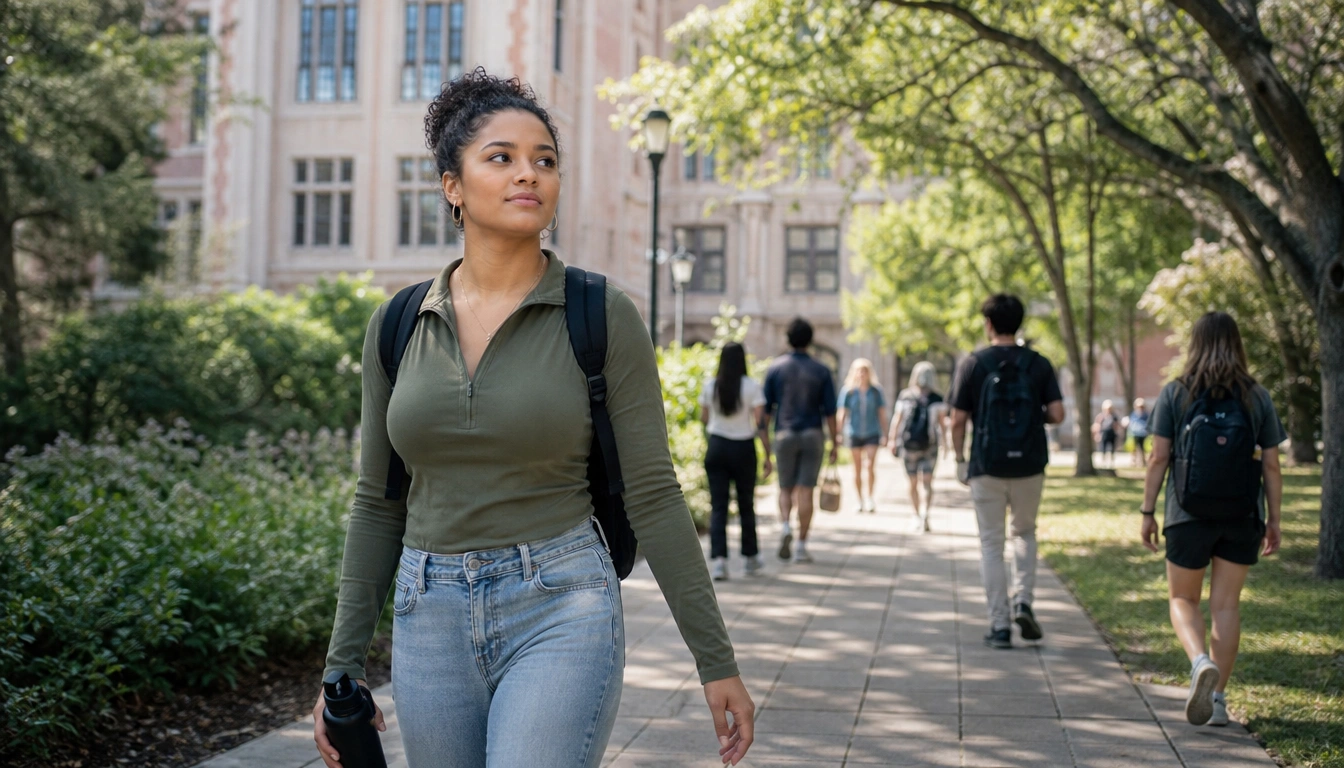
A realistic week-long movement routine for college students usually works best when it is built around your existing schedule, not added on top of it. Aim for frequent walking or other moderate activity across the week, two short strength sessions, and an active recovery day. Start small if you are new to exercise, because some movement is better than none and short bouts can add up.
Key Takeaways
- Use your class schedule as the framework: walking to class, climbing stairs, and short study-break movement all count toward weekly activity.
- A beginner-friendly week does not need to be perfect; consistent 10-minute bouts can still help you build the habit and avoid burnout.
- A simple pattern is cardio or campus walking on several days, strength work twice a week, one active recreation day, and one lighter recovery day.
- During midterms or finals, replace ideal workouts with shorter movement breaks so the routine survives busy periods instead of collapsing.
- If you have chest pain, dizziness, severe shortness of breath, or a known heart, metabolic, or kidney condition, talk with a healthcare professional before starting or changing exercise.
Why a week-long movement habit matters for college students
College life can make it easy to sit for long stretches: lectures, labs, homework, screens, commuting, and late-night study sessions. That much sitting is not just a time issue. The World Health Organization and CDC both emphasize that replacing sedentary time with movement has health benefits, even before you build a full workout routine.
For students, movement also supports the parts of life that are under pressure already. Regular activity can help with stress regulation, mood support, and focus, which matters when sleep is inconsistent and deadlines pile up. It can also help preserve strength and stamina during a semester that is mentally demanding but physically repetitive.
The goal is not to turn college into an athletic training plan. The goal is to create a weekly rhythm that fits real campus life, so activity becomes something you do between classes, study blocks, and social time instead of something that competes with them.
What the weekly goal should look like
Public health guidance for adults ages 18 to 64, including college students, points toward at least 150 minutes of moderate-intensity aerobic activity a week, or 75 minutes of vigorous activity, plus muscle-strengthening work on two or more days. The CDC, WHO, and American College of Sports Medicine all support that general structure.
For a student, that target does not have to mean long gym sessions. It can be broken into smaller pieces across the week. A brisk walk to class, a short bike ride, a dance session in your room, or a quick bodyweight workout can all help build toward the total. What matters most is that the week includes repeated movement, not one heroic workout.
If you are new to exercise, start below the full guideline and build gradually. Some physical activity is better than none, and 10-minute bouts still count. That is especially useful if you are trying to stop a completely sedentary pattern without shocking your schedule or your body.
Build the habit around your existing week
The easiest way to make movement stick is to attach it to things you already do. If you already move between buildings, walk with purpose instead of rushing only when you are late. If you take the same route to class every day, add stairs where practical. If you spend long hours studying, use the break between reading blocks to stand, stretch, and pace for a few minutes.
Think of the week as a pattern rather than a perfect timetable. Class days can carry the most walking. Study-heavy days can carry shorter movement breaks. Weekends can hold a longer recreational session, a walk with friends, or a lighter recovery day. That kind of flexibility is what keeps the habit intact when the semester gets messy.
A useful question is: What is the smallest version of this habit I can do on a bad day? If the answer is a 10-minute walk, a short set of squats and push-ups, or a lap around campus, you already have a fallback plan. That fallback is what prevents a busy week from becoming a lost week.
A sample 7-day movement plan for college students
This is one realistic way to structure the week. It is not the only way, but it shows how cardio, strength, recreation, and recovery can fit around classes.
| Day | Movement focus | Simple student version |
|---|---|---|
| Monday | Cardio | Brisk walking to classes, campus loops, or 20 to 30 minutes of continuous walking or cycling |
| Tuesday | Strength | Short bodyweight circuit in a dorm room, common area, or gym |
| Wednesday | Cardio | Use active transit, extra stairs, or a short jog, walk, or rec-room cardio session |
| Thursday | Strength | Repeat the bodyweight circuit or a slightly harder version |
| Friday | Cardio | Walking between classes plus a longer evening walk or bike ride |
| Saturday | Active recreation | Pickup sports, dancing, hiking, a long walk with friends, or a rec center class |
| Sunday | Active recovery | Easy walk, gentle stretching, yoga, or light mobility work |
The structure matters more than the exact exercise. Cardio days help you accumulate weekly movement. Strength days help maintain muscle and support joints, posture, and everyday stamina. An active recreation day makes the plan feel less like homework. A recovery day keeps the routine sustainable.
If you are very busy, you can compress the plan without abandoning it. Two 15-minute strength sessions and several short walking blocks still create a meaningful week. If you already walk a lot on campus, you may need less extra cardio than a student who drives everywhere or sits most of the day.
Beginner-friendly options that work in a dorm, on campus, or without a gym
You do not need a full gym setup to start. A beginner can build a strong base with bodyweight movement, campus walking, and a little creativity. For strength, think in patterns rather than fancy equipment: squat, push, hinge, lunge, and brace your core. For cardio, think brisk walking, stairs, cycling, or easy jogging if your body is ready for it.
A simple dorm-friendly strength session might include squats to a chair, wall or countertop push-ups, reverse lunges, glute bridges, and a plank or dead bug. You can keep the session short, do one or two rounds, and stop before you are wiped out. If floor space is tight, reduce the range of motion or use a wall for support.
If you prefer easier starting points, begin with walking and a few sets of sit-to-stand reps from a chair. If you want a harder version, add another round, slow the lowering phase, carry a backpack for loaded walking, or choose hillier routes around campus. The progression should be gradual, not dramatic.
How to make the plan stick during busy weeks
Habit stacking is one of the best tools for students because it removes decision fatigue. Pair movement with a fixed cue: after your morning coffee, walk to class; after one lecture, take the stairs; after 50 minutes of studying, stand up and pace for 5 minutes. The more automatic the cue, the less willpower you need.
Active transit is especially useful on campus because it is built into daily life. Walking to class, biking between buildings, parking farther away, or taking stairs can all become part of your weekly total without requiring extra travel time. Even standing up during phone calls or pacing while reviewing notes adds movement to an otherwise sedentary day.
Midterms and finals are the moments when routines usually crack, so have a rescue plan before you need it. Replace a missed workout with a shorter session: 10 minutes of brisk walking, a few sets of bodyweight exercises, or a quick mobility break between study blocks. The goal during exam weeks is not perfection. It is preserving the habit so you can restart easily when life settles down.
Safety checks and when to get medical advice before starting or changing exercise
Most healthy college students can begin with walking, light bodyweight work, and gradual progression. Still, it is smart to pay attention to warning signs and to the pace of change. Sudden jumps in volume, intensity, or load raise the risk of overuse injuries, especially if you have been inactive.
Warm up before harder activity with a few minutes of easy movement, and increase total time or effort step by step. If you try to go from almost no exercise to daily hard workouts, your joints, tendons, and muscles may complain before your fitness improves. A steady build is safer and usually easier to maintain.
Talk with a healthcare professional or campus health service before starting a new routine if you have a known heart, metabolic, or kidney condition, or if exercise causes unexplained chest pain, dizziness, faintness, or severe shortness of breath. New or unusual symptoms are a reason to get checked, not a reason to push through.
Simple ways to know if the routine is working
You do not need a complicated tracker to see progress. Start with a few practical signs: are you moving most days of the week, do you recover from walks or workouts more easily, and do study breaks leave you feeling more alert instead of more stiff? Those are real signs the routine is doing something useful.
Look for patterns rather than perfect numbers. If you are sitting less, taking more stairs, and finishing the week with more energy than you started with, the habit is moving in the right direction. If your routine feels fragile, scale it down until it becomes easy enough to repeat. A sustainable week is better than a perfect week that disappears after one stressful exam.
Over time, you can add a little more: another walk, an extra strength round, a longer weekend session, or a tougher route across campus. Progress does not have to be dramatic to count. For college students, the best plan is the one that survives classes, deadlines, and low-motivation days.
Frequently Asked Questions
How much exercise should college students aim for each week?
Public health guidance for adults ages 18 to 64 points to at least 150 minutes of moderate aerobic activity a week, or 75 minutes of vigorous activity, plus muscle-strengthening work on at least two days. Students can split that into shorter sessions across the week.
What is the easiest way to fit movement into a busy class schedule?
Use movement that already fits your day: walk to class, take stairs, stand during phone calls, and pace during study breaks. If you already have gaps between classes, those are ideal times for 10-minute walks or short bodyweight circuits.
How can a beginner start moving without getting injured or burned out?
Start with low-pressure activity such as walking and short bodyweight sessions, then build slowly. Some activity is better than none, and smaller bouts can still help. Avoid sudden jumps in mileage, weights, or workout frequency.
What should students do during midterms or finals when routine falls apart?
Use a fallback plan instead of skipping movement entirely. Swap a full workout for a short walk, a few minutes of stair climbing, or a 10-minute strength circuit. The goal is to keep the habit alive until your schedule loosens.
What are simple dorm-room or campus-friendly workouts that do not require a gym?
Bodyweight squats, wall or countertop push-ups, lunges, glute bridges, planks, stair climbs, and brisk campus walks all work well. You can make them easier by shortening the session or using support, or harder by adding rounds or pace.
The Bottom Line
A week-long movement habit for college students works best when it is built into campus life instead of treated like an extra job. Walking to class, using stairs, and taking short study breaks can add up to real weekly activity.
Start with a pattern you can repeat: a few cardio days, two short strength sessions, one active recreation day, and one lighter recovery day. If you are new to exercise, begin smaller and build gradually. The habit that survives midterms is the one that will last beyond college.
If you notice concerning symptoms, have a known medical condition, or are unsure how to begin safely, campus health services or another healthcare professional can help you adapt the plan to your needs.
Medical disclaimer
Medical disclaimer: This content is for educational and informational purposes only and is not a substitute for professional medical advice, diagnosis, or treatment. Dietary needs and supplement suitability vary by individual.
Sources
- Centers for Disease Control and Prevention (CDC) — cdc.gov. Accessed November 2026.
- World Health Organization (WHO) — who.int. Accessed November 2026.
- National Institutes of Health (NIH) — nih.gov. Accessed November 2026.
- American College of Sports Medicine (ACSM) — acsm.org. Accessed November 2026.
