
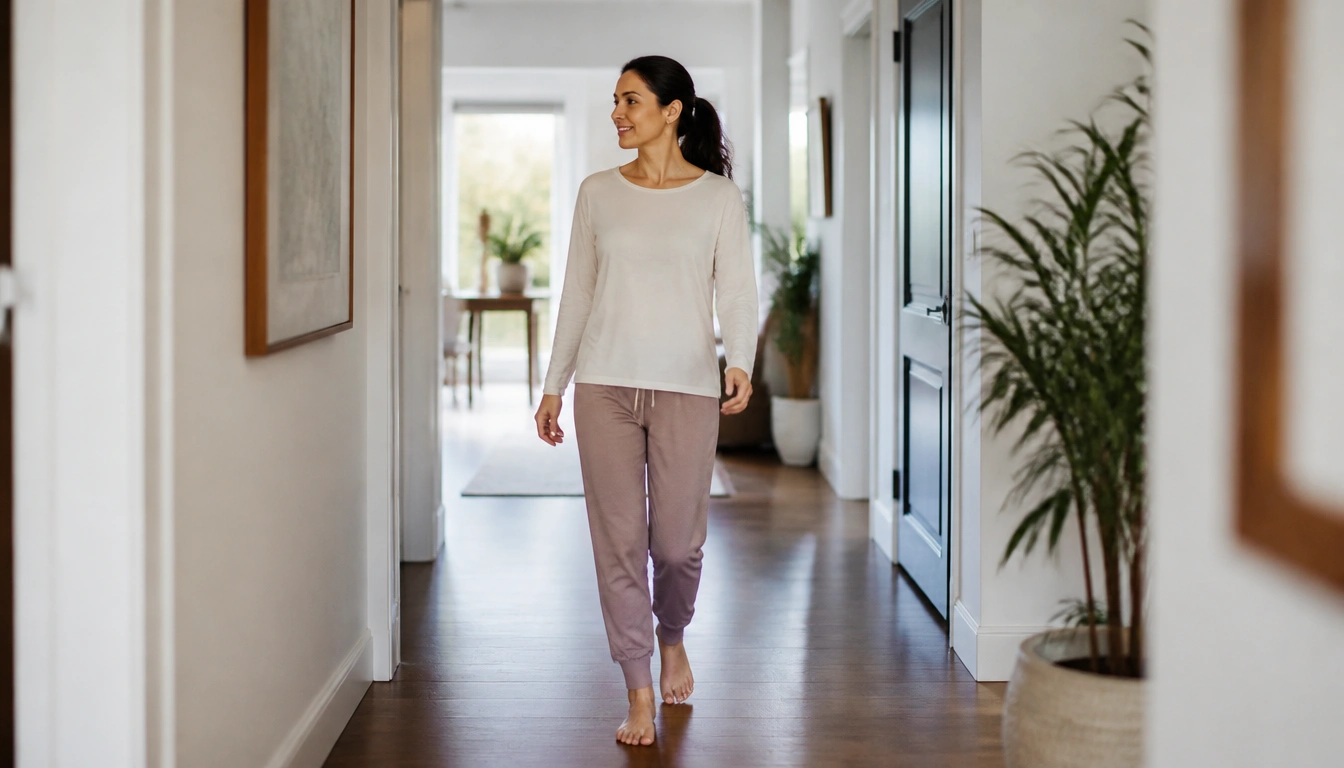
If you’re completely sedentary, start with a week-long movement habit that is small enough to feel easy and repeatable. The goal of the first week is not fitness transformation; it is showing up consistently, learning what a safe effort feels like, and breaking up long sitting periods with short walks or simple home movements. A few minutes at a time can count, and you do not need equipment, a gym, or a perfect plan to begin.
Key Takeaways
- The biggest early gains often come from moving at all, so the first week is about building a baseline rather than chasing performance.
- Short movement snacks spread through the day can count, even if they are only a few minutes long.
- You can judge safe beginner effort with the talk test and simple breathing cues instead of a wearable device.
- Older adults may benefit from early balance and stability work, while people with diabetes, high blood pressure, or sore joints can usually start gently with timing and load adjustments.
- Think of the week as a habit experiment: consistency matters more than intensity, and a small win is enough to continue.
Why this week is different from a normal workout plan
A week-long movement habit for absolute beginners is not a mini training camp. It is a low-pressure way to prove to yourself that movement can fit into your real life. Public health guidance from the CDC, the World Health Organization, and the NHS supports starting small and reducing sedentary time rather than waiting for a perfect routine.
For someone who has been inactive, the first relative health gains often come from moving at all. That is why the first week is about establishing a baseline: learning what feels manageable, noticing how your body responds, and creating a repeatable cue you can use again tomorrow. If you try to start with a large goal too soon, the plan can feel like a test you are destined to fail.
The better question is not, “How hard should I push?” It is, “How do I make movement so doable that I will actually do it again?” That shift lowers friction and helps the week feel like a practical experiment instead of a judgment on your fitness level.
How to judge effort without gear
You do not need a heart-rate monitor to know whether you are doing enough. The easiest beginner tool is the talk test. If you can still speak in full sentences while walking or moving, you are usually in a light to moderate zone that is appropriate for a first week. If you are gasping or unable to speak more than a few words, the effort is too high for a starting point.
A simple perceived-exertion cue also helps. On a scale from very easy to very hard, beginners can aim for a mild to moderate effort that feels like “I am working, but I could keep going.” That is different from strain, strain is not the goal here. You should finish a session feeling like you could repeat it tomorrow.
Safe beginner cues include steadier breathing, warmer muscles, and a slightly faster heartbeat. Stop or ease off if you feel dizziness, chest pressure, sharp pain, or a sense that your body is fighting the movement. For a first week, smooth and steady beats fast and forceful.
The seven-day movement blueprint
This sample plan is intentionally simple. Each day has one main action, and you can keep it short. If your schedule is busy, treat each task as a minimum, not a maximum.
Day 1: Take a five-minute walk at an easy conversational pace. If outdoor walking feels intimidating, walk inside your home, hallway, or around your room.
Day 2: Break up sitting with gentle sit-to-stands from a sturdy chair. Try a few repetitions once or twice during the day.
Day 3: Do five minutes of mobility work such as shoulder rolls, ankle circles, gentle torso turns, and slow reaching overhead.
Day 4: Repeat the Day 1 walk or split it into two shorter walks if that feels easier.
Day 5: Add one light strength pattern, such as wall push-ups or supported chair squats, using slow control and comfortable breathing.
Day 6: Use two favorite songs as a movement cue. Walk, sway, tidy, or stretch during the music.
Day 7: Reflect on what felt easiest, what felt awkward, and what you could repeat next week. This is a check-in day, not a test.
If a full day feels too big, reduce the task. A five-minute walk is still a real workout for a former non-mover, and two separate three-minute walks can be just as useful for habit building.
How to use movement snacks and no-equipment options
Movement does not have to happen in one 10-minute block to count. Short “movement snacks” scattered through the day can help break up sitting and make activity feel less intimidating. A two-minute walk to another room, a few chair stands, or a brief stretch break can all serve the same habit-building purpose: they interrupt long sedentary stretches.
This matters for people who work at a desk, care for others, or feel too busy for a structured workout. When you sit for long periods, the body gets fewer movement signals. Frequent small bouts can support metabolic health, mood, and alertness, and they are often easier to repeat than one long session.
Beginner-safe options at home include walking laps around a room, stepping in place, marching while watching TV, reaching overhead, heel raises at the counter, wall push-ups, chair squats, and gentle balance practice near a wall or sturdy surface. None of these require equipment or special clothing. The best option is the one you will actually do consistently.
Common beginner barriers and how to lower the friction
Time: Keep the minimum small enough that you can complete it on a bad day. Five minutes is a legitimate starting point. If you have more time, great; if not, you still kept the habit alive.
Confidence: Many people feel awkward because they are comparing themselves with experienced exercisers. Do not. The first week is not about looking fit. It is about showing up in a way your current body can tolerate.
Soreness: Mild muscle soreness can happen when you begin moving again, especially after sitting a lot. That is different from sharp pain, joint pain, or pain that worsens as you continue. Lower the next day’s effort if needed, shorten the session, or switch to gentler movement.
Boredom: Pair movement with music, a podcast, or a routine cue you already do every day, such as after brushing your teeth or after lunch. Habit research and public health guidance both support making the action obvious and easy to repeat.
If you feel stuck, make the plan smaller, not grander. The goal is to reduce friction until the first step feels almost automatic.
When to modify for age or common conditions
Older adults often benefit from early balance and stability work because it supports confidence and functional independence. Simple examples include standing near a counter and shifting weight side to side, rising from a chair, or practicing short balance holds with support nearby. These can be added early because they are practical, not because they are advanced.
People with diabetes, hypertension, or osteoarthritis can usually begin gently, but timing and load matter. With diabetes, it may help to avoid long gaps without food if you are prone to low blood sugar and to pay attention to how you feel before and after activity. With high blood pressure, begin with easy to moderate movement and avoid breath-holding or strain. With osteoarthritis, shorter sessions, smoother movements, and lower-impact options are often more comfortable than trying to “power through.”
During pregnancy or postpartum, the safest starting point is individualized. The NHS and other health authorities advise tailoring movement to the person’s current stage, symptoms, and medical guidance. If you are pregnant or recently postpartum, choose low-impact movement, avoid fall-risk activities, and follow the advice you were given by your clinician.
None of these situations automatically rule out gentle movement. They simply mean the starting point should be more individualized and more cautious.
Warning signs that mean stop and seek medical advice
Do not try to push through warning signs. Stop exercising and seek medical advice if you develop chest pain, fainting, severe shortness of breath, new confusion, or a racing or irregular heartbeat that does not settle with rest.
You should also stop if you get sharp joint pain, sudden swelling, instability, or pain that clearly worsens with movement. Muscle work can feel challenging, but pain that feels sharp, localized, or abnormal is different from normal effort. If the exercise seems to make you feel worse rather than gradually better, back off and get checked.
If you already have a diagnosed heart, lung, or metabolic condition and you are unsure what is safe, ask a healthcare professional before starting. The CDC and other public health bodies support gentle movement for many people, but individualized medical advice matters when symptoms or known conditions are part of the picture.
How to make week two feel automatic
At the end of the week, do not ask whether you became “fit.” Ask what was repeatable. Did a five-minute walk feel easy enough to keep? Did movement snacks work better than one longer session? Did chair stands feel useful, or did another option fit your day better?
Week two should usually feel familiar, not dramatic. Repeat the parts that worked and make only one small change at a time, such as adding a minute, adding one extra walk break, or swapping in a slightly harder version of an already comfortable movement. That keeps the routine from turning into a new project every Monday.
Think in terms of a loop: cue, movement, finish. The cue might be after coffee, after work, or after lunch. The movement might be short and plain. The finish might be a quick note in your phone saying you did it. That tiny record helps your brain treat the habit as real.
The first week is successful if it teaches you that movement is available, safe enough, and not reserved for gym people. Once that happens, consistency becomes much easier to grow.
Frequently Asked Questions
How much movement should an absolute beginner do on Day 1?
Start small enough that you will actually do it again. For many completely sedentary adults, that may be a five-minute walk or a few minutes of gentle home movement. The goal is to establish the habit, not to prove fitness on day one.
What counts as movement if I can’t do a real workout yet?
Anything that gets you out of long sitting periods and raises your activity a little can count: walking around the house, marching in place, chair stands, easy stretching, or light tidying. For a beginner, consistency matters more than whether it looks like a formal workout.
How do I know if the intensity is safe and not too hard?
Use the talk test. If you can speak in full sentences, the effort is usually in a beginner-friendly range. If you are gasping, dizzy, or unable to speak comfortably, slow down or stop. Safe beginner effort should feel manageable, not punishing.
Can short movement breaks during the day actually help?
Yes. Short breaks can help interrupt long sitting periods and make movement feel less intimidating. Even brief bouts repeated through the day may support metabolic health, mood, and consistency better than waiting for one long workout.
What if I have joint pain, diabetes, or high blood pressure?
Many people with these conditions can still start gently, but the plan should be adjusted. Keep the effort light to moderate, use lower-impact options, and pay attention to symptoms. If you have chest pain, dizziness, severe shortness of breath, or you are unsure what is safe, speak with a healthcare professional first.
The Bottom Line
If you are completely sedentary, the best first week is a small one. Choose one simple movement each day, keep the effort conversational, and treat short bouts as real progress. The early win is consistency, not transformation.
A week like this works because it lowers the barrier to entry. You are learning what fits your body, your schedule, and your confidence level. Once the habit feels repeatable, you can build gradually without making the plan feel intimidating.
Medical disclaimer
Medical disclaimer: This content is for educational and informational purposes only and is not a substitute for professional medical advice, diagnosis, or treatment. Dietary needs and supplement suitability vary by individual.
Sources
- National Health Service (NHS) — www.nhs.uk. Accessed November 2026.
- World Health Organization (WHO) — who.int. Accessed November 2026.
- National Institutes of Health (NIH) — nih.gov. Accessed November 2026.
- Centers for Disease Control and Prevention (CDC) — cdc.gov. Accessed November 2026.
- American College of Sports Medicine (ACSM) — acsm.org. Accessed November 2026.
