
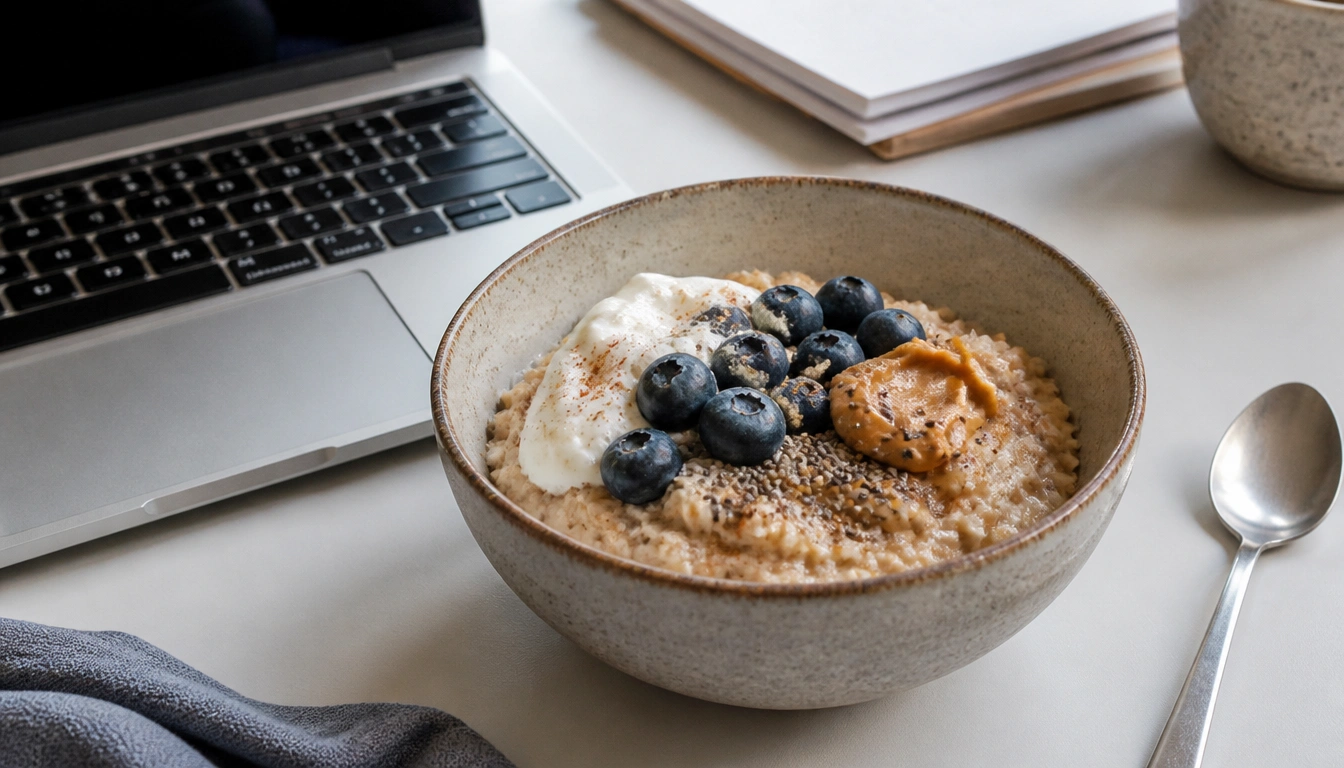
To keep oatmeal fulling longer without extra morning work, mix in protein, healthy fat, and a little extra fiber. Good fast options include Greek yogurt, cottage cheese, protein powder, nut butter, chia, flax, hemp hearts, and berries. Those add-ins help slow digestion, improve satiety, and reduce the chance of a mid-morning energy crash.
Key Takeaways
- Plain oats are a solid base, but they are mostly carbohydrate, so toppings matter if you want lasting fullness.
- A half-cup of dry oats gives roughly 4 grams of fiber and 5 to 6 grams of protein, so add-ins help turn breakfast into a more balanced meal.
- For the fastest upgrade, use protein plus healthy fat plus fiber: for example, yogurt, nut butter, and chia.
- If you are watching blood sugar, keep the oat portion moderate and lean harder on protein, seeds, and nuts.
- Increase oats, chia, and flax gradually if you are not used to high fiber, and drink enough fluid to reduce bloating.
Why plain oatmeal is a good base but not always enough for a busy morning
Oatmeal earns its reputation because it is fast, inexpensive, and easy to customize. It also brings soluble fiber, including beta-glucan, which helps slow digestion and supports steadier energy. The National Health Service notes that oats are a useful source of fiber, and that matters for heart health and digestive health as well.
That said, a plain bowl of oats is still mostly carbohydrate. A standard half-cup of dry oats provides about 4 grams of fiber and 5 to 6 grams of protein, which is helpful but often not enough on its own to keep a busy professional satisfied until lunch. If your mornings involve meetings, a commute, or back-to-back emails, breakfast needs a little more staying power.
The goal is not to make oatmeal complicated. It is to make it more balanced with the least possible effort. When you add protein, healthy fat, and a little extra fiber, you slow stomach emptying and make the meal more filling. That combination is especially useful if you tend to get hungry around 10:30 or 11 a.m. and reach for something sugary.
The fastest oatmeal upgrade formula: protein, healthy fat, fiber, and flavor
The simplest way to build a better bowl is to think in four parts: a base, a protein anchor, a fat source, and a flavor booster. Oats provide the base. The add-ins do the heavy lifting for fullness and taste.
Protein add-ins: plain Greek yogurt, cottage cheese, whey protein, soy protein, or pea protein are all practical choices. Greek yogurt and cottage cheese create a creamy bowl and can be stirred in after cooking. Protein powder works well when whisked into the liquid before heating or blended into overnight oats so it does not clump.
Healthy-fat and texture add-ins: nut butters, chia, ground flax, and hemp hearts each bring more satiety. Nut butters add richness and a few extra grams of protein. Chia and flax contribute fiber and healthy fats. Hemp hearts add a soft crunch and a more neutral taste, which is useful if you do not want a strongly nutty flavor.
A practical rule for a workday bowl is to add one protein source and one fat or seed source. That keeps the meal interesting without turning it into a long recipe. If your oats taste good, you are more likely to repeat the habit during busy weeks.
Best fruit and flavor add-ins for easier, better-tasting oatmeal
Fruit and spices matter because they make a higher-protein bowl feel satisfying instead of bland. Berries are one of the easiest choices: blueberries, raspberries, and strawberries add sweetness, color, and texture without much prep. Frozen berries are especially convenient because they can go straight into hot oats or thaw in overnight oats.
Cinnamon is the easiest flavor upgrade for people who want less sugar. Vanilla extract adds warmth and makes oatmeal taste richer without needing syrup. Nutmeg works well in smaller amounts for a more dessert-like flavor.
These add-ins do more than improve taste. When breakfast tastes good, you are less likely to compensate with a mid-morning snack. That is one reason flavor should be part of the plan, not an afterthought. For professionals trying to eat consistently on autopilot, the most sustainable breakfast is usually the one you actually want to repeat.
Two workday-friendly methods: microwave bowl vs. overnight oats
If you need breakfast in two minutes, the microwave bowl is the fastest option. Combine oats with water or milk in a large bowl, microwave, then stir in your toppings. Add protein after heating if you are using yogurt or cottage cheese so the texture stays smooth. If you use protein powder, mix it into the liquid first or stir thoroughly to avoid dry clumps.
For an even smoother morning, overnight oats remove cooking from the equation. Mix oats with liquid, protein, seeds, and fruit in a mason jar or similar container, then refrigerate. The brief allows for storage up to 2 days, which makes this a smart option for prepping a couple of breakfasts at once rather than making a full week’s supply.
Overnight oats are especially useful for commuters, people with early meetings, or anyone who wants breakfast ready to grab on the way out. They also travel well if you need to eat at your desk. If texture matters to you, adjust the liquid amount: less liquid gives a thicker, spoonable jar; more liquid gives a softer result.
The best method is the one you will use consistently. Some people prefer warm oats for comfort and satiety. Others like the convenience of a cold jar they can take to work. Both can be nutritionally strong if the add-ins are planned well.
How to build oatmeal for longer fullness and fewer cravings
To stay full longer, aim for a bowl that includes all three macronutrient supports: carbohydrate from oats, protein from dairy or plant sources, and fat from nuts or seeds. This combination slows digestion more than oats alone and can help keep blood sugar steadier through the morning.
If your usual breakfast leaves you hungry too soon, start by adding one protein item and one seed or nut item. For example, oats plus Greek yogurt and chia, or oats plus protein powder and peanut butter. You do not need every add-in at once. A few targeted additions are usually enough.
For people who are trying to avoid an energy crash, the structure of the meal matters as much as the ingredient list. A bowl that is mostly oats and fruit may taste healthy but still digest quickly. A bowl with protein and fat is more likely to carry you through a long meeting block.
Condition-specific note: if you have prediabetes, type 2 diabetes, or PCOS, a moderate oat base with more emphasis on protein, seeds, and nuts is often the better structure. That approach can help flatten the glucose rise after breakfast. Individual needs vary, so carb targets may need to be adjusted with a clinician or registered dietitian.
Gluten-free and allergy-aware shopping tips
Oats are naturally gluten-free, but cross-contamination can happen during processing. If you have celiac disease or non-celiac gluten sensitivity, choose oats that are specifically labeled certified gluten-free. That extra label matters because standard oats may be handled alongside wheat, barley, or rye.
If you are avoiding dairy, you can still build a filling breakfast. Soy protein, pea protein, hemp hearts, chia, flax, and nut butters all work well in a dairy-free bowl. Almond butter, peanut butter, and sunflower seed butter are common options, though sunflower seed butter is often useful if you need a nut-free choice.
For people with allergy concerns, read labels on protein powders, flavored yogurts, and granolas carefully. Cross-contact is common in packaged foods. If you pack oats for the office, store them in clean containers and separate them from shared kitchen utensils or communal toppings if that is a concern.
Common mistakes that make oatmeal less filling or less nutritious
One of the most common mistakes is building a bowl that is too carb-heavy. A large serving of oats with fruit and sweeteners may provide energy, but it can also leave you hungry again quickly. If the bowl does not include protein or fat, it is more likely to act like a snack than a complete breakfast.
Another mistake is adding too much sugar to make the oats taste better. Brown sugar, syrup, sweetened nut butters, or flavored creamers can turn a practical breakfast into something less balanced. If you want sweetness, start with berries, cinnamon, vanilla, or a small amount of fruit and see if that is enough.
Fiber can also become a problem if you increase it too quickly. If you suddenly add oats, chia, and flax all at once, you may get bloating or gas, especially if your usual diet is low in fiber. The safer approach is to increase gradually and drink enough water through the day. That gives your digestive system time to adjust.
Finally, be careful about assuming that “healthy” means “automatic.” Even nutrient-dense add-ins can become excessive if portions are very large. Nut butters, seeds, and dried fruit are useful, but they are meant to support the oats, not bury them.
Simple combination examples for different morning schedules and preferences
For the 2-minute microwave morning: oats, milk or water, a spoon of peanut butter, and a handful of blueberries. This is a good default when you want warmth, simplicity, and a more filling texture.
For a portable desk breakfast: overnight oats with Greek yogurt, chia, cinnamon, and raspberries. This version is easy to carry, spoonable, and well suited to eating between meetings.
For a dairy-free option: oats with soy protein, hemp hearts, flax, and vanilla. This gives you protein and texture without dairy and works well hot or cold.
For a lower-sugar morning: oats with cottage cheese, walnuts or almond butter, and cinnamon. If you prefer a milder flavor, add a few berries rather than a sweetened topping.
For blood sugar-conscious breakfasts: keep the oat portion moderate and build the rest of the bowl around protein and seeds. That may mean more yogurt, more chia, and fewer sweet toppings. The exact ratio should match your personal goals and medical advice.
These combinations are meant to be templates, not rules. Pick the one that fits your schedule, texture preference, and tolerance. The best oatmeal routine is the one that feels realistic on a Tuesday morning, not just on a perfect weekend.
Frequently Asked Questions
How can I make oatmeal higher in protein without cooking more?
Use add-ins that do not require extra cooking, such as Greek yogurt, cottage cheese, protein powder, soy protein, or pea protein. Stir yogurt or cottage cheese in after heating, or mix protein powder into the liquid before cooking so the texture stays smooth.
Which oatmeal add-ins help prevent a mid-morning energy crash?
The best choices are protein and healthy fat, because they slow digestion more than oats alone. Good options include nut butter, chia, flax, hemp hearts, Greek yogurt, and cottage cheese. Cinnamon and berries help with flavor so you do not need much added sugar.
Can I use overnight oats if I have no time in the morning?
Yes. Overnight oats are one of the easiest no-cook options for busy mornings. Make them the night before in a jar, refrigerate them, and grab them on your way out. They are especially helpful if you want breakfast ready before your workday starts.
What are the best oatmeal add-ins for blood sugar management?
A moderate oat base with more protein, seeds, and nuts is usually the most helpful structure. Greek yogurt, cottage cheese, protein powder, chia, flax, hemp hearts, and nut butters can make the meal more balanced and less likely to spike hunger soon after breakfast.
How do I make oatmeal more filling without adding lots of sugar?
Focus on protein, fat, and texture instead of sweeteners. Use plain yogurt or cottage cheese, nut butter, chia, flax, hemp hearts, cinnamon, vanilla, and berries. Those ingredients improve satiety and taste without relying on syrup or lots of refined sugar.
The Bottom Line
Plain oatmeal is a useful base, but it usually works best when you upgrade it with protein, healthy fat, and a little extra fiber. That combination can help you stay fuller longer and avoid the mid-morning slump that leads to random snacking.
For the fastest weekday approach, use either a two-minute microwave bowl or overnight oats in a jar. If you want better blood sugar support, keep the oat portion moderate and lean on protein-rich and seed-based add-ins. If you are not used to a high-fiber breakfast, build up gradually and drink enough water.
Medical disclaimer
Medical disclaimer: This content is for educational and informational purposes only and is not a substitute for professional medical advice, diagnosis, or treatment. Dietary needs and supplement suitability vary by individual.
Sources
- National Health Service (NHS) — www.nhs.uk. Accessed November 2026.
