
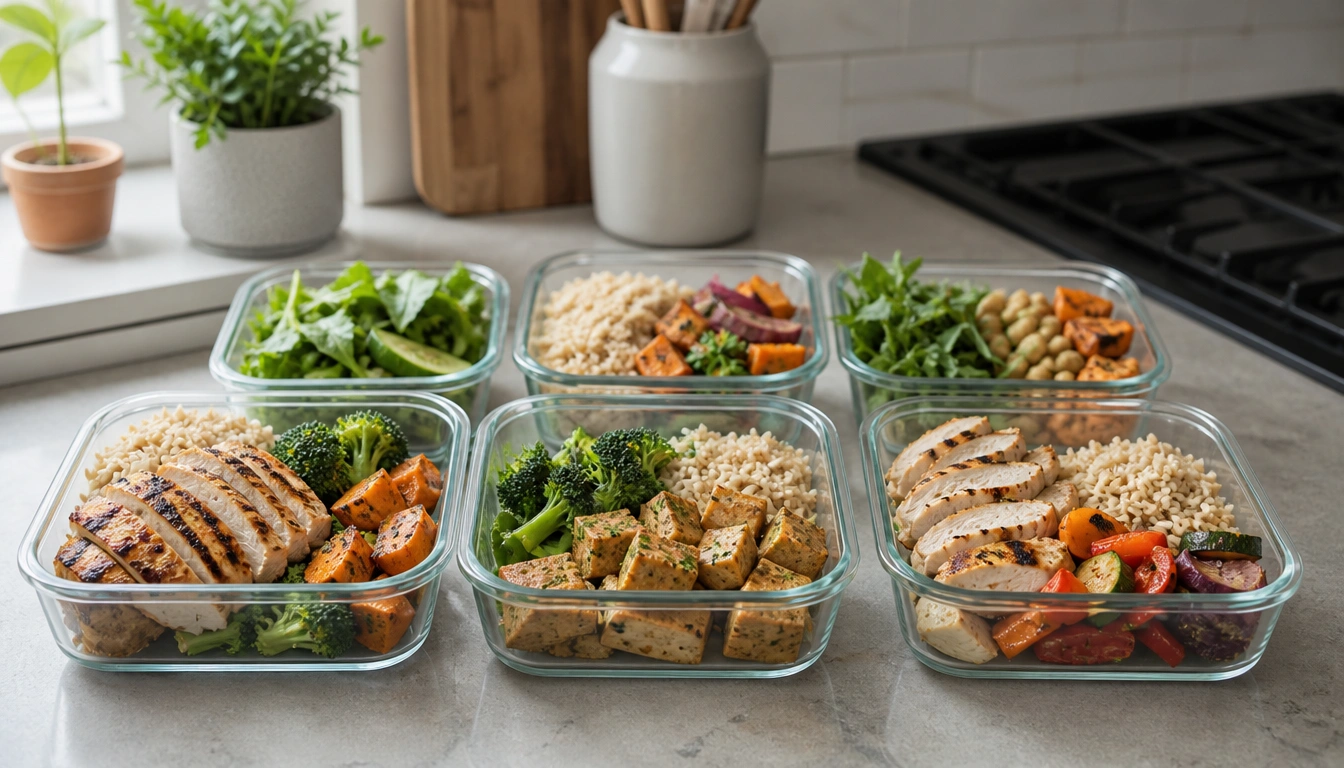
High-protein meal prep can be fast, safe, and realistic if you rely on a few repeatable meals instead of cooking from scratch all weekend. Aim first for a sensible daily protein target, then spread it across breakfast, lunch, dinner, and snacks. Build meals from a protein anchor plus fiber-rich carbs and vegetables, use batch-cooking methods that save time, and follow basic food-safety rules for cooling, storage, and reheating.
Key Takeaways
- Protein helps with satiety, muscle repair, and steadier meal structure, which can make busy workdays easier to manage.
- For many adults, the baseline protein recommendation is 0.8 g/kg/day, while active adults often use a higher practical range; needs vary by age, activity, and goals.
- Distributing protein across meals is often more useful than loading most of it into dinner.
- The easiest meal-prep formula is protein plus a fiber-rich carb plus vegetables, repeated in a few different flavor combinations.
- Food safety matters: keep cooked foods out of the 40°F–140°F danger zone, refrigerate promptly, and reheat leftovers to 165°F.
Why high-protein meal prep fits busy workweeks
High-protein meal prep works because it solves more than hunger. It gives you a default plan for days when meetings run late, energy drops, and decision-making gets harder. Protein-rich meals tend to be more filling than meals built mostly around refined carbs or snacks, which can help reduce the grab-a-random-lunch pattern that often leads to low-satiety eating later in the day.
There is also a workflow advantage. If you decide in advance what breakfast, lunch, and dinner will look like, you remove repeated choices from the workday. That matters when your schedule is full and your easiest option is usually the nearest convenience food. Meal prep does not have to mean rigid eating or eating the same container every day. It means creating a small system that makes better meals the easiest option.
From a nutrition standpoint, protein supports muscle maintenance and repair, but it is also part of a broader pattern. For busy professionals, the value often comes from consistency: fewer skipped meals, less reactive snacking, and a better chance of getting enough protein without tracking every bite all day.
How much protein to aim for across the day
The baseline public-health reference for sedentary adults is the Recommended Dietary Allowance of 0.8 grams of protein per kilogram of body weight per day. That level is intended to prevent deficiency, not necessarily to optimize satiety, training recovery, or body composition goals. Many active adults use a higher practical range, often around 1.2 to 1.6 grams per kilogram per day, depending on size, training load, age, and overall energy needs.
That higher range is not a universal requirement. Some people do well with less, especially if they are not very active and are eating enough total calories from nutrient-dense foods. Others may benefit from the higher end because they train regularly, have physically demanding jobs, or are trying to preserve lean mass while losing fat. The main point is to use the range as a planning tool, not a moral target.
Protein distribution matters too. Instead of saving most protein for dinner, spread it across breakfast, lunch, dinner, and one or two snacks if needed. That approach can support satiety during the workday and may better stimulate muscle protein synthesis than putting most protein into one meal. A practical pattern is to anchor each meal with a meaningful protein portion rather than treating breakfast as optional and lunch as a stopgap.
For office schedules, distribution can be simple: a protein-forward breakfast, a lunch with a clear protein anchor, a dinner built the same way, and a snack that includes protein if the gap between meals is long. If mornings are rushed, even a small protein-containing breakfast is often better than none, because it reduces the need to “make up” for it later with grazing.
The simplest high-protein meal prep formula
The easiest structure is a repeatable plate: protein + fiber-rich carb + vegetables. That formula works because it is flexible, satisfying, and easy to scale up or down based on appetite and activity.
Start with a protein anchor such as chicken, turkey, tofu, tempeh, fish, shrimp, lean beef, eggs, Greek yogurt, cottage cheese, beans, or lentils. Then add a carb that holds up well after refrigeration, such as brown rice, quinoa, sweet potatoes, whole-grain pasta, farro, or chickpeas. Finish with vegetables that reheat without turning watery too quickly, such as broccoli, green beans, Brussels sprouts, peppers, carrots, or cabbage.
This formula helps with more than macros. Fiber-rich carbs and vegetables improve meal volume and texture, which makes prepped food feel less repetitive. They also help keep the plate balanced so your meal is not just a pile of protein with nothing else to make it satisfying.
To keep prep efficient, choose two proteins, two carbs, and two vegetable options for the week. That gives you enough variety to avoid boredom without turning meal prep into a custom cooking project every Sunday.
Best high-protein foods that batch-cook well
The most practical meal-prep proteins are the ones that cook quickly, hold their texture, and taste fine after reheating. Chicken breast and thighs, turkey, lean ground beef, pork tenderloin, tofu, tempeh, salmon, tuna, eggs, lentils, beans, and edamame all fit that role in different ways.
For batch cooking, poultry and lean ground meats are useful because they can be seasoned in several directions at once. Tofu and tempeh work well when you want a plant-based option that still feels substantial after refrigeration. Beans, lentils, and edamame are especially helpful when you want to save money or reduce prep time, since they can be used from canned, frozen, or minimally cooked forms.
Some foods are more office-friendly than others. Chili, shredded chicken, grain bowls, tuna-based salads, lentil stew, turkey meatballs, and tofu stir-fry usually reheat well. Foods with crisp coatings, delicate fish, or very watery sauces may lose texture faster, so they are better saved for meals that will be eaten soon after cooking.
If you want the lowest-friction option, include at least one protein that can be bought pre-cooked or ready to use, such as rotisserie chicken, canned salmon, Greek yogurt, cottage cheese, or canned beans. Convenience does not have to mean poor nutrition; it just has to be chosen intentionally.
Fast prep methods that cut weekend cooking time
Sheet-pan cooking is one of the simplest ways to reduce effort. Put protein and vegetables on the same pan, use parchment for easier cleanup, and season everything in one pass. If the foods cook at similar temperatures, you can make several portions with very little hands-on time.
Slow cookers and pressure cookers are also strong options for busy professionals. A slow cooker can turn chicken, pork, or beans into several meals with minimal attention. A pressure cooker is useful when you need speed and want shredded meat, soups, or grain-based meals without hovering over the stove. Both methods are especially helpful when your schedule makes active cooking unrealistic.
Pantry shortcuts can shorten prep even further. Canned tuna, salmon, beans, and lentils; frozen edamame; microwaveable grains; pre-washed greens; and plain Greek yogurt can all become part of a higher-protein plan without much cooking. These items are especially useful on weeks when you want a plan that is realistic rather than perfect.
To save time, think in batches instead of recipes. Roast one tray of protein, one tray of vegetables, and a pot of grains, then mix and match into different containers. Changing the sauce or seasoning is often enough to make the same base ingredients feel different across several meals.
Storage and food safety that protect your prep
Good meal prep is only useful if it stays safe to eat. Cooked food should not sit in the 40°F–140°F danger zone for long, because that temperature range allows bacteria to grow quickly. The USDA and FDA guidance is to refrigerate perishable cooked food within 2 hours, or within 1 hour if the room is very hot.
Once food is cooled and stored, keep the refrigerator at or below 40°F and plan to eat refrigerated meal-prep portions within 3 to 4 days. If you know you will not finish the food in that window, freeze portions sooner rather than later. Freezing is often the easiest way to make meal prep work beyond the first half of the week.
Let hot food cool briefly before sealing containers so steam does not trap excess moisture and soften the food too much. Use shallow containers when possible, because food cools faster and more evenly that way. Keep raw animal proteins separate from ready-to-eat foods, and wash hands, boards, knives, and counters after contact with raw meat, poultry, or seafood.
When reheating, bring leftovers to 165°F throughout. That target matters for safety, especially for chicken, turkey, and mixed dishes. If you reheat at work, stir the food partway through so cold spots do not remain in the center.
How to adapt meal prep for age, activity, and body goals
Meal prep is not one-size-fits-all. Older adults may need a higher protein concentration per meal because of anabolic resistance, which means the body is less responsive to smaller protein doses. In practice, that often means paying more attention to the amount of protein in each meal, not just the day’s total.
If you are highly active, train regularly, or have a physically demanding job, you may need more protein and more total food than someone with a more sedentary schedule. In that case, meal prep can be used to protect recovery and avoid under-eating on long days. The same basic formula still works; the portions may simply be larger.
If your goal is body composition, meal prep helps because it makes protein intake more predictable. That is useful whether you are trying to maintain muscle while losing fat or simply avoid inconsistent eating patterns. The best setup is the one you can repeat during real workweeks, not only on ideal weekends.
If appetite is low, split intake into smaller meals or add protein-rich snacks. If appetite is high, increase the volume of vegetables and the size of your protein portions while keeping the overall structure the same. The plan should fit your schedule, not fight it.
When high-protein meal prep needs medical guidance
High-protein meal prep is not a DIY project for everyone. People with chronic kidney disease should not increase protein intake without clinician guidance, because higher protein loads may be inappropriate depending on kidney function and treatment plan. Some liver conditions also require individualized nutrition advice, especially when protein needs, fluid balance, or medication interactions are part of care.
You should also check with a registered dietitian or physician before making large diet changes if you are pregnant or breastfeeding, have gastrointestinal disorders, manage diabetes or other metabolic conditions, or have a history of eating disorder behavior. In those situations, the right protein target and meal pattern depend on more than convenience.
Professional guidance is useful even when there is no medical diagnosis. If you are unsure how much protein to eat, need help fitting meals into a shift schedule, or want a plan that matches budget limits and food preferences, an RD or RDN can help you personalize the structure without making it more complicated than it needs to be.
Frequently Asked Questions
How much protein should a busy professional aim for each day?
The general baseline recommendation for sedentary adults is 0.8 grams per kilogram of body weight per day. Many active adults use a higher practical range, often about 1.2 to 1.6 grams per kilogram per day, but needs vary with age, activity, and medical status.
How can I spread protein across meals for better satiety and muscle maintenance?
Try to include a clear protein source at breakfast, lunch, and dinner instead of loading most of it into one meal. If your workday is long, add a protein-containing snack between meals. The goal is consistent intake, not perfection at every meal.
What are the easiest high-protein foods to batch cook or buy pre-cooked?
Chicken, turkey, lean ground beef, tofu, tempeh, beans, lentils, salmon, tuna, eggs, Greek yogurt, cottage cheese, and edamame are all practical. Pre-cooked items like rotisserie chicken or canned fish can save time when your schedule is tight.
How long can meal-prepped protein meals safely stay in the fridge?
Most cooked meal-prep foods should be eaten within 3 to 4 days if the refrigerator is at or below 40°F. If you will not use them in that window, freeze the portions earlier rather than waiting until they seem questionable.
What is the safest way to reheat meal-prepped food?
Reheat leftovers until they reach 165°F throughout. Stirring halfway through helps avoid cold spots, especially in thicker dishes like rice bowls, casseroles, chili, and shredded meat meals.
The Bottom Line
High-protein meal prep works best when it is simple enough to repeat during a real workweek. Use a protein-first template, spread protein across the day, and rely on a small set of meals that reheat well instead of trying to cook something new every day.
Food safety is part of the plan, not an extra step. Keep cooked food out of the danger zone, refrigerate promptly, use frozen portions when needed, and reheat leftovers to 165°F. If you have kidney disease, certain liver conditions, or another medical issue that affects nutrition, get individualized advice before making protein a bigger part of your routine.
The most sustainable version is the one that lowers friction: fewer decisions, fewer takeout emergencies, and a meal plan that fits your schedule instead of dominating it.
Medical disclaimer
Medical disclaimer: This content is for educational and informational purposes only and is not a substitute for professional medical advice, diagnosis, or treatment. Dietary needs and supplement suitability vary by individual.
