
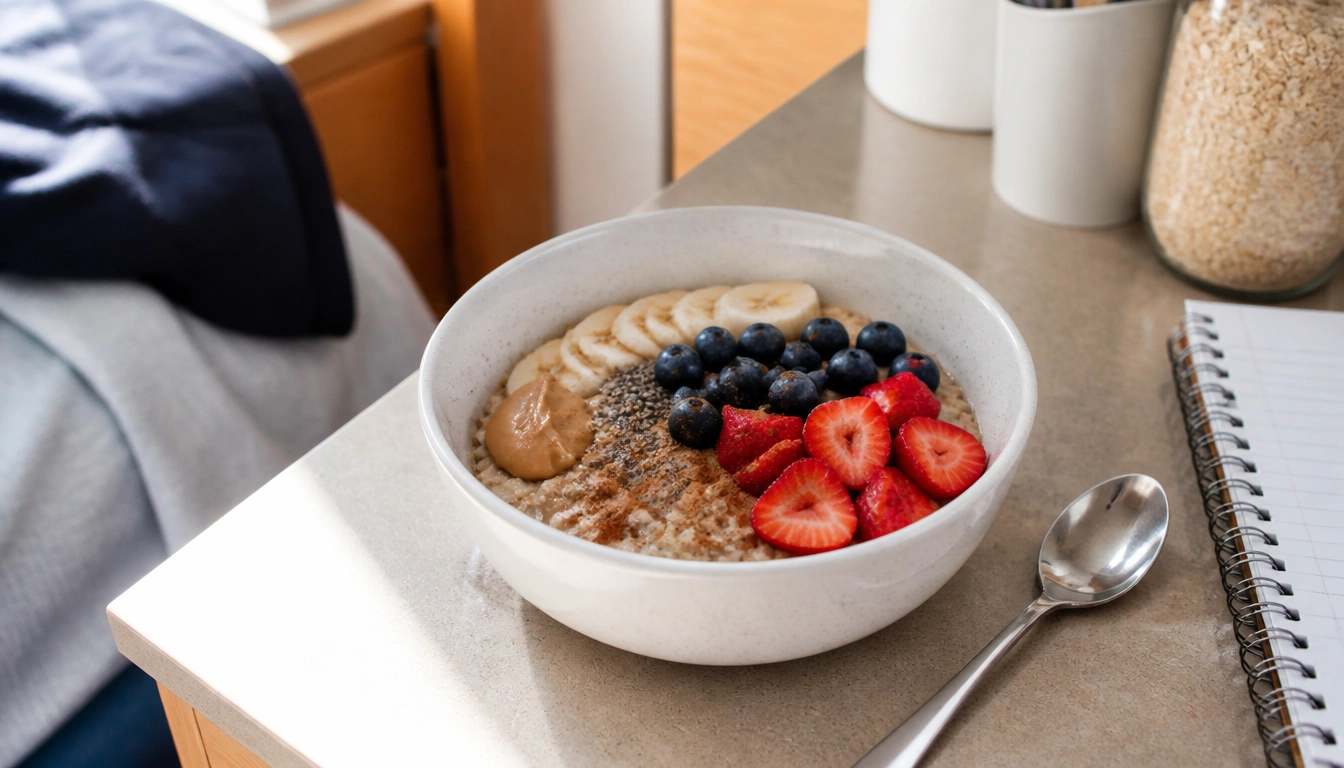
The best quick oatmeal toppings for college students are the ones that add protein, fiber, and a little healthy fat without much prep: nut or seed butter, chia or ground flax, nuts, cinnamon, cacao nibs, frozen berries, banana, Greek yogurt, and cottage cheese. These toppings make oatmeal more filling, help steady energy, and are easy to keep in a dorm pantry or mini-fridge.
Key Takeaways
- Start with oats, then add at least one protein, fiber, or healthy-fat topping so the bowl keeps you full longer.
- Dorm-friendly staples include nut butters, seeds, nuts, cinnamon, cacao nibs, and dried fruit because they store well and need no cooking.
- Mini-fridge add-ins like Greek yogurt, cottage cheese, bananas, and frozen berries improve flavor, creaminess, and satiety fast.
- Use small portions for calorie-dense toppings such as nuts and nut butters so the bowl stays balanced and budget-friendly.
- Choose gluten-free oats if you need them, and use seed butter or seed toppings if you must avoid nuts.
- If you are increasing fiber from a low-fiber diet, build up gradually and drink enough water to reduce bloating or discomfort.
How to build a better bowl for fullness and energy
Quick oatmeal toppings work best when they do more than make the bowl taste better. A plain bowl of oats gives you a solid carbohydrate base, but it can wear off quickly if it is the whole meal. The smarter approach is to pair oats with protein, fiber, and/or healthy fat. That combination helps slow digestion, supports steadier energy, and makes a mid-morning snack less likely.
Oats already bring a useful advantage: they contain soluble fiber called beta-glucan, which forms a gel-like texture as it digests. That natural thickness helps slow the way carbohydrate enters the bloodstream. Toppings can strengthen that effect. A spoonful of nut butter, a sprinkle of chia or flax, or a scoop of Greek yogurt makes the bowl more satisfying without turning breakfast into a complicated recipe.
A practical dorm formula is simple: oats + one protein or fat source + one fiber-boosting or flavor topping. For example, oats with peanut butter and banana, or oats with Greek yogurt and berries, or oats with chia and cinnamon. You do not need every topping at once. One or two well-chosen additions usually work better than piling on a long list of extras.
This also helps with the common “eat fast, get hungry fast” problem that shows up when students rely on plain instant oats. A little structure at breakfast can make it easier to sit through class, focus on studying, and avoid buying a second breakfast later.
If you are trying to save money, think in categories rather than single recipes. Keep one pantry fat, one pantry crunch, one fruit option, and one fridge protein option on hand. That way you can rotate flavors without buying a new breakfast every week.
Shelf-stable toppings that work well in a dorm pantry
For students with limited storage, shelf-stable toppings are the easiest place to start. These ingredients need little or no refrigeration, travel well, and can be portioned out in small amounts. They are especially useful if you are making microwave oats between classes or storing breakfast supplies on a narrow dorm shelf.
Nut butters are one of the most useful options. Peanut butter, almond butter, and sunflower seed butter all add creaminess and staying power. They also help oatmeal taste richer without requiring much effort. Stir a spoonful into hot oats so it melts through the bowl, or dollop it on top and swirl it in as you eat.
Seeds are another dorm-friendly staple. Chia seeds, ground flaxseed, and hemp seeds add fiber and a subtle boost of fat and protein. Chia especially thickens oatmeal, which can make a small bowl feel more substantial. Ground flax blends in easily and has a mild flavor, while hemp seeds add a soft, nutty taste.
Nuts bring crunch and flavor. Walnuts, sliced almonds, and pecans work well because they can be stored in a sealed container and sprinkled on at the last minute. They are a good choice when you want texture more than sweetness. A small handful goes a long way.
Cinnamon and cacao nibs are low-effort ways to make oatmeal taste less plain. Cinnamon gives warmth and sweetness without added sugar. Cacao nibs add a bitter chocolate note and crunch, which can make oats feel more like a treat. A small amount is usually enough.
Dried fruit can help when you want natural sweetness. Raisins, dried cranberries, or chopped dried apricots are easy to store and use. Because dried fruit is concentrated, a little is often enough. It works best when paired with protein or fat so the bowl does not turn into a sugar-heavy breakfast.
A useful way to organize your pantry is by function: one topping for creaminess, one for crunch, one for sweetness, and one for extra fiber. That makes it easier to mix and match without buying a lot of ingredients.
Mini-fridge and freezer toppings that add protein or freshness
If you have access to a mini-fridge or freezer, a few chilled toppings can make oatmeal much more filling and interesting. These are especially helpful when you want breakfast to feel less repetitive without adding more cleanup.
Greek yogurt is one of the easiest protein add-ins. Stir it into warm oats after cooking, or spoon it on top if you like a cold-and-warm contrast. It makes the texture creamier and can help a simple bowl feel more complete. Plain yogurt gives you the most flexibility with sweetness; vanilla can be useful if you prefer a sweeter breakfast without adding much extra effort.
Cottage cheese also works well for students who want a quick protein boost. It softens into warm oats and adds a mild, creamy texture. If you are unsure about the taste, start with a small amount and pair it with fruit or cinnamon.
Bananas are one of the best budget-friendly toppings for students. They are portable, easy to slice, and naturally sweet. A ripe banana can help replace extra sugar while still making the bowl taste familiar and comforting. Mash half into the oats while cooking, or slice it on top.
Frozen berries are especially practical for dorm life. They are usually prewashed, easy to portion, and useful for both microwave oats and overnight oats. They cool down hot oatmeal quickly and add color, tartness, and freshness. Berries also pair well with yogurt, seeds, and cinnamon.
These toppings are useful because they let you shift your breakfast based on what you already have. If you want a colder, thicker bowl, use yogurt and berries. If you want something warmer and more filling, add banana and nut butter. If you want a quick high-protein option before a long class day, cottage cheese works well with oats, cinnamon, and fruit.
Best quick topping combinations by goal
Most students do better with a few repeatable oatmeal formulas than with a long list of random toppings. The goal is not to create the most elaborate bowl. The goal is to make breakfast easy enough that you will actually eat it.
| Goal | Good topping combo | Why it works |
|---|---|---|
| Cheaper | Banana + cinnamon + peanut butter | Uses affordable ingredients and adds sweetness, fat, and staying power |
| Higher protein | Greek yogurt + chia seeds + berries | Adds protein plus fiber and fresh flavor |
| Sweeter without added sugar | Banana + cinnamon + walnuts | Natural sweetness with crunch and healthy fat |
| Crunchier | Sliced almonds + cacao nibs + a spoonful of nut butter | Creates texture and richness without needing many ingredients |
If you want a bowl that feels more dessert-like, use banana, cinnamon, and a small amount of cacao nibs. If you want something more breakfast-forward and filling, choose Greek yogurt, chia, and berries. If you want a simple grab-and-go bowl, nut butter and sliced fruit are usually enough.
Students on a tight budget can also build a rotation around a few “anchor” ingredients. For example, keep oats plus one nut or seed butter, one seed, and one fruit. That keeps the cost down and avoids food waste. A single ingredient can change the flavor enough that breakfast does not feel repetitive.
If your mornings are chaotic, choose combinations that require almost no measuring. Spoon on nut butter, add fruit, and eat. Or stir in seeds while the oats are cooking, then top with cinnamon. Small routines are easier to keep than complicated meal plans.
Portion guidance for calorie-dense toppings
Nut butters, nuts, and seeds are excellent oatmeal toppings, but they are also energy-dense. That is helpful if you need a breakfast that holds you until lunch, but it can add up quickly if you are using several of them at once. Portioning matters because the bowl can shift from balanced to heavy without much warning.
A good student habit is to treat calorie-dense toppings as accent ingredients, not the whole meal. A spoonful of nut butter is usually enough to add flavor and satiety. A small sprinkle of nuts or seeds often gives enough texture to keep the bowl interesting. You do not need to cover the entire surface of the oatmeal to get the benefit.
If you are trying to stay full, combine a modest amount of a fat-rich topping with a fiber-rich one. For example, nut butter plus chia, or walnuts plus berries, or sunflower seed butter plus cinnamon and banana. That way you get more staying power without relying on a very large portion of any one ingredient.
If you are watching your budget, portioning also helps your groceries last longer. A jar of nut butter disappears fast if it is used generously every morning. Using a smaller amount and pairing it with fruit or seeds stretches the ingredient farther.
For students who are active or have a larger appetite, a slightly bigger portion of nuts or nut butter may make sense. For students who want a lighter breakfast, choose fruit and yogurt as the main toppings and use nuts or seeds as a smaller finish. The right amount depends on your hunger, schedule, and overall eating pattern, not on one fixed rule.
Special considerations for blood sugar, gluten-free oats, and nut-free dorm kitchens
Students with diabetes or prediabetes can still use oatmeal, but the topping strategy matters. Oats on their own are a carbohydrate source, so they work better when paired with protein, fiber, or healthy fat. Chia seeds, ground flax, nuts, seed butter, Greek yogurt, and cottage cheese can all help make the bowl more balanced. Keeping the oat portion moderate and adding these toppings is a practical way to support steadier blood sugar.
For students who need gluten-free oats, the key issue is not oats themselves but cross-contact during processing. Oats should be labeled gluten-free if you need them for celiac disease or gluten sensitivity. The toppings in this guide can still fit a gluten-free breakfast, as long as the packaged foods you choose are also confirmed gluten-free when needed.
If you have a nut allergy or share a dorm kitchen with people who do, seed-based toppings are the most useful alternative. Sunflower seed butter, chia seeds, flax, hemp seeds, cinnamon, bananas, and berries all work well without nuts. They can still make oatmeal filling and flavorful. If you are buying packaged toppings, read labels carefully because cross-contact can happen in shared facilities.
Another practical issue is fiber adjustment. If your usual diet is low in fiber and you suddenly switch to oats plus seeds, your stomach may need time to adapt. The easiest safeguard is to add fiber gradually and drink enough water. That can reduce bloating, gas, or discomfort while your body adjusts.
If oatmeal or any new breakfast pattern causes ongoing digestive upset, or if you have blood sugar concerns and are unsure how to structure meals around classes and activities, a registered dietitian or university health clinician can help you personalize the plan.
Simple ways to upgrade microwave oats versus overnight oats without extra cleanup
Microwave oats and overnight oats both fit college life, but they call for slightly different topping habits. The best choice is usually the one you are most likely to repeat during a busy week.
Microwave oats are ideal when you want something hot and fast. Add oats and liquid, cook, then stir in toppings that melt or soften easily. Nut butter, cinnamon, banana, and chia all work well. Frozen berries are especially useful because they cool the bowl quickly while adding flavor. If you want Greek yogurt or cottage cheese, stir it in after cooking so the texture stays smooth.
Overnight oats are better when you want a no-cook option for mornings when every minute counts. Mix oats with liquid and a few toppings the night before, then store it in the fridge. Chia, flax, yogurt, berries, and banana all fit well here. Overnight oats are also a good place to use cinnamon or cacao nibs because the flavors have time to blend.
If you want the least cleanup possible, use toppings that can go in by the spoonful from the container: nut butter, yogurt, fruit, and seeds. You do not need a blender, stove, or separate mixing bowl. A jar, bowl, or reusable container is enough.
For the most flexible dorm setup, keep two topping sets: one pantry set and one fridge set. Pantry toppings cover days when you are rushing out the door or do not have space for much storage. Fridge toppings cover days when you want a creamier, more filling breakfast. That small system makes oatmeal feel less boring without making breakfast a project.
Frequently Asked Questions
How do I make oatmeal more filling without spending much money?
Use one low-cost protein or fat source and one fiber-boosting topping. Peanut butter, sunflower seed butter, chia, flax, banana, and cinnamon are inexpensive ways to make oats more satisfying without a lot of prep or cleanup.
Which oatmeal toppings are shelf-stable for dorm life?
Good shelf-stable options include nut or seed butter, chia seeds, ground flax, hemp seeds, walnuts, almonds, pecans, cinnamon, cacao nibs, and dried fruit. These keep well in a pantry and work for microwave oats or overnight oats.
What toppings work best for microwave oats or overnight oats?
Microwave oats do well with banana, nut butter, cinnamon, and frozen berries. Overnight oats work especially well with chia, flax, yogurt, berries, and banana because they soften and blend overnight without extra cooking.
How can I add protein to oatmeal quickly?
The fastest options are Greek yogurt, cottage cheese, nut butter, hemp seeds, and chia seeds. Stir them in after cooking or layer them on top. These choices add protein without requiring a full kitchen.
What oatmeal toppings are best if I need to watch blood sugar?
Pair oats with protein, fiber, or healthy fat rather than eating them plain. Helpful toppings include chia, flax, nuts, seed butter, Greek yogurt, and cottage cheese. Keeping the oat portion moderate and avoiding lots of added sugar is also useful.
The Bottom Line
The best quick oatmeal toppings for college students are the ones that are easy to keep, easy to use, and good at making a bowl more filling. For most dorm kitchens, that means a mix of nut or seed butter, seeds, nuts, cinnamon, fruit, and a fridge protein like Greek yogurt or cottage cheese.
If you want the simplest system, keep one shelf-stable topping for creaminess, one for crunch, and one fresh topping for flavor. That gives you enough variety to avoid oatmeal boredom while still keeping breakfast cheap, fast, and low-cleanup.
Medical disclaimer
Medical disclaimer: This content is for educational and informational purposes only and is not a substitute for professional medical advice, diagnosis, or treatment. Dietary needs and supplement suitability vary by individual.
Sources
- Academic Research Institution — harvard.edu. Accessed November 2026.
- Johns Hopkins Medicine — hopkinsmedicine.org. Accessed November 2026.
- fns-prod.azureedge.us — azureedge.us. Accessed November 2026.
