
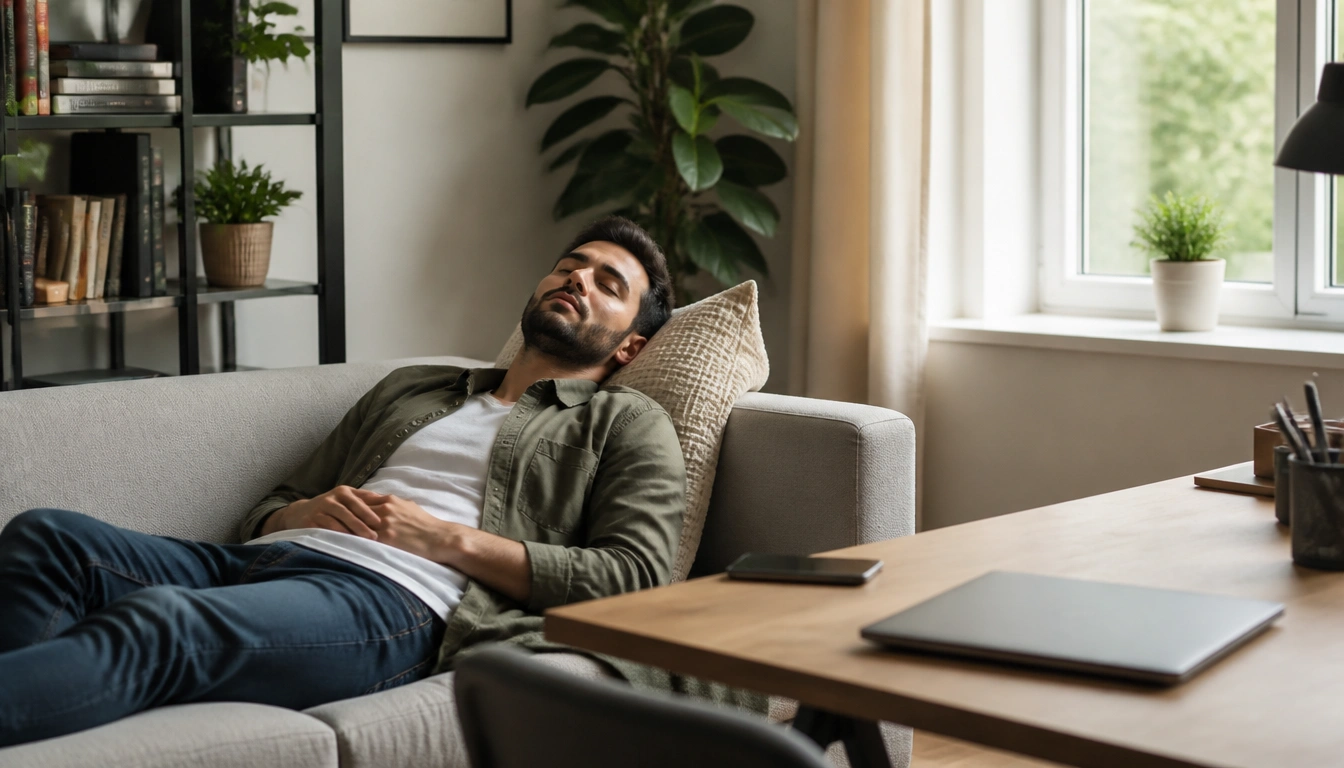
Yes—if you keep it short, early enough in the day, and easy to end. For most healthy adults working from home, the simplest nap routine is a 15–20 minute nap in the early afternoon, with a hard alarm and a quick reset afterward. That timing can help you recover alertness without dropping into deep sleep, which is what usually causes grogginess and can make it harder to sleep tonight.
Key Takeaways
- The best time for a work-from-home nap is usually early afternoon, when the natural circadian dip makes sleep more likely and nighttime sleep less likely to be affected.
- A 15–20 minute nap is different from a longer one: it is less likely to trigger deep sleep and the groggy feeling known as sleep inertia.
- If you tolerate caffeine, a caffeine nap can be useful: drink coffee right before a short nap so the caffeine is kicking in as you wake up.
- Set up your nap like a work task: block time, silence notifications, and use an alarm so the nap does not drift into a long sleep session.
- If you are napping often because you cannot stay awake, or daytime sleepiness is becoming routine, that may need medical evaluation rather than just a better nap plan.
Why naps can help during the work-from-home afternoon energy dip
A simple nap routine for people working from home works best when you match it to the body’s natural rhythm. Many adults feel a predictable dip in alertness in the early to mid-afternoon, often around 1 p.m. to 3 p.m. That slump is not just a mindset issue. It reflects your circadian rhythm, plus the sleep pressure that builds as the day goes on.
For remote workers, this can be a useful window for a short reset. A brief nap may improve alertness, mood, and concentration without needing a big interruption to the workday. The benefit comes from timing and restraint. If you nap randomly, or too long, the same routine can leave you foggy instead of refreshed.
Think of a nap as a targeted recovery tool, not a substitute for sleep at night. The goal is to reduce the afternoon drag enough to finish the day clearly and still sleep well later.
Who this routine is for, and who should skip or rethink daytime napping
This kind of nap routine is most useful for healthy adults who are short on afternoon energy, have a flexible remote schedule, and want a controlled way to reset without losing the evening. It can also help people whose work demands sustained focus after lunch, especially if their mornings are busy and they cannot simply power through the slump.
Some people should be more cautious. If you already struggle with insomnia, frequent nighttime awakenings, or trouble falling asleep, daytime napping can make those patterns harder to fix. Sleep specialists often advise avoiding naps when the main problem is poor nighttime sleep. The same is true if your naps routinely turn into long sleep sessions, because that may be reinforcing a sleep schedule that is drifting away from nighttime rest.
There are also situations where daytime sleepiness should not be treated as a normal work-from-home annoyance. If you are suddenly needing naps every day despite giving yourself enough time in bed at night, or if your sleepiness feels intense, new, or hard to explain, it is worth discussing with a healthcare professional. Persistent sleepiness can point to a sleep disorder or another medical issue.
The simplest evidence-based nap recipe: timing, duration, and alarm setting
The most practical nap formula is also the most boring: early afternoon, short duration, hard stop. Public health and sleep medicine guidance from organizations such as the CDC, NIH, and the American Academy of Sleep Medicine generally supports short naps, usually around 15 to 20 minutes, with a maximum of about 30 minutes. That range helps you get some recovery without drifting into deeper stages of sleep.
Longer naps are more likely to backfire because you may wake from slow-wave sleep, which is where sleep inertia becomes more noticeable. Sleep inertia is the heavy, disoriented, sluggish feeling that can last after waking. If you have ever stood up from a nap and felt worse than before, that effect is a likely reason.
A useful routine is simple:
- Choose a nap window in the early afternoon, ideally before late afternoon.
- Set one alarm for about 20 minutes, not “whenever I wake up.”
- Give yourself a few minutes to fall asleep, knowing that the alarm is there to protect the nap from becoming too long.
- Keep the nap short enough that you can return to work without a long recovery period.
If you regularly need a longer sleep to function, that is a different question from a strategic short nap. In that case, the issue may be sleep debt, poor nighttime sleep, or something else that needs attention.
How to set up a nap-friendly home-office environment without overcomplicating it
Remote work makes napping easier in theory, but it also makes boundaries easier to lose. A nap-friendly setup does not need special equipment. It just needs fewer interruptions and less temptation to keep sleeping.
First, move away from the desk if you can. Sleeping slumped at a keyboard is usually uncomfortable and often too stimulating to be restful. A couch, bed, or supportive chair can work better, as long as you are still planning a short nap rather than a full sleep session. If light or noise is a problem, use an eye mask, white noise, or a quieter room.
Second, silence the usual work triggers. Put your phone on do not disturb, mute desktop alerts, and let family members or housemates know you are unavailable for a few minutes. The less likely you are to be startled awake, the less likely the nap is to feel fragmented. That matters, because broken sleep can be just as unsatisfying as sleep that is too long.
Third, make the setup frictionless. If it takes ten minutes to prepare, the routine is less likely to stick. A successful work-from-home nap should feel ordinary, brief, and repeatable.
The caffeine nap option: when it may help and when to skip it
For some people who tolerate caffeine, the caffeine nap is a useful remote-work strategy. The idea is simple: drink coffee or another caffeinated drink right before a short nap. Caffeine takes a while to be absorbed and start working, so by the time you wake up, the alerting effect is beginning to kick in. That can make the transition out of the nap feel smoother.
This is not a magic trick, and it is not for everyone. It makes the most sense if you already know caffeine does not leave you jittery, worsen anxiety, or interfere with your sleep later in the day. It also works best with a short nap. If the nap runs long, the timing advantage disappears and you may still wake groggy.
Skip the caffeine nap if caffeine tends to make you anxious, if you are sensitive to even small amounts, or if afternoon caffeine regularly pushes bedtime later. In that case, a plain short nap is the better option. The goal is to sharpen your afternoon without borrowing trouble from tonight’s sleep.
What to do immediately after waking to reduce sleep inertia
The first few minutes after waking matter. If you stay still, scroll messages, or drift back into bed, grogginess can linger. A better approach is to treat waking as part of the routine, not an afterthought.
Stand up right away when the alarm goes off. Open a curtain, step outside, or get a few minutes of daylight if possible. Light is a strong signal to your body that the rest period is over. Move your body too, even if it is just a short walk around the room, a stretch, or a few shoulder rolls. Gentle movement helps shift you out of that half-asleep state.
It also helps to delay work messages for a few minutes. Checking email or chat immediately can make you feel like you are back in full work mode before the grogginess has cleared. A short buffer period gives sleep inertia time to pass so your next task starts on a steadier footing.
Common mistakes remote workers make with naps and how to avoid them
The most common mistake is letting a nap become a second sleep period. Working from home removes the commute, so it is easy to think, “I’ll just rest for a bit,” and then wake up much later than planned. A hard alarm is the simplest fix.
Another mistake is napping too late in the day. An afternoon rest may feel harmless, but a late nap can reduce the sleep pressure you need at night. If you already have trouble falling asleep, try moving the nap earlier or skipping it altogether.
People also overestimate how restorative a long nap will feel. More time asleep is not always better. Once a nap gets longer, the chance of waking from deeper sleep rises, and that is where grogginess becomes more likely. Short is usually more effective for a quick reset.
Finally, some remote workers use naps to compensate for chronic sleep loss. A nap can help you function better for part of the day, but it does not replace adequate nighttime sleep. If you are relying on naps most days because your nights are not sufficient, the schedule itself may need to change.
How to tell whether your daytime sleepiness is normal versus a sign of a sleep problem
Feeling sleepy in the early afternoon can be normal. That is especially true if you slept poorly the night before, had a heavy lunch, or have been concentrating hard on screen-based work. A brief, planned nap in that setting can be a reasonable response.
What is less normal is frequent, overwhelming sleepiness that keeps showing up even when you are giving yourself enough time to sleep at night. If you are regularly fighting to stay awake, nodding off unintentionally, or needing naps that are longer and more frequent than you planned, that is worth medical attention. Persistent daytime sleepiness can be a sign of obstructive sleep apnea, another sleep disorder, or a different health problem.
It is also worth getting help if napping makes your nighttime sleep worse and the pattern does not improve when you adjust timing and duration. That is a sign the issue may be more than a simple afternoon dip. A healthcare professional can help sort out whether the problem is sleep timing, sleep quality, or something that needs evaluation.
For most remote workers, the answer is not to avoid naps completely. It is to use them with clear limits, watch how your body responds, and know when the pattern stops looking routine.
Frequently Asked Questions
How long should a work-from-home nap be?
For most adults, 15 to 20 minutes is the sweet spot. That length is short enough to reduce the chance of deep sleep and the groggy feeling that can follow it. If you routinely need much longer naps, it is worth looking at your nighttime sleep and overall fatigue pattern.
What is the best time of day to nap when working remotely?
Early afternoon is usually best, often before 3 p.m. That lines up with the natural circadian dip that many people feel after lunch, and it is less likely to interfere with nighttime sleep than a late-afternoon nap.
Is a caffeine nap actually helpful, and how do I do one?
It can be helpful if you tolerate caffeine well. Drink coffee or another caffeinated beverage right before a short nap, then set an alarm for about 20 minutes. The timing lets the caffeine start working as you wake up, which may reduce post-nap grogginess.
What should I do if naps make it harder for me to sleep at night?
Shorten the nap, move it earlier, or stop napping for a while and see whether nighttime sleep improves. If you already have insomnia or trouble staying asleep, daytime naps may be working against you. If the pattern continues, talk with a healthcare professional.
When is frequent daytime sleepiness a sign I should see a doctor?
See a doctor if you are sleepy every day despite getting enough time in bed, if the sleepiness feels new or extreme, or if you are needing naps just to function. Ongoing daytime sleepiness can signal a sleep disorder or another medical issue.
The Bottom Line
A short, planned nap can be a useful tool for remote workers who hit the afternoon slump. The most reliable version is simple: early afternoon, 15 to 20 minutes, and a firm alarm so the nap does not drift into deeper sleep.
Treat the transition back to work as part of the routine. Get up right away, use daylight and movement, and give your brain a few minutes before diving into messages. If napping becomes frequent, late, or necessary just to stay awake, it is time to look beyond routine fatigue and consider medical guidance.
Medical disclaimer
Medical disclaimer: This content is for educational and informational purposes only and is not a substitute for professional medical advice, diagnosis, or treatment. Dietary needs and supplement suitability vary by individual.
Sources
- Centers for Disease Control and Prevention (CDC) — cdc.gov. Accessed November 2026.
- National Institutes of Health (NIH) — nih.gov. Accessed November 2026.
- National Health Service (NHS) — scot.nhs.uk. Accessed November 2026.
- National Health Service (NHS) — roh.nhs.uk. Accessed November 2026.
- National Health Service (NHS) — uhs.nhs.uk. Accessed November 2026.
- Mayo Clinic — mayoclinic.org. Accessed November 2026.
