
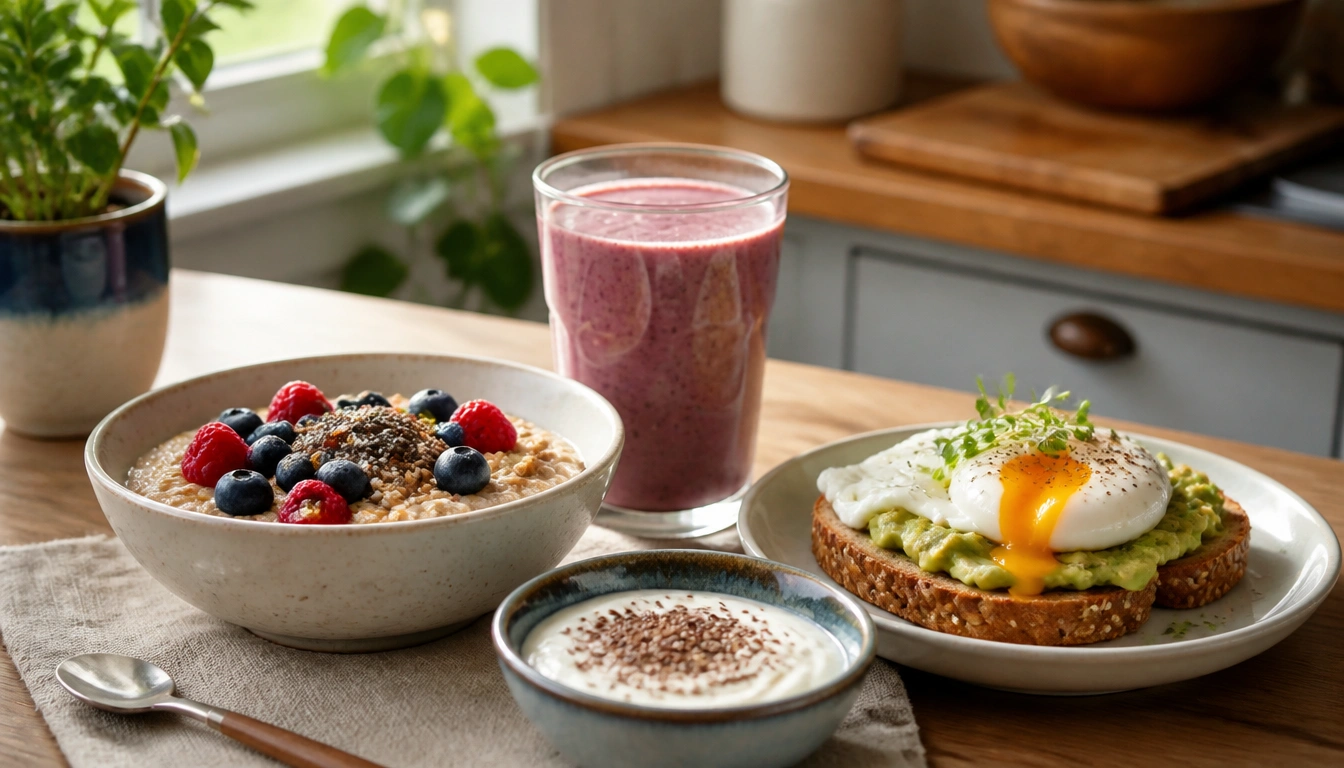
The best fiber-friendly breakfast ideas for adults over 50 are soft, filling foods that combine fiber with protein and fluids: oatmeal with berries, chia pudding, whole-grain toast with avocado and egg, yogurt with ground flax, smoothies made with fruit and oats, and softly cooked beans or legumes. The most practical choices are easy to chew, easy to digest, and simple to scale up gradually if you are not used to eating much fiber.
Key Takeaways
- Aim to get some of your daily fiber at breakfast, especially if mornings are your easiest time to eat fruits, whole grains, or seeds.
- Soft-texture options such as oats, smoothies, soaked chia, cooked fruit, and well-cooked beans are often easier to tolerate than dry bran or very crunchy cereals.
- Pair fiber with protein and healthy fats to make breakfast more satisfying and help support steadier morning blood sugar.
- Increase fiber gradually and drink enough fluid, since a sudden jump in fiber without extra fluid can worsen bloating or constipation.
- For packaged foods, look for whole grains first on the ingredient list and at least 3 to 4 grams of fiber per serving.
Why fiber matters more at breakfast after 50
For many adults over 50, breakfast is a useful place to add fiber because appetite may be smaller later in the day, digestion can feel slower, and regularity becomes more important. Fiber supports bowel movements, helps you feel satisfied after eating, and can slow the rise in blood sugar after a meal. According to the National Institutes of Health and the NHS, adults should aim for enough daily fiber overall, and breakfast can help close the gap if the rest of the day is inconsistent.
There are two broad types of fiber, and both can help at breakfast. Soluble fiber, found in oats, barley, beans, chia, and some fruit, forms a gel-like texture that slows digestion and can support steadier glucose levels. Insoluble fiber, found in whole grains and fruit skins and seeds, adds bulk and helps stool move through the gut. A breakfast with both types is often more useful than relying on one source alone.
For adults 51 and older, the daily target is commonly described as about 30 grams for men and 21 grams for women in U.S. guidance, while the NHS uses 30 grams as a population target for adults. You do not need to reach that amount at breakfast. A good goal is to make the first meal of the day a reliable source of fiber rather than an afterthought.
Starting the day with a fiber-containing meal can also help if lunch or dinner tends to be rushed. If breakfast is the one meal you are least likely to skip, it is often the easiest place to build a sustainable habit.
Best breakfast fiber sources by texture and tolerance
The most practical high-fiber breakfasts are not always the crunchiest. Texture matters, especially if you have sensitive gums, dentures, dry mouth, or a low appetite. Soft foods can deliver plenty of fiber without making eating feel like work.
Oats are one of the most versatile choices. Rolled oats and steel-cut oats both provide soluble fiber and become even easier to eat when cooked into a soft porridge. They pair well with berries, nut butter, or ground flaxseed.
Barley is another gentle grain, though it is less common at breakfast. Cooked barley can be made into a warm cereal with fruit and cinnamon, similar to oatmeal, and it offers a chewy but still soft texture when cooked thoroughly.
Berries bring fiber, flavor, and moisture. Raspberries and blackberries are especially useful because a modest portion can add fiber without making the meal bulky. If raw fruit is too firm, simmer it briefly or use thawed frozen berries.
Chia and ground flax are concentrated fiber add-ins. Chia softens in liquid and works well in pudding or stirred into yogurt. Ground flax blends smoothly into oatmeal, smoothies, or yogurt and is usually easier to eat than whole seeds.
Whole grains show up in breads, hot cereals, and some cereals. For older adults, the best options are often those that are soft enough to chew well and have enough fiber to matter, rather than dense products that are hard on the jaw.
Beans and cooked fruit may sound less traditional for breakfast, but they are excellent when you want a soft, filling meal. Pureed bean spreads on toast, black beans in a breakfast bowl, or stewed apples and pears can all work well.
As a practical rule, the best food form is the one you can comfortably eat consistently. A softer breakfast with moderate fiber is usually better than a high-fiber food that you avoid because it feels too dry or too hard to chew.
Soft and easy-to-chew breakfast strategies for dentures, sensitive gums, or low morning appetite
If chewing is difficult, the goal is not to abandon fiber; it is to change the texture. Gentle breakfast ideas can still be high in fiber when you use cooking, soaking, mashing, or blending.
Cook grains until very soft. Oatmeal, barley cereal, and other hot grains are often easier than dry cereal. Add fruit after cooking so the bowl stays moist. If needed, make it looser and spoonable rather than thick.
Soak or gel seeds. Chia pudding is a useful option because the seeds absorb liquid and become easier to swallow. Ground flax can be mixed into yogurt, porridge, or smoothies without adding much chew.
Use mashed or pureed toppings. Avocado, banana, cooked apples, or stewed pears can add texture and fiber without crunch. If you enjoy toast, a soft whole-grain slice with mashed toppings is often easier than dry bran muffins or hard granola.
Choose smoothies for very small appetites. A smoothie can be a good breakfast when a full plate feels overwhelming. Blending fruit, oats, yogurt, and chia can create a high-fiber meal in a manageable volume. That said, smoothies work best when they are built with enough protein and not loaded with fruit juice.
Think in mini-meals. If a large breakfast feels unappealing, split it into two smaller parts: a warm cereal or smoothie first, then a piece of fruit or yogurt later. That approach can be easier than forcing one big meal.
Very dry, crunchy, or dense foods can still fit into an overall pattern, but they are not always the best first choice for someone with dentures, dry mouth, or reduced morning hunger. For many older adults, softer foods improve consistency more than willpower does.
How to build a balanced fiber-rich breakfast
A breakfast is usually more satisfying when fiber is not the only goal. Pairing fiber with protein and healthy fats can help slow digestion, support satiety, and make blood sugar changes less abrupt after eating.
For example, oatmeal alone is helpful, but oatmeal with Greek yogurt, milk, soy milk, nut butter, or eggs is more complete. Whole-grain toast with avocado becomes more balanced when you add a scrambled egg or cottage cheese. A fruit-and-oat smoothie is more useful when it includes yogurt, milk, or a fortified plant milk instead of just fruit and ice.
Fluids matter too. Fiber absorbs water, so breakfast should include a beverage as part of the meal plan. Water is fine, and tea or milk can also contribute. If you are increasing fiber, do not rely on a dry cereal bowl without enough liquid. That can make constipation or discomfort more likely rather than less.
Simple combinations often work best:
Warm bowl: oatmeal, berries, chia, and Greek yogurt.
Toast plate: whole-grain toast, mashed avocado, and egg.
Drinkable breakfast: smoothie with yogurt, oats, spinach, and berries.
Savory bowl: cooked beans, soft grains, and a poached egg.
The aim is not perfection. It is a breakfast that gives you fiber, enough protein to feel steady, and enough fluid to keep the meal comfortable.
Practical meal ideas and quick combinations for weekdays, weekends, and low-appetite mornings
Useful breakfast ideas are the ones you can repeat without a lot of effort. A few templates make it easier to stay consistent during busy weekdays or slower weekends.
Weekday ideas should be fast. Overnight oats with berries and chia can be made ahead and eaten cold or warmed up. Yogurt with ground flax, softened fruit, and a small portion of whole-grain cereal is another quick option. A smoothie made from yogurt, oats, frozen berries, and liquid can be blended in minutes.
Weekend ideas can be more substantial. A warm barley bowl with cinnamon and fruit, scrambled eggs with whole-grain toast and avocado, or a breakfast bowl with black beans and soft-cooked vegetables can provide more variety without becoming difficult to eat.
Low-appetite mornings call for smaller, denser options. Try half a smoothie, a small bowl of oatmeal, or yogurt with berries and chia. If you do better with savory flavors, a soft egg with mashed avocado on toast may feel easier than a sweet breakfast.
Some people do well with a “starter” breakfast and a second small snack later. That can be especially helpful if appetite is low or if a large plate feels unappealing first thing in the morning. The main idea is to get a fiber-containing meal in a form you actually want to eat.
How to increase fiber gradually without bloating or constipation
Getting more fiber too quickly can backfire. If your usual intake is low, a sudden jump may lead to bloating, gas, cramping, or a sense of fullness that makes you want to skip breakfast altogether. A slower increase gives your digestive system time to adjust.
Start with one fiber upgrade at a time. For example, add berries to oatmeal, then later add chia or flax, then later switch to a higher-fiber bread. Small steps are easier to tolerate than changing the whole meal at once.
Fluids are part of the plan from the beginning. Fiber draws water into the digestive tract, so if you increase fiber without increasing fluids, constipation can get worse. Make it a habit to drink something with breakfast and continue hydrating through the morning.
If a food seems to cause discomfort, the problem may be the amount, the texture, or the speed of the change rather than fiber itself. Oats may be tolerated better than bran cereal. Cooked fruit may be easier than raw fruit. Smoothies may be easier than a dry bowl of cereal. Adjusting the form often helps more than cutting fiber out entirely.
If you have been constipated for a while, do not assume more fiber alone will fix it. The combination of fiber, fluid, movement, and, when needed, medical guidance is usually more effective.
What to watch for before making breakfast higher in fiber
High-fiber breakfasts are not appropriate for everyone without guidance. If you have a history of bowel obstruction, intestinal strictures, severe gastroparesis, or an active inflammatory bowel disease flare, you should ask a healthcare professional how much fiber is appropriate for you. Individualized advice matters more than generic targets in those situations.
Even without a major digestive condition, some people need to move more cautiously. If you have frequent abdominal pain, unexplained weight loss, trouble swallowing, persistent constipation, or a major change in bowel habits, those symptoms deserve medical review rather than self-treatment with more fiber.
It is also worth paying attention to chewing and swallowing comfort. Very hard seeds, dry bran, and coarse cereals may not be the best fit if you have dentures or jaw pain. Soft food is not a compromise; it is often the smarter long-term choice.
If you take medicines that affect digestion or have dietary restrictions that limit fluids, ask for personalized advice before making large changes. The safest approach is a breakfast pattern that fits your medical situation, not a generic fiber rule.
Label-reading tips for packaged cereals, breads, and breakfast bars
Packaged breakfast foods can be helpful, but label reading makes a big difference. The first ingredient should ideally be a whole grain, such as oats, whole wheat, or another intact grain. That does not guarantee a high-fiber food, but it is a useful sign that the product starts with a better base.
Look at the fiber line on the Nutrition Facts panel and aim for at least 3 to 4 grams of fiber per serving when choosing cereals, breads, or bars. Some products advertise health claims but contain little fiber once portion size is checked. Compare brands carefully because two similar-looking boxes may be very different nutritionally.
Be cautious with breakfast bars that are more like cookies. If sugar is high and fiber is low, they may not keep you satisfied for long. Also watch for products that look “multigrain” but are not actually made mostly from whole grains.
For bread, a slice that is soft enough to chew and still made with whole grains is often a better choice than a very dry, seedy loaf that is hard to manage. For cereal, choose options that are not so coarse or dry that they irritate the mouth. A little milk or yogurt can improve texture and help the meal feel more complete.
Budget-friendly choices are often simple ones: oats, plain whole-grain bread, frozen berries, bananas, beans, and yogurt. Those foods are usually easier on the wallet than specialty health products and often easier to adapt to your own digestion.
Frequently Asked Questions
How much fiber should adults over 50 aim for each day?
U.S. guidance commonly gives a target of about 30 grams per day for men age 51 and older and 21 grams per day for women age 51 and older. The NHS uses 30 grams per day as an adult target. You do not need to reach that amount at breakfast alone.
What are the best high-fiber breakfast foods that are soft enough for older adults with dental issues?
Soft oatmeal, soaked chia, yogurt with ground flax, smoothies with oats and berries, stewed fruit, and well-cooked beans are usually easier to chew than dry cereal, bran, or hard toast. Texture is often as important as fiber content.
How can I increase fiber at breakfast without causing bloating or constipation?
Increase fiber gradually, one change at a time, and drink enough fluid with the meal. Starting with softer foods such as oats or cooked fruit can be easier than jumping straight to very coarse cereals or large portions of beans.
Which breakfast options are better for blood sugar stability in the morning?
Breakfasts that combine fiber with protein and healthy fats usually work best, such as oatmeal with yogurt, whole-grain toast with avocado and egg, or a smoothie with yogurt and oats. These choices tend to digest more slowly than refined, low-fiber breakfasts.
Can smoothies, oats, or chia-based breakfasts count as a high-fiber meal for older adults?
Yes. Smoothies can count if they include fiber-rich ingredients like oats, chia, berries, or spinach, not just fruit juice. Oats and chia are especially useful because they are soft, flexible, and easy to build into a balanced meal.
The Bottom Line
For adults over 50, the best fiber-friendly breakfast is usually the one that is soft enough to eat comfortably, easy to prepare, and balanced enough to keep you satisfied. Oatmeal, chia pudding, yogurt with ground flax, whole-grain toast with avocado and egg, and fruit-based smoothies are all practical starting points.
If you are increasing fiber, do it gradually and drink enough fluid with the meal. That helps reduce the chance of bloating or constipation and makes the change more sustainable. If you have a digestive condition, swallowing problem, or a history of bowel obstruction, get individualized medical advice before making bigger changes.
Medical disclaimer
Medical disclaimer: This content is for educational and informational purposes only and is not a substitute for professional medical advice, diagnosis, or treatment. Dietary needs and supplement suitability vary by individual.
Sources
- National Institutes of Health (NIH) — nih.gov. Accessed November 2026.
- U.S. Government / Health Authority — acl.gov. Accessed November 2026.
- National Health Service (NHS) — www.nhs.uk. Accessed November 2026.
- Mayo Clinic — mayoclinic.org. Accessed November 2026.
