
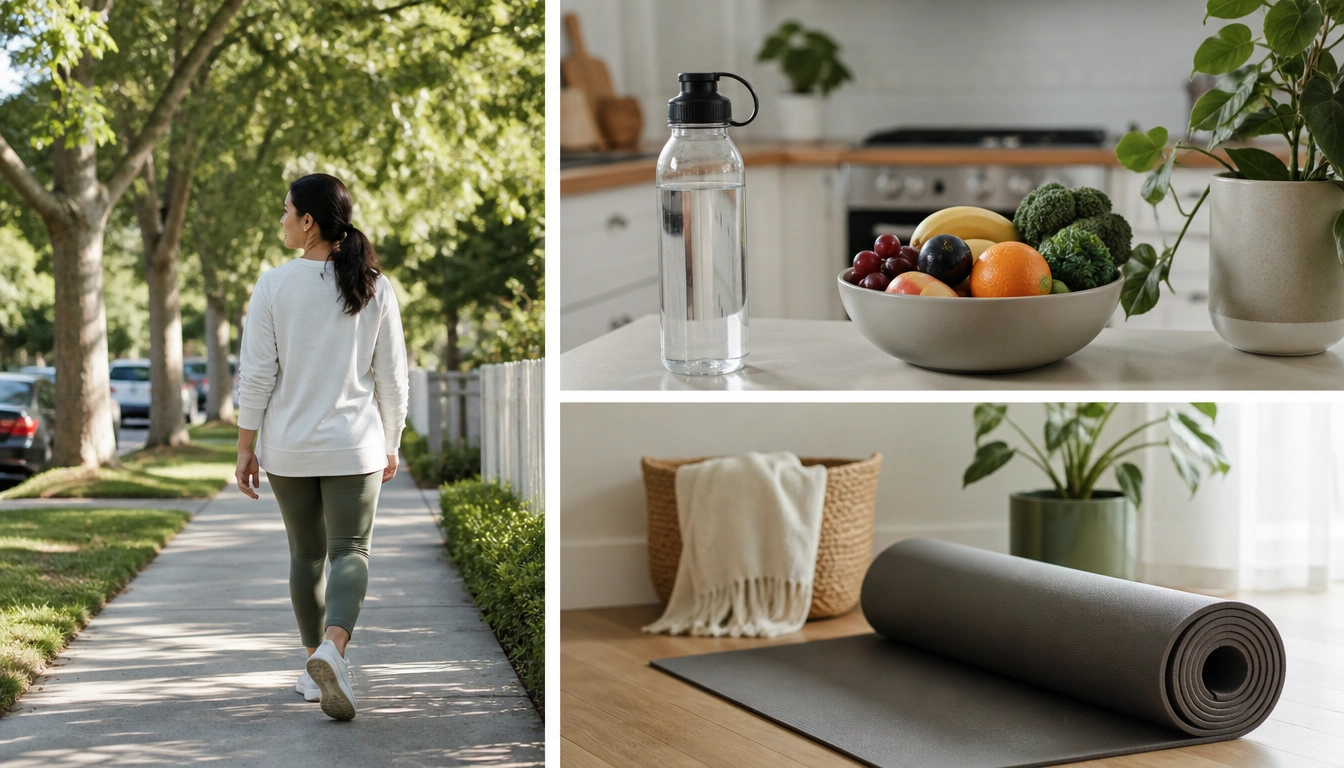
Start with the smallest habits you can repeat: take short walks, add one or two strength moves twice a week, build meals around fruits, vegetables, and wholegrains, drink more water, and keep a steadier sleep schedule. You do not need to do everything at once. For a complete beginner, consistency matters more than intensity, and short bouts of activity still count.
Key Takeaways
- Some movement is better than none; beginners can start with 5–10 minute walks and build gradually toward the weekly 150-minute target.
- Add habits to routines you already have, such as walking after dinner or taking the stairs, so the plan feels easier to keep.
- For food, start by adding fruit, vegetables, and wholegrains instead of trying a strict diet or counting calories.
- Water, regular sleep times, and a short wind-down routine can improve energy and make other changes easier to maintain.
- Older adults, pregnant or postpartum readers, and people with chronic conditions may need tailored guidance or medical clearance before starting.
A starter kit, not a total life overhaul
If you are a complete beginner, the goal is not to become a different person by next Monday. The goal is to make your day a little healthier in ways that feel realistic. That usually means choosing a few basics that support each other: move a bit more, eat a little better, drink enough water, and protect sleep. Those four pillars are enough to create momentum without turning your life into a project.
A good starter kit also respects low motivation. You do not need perfect routines, expensive gear, or a big block of free time. You need a first step that is so small you are willing to repeat it. Once a habit becomes familiar, it is easier to build on it. That is why many public health recommendations are useful as a destination, not a starting line.
Think of this as a sequence: first, make the healthy option easier to do than the old one. Then repeat it until it feels normal. That approach is less exciting than a dramatic transformation, but it works better for most beginners.
Movement basics that count from day one
Public health guidance for adults commonly points to at least 150 minutes of moderate-intensity aerobic activity each week, plus muscle-strengthening activities on at least two days a week. If that sounds far away, start smaller. Five or ten minutes of walking still counts, especially if you are currently sedentary. A few short bouts can be the bridge to a longer routine.
Moderate intensity usually means you are moving enough to warm up and breathe harder, but you can still speak in short sentences. Brisk walking, easy cycling, dancing, or active chores can fit that level. You do not need to train like an athlete to benefit from moving more.
For strength work, keep it simple. Chair squats, wall push-ups, sit-to-stand practice, or light resistance-band rows are practical options at home. Start with a small number of controlled repetitions and stop before your form falls apart. The point is to wake up muscles you do not use enough, not to exhaust yourself.
A simple beginner pattern could be a short walk most days and two brief strength sessions each week. If you miss a day, restart the next day without trying to “make up” everything at once. Progress is built from repeatable sessions, not perfect ones.
Nutrition foundations without restrictive dieting
For beginners, healthy eating is usually easier when you add before you subtract. That means adding fruit, vegetables, and wholegrains more often instead of starting with a long list of forbidden foods. The NHS recommends at least five portions of fruits and vegetables a day, and public health guidance also supports choosing higher-fiber starchy foods such as oats, brown rice, potatoes with skins, and wholewheat pasta.
If the idea of meal planning feels overwhelming, begin with one swap. Use wholegrain bread instead of white bread. Add a piece of fruit to breakfast. Put a vegetable on the plate at dinner, even if it is just frozen peas or a side salad. These changes are small, but they improve fiber, vitamins, and satiety without requiring a major overhaul.
You do not need to count calories or macros to start eating better. A simpler rule is to build meals around a few steady basics: a source of protein, a higher-fiber carbohydrate, and at least one fruit or vegetable. That structure is flexible enough for busy days and it supports more balanced energy through the day.
If your current pattern includes a lot of ultra-processed snacks or takeout, do not try to eliminate everything overnight. A better first move is to make the healthier choice easier to reach. Keep fruit visible, stock a few quick vegetables, and choose one or two meals a week to improve first.
Hydration that fits real life
Water is easy to overlook, yet it supports concentration, circulation, and general day-to-day functioning. You do not need to track every ounce to drink more of it. The practical goal is to make water easy to notice and easy to choose.
Try keeping a bottle or glass where you spend time most often: next to your bed, on your desk, in the car, or by the sink. Drink a few sips when you wake up, with meals, and after walks. If plain water feels boring, chilled water, sparkling water, or water with citrus or cucumber can make the habit more appealing.
Reducing sugary drinks is often more effective than trying to be “perfect” with hydration. Start by replacing one soda, sweetened coffee drink, or juice-heavy beverage with water most days. You can keep other drinks in your routine and still make a meaningful change.
If you tend to forget to drink, pair it with something you already do. Have water before your morning coffee, after brushing your teeth, or when you sit down for dinner. Habit stacking works well because it turns a new action into part of an old one.
Sleep and recovery for beginners
Sleep is not a reward for doing wellness correctly; it is part of the foundation. Most adults do best with about 7 to 8 hours of quality sleep, though individual needs vary. If your sleep is inconsistent, the first goal is not a perfect nightly routine. It is a steadier anchor.
Two of the most helpful anchors are a regular wake time and a regular bedtime. You do not need the schedule to be exact to the minute, but keeping it reasonably consistent helps train your body clock. If you can only improve one end of the day, start with the wake time, because it often has the biggest effect on the rest of the routine.
A short wind-down routine can help too. Try turning down lights, putting your phone aside, and spending 30 to 60 minutes on quiet activities such as stretching, reading, or preparing for tomorrow. You are not trying to force sleep. You are giving your body a clear signal that the day is ending.
If sleep is difficult because of pain, anxiety, shift work, snoring, or frequent waking, it may take more than basic sleep hygiene. The starter kit still helps, but persistent sleep problems are worth discussing with a clinician.
Pacing and habit stacking that make change stick
Most beginners do better with tiny, repeatable actions than with a big list of rules. Habit stacking means attaching a new habit to something that already happens every day. For example, walk for ten minutes after dinner, do chair squats after you brush your teeth, or fill a water bottle before you leave the house.
This approach works because it removes the need to decide from scratch every time. You are not asking, “When should I fit health into my life?” You are saying, “After this existing habit, I do this small new one.” That structure lowers friction and helps the habit survive busy days.
Pacing matters too. If you are starting from zero, some activity is still progress. Very short sessions can build confidence and reduce soreness, which makes it easier to come back tomorrow. Once short sessions feel normal, you can extend them gradually by a few minutes or add one extra day each week.
It also helps to choose a “minimum version” for hard days. For example: a five-minute walk, one set of squats, one fruit at breakfast, a glass of water, and a fixed bedtime reminder. That kind of floor keeps your routine alive when motivation is low.
Special situations and when to get medical guidance
Some people should modify the starter kit or get medical advice before beginning. Older adults benefit from the same basics, but balance work matters more because it helps reduce fall risk. Simple options include standing near a counter and practicing single-leg balance, heel-to-toe walking, or slow sit-to-stand practice. These should feel steady, not risky.
Pregnant or postpartum readers should not copy a generic fitness plan without checking whether it fits their stage of recovery. Exercise is often beneficial, but the right type and intensity can depend on symptoms, healing, and the advice of a clinician. If you are unsure, get personalized guidance first.
You should also speak with a healthcare professional before starting a new diet or exercise plan if you have been inactive for a long time, have heart disease, diabetes, severe joint pain, or other chronic conditions, or if you notice chest discomfort, dizziness, unusual shortness of breath, or sharp pain with activity. Mild muscle soreness can happen when you begin, but persistent or severe symptoms are not a normal starting point.
Safety is part of the plan, not a failure of the plan. If you need medical clearance, that simply means your starting point should be tailored to your body and health history.
A one-week starter plan you can actually follow
This is not a perfect program. It is a practical way to combine the basics so they fit into real life. Use it as a template and adjust the timing to match your schedule.
| Habit | Easy first version |
|---|---|
| Movement | Walk 5–10 minutes after one meal, then add another short walk on a different day. |
| Strength | Do one or two bodyweight moves twice this week, such as chair squats or wall push-ups. |
| Food | Add one fruit at breakfast and one vegetable at dinner. |
| Hydration | Drink water at waking, with meals, and after movement. |
| Sleep | Set one consistent wake time and create a short wind-down before bed. |
Across the week, look for repeats rather than perfection. Did you walk after dinner twice? Did you drink more water than usual? Did you get to bed a little earlier on two nights? Those are signs the system is starting to work.
At the end of the week, keep what felt easiest and repeat it. Add only one small upgrade at a time, such as a longer walk, an extra vegetable, or a second strength session. The goal is not to do everything. The goal is to build a base you can keep.
Frequently Asked Questions
How much exercise should a beginner aim for each week?
A common adult target is 150 minutes of moderate-intensity aerobic activity each week, plus muscle-strengthening work on at least two days. Beginners do not need to start there. Short 5–10 minute walks still count and can be built up gradually over time.
What are the easiest nutrition changes for someone starting from scratch?
The easiest first changes are usually adding rather than restricting: one extra fruit, one extra vegetable, and a switch to wholegrains when practical. That approach improves fiber and nutrients without requiring calorie counting or a strict diet.
How do I start sleeping better without overhauling my whole routine?
Start with two anchors: a more consistent wake time and a simple wind-down before bed. Even 30 minutes of quieter, lower-light time can help. If sleep problems are persistent or tied to pain, snoring, anxiety, or frequent waking, talk to a clinician.
What if I’m completely sedentary or out of shape—how slowly can I begin?
Very slowly is fine. Some activity is better than none, and you can begin with 5–10 minute bouts of walking or gentle movement. The key is to repeat them often enough that they feel normal before you build up.
When should I talk to a doctor before starting a new diet or exercise plan?
Get medical advice first if you have heart disease, diabetes, major joint pain, other chronic conditions, or symptoms such as chest discomfort, dizziness, or unusual shortness of breath. Pregnant and postpartum readers should also ask about modifications before starting a new routine.
The Bottom Line
A healthy lifestyle starter kit for beginners works best when it is small, repeatable, and unglamorous. Short walks, simple strength moves, better food swaps, water, and steadier sleep are enough to start building momentum.
You do not need to earn the right to begin. Start with the easiest version of each habit, repeat it, and let progress build from there. If you have a medical condition, troubling symptoms, or a life stage that needs modifications, get individualized guidance before pushing ahead.
Medical disclaimer
Medical disclaimer: This content is for educational and informational purposes only and is not a substitute for professional medical advice, diagnosis, or treatment. Dietary needs and supplement suitability vary by individual.
Sources
- Centers for Disease Control and Prevention (CDC) — cdc.gov. Accessed November 2026.
- National Health Service (NHS) — www.nhs.uk. Accessed November 2026.
- National Health Service (NHS) — www.nhs.uk. Accessed November 2026.
- Centers for Disease Control and Prevention (CDC) — cdc.gov. Accessed November 2026.
- National Health Service (NHS) — oxfordhealth.nhs.uk. Accessed November 2026.
