
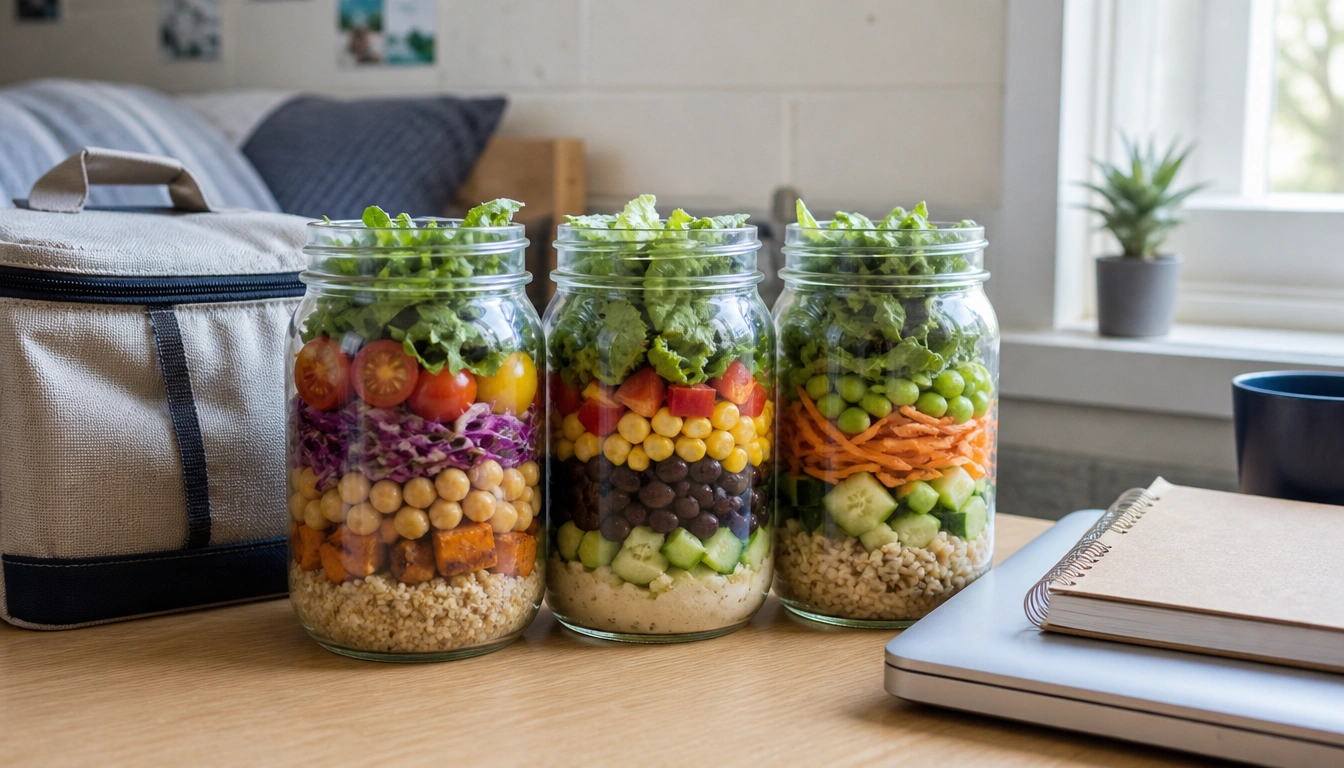
Yes—salad jars can work very well for college lunches if you layer them correctly, use budget-friendly ingredients, and keep them cold until eating. Put dressing on the bottom, sturdy vegetables next, then beans or grains, toppings, and leafy greens on top. Most vegetarian jars keep well for 3 to 4 days in the fridge when stored below 40°F, and chicken-based jars should be eaten sooner.
Key Takeaways
- Layering matters: dressing first, then sturdy vegetables, then grains or protein, then toppings, then greens to keep the salad crisp.
- Cheap staples like canned beans, frozen vegetables, and store-brand grains make salad jars filling without pushing up your grocery bill.
- For dorm life, keep jars cold, prep only a few days at a time, and follow the 2-hour rule for anything perishable.
- Use a 32-ounce mason jar for a lunch-sized portion, or choose another reusable container if glass feels risky in a backpack.
- Shake the jar only if there is room for the dressing to coat everything; otherwise dump it into a bowl for better mixing and less mess.
Why salad jars fit college life
For a lot of students, the hard part is not knowing what to eat. It is finding something that is quick, affordable, and still feels like an actual meal instead of random snack foods. That is where the salad jars for college idea makes sense. A jar can hold a full lunch, be made ahead on a quiet night, and sit in a mini-fridge until you need it.
They also solve a common campus problem: food gets boring fast. Dining hall salads can be limp, takeout gets expensive, and a bag of chips is not much help during a long day of classes. A salad jar gives you a flexible base you can build around what is cheap and available, while still keeping the meal balanced with vegetables, protein, and fiber-rich grains or beans.
The reason the jars stay fresh is simple. You are keeping the wettest ingredient away from the most delicate one. Instead of tossing everything together hours before lunch, you stack the ingredients so moisture moves slowly and predictably. According to food safety guidance from the CDC and Foodsafety.gov, that cold storage and limited room-temperature time are the pieces that help make meal prep safer in shared housing.
The best layering order for a mason jar salad
The classic mason jar salad layering order is built around moisture control. Start with the dressing at the bottom because it is the heaviest and wettest ingredient. Next add sturdy vegetables that can sit in the dressing without turning limp, such as cucumbers, carrots, bell peppers, radishes, or cherry tomatoes.
After that, add your protein and grain layer. Beans, chickpeas, lentils, edamame, quinoa, brown rice, and farro all work well here. They help create a buffer between the dressing and the greens, and they make the salad more filling. On top of that, add soft extras like cheese, seeds, nuts, or dried fruit. Leafy greens go last so they stay dry until you are ready to eat.
This order matters because leafy greens are the most fragile part of the salad. If they sit directly on wet dressing, they absorb moisture and lose texture. If you keep them at the top, they stay crisp longer and the jar feels fresh even after a few days in the fridge.
A good starting formula for one lunch-sized jar looks like this:
- Dressing: 2 tablespoons
- Sturdy vegetables: about 1/2 cup
- Protein or grains: about 1/3 to 1/2 cup total
- Toppings: 1 to 2 tablespoons
- Greens: enough to fill the rest of the jar
A 32-ounce quart-sized jar is a practical size for most student lunches. It leaves enough room for layers without packing the greens so tightly that they get crushed.
Three student-friendly salad jar combinations
To keep prep simple, use a few repeatable combinations instead of trying to invent a new recipe every week. That way you can shop once, prep once, and mix flavors without wasting food.
Mediterranean quinoa-chickpea jar: Use a lemon-olive oil dressing with oregano, then layer cucumbers and cherry tomatoes, rinsed chickpeas, cooked quinoa, a little feta, and spinach or romaine. This one works well when you want a bright, familiar flavor that still feels hearty.
Southwest black bean-corn jar: Start with lime juice, a little olive oil, and salsa or hot sauce. Add black beans, thawed corn, diced bell pepper, pepitas or crushed tortilla chips, and chopped romaine. This version is budget-friendly and easy to customize with whatever salsa you already have.
Sesame edamame-peanut crunch jar: Use peanut butter thinned with water, soy sauce, and rice vinegar as the dressing. Layer shredded cabbage, grated carrots, edamame, peanuts or sunflower seeds, and baby kale or napa cabbage. This jar has more crunch and holds up especially well for a few days.
These combinations work because they use ingredients that can be found in most grocery stores without special equipment. They also let you mix plant protein, vegetables, and grains in a way that feels more like a real meal than a side salad.
How to build a budget-smart grocery list
Student grocery budgets usually work best when the ingredients are flexible. The cheapest salad jar ingredients are often the ones that do not need much handling: canned beans, frozen vegetables, and store-brand grains. They are easy to portion, easy to store, and usually less expensive than specialty toppings or pre-cut produce.
Canned beans are especially useful because they bring protein and fiber without requiring a stove all the time. Rinse them before using so they taste cleaner and are less salty. Frozen vegetables can also help stretch a jar budget. Corn, edamame, or chopped mixed vegetables can be thawed and drained before layering. Store-brand quinoa, brown rice, couscous, or farro can be cooked in a batch and used all week.
For toppings, think simple. Pumpkin seeds, sunflower seeds, shredded cheese, olives, and a small amount of dried fruit can add flavor without making the jar expensive. If money is tight, use one higher-impact topping instead of several. That keeps the meal interesting while limiting waste.
Fresh produce still matters, but it does not have to be fancy. Carrots, cucumbers, cabbage, and romaine often give you more value per dollar than fragile greens or specialty salad mixes. Choosing sturdy produce also helps the jar last longer in a dorm fridge.
Mini-fridge prep without wasting food
Meal prep works best when it fits your actual schedule. For most students, that means making a few jars at once, not a week’s worth of complicated meals. A Sunday prep session is usually enough to batch-cook a grain, rinse beans, chop vegetables, and assemble three or four jars for the next few days.
Use the coldest part of the mini-fridge if you can, usually the back rather than the door. The door warms up more often. Keep jars upright and sealed tightly so the layers stay separate. If you are worried about space, line them up together instead of stacking items loosely around the fridge; that makes it easier to see what needs to be eaten first.
For most vegetarian jars, a 3- to 4-day prep window is the sweet spot. Hearty cabbage or kale-based jars may keep a little longer, but the best quality usually comes from preparing only as many as you will realistically eat. If you are adding cooked chicken, plan to eat it sooner and be especially careful with temperature control.
A simple rule: prep only what your fridge can hold safely and what your schedule can actually finish. Making fewer jars that get eaten is better than making more and watching them age past their best texture.
Food safety for dorms and shared housing
Food safety matters more in student housing because jars may sit in backpacks, dorm kitchens, or common areas longer than you expect. According to Foodsafety.gov and CDC guidance, perishable foods should not stay in the danger zone between 40°F and 140°F for more than 2 hours, or 1 hour if the room is very hot. If you are packing a jar for class, leave it chilled until the last possible moment.
Keep your fridge at or below 40°F. That temperature helps slow bacterial growth and gives your salad jars the best chance of staying fresh. Wash your hands, cutting board, knife, and prep containers before assembling anything, especially if you are handling cooked meat or dairy.
Vegetarian jars with beans, grains, and sturdy vegetables usually keep for about 3 to 4 days when chilled properly. Jars with cooked chicken should be eaten sooner, and any jar with signs of spoilage should be tossed. If it smells off, looks slimy, or has leaking liquid that seems unusual, do not try to save it. Food safety is not worth guessing about.
If you do not have reliable fridge space, make smaller batches or use ingredients that are shelf-stable until assembled. That may mean keeping the dressing separate and packing the jar closer to mealtime. For students with long days on campus, a small insulated lunch bag with an ice pack can also help during transport.
How to pack, carry, and eat the jar at school
Glass mason jars are sturdy enough for prep, but they can be awkward in a backpack. If you use glass, a silicone sleeve can help with grip and a little protection. If glass still feels risky, choose another reusable container with a tight lid. The main goal is preventing leaks and keeping the salad cold.
For transport, keep the jar upright whenever possible. Do not toss it loose into a bag with heavy books if you can avoid it. If you commute across campus, place it in a side pocket or insulated lunch bag so it stays steady. The less the jar rattles around, the less likely the greens are to bruise or the lid is to loosen.
When it is time to eat, you have two choices. If the jar has enough room, you can shake it to coat the ingredients and eat directly from it. That works best when the jar is not packed to the top. If it is tightly filled, dump it into a bowl or container first. That gives you a better mix and helps you avoid spilling dressing down your sleeve.
Crunchy toppings are best added at the last minute if you want them to stay crisp. Keep tortilla chips, croutons, or extra seeds separate and sprinkle them on just before eating. That small step makes a big difference in texture.
If your salad turns soggy, the most common causes are too much dressing, watery vegetables near the greens, or a jar that sat too long before eating. Drain juicy ingredients well, use a thicker dressing when possible, and keep the greens at the top. If the jar leaks, check the lid seal and make sure the dressing layer is not overfilled.
Easy variations for different student diets
Salad jars are easy to adapt without making them complicated. For vegetarian students, beans, lentils, chickpeas, edamame, quinoa, and seeds can supply enough substance to make the meal feel complete. If you want more protein without meat, combine a bean or soy food with a grain so the jar feels more filling.
For dairy-free jars, skip cheese and use ingredients like olives, avocado added just before eating, sunflower seeds, or a dairy-free dressing. For nut-free versions, use seeds instead of peanuts or nut butters. For gluten-free jars, choose rice, quinoa, corn, or certified gluten-free grains and crackers.
If you want a higher-protein jar, increase the bean or edamame portion and keep the dressing simple. If you need a faster version, use canned beans, bagged greens, and pre-cut sturdy vegetables. The format works because the structure stays the same even when the ingredients change. That makes it easy to match your budget, your schedule, and your dietary needs without starting from scratch each week.
Frequently Asked Questions
How long do salad jars last in the fridge?
Most vegetarian salad jars keep well for about 3 to 4 days in a refrigerator at or below 40°F. Hearty greens like kale or cabbage may last a bit longer, while jars with cooked chicken should be eaten sooner. Quality drops before safety necessarily does, so use the earliest jars first.
What order should I layer a mason jar salad so it doesn’t get soggy?
Start with dressing, then add sturdy vegetables, then beans or grains, then toppings like cheese or seeds, and put leafy greens on top. That keeps the dressing away from the greens until you are ready to eat. If you use watery vegetables, drain them well first.
What are the cheapest ingredients for college salad jars?
Canned beans, frozen vegetables, and store-brand grains are usually the most budget-friendly building blocks. Carrots, cabbage, romaine, cucumbers, and simple seeds are also affordable in many stores. You do not need specialty ingredients for a filling jar.
Can I make salad jars without meat and still keep them filling?
Yes. Beans, chickpeas, lentils, edamame, and grains like quinoa or brown rice can make a meatless jar satisfying. Combining a protein source with a grain and plenty of vegetables helps the meal feel more complete and keeps you full longer.
How do I pack and transport salad jars safely to campus?
Keep the jar cold until you leave, pack it upright, and use a tight lid. A silicone sleeve or insulated lunch bag can help protect glass and reduce leaks. If the jar is very full, dump it into a bowl rather than shaking it in the container.
The Bottom Line
Salad jars are a strong fit for college students because they are cheap, flexible, and easy to prep around a busy schedule. The formula is simple: dressing on the bottom, sturdy vegetables next, then beans or grains, toppings, and greens on top.
If you keep the jars cold, prep only a few days at a time, and use low-cost staples like canned beans, frozen vegetables, and store-brand grains, you can make lunches that stay fresh and actually get eaten. The best jar is the one you can pack safely, carry comfortably, and repeat without stress.
Medical disclaimer
Medical disclaimer: This content is for educational and informational purposes only and is not a substitute for professional medical advice, diagnosis, or treatment. Dietary needs and supplement suitability vary by individual.
Sources
- Centers for Disease Control and Prevention (CDC) — cdc.gov. Accessed November 2026.
- U.S. Government / Health Authority — ed.gov. Accessed November 2026.
- U.S. Government / Health Authority — foodsafety.gov. Accessed November 2026.
- National Institutes of Health (NIH) — nih.gov. Accessed November 2026.
- Academic Research Institution — uada.edu. Accessed November 2026.
- Academic Research Institution — msu.edu. Accessed November 2026.
- Academic Research Institution — clemson.edu. Accessed November 2026.
