
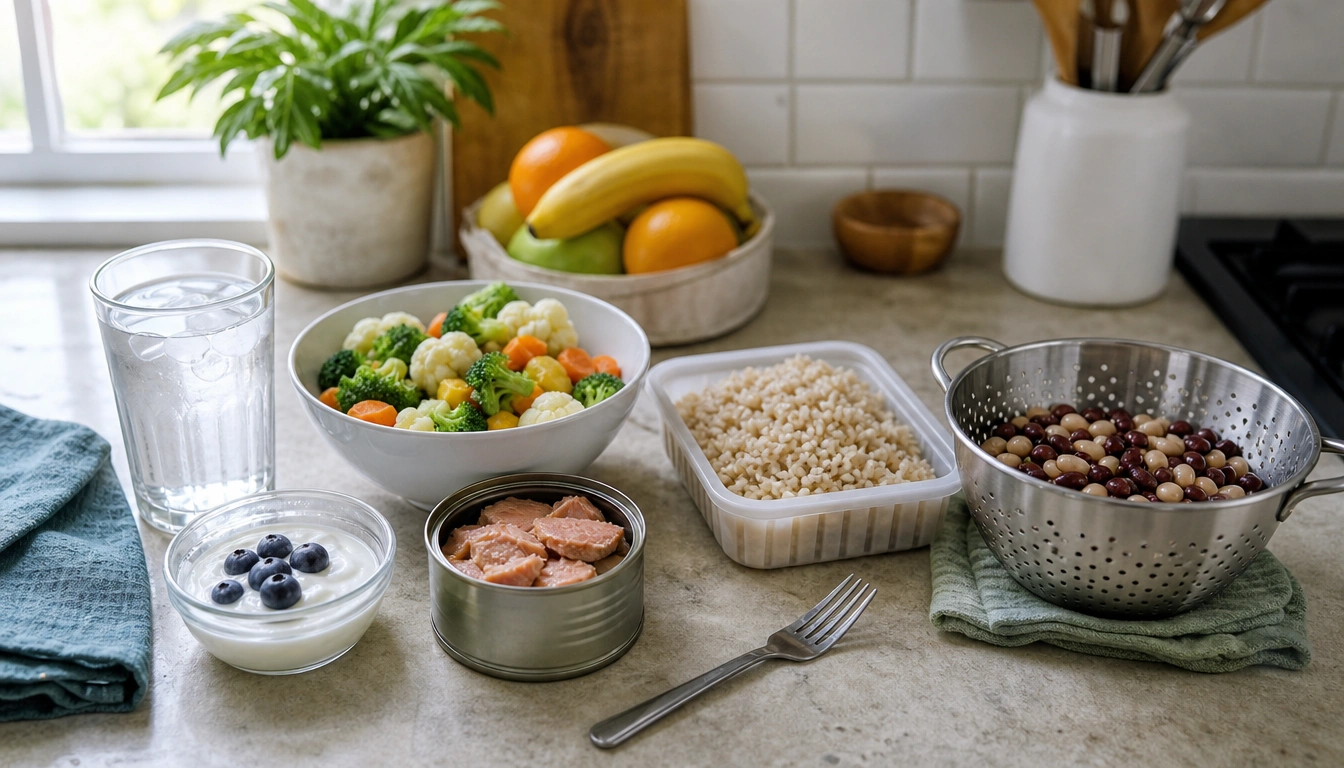
Yes—you can eat well after 60 with convenience foods if you choose them strategically. Build meals around a protein anchor, add produce and a high-fiber grain or bean, and use frozen, canned, and pre-prepped foods that still keep nutrient quality high. For older adults, the best convenience foods are usually the ones that save effort without sacrificing protein, fiber, hydration, or food safety.
Key Takeaways
- After 60, fewer calories often need to deliver more protein, fiber, and key micronutrients.
- A practical meal formula is protein + produce + whole grain or fiber-rich starch.
- Frozen vegetables, canned fish, rinsed beans, and microwaveable whole grains can be healthy shortcuts.
- Flavor boosters like citrus, herbs, vinegar, and spices can improve taste without leaning on excess salt.
- Older adults should watch sodium, added sugar, saturated fat, and food safety more closely.
- Trouble chewing, swallowing, appetite loss, or weight loss are reasons to involve a clinician or dietitian.
Why convenience food needs a different strategy after 60
After 60, many adults need fewer calories but not fewer nutrients. That shift matters because older bodies still need enough protein to help preserve muscle, plus enough fiber, calcium, vitamin D, vitamin B12, and other nutrients that support bones, immunity, digestion, and day-to-day strength. The National Institute on Aging and federal dietary guidance both emphasize nutrient-dense eating patterns for older adults.
This is where a healthy convenience food strategy helps. If a meal is mostly refined starch, salty sauce, and a little fat, it may be easy to eat but not very useful. A better shortcut keeps the effort low while improving the nutrition density of each bite. That is especially important for people living alone, dealing with fatigue, or noticing a smaller appetite.
One more age-related change affects meal design: the body may not respond to protein as strongly as it once did. That means older adults often do better when protein is present at meals instead of saved for one large dinner. Convenience foods should help you spread protein across the day, not leave it to chance.
The senior-friendly convenience food formula
A practical plate pattern works well for most adults over 60: a protein anchor, a produce item, and a fiber-rich starch or grain. The protein anchor is the most important part because it helps make a quick meal feel complete and more satisfying.
Think in parts rather than recipes. Examples include Greek yogurt with berries and oats, a tuna or salmon pouch with whole-grain crackers and salad, cottage cheese with fruit and nuts, or microwaved beans over brown rice with frozen vegetables. This approach keeps planning simple and makes it easier to eat well even when energy is low.
If appetite is small, smaller meals can still be nutritionally strong. The goal is not a giant plate; it is a plate with enough value in every portion. For many older adults, that means choosing foods that do more than just fill space.
Best ready-to-eat and semi-prepared protein options
Protein deserves special attention because aging muscles benefit from regular high-quality protein intake. Convenience foods that work well here include canned fish such as salmon, tuna, or sardines; plain Greek yogurt; cottage cheese; milk or fortified soy milk; hard-boiled eggs; and pre-cooked chicken or turkey strips with short ingredient lists.
Beans and lentils are also useful, especially when appetite, budget, or cholesterol concerns are part of the picture. They bring both protein and fiber, and they can be used straight from a can or pouch after rinsing. For people who eat little at breakfast, a protein-forward morning option can make the rest of the day easier.
Choose the least processed option that is still realistic. A plain yogurt cup or a canned fish pouch is often a better convenience choice than a heavily breaded frozen entrée. If chewing is difficult, softer proteins such as yogurt, eggs, cottage cheese, tofu, or flaky fish may be more comfortable than dry meats.
Frozen, canned, and pre-prepped foods that still count as nutritious
Frozen and canned foods are not automatically unhealthy. In fact, they can be some of the best tools in a healthy convenience food strategy because they reduce prep time, waste, and physical effort. Frozen vegetables and fruit are often picked and frozen quickly, which helps preserve nutrients and makes them ready to use without washing, peeling, or chopping.
Canned or pouch-packed beans, tomatoes, fish, and vegetables can also be helpful. Rinsing canned beans or vegetables can lower sodium. Canned fruit packed in juice or water is usually a better pick than fruit packed in heavy syrup. Microwaveable whole grains such as brown rice, quinoa, or farro can replace less filling refined sides with almost no cooking.
Think of these foods as building blocks. A frozen vegetable blend plus a pouch of salmon plus microwaveable brown rice is not a gourmet meal, but it is a balanced one. Pre-washed greens, bagged slaw, and washed baby carrots can also reduce the barrier to eating more produce.
How to read labels for sodium, added sugar, and saturated fat
Label reading matters more when convenience foods become a routine. Many packaged meals, soups, sauces, and seasoned grains can contain a lot of sodium, added sugar, or saturated fat. That is a bigger concern for adults with high blood pressure, heart disease, diabetes, or kidney disease, but it is useful for most older adults.
Look first at the serving size so the numbers make sense. Then check sodium, added sugars, and saturated fat. “Low sodium” or “no salt added” can be useful terms, but they do not guarantee a food is balanced overall. A product may still be high in sodium or low in fiber.
For flavor, do not assume salt is the only option. Lemon juice, vinegar, garlic powder, onion powder, pepper, paprika, cumin, dill, and salt-free herb blends can make food taste stronger without adding much sodium. If a packaged food is convenient but very salty, use a smaller portion and pair it with plain foods like unsalted vegetables or beans.
Texture, appetite, and chewing considerations
Convenience food should be comfortable to eat, not just easy to buy. Older adults may deal with dental problems, dry mouth, dentures, reduced saliva, or a lower appetite. Those issues can turn a meal into work, which often leads to skipping food altogether.
Soft, moist, easy-to-chew options can help. Examples include oatmeal, yogurt, cottage cheese, scrambled eggs, canned fish, cooked vegetables, soups with lower sodium, hummus, mashed beans, tender fruit, and nut butters spread thinly. If swallowing is difficult, food texture needs medical attention, not just recipe changes.
Smell and taste often fade with age, so food may seem bland even when it is not. That is another reason to use herbs, acid, and aroma-rich ingredients rather than simply adding salt. Warm foods can also be easier to taste than very cold foods for some people. If reduced appetite is causing weight loss, bring it up with a clinician or registered dietitian.
Food safety basics for older adults using convenience foods
Food safety becomes more important with age because older adults can be more vulnerable to foodborne illness. Convenient foods still need proper storage, handling, and reheating. Keep cold foods cold, hot foods hot, and do not rely on smell alone to judge safety.
Use the date on the package as a guide, follow storage instructions, and discard foods that were left out too long. When reheating leftovers or ready-made meals, heat them thoroughly until steaming hot. Wash hands before handling food, and clean surfaces that touch raw meat, eggs, or fish.
Some high-risk foods need extra care, especially if someone has a weaker immune system. Ready-to-eat convenience foods are useful, but only when they are stored and used correctly. If food safety feels hard to manage, simplify the routine: buy smaller amounts, choose shelf-stable items more often, and keep the fridge organized so older foods are visible first.
A simple one-day pattern and the easiest kitchen setup
A practical day does not have to look elaborate. Breakfast might be Greek yogurt with fruit and oats, or eggs with whole-grain toast and a piece of fruit. Lunch could be canned salmon on whole-grain crackers with bagged salad. Dinner might be microwaveable brown rice, frozen vegetables, and beans or chicken with olive oil and herbs. Snacks can be as simple as cottage cheese, a banana, or peanut butter on whole-grain toast.
The kitchen setup matters because friction is what makes convenience food turn into skipped meals. Keep a few easy-grip staples within reach: a water bottle or thermos, a microwave-safe bowl, a can opener that works well, a cutting tool that is easy on the hands, and a small stock of shelf-stable proteins. Frozen fruit, frozen vegetables, canned beans, and microwaveable grains are a strong base.
Shopping habits can be just as important. Buy a few repeat items you actually use, not a cart full of ambitious ingredients. If meal prep is tiring, choose foods that can be assembled rather than cooked: yogurt and fruit, soup and crackers, beans and greens, fish and rice. The point is consistency, not culinary effort.
If you notice that convenience foods are replacing most meals and your weight is dropping, your appetite is fading, or chewing and swallowing are getting harder, that is the time to ask for help. A physician, registered dietitian nutritionist, or speech-language pathologist can help match food choices to medical needs and eating comfort.
Frequently Asked Questions
What are the best ready-to-eat or semi-prepared protein sources for older adults?
Good options include Greek yogurt, cottage cheese, milk or fortified soy milk, eggs, canned salmon, tuna, sardines, tofu, and rinsed beans or lentils. These foods are easy to portion, generally quick to use, and help older adults spread protein across meals without a lot of cooking.
How can adults over 60 use frozen and canned foods in a healthy way?
Choose frozen vegetables, frozen fruit, canned beans, canned fish, and canned tomatoes more often than heavily sauced meals. Rinse beans and vegetables when needed, choose fruit packed in water or juice, and pair these foods with whole grains or other proteins for a more balanced meal.
What should older adults look for on nutrition labels when buying convenience foods?
Check serving size first, then sodium, added sugars, saturated fat, and fiber. Compare a few similar products and choose the one with less sodium and more fiber when possible. For people with high blood pressure or heart disease, sodium deserves special attention.
How can someone eating alone avoid kitchen fatigue and skipped meals?
Keep a short list of repeat meals that require almost no effort, such as yogurt and fruit, soup and whole-grain crackers, or beans with microwaveable rice. Stock single-serve items, keep tools easy to reach, and build meals from the same basic ingredients instead of starting from scratch each time.
Which convenience foods are safer for people with reduced appetite, chewing issues, or constipation?
Soft, moist foods are often easier: oatmeal, yogurt, cottage cheese, eggs, soups with lower sodium, mashed beans, tender fish, cooked vegetables, and ripe fruit. For constipation, add fiber gradually and pair it with fluids; for chewing or swallowing trouble, get medical guidance rather than forcing difficult textures.
The Bottom Line
A healthy convenience food strategy after 60 is less about avoiding packaged foods and more about choosing better building blocks. Look for protein, produce, fiber, and hydration support in meals that are realistic for your energy and mobility.
Frozen vegetables, canned fish, rinsed beans, microwaveable grains, yogurt, and other simple staples can make eating well much easier. The goal is steady nourishment, not perfect cooking.
If appetite drops, weight changes, chewing gets harder, or swallowing feels unsafe, involve a healthcare professional. Convenience foods should support health—not hide a problem that needs attention.
Medical disclaimer
Medical disclaimer: This content is for educational and informational purposes only and is not a substitute for professional medical advice, diagnosis, or treatment. Dietary needs and supplement suitability vary by individual.
Sources
- National Institutes of Health (NIH) — nih.gov. Accessed November 2026.
- U.S. Government / Health Authority — medlineplus.gov. Accessed November 2026.
- National Institutes of Health (NIH) — nih.gov. Accessed November 2026.
- U.S. Government / Health Authority — health.gov. Accessed November 2026.
- National Institutes of Health (NIH) — nih.gov. Accessed November 2026.
