
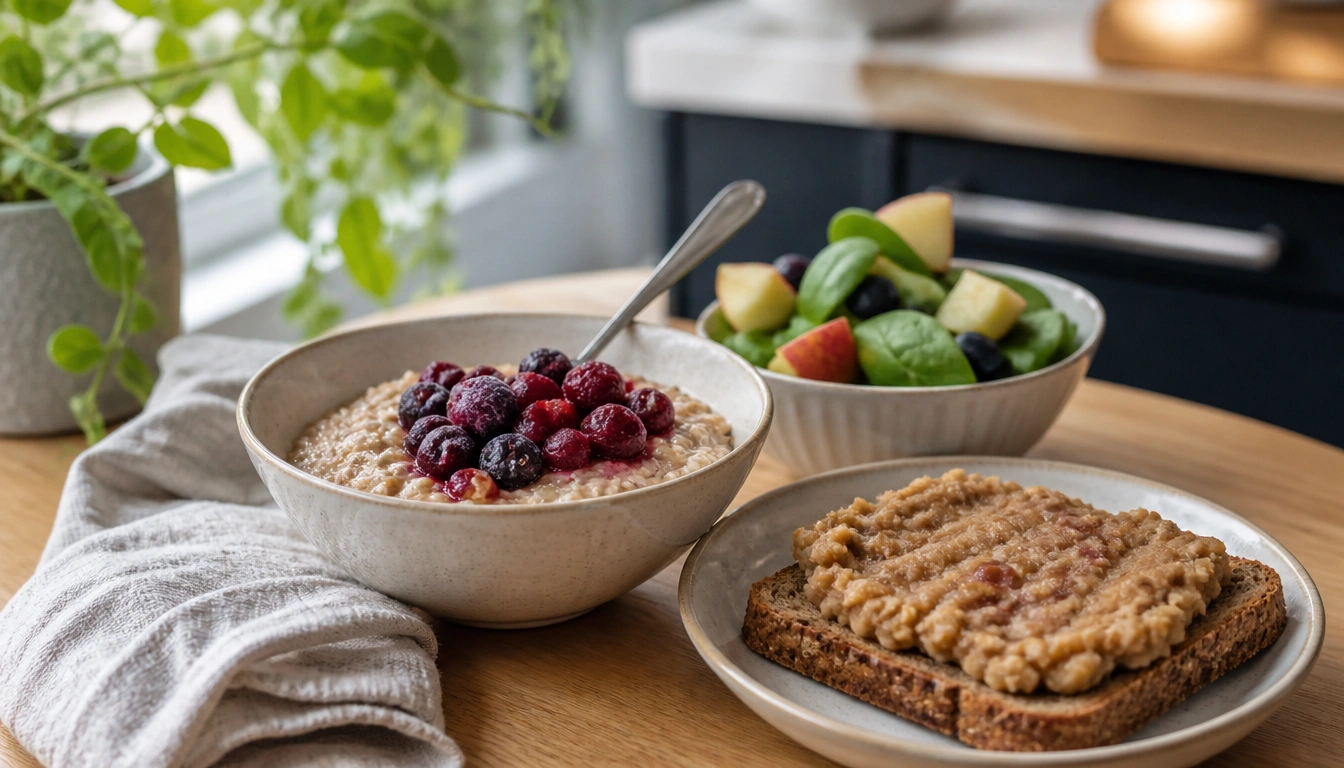
Cheap, easy breakfasts can absolutely help you get more fiber without specialty ingredients. The most practical options are rolled oats, beans, whole-grain bread, and frozen fruits or vegetables. If you aim for about 8 to 12 grams of fiber at breakfast, you can make steady progress toward the daily fiber target while keeping costs low and prep simple.
Key Takeaways
- Aim to get roughly 8 to 12 grams of fiber at breakfast so the rest of the day is easier to manage.
- Rolled oats, dry or canned beans, whole-grain bread, and frozen produce are some of the cheapest fiber-rich staples.
- Frozen berries and spinach can be just as practical as fresh for fiber-focused breakfasts, with less waste.
- Increase fiber gradually over 2 to 3 weeks and drink more fluid at the same time to reduce bloating and constipation.
- Store brands, markdown bread, freezer storage, and shelf-stable pantry items can lower costs without lowering fiber.
Why breakfast is the easiest place to start
Fiber matters because it supports bowel regularity, helps slow digestion, and can make breakfast more satisfying. The Dietary Guidelines for Americans generally place adult fiber needs in the range of about 25 to 38 grams per day, but many people do not reach that amount. Breakfast is a useful place to start because it sets the tone for the rest of the day and can keep you from relying on low-fiber convenience foods later.
For budget shoppers, the good news is that high-fiber breakfasts do not have to be built from expensive powders, specialty granola, or imported seeds. The cheapest options are usually ordinary foods that happen to be fiber-rich: oats, beans, whole-grain bread, and frozen produce. These foods are affordable, widely available, and flexible enough to work with sweet or savory breakfasts.
A practical breakfast goal is not perfection. It is consistency. If you can regularly build one morning meal that contributes a meaningful share of your daily fiber, you are already doing the work that matters.
The cheapest high-fiber breakfast staples worth keeping on hand
Rolled oats are one of the strongest budget buys in the fiber category. They are filling, easy to cook, and work in hot cereal, overnight oats, baked oatmeal, or blended smoothies. Oats also bring soluble fiber, which helps form a gel-like texture during digestion and can make meals feel more steadying.
Beans may sound unusual at breakfast, but they are among the most economical fiber sources available. Dry beans are usually the lowest-cost option if you have time to cook them, while canned beans offer convenience. Black beans, pinto beans, and chickpeas can be mashed, warmed, or mixed into savory breakfast dishes with very little effort.
Whole-grain bread is another practical staple. Look for whole wheat or whole grain as the first ingredient, and buy store-brand loaves when possible. If you do not use bread quickly, freeze part of the loaf right away. That keeps it from molding and lets you toast slices straight from frozen.
Frozen berries and frozen spinach deserve a place in a budget kitchen because they reduce waste. You use only what you need, and the rest stays usable in the freezer. They are especially helpful when fresh produce is out of season or spoils before you can finish it.
The staple, fiber booster, flavor method
A simple way to build a fiber-rich breakfast on a budget is to think in three parts: a staple, a fiber booster, and a flavor element. The staple is the base of the meal, such as oats, bread, or beans. The fiber booster adds extra fiber from fruit, vegetables, or legumes. The flavor element keeps the meal enjoyable so you will actually want to repeat it.
For example, oatmeal can be the staple, frozen berries can be the booster, and cinnamon can be the flavor element. Toast can be the staple, mashed beans can be the booster, and salsa or pepper can be the flavor element. A breakfast bowl can start with oats, then include spinach or berries, then finish with peanut butter, cinnamon, or a spoonful of plain yogurt if you use dairy.
This approach is useful because it keeps shopping simple. You do not need a different recipe for every morning. You need a small set of low-cost ingredients that can be combined in different ways. That makes it easier to use what is already in the pantry and fridge before it goes to waste.
Affordable breakfast ideas that use everyday foods
Oatmeal with frozen berries: Cook rolled oats with water or milk, then stir in frozen berries near the end. The berries thaw quickly and add fiber, color, and flavor. A spoonful of nuts or seeds can add texture if they are already in your budget, but they are optional.
Savory bean toast: Toast whole-grain bread and top it with warmed canned beans, a little salsa, and a sprinkle of seasoning. This is a very low-cost option that feels more substantial than plain toast and can be made in minutes.
Breakfast burrito with beans and egg: Fill a whole-grain tortilla with scrambled egg, black beans, and salsa. If you want a lower-cost version, keep the egg portion modest and let the beans do most of the fiber work.
Overnight oats with grated apple: Mix oats with milk or water, then add grated apple with the peel on. The apple adds bulk and natural sweetness without needing expensive add-ins.
Smoothie with spinach and oats: Blend frozen spinach, a banana if you have one, oats, and milk or yogurt. The spinach is usually mild in flavor, and the oats help make the smoothie more filling.
Toast with mashed chickpeas: Mash canned chickpeas with a little lemon juice, pepper, or garlic powder and spread on whole-grain toast. It is inexpensive, filling, and easy to customize.
How to shop smart without spending more
Store brands often give you the same basic nutrition at a lower price. That matters most for staples you buy repeatedly, such as oats, bread, canned beans, and frozen vegetables. If the ingredient list is simple, a store-brand version is often all you need.
Bulk bins can help when you need larger quantities of oats or dry beans, but only if you will actually use them before they sit around. For many households, a standard bag of rolled oats is already the easiest value buy. The best deal is the one that gets used instead of forgotten.
Markdown bread is worth watching for, especially if you can freeze it the day you buy it. Freezing bread immediately is one of the easiest food-waste reduction strategies for a tight budget. It lets you buy larger loaves or sale items without racing the mold clock.
Frozen produce is often the smartest option for budget breakfast planning. It can be cheaper than fresh, especially for berries, and it avoids the problem of slimy spinach or moldy fruit before you finish the container. Shelf-stable pantry foods matter too: oats, beans, peanut butter, cinnamon, and canned fruit in juice can all support a fiber-forward breakfast routine without constant shopping trips.
How much fiber to aim for at breakfast
A practical breakfast target is about 8 to 12 grams of fiber. That is not a formal medical rule, but it is a helpful range because it makes the daily goal easier to reach without cramming all your fiber into one meal. If your day needs about 25 to 38 grams overall, breakfast can do a meaningful share of the work.
Spreading fiber across the day is usually easier on digestion than trying to make one huge meal do everything. A breakfast with oats and berries, or toast with beans, can take some pressure off lunch and dinner. That also helps with satiety, because fiber-rich meals tend to be more filling and can reduce the urge to chase quick snacks later in the morning.
If you are unsure how to judge your intake, start by building one meal that clearly contains a high-fiber staple plus a plant-based booster. You do not need to count every gram perfectly to benefit from this pattern.
How to increase fiber without stomach upset
Fiber works best when you add it gradually. Jumping from a low-fiber diet to a much higher one overnight can cause gas, bloating, cramping, or a backed-up feeling. A steadier approach over 2 to 3 weeks gives your digestive system time to adjust.
Fluid matters just as much as fiber. When fiber intake goes up, fluid intake should rise too. Without enough water, high-fiber eating can make constipation worse instead of better. That is one reason breakfast is a good place to practice balance: a bowl of oats, fruit, and liquid is often easier to tolerate than a dry, fiber-heavy meal.
Portion pacing also helps. If beans are new to you, start with a smaller amount and build up. If raw fruit or coarse whole grains bother your stomach, try softer preparations first, such as cooked oats, peeled fruit, or beans that are mashed instead of left whole. Tolerance varies, so the most useful plan is the one you can repeat comfortably.
When a higher-fiber breakfast is not the right choice
There are times when a low-fiber or low-residue approach is more appropriate. People with active inflammatory bowel disease flares, Crohn’s disease, ulcerative colitis, intestinal strictures, or those recovering from certain gastrointestinal surgeries may be told to avoid coarse whole grains, seeds, raw skins, and other rougher foods.
That does not mean fiber is always off the table, but it does mean breakfast should match the medical situation rather than a general nutrition goal. In those cases, the right plan should come from a clinician or registered dietitian who understands the condition and the current symptoms.
If you are having ongoing bloating, sharp abdominal pain, unintended weight loss, or a lasting change in bowel habits after changing your diet, do not assume it is only the fiber. Those symptoms deserve professional evaluation.
For most budget shoppers, though, the path is straightforward: use ordinary foods, build one fiber-forward breakfast you can repeat, and let small improvements add up over time.
Frequently Asked Questions
How much fiber should breakfast provide to help me reach a daily goal?
A practical target is about 8 to 12 grams of fiber at breakfast. That amount can make it easier to reach your total daily fiber goal without overloading one meal. The exact daily target varies by age and calorie needs, so breakfast should be part of the pattern rather than the whole plan.
What are the cheapest high-fiber breakfast staples I can buy regularly?
Rolled oats, dry or canned beans, whole-grain bread, and frozen fruits or vegetables are among the best value choices. Store-brand versions are often the most affordable. These foods are flexible, shelf-stable or freezer-friendly, and easy to use in both sweet and savory breakfasts.
Can frozen fruits and vegetables count as well as fresh for fiber-focused breakfasts?
Yes. Frozen berries and frozen spinach are very practical for fiber-rich breakfasts, and they can be more economical than fresh produce. They also reduce waste because you only use what you need. For breakfast, frozen produce works well in oatmeal, smoothies, toast toppings, and quick bowls.
How do I add more fiber to breakfast without causing bloating or stomach upset?
Increase fiber gradually over 2 to 3 weeks instead of making a sudden jump. Drink more fluid as fiber goes up, and start with smaller portions if you are sensitive. Cooked oats, softened fruit, and mashed beans are often easier to tolerate than very rough or dry high-fiber foods.
What high-fiber breakfast options work for people who need to avoid very high-fiber foods?
People who have active gut disease, recent gastrointestinal surgery, or a prescribed low-residue diet may need to limit coarse whole grains, seeds, and raw skins. In those cases, a lower-fiber breakfast plan should be individualized by a clinician or dietitian, because the right food pattern depends on the medical situation.
The Bottom Line
Cheap fiber-friendly breakfasts are very doable when you lean on ordinary foods instead of specialty products. Oats, beans, whole-grain bread, and frozen produce are the most useful building blocks for a budget kitchen.
If you want a practical starting point, aim for about 8 to 12 grams of fiber at breakfast, then spread the rest across the day. Build up gradually, drink enough fluid, and use freezer storage and store brands to keep costs under control.
If you have a medical reason to limit fiber, the best breakfast plan is the one tailored to your condition. For everyone else, consistency matters more than fancy ingredients.
Medical disclaimer
Medical disclaimer: This content is for educational and informational purposes only and is not a substitute for professional medical advice, diagnosis, or treatment. Dietary needs and supplement suitability vary by individual.
Sources
- U.S. Government / Health Authority — realfood.gov. Accessed November 2026.
