
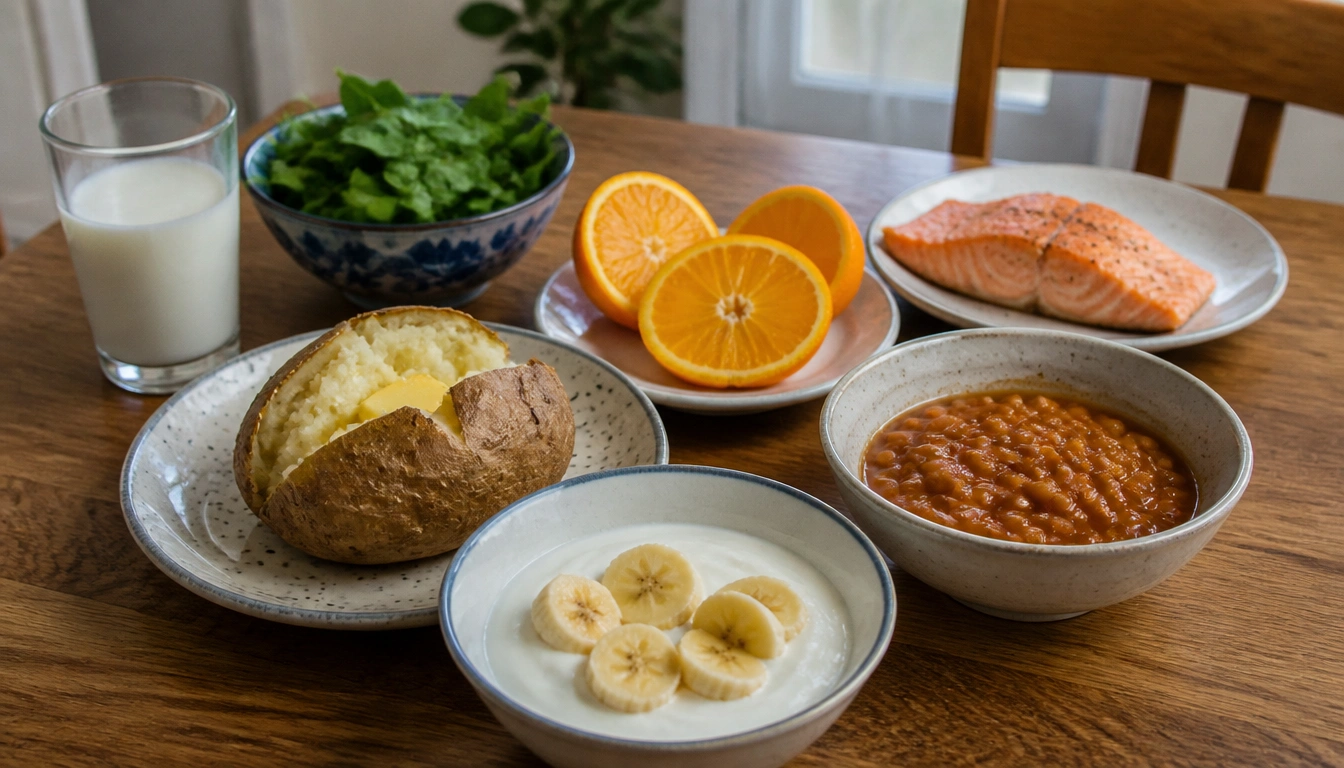
Adults over 50 can usually get potassium safely from everyday foods such as potatoes, beans, yogurt, milk, bananas, citrus, spinach, beets, dried fruit, and fish. Food is the preferred source because it comes with other nutrients and is easier to fit into a balanced diet. But if you have kidney disease, reduced kidney function, or take certain blood-pressure medicines, higher potassium intake can be unsafe and should be reviewed with a clinician before you intentionally increase it.
Key Takeaways
- Potassium helps with blood pressure control, fluid balance, and normal muscle and nerve function; older adults often benefit from getting enough through food.
- Affordable staples like potatoes, beans, milk, yogurt, bananas, and canned fish can supply meaningful potassium without special supplements.
- Baking, roasting, steaming, and using the cooking liquid in soups or stews help preserve potassium better than boiling and draining.
- High-potassium foods are not automatically safe for everyone; kidney disease and medicines such as ACE inhibitors, ARBs, and potassium-sparing diuretics can raise risk.
- Salt substitutes often contain potassium chloride and can trigger dangerous potassium buildup in people with kidney problems or certain medications.
Why potassium matters more as you get older
Potassium is one of the body’s key minerals for keeping cells working normally. It helps regulate fluid balance, supports nerve signals, and allows muscles—including the heart muscle—to contract and relax in a normal rhythm. Potassium also helps offset sodium’s effects, which matters because many adults over 50 are trying to manage blood pressure and heart risk.
Age changes the picture in two directions. On the one hand, older adults often benefit from potassium-rich foods because many people eat too much sodium and too little potassium. On the other hand, kidney function can gradually decline with age, and the kidneys are the main route for removing extra potassium from the body. That means the same food pattern that helps one person may be too much for another.
Food is the default choice for most healthy adults. According to the National Academies and U.S. dietary guidance, the adequate intake for healthy adults is 3,400 mg per day for men and 2,600 mg per day for women. That target is not a prescription to force potassium higher with pills. It is a reminder that everyday meals can do a lot of the work.
Research and public-health guidance also link adequate potassium intake with better blood-pressure control. For older adults, the practical goal is not “more is better.” It is getting enough through ordinary meals while staying aware of kidney function and medication effects.
Everyday potassium-rich foods to keep on hand
The best potassium foods are often the least dramatic ones: simple staples you can use in multiple meals. You do not need specialty powders or imported produce. Many budget-friendly foods count as useful potassium sources when portions are regular and meals are built around them.
Potatoes and sweet potatoes: A baked potato with the skin on is one of the most concentrated everyday sources. Sweet potatoes are also useful, especially because they are easy to bake, mash, or roast. Keep the skin on when possible because it adds fiber and helps preserve the “whole food” benefit.
Beans and lentils: White beans, kidney beans, black beans, chickpeas, and lentils are inexpensive, filling, and versatile. They work in soups, salads, grain bowls, dips, and casseroles. Canned beans are especially convenient; rinse them to lower sodium if needed.
Bananas and dried fruit: Bananas are familiar, portable, and easy to chew. Prunes, raisins, and dried apricots can be useful in small amounts, especially for people who prefer soft foods. Because dried fruit is concentrated, portion size matters.
Yogurt and milk: Plain yogurt and milk provide potassium along with protein and calcium. They are useful if appetite is lower, because they do not require much prep. Unsweetened or lightly sweetened versions usually fit best in a food-first pattern.
Citrus, spinach, beets, and fish: Oranges, orange segments, and orange juice can add potassium quickly. Spinach and beets are strong vegetable options, whether fresh or frozen. Fish such as salmon also contributes potassium, while adding protein for older adults who may need more nutrient density in smaller meals.
If chewing is difficult, choose soft options first: yogurt, bananas, mashed beans, baked potatoes, steamed spinach, soups with beans, and flaky fish.
How to build a potassium-friendly day of eating
A potassium-friendly pattern does not require a special menu. It works best when each meal includes at least one potassium-rich food and one or two supporting foods that make the meal satisfying.
Breakfast: Try plain yogurt with sliced banana and a spoonful of dried apricots, or a smoothie made with milk, yogurt, and fruit. If you prefer savory breakfast, a small baked potato topped with eggs and sautéed spinach can work surprisingly well. The goal is to start the day with food you will actually eat, not a perfect recipe.
Lunch: Use beans as the anchor. A bean-and-vegetable soup, a lentil salad, or a tuna or salmon salad with beans on the side can fit a variety of tastes. If you rely on sandwiches, add a side of orange slices, a cup of milk, or a small yogurt instead of replacing the meal entirely.
Dinner: Build around a baked potato or sweet potato, then add a protein such as fish, beans, or chicken, plus a vegetable like spinach or beets. A simple plate of roasted salmon, roasted sweet potatoes, and steamed greens can be both practical and nutrient dense.
Snacks: Bananas, yogurt, orange segments, or a small portion of dried fruit are easy options. If you are managing appetite changes, smaller and more frequent eating may work better than three large meals.
The useful habit is variety. Potassium can come from breakfast, lunch, dinner, and snacks rather than from one “superfood” you force into every meal.
Best low-effort ways to preserve potassium when cooking
Potassium is water-soluble, so cooking method matters. Boiling vegetables in plenty of water and discarding the liquid can reduce potassium content. That does not make boiled vegetables “bad,” but it does mean some of the mineral ends up down the drain.
To keep more potassium in the food, use dry-heat or low-water methods more often. Bake potatoes and sweet potatoes instead of boiling them. Roast vegetables on a sheet pan. Steam spinach, beets, or other vegetables just until tender. These methods are simple, low effort, and often improve flavor without extra salt.
Another practical approach is to use the cooking liquid. If you boil beans or vegetables for soups, stews, or braises, keep the liquid in the dish instead of pouring it off. That way, minerals that leach into the water stay in the meal.
For older adults, texture matters too. Mashing, pureeing, or lightly cooking potassium-rich foods can make them easier to chew and swallow. A baked potato can become mashed potatoes; beans can become soup or hummus; spinach can be folded into eggs or blended into a soup.
The cooking goal is not to preserve every last nutrient at all costs. It is to choose methods that fit your energy level, taste preferences, and chewing needs while keeping the food useful and enjoyable.
Budget-friendly and store-friendly strategies
Potassium-rich eating does not have to be expensive. In fact, some of the most useful foods are the cheapest items in the store. That matters for older adults on fixed incomes or caregivers trying to plan practical meals.
Use canned beans and canned fish: Shelf-stable beans are inexpensive, quick to use, and easy to store. Canned salmon, tuna, or sardines can add potassium and protein without much cooking. Choose lower-sodium versions when possible, and rinse canned beans to reduce sodium.
Lean on frozen vegetables: Frozen spinach, mixed vegetables, and beet options can be as convenient as fresh produce and often last longer. They are useful when appetite or energy for shopping is limited.
Buy plain yogurt and milk as multipurpose foods: These work for breakfast, snacks, and cooking. Plain yogurt can become a dip or a breakfast base. Milk can be part of cereal, oatmeal, soups, or smoothies.
Keep pantry potatoes and fruit on hand: Potatoes store well in a cool, dark place. Bananas, oranges, and dried fruit are widely available and easy to use without much preparation.
Think in meals, not supplements: If you have trouble eating large portions, add one potassium-rich item to meals you already eat. A half-cup of beans in soup, a baked potato with dinner, or yogurt with breakfast can make a meaningful difference without changing your whole routine.
Store-friendly foods also reduce food waste. That is helpful if cooking energy is limited and you need ingredients that last long enough to use them consistently.
When more potassium is not better
For many adults over 50, potassium-rich foods are helpful. But there are important exceptions. If you have chronic kidney disease, a history of high blood potassium, or reduced kidney function, your body may not clear potassium efficiently. In that setting, intentionally loading up on potassium-rich foods can be risky.
Medication use matters too. People commonly take blood-pressure medicines that affect potassium balance. ACE inhibitors, ARBs, and potassium-sparing diuretics can reduce potassium excretion and raise the risk of hyperkalemia, which means too much potassium in the blood. Other diuretics can lower potassium, so the direction of the risk depends on the drug.
That is why “healthy food” is not a complete safety rule. A banana or baked potato is fine for many people, but a high-potassium meal pattern may not be appropriate if your lab results, kidney function, or prescriptions say otherwise. If you have kidney disease or take medicines that affect potassium, ask a clinician or registered dietitian before making major changes.
Warning signs such as unexplained muscle weakness, unusual fatigue, palpitations, or an irregular heartbeat deserve medical evaluation. Blood testing is the only reliable way to know whether potassium is too high or too low.
How to read labels and avoid accidental potassium overload
One of the biggest hidden sources of potassium is the salt substitute shelf. Many potassium-based salt substitutes replace sodium chloride with potassium chloride. They can be useful for some people trying to reduce sodium, but they are not automatically safe. If you have kidney disease or take medicines that raise potassium, salt substitutes can be dangerous.
Read labels on seasoning blends, low-sodium products, sports drinks, meal replacements, and packaged foods. Potassium may be added as potassium chloride or other potassium compounds. A product marketed as “heart healthy” or “low sodium” is not automatically appropriate for someone who needs to watch potassium.
For people trying to lower sodium without raising potassium too much, flavor with herbs, citrus, garlic, vinegar, pepper, and spice blends that do not rely on potassium chloride. This gives you more control than using a salt substitute without checking the label.
Supplements deserve extra caution. Potassium pills and powders should not be used casually, especially by older adults with kidney disease or multiple prescriptions. Food is usually the safer, more flexible source because the dose is naturally spread across meals and paired with other nutrients.
If you are unsure whether a food or product fits your situation, bring the label to your next appointment. That small step can prevent avoidable problems and help you keep the benefits of potassium without crossing a safety line.
Frequently Asked Questions
What foods are high in potassium and easy to add to meals?
Easy options include potatoes, sweet potatoes, beans, lentils, bananas, yogurt, milk, oranges, spinach, beets, and fish such as salmon. The easiest way to use them is to add one or two of these foods to meals you already eat, rather than redesigning your whole diet.
How much potassium do adults over 50 need each day?
There is no special potassium target just for age 50 and up, but official adequate intake levels for healthy adults are 3,400 mg per day for men and 2,600 mg per day for women. Your personal needs can differ if you have kidney disease or take medicines that affect potassium.
Is it better to get potassium from food or supplements?
Food is usually the better choice because it is easier to fit into a balanced diet and less likely to cause a sudden potassium spike. Supplements can be risky for people with kidney problems or certain medications, so they should only be used with medical guidance.
Which medications or health conditions make high-potassium foods risky?
Chronic kidney disease, reduced kidney function, and medicines such as ACE inhibitors, ARBs, and potassium-sparing diuretics can increase the risk of high blood potassium. If any of these apply to you, ask a clinician before intentionally increasing potassium intake.
What are practical ways to keep potassium when cooking at home?
Bake, roast, or steam foods instead of boiling and draining them. If you boil beans or vegetables for soups or stews, use the cooking liquid in the final dish. That helps keep the potassium in the meal instead of losing it in the water.
The Bottom Line
For most adults over 50, the most practical way to get potassium is through everyday foods: potatoes, beans, yogurt, milk, bananas, citrus, spinach, beets, and fish. These foods are affordable, flexible, and easy to work into breakfast, lunch, dinner, or snacks.
The safety boundary matters. If you have kidney disease, reduced kidney function, or take medicines that can raise potassium, do not use salt substitutes or potassium supplements without medical advice. In those situations, the right amount of potassium is individualized.
If you are trying to eat more potassium safely, focus on simple meals, low-effort cooking methods, and label reading. That approach gives you the benefits of potassium without relying on hype, pills, or expensive specialty foods.
Medical disclaimer
Medical disclaimer: This content is for educational and informational purposes only and is not a substitute for professional medical advice, diagnosis, or treatment. Dietary needs and supplement suitability vary by individual.
Sources
- National Institutes of Health (NIH) — nih.gov. Accessed November 2026.
- National Institutes of Health (NIH) — nih.gov. Accessed November 2026.
- U.S. Food and Drug Administration (FDA) — fda.gov. Accessed November 2026.
- U.S. Government / Health Authority — dietaryguidelines.gov. Accessed November 2026.
- U.S. Government / Health Authority — usda.gov. Accessed November 2026.
