
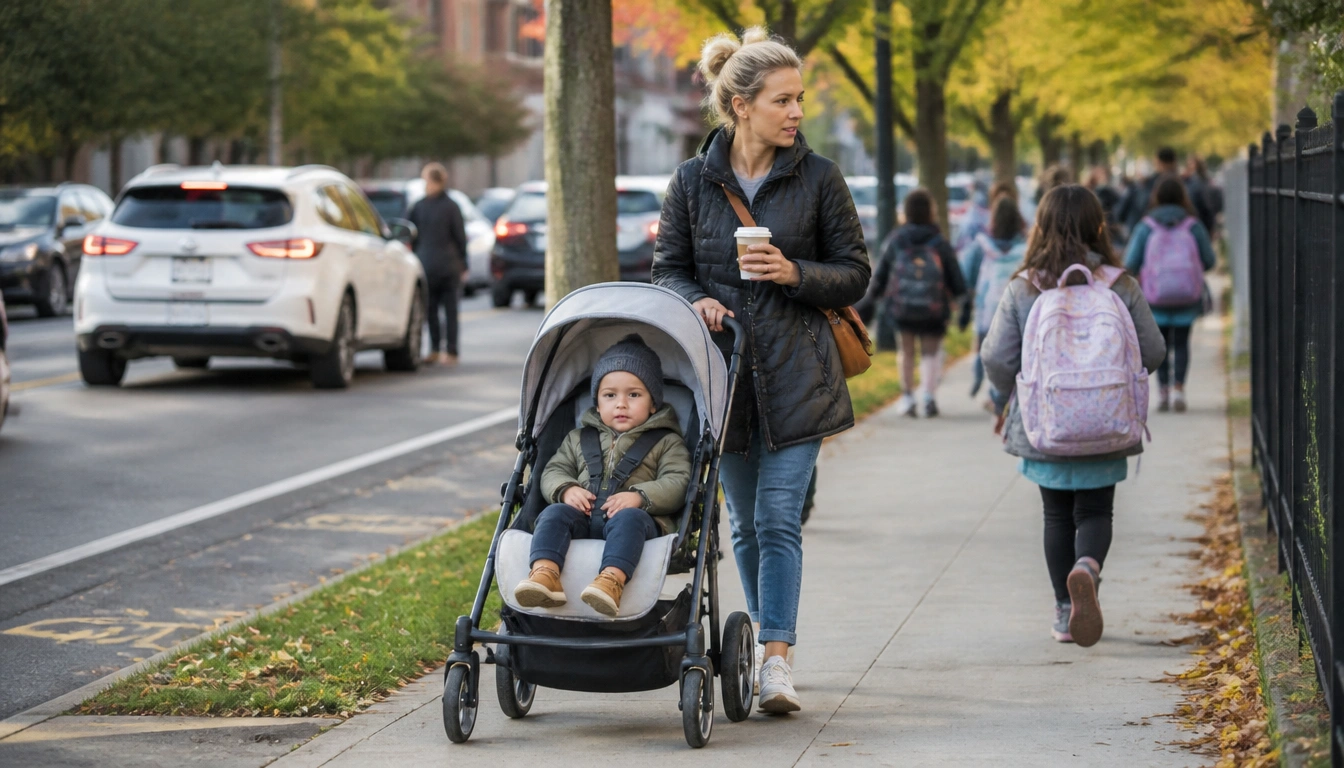
If you do not have time for a gym workout, a daily step habit is a realistic way to build fitness. Busy parents can make progress with short walks, school runs, errands, stroller time, and pacing breaks. Health benefits add up across the day, and you do not need 10,000 steps to get started or see value. Consistency matters more than chasing a fixed number.
Key Takeaways
- Short walking bouts count. Ten- to fifteen-minute walks can contribute meaningfully to weekly activity goals.
- You do not need 10,000 steps for health. A steady increase from your current baseline is more realistic and often enough to help.
- Start low, go slow if you are sedentary. Gradual progress lowers the chance of burnout, soreness, or injury.
- Walking can support stress relief as well as fitness, which matters for parents managing overload and fatigue.
- Postpartum parents should wait for medical clearance when advised and watch for warning signs such as heavy bleeding, dizziness, or pelvic pain.
Why a daily step habit fits better than a perfect workout schedule
For busy parents, the best movement plan is usually the one that survives real life. A daily step habit works because it does not depend on a gym bag, childcare coverage, or a full hour of uninterrupted time. It fits into school drop-offs, errands, stroller walks, work breaks, and the small gaps that already exist in a parent’s day.
That makes walking easier to repeat than a more ambitious workout plan. It also lowers the pressure that can lead to all-or-nothing thinking. If you miss a planned workout, the day can still contain useful movement. A few brisk walks, some pacing, and an active school run can add up in a way that feels manageable.
Walking has another advantage: it is often less mentally demanding than more structured exercise. Parents who are already tired may find it easier to commit to “move a little often” than to follow a formal routine with set equipment, set classes, or set intensity.
According to the CDC and other public-health bodies, adults should aim for at least 150 minutes of moderate-intensity activity each week. Walking is one of the simplest ways to work toward that goal without turning exercise into another major project.
What public-health guidance actually says about activity and short walking bouts
Public-health guidance is more flexible than many people assume. The CDC recommends at least 150 minutes of moderate-intensity aerobic activity each week for adults. Brisk walking can count toward that total when it raises your heart rate enough that you can talk, but not sing.
That target does not require a single long session. Health benefits are cumulative, which means several shorter walks across the day can still matter. A 10-minute walk before work, a 15-minute walk after dinner, and a few quick pacing breaks can all contribute toward your weekly total.
This is where the “every step counts” idea becomes useful. If your life rarely allows a long workout window, short bouts are not a backup plan; they are a valid plan. The body still responds to repeated movement, and your weekly activity pattern can improve even when the individual pieces are small.
Public-health guidance also emphasizes moving more and sitting less. For busy parents, that often means treating walking as a baseline habit instead of a special event. The goal is not perfection. The goal is steady accumulation over time.
How many steps should a busy parent aim for?
There is no single number that works for every parent, and that is useful to remember. The popular 10,000-step target is not a medical requirement. It became widely known as a marketing idea, not a strict health standard. Meaningful health gains can happen below that level.
A better starting point is your current reality. If you already walk a fair amount, your next step may be to add a little more consistency. If you are very inactive, the first win may simply be to make your baseline visible and raise it slowly. For example, you might add one short walk a day before thinking about bigger targets.
The most practical approach is to focus on trend, not perfection. Ask: can I increase my average steps a little and keep that going for several weeks? That kind of progress is more sustainable than a dramatic target that falls apart after a few days.
If a rough step goal helps you stay motivated, choose one that feels achievable on most days, not just on your best days. The best step goal is the one you can repeat while still handling childcare, work, and household demands.
How to build steps into parenting routines
Busy parents often do not need to find extra time; they need to use the time that already exists more deliberately. School runs, grocery trips, sports practices, and daycare pickups are all opportunities to add steps without creating a separate workout block.
Try parking farther away from entrances when it is safe and practical. Walk part of the route to school instead of driving the entire way. If you use a stroller, turn a casual outing into a brisk walk by setting a steady pace. Even routine errands can become movement if you choose a longer path inside a store or walk the perimeter of the parking lot.
Small pacing breaks help too. You can walk while waiting for a kettle to boil, while bottle-feeding timing allows, or while supervising a child’s playtime in a safe space. These moments may feel minor, but they are often the easiest way to build a habit that lasts.
The point is not to turn every task into exercise. It is to notice where walking can be layered onto what you already do. That is usually more realistic than trying to invent a new routine from scratch.
Habit stacking that makes walking automatic
Habit stacking means attaching walking to something you already do regularly. This works well for parents because the day is full of repeated cues: school prep, phone calls, laundry, mealtimes, and bedtime routines. A cue makes the habit easier to remember.
One simple version is to reserve certain activities for walking time. Listen to a podcast only when you walk. Return a friend’s call while pacing. Use audio time after the kids are asleep as a signal to do a few laps around the house or block. The walking becomes tied to something pleasant instead of something you have to force.
You can also connect steps to family routines. Walk after dinner, around the playground, or during sibling sports practice. Older children may enjoy turning walks into scavenger hunts or “count the red cars” games. When walking feels shared, it is easier to repeat.
Keep the routine small enough that it does not need perfect motivation. A short walk linked to a familiar cue is more reliable than a vague goal to “exercise more” someday.
How to avoid burnout or injury when you are starting from low activity
If you are starting from a sedentary baseline, the safest plan is to begin gently and build gradually. Jumping from very little movement to a large daily step target can lead to sore feet, irritated joints, or frustration that makes the plan hard to keep.
A start low, go slow approach works better. Begin with whatever feels manageable, then add a little more only after the current level feels comfortable. The exact increase can vary, but the principle stays the same: small changes are easier to recover from and easier to maintain.
Pay attention to recovery. Mild muscle soreness can happen when you add more walking, especially if you have been inactive. Sharp pain, worsening joint pain, or pain that changes your gait is different and should not be pushed through. Better shoes, flatter routes, and shorter bouts can also make walking feel easier in the early stages.
If you have a chronic health condition or have been inactive for a long time, it is sensible to check with a clinician before making a major change in activity. That is especially true if you have heart disease, metabolic conditions, or ongoing pain.
Postpartum walking and when to seek medical advice
Postpartum parents need a gentler approach. Walking is often a helpful first step after birth, but timing matters. If your clinician advised waiting for medical clearance, follow that guidance before increasing activity. Many parents are told to check in around the routine postpartum visit, but individual recovery is different.
Once you are cleared, start with easy walking and build up slowly. The first goal is comfort and tolerance, not fitness tests. Short, gentle walks are usually a better choice than long routes or brisk efforts early on.
Stop and contact a healthcare professional if you notice heavy postpartum bleeding, dizziness, pelvic heaviness, sharp pelvic or abdominal pain, chest pain, shortness of breath, or anything that feels clearly worse as you walk. These are not signs to “push through.” They are signs to pause and get medical advice.
Postpartum walking should support recovery, not strain it. If you are unsure whether a symptom is normal, ask before you increase your pace or distance.
Family-friendly ways to make walking social and sustainable
Walking is easier to keep when it feels like part of family life rather than a solo obligation. A regular family walk after dinner, a weekend park loop, or a school-day walk with one child can make movement feel natural instead of forced.
Social walking also helps with stress. For many parents, the walk is not just exercise; it is a reset. The rhythm of moving outdoors, even for a short time, can lower tension and support mood. Exercise-related endorphins and the chance to step away from constant demands both matter here.
Keep the plan flexible. Some days will allow a stroller walk; other days will only allow pacing during a phone call or a few extra loops in the hallway. That still counts. Over time, the habit becomes less about hitting a perfect target and more about returning to movement again and again.
If you want the habit to last, focus on routines you can repeat on ordinary days, not just ideal ones. A sustainable step habit is the one that fits school schedules, naps, work deadlines, and the unpredictability of family life.
Frequently Asked Questions
How many steps a day should busy parents aim for?
There is no universal step number that every parent must hit. A better goal is to increase your own baseline in a way you can sustain. If a number helps, choose one that fits your current routine and build from there rather than chasing a perfect target.
Can short walking breaks really count toward weekly exercise goals?
Yes. Health benefits are cumulative, and short bouts of walking can add up across the day. Ten- to fifteen-minute walks, school runs, and pacing breaks can all contribute toward weekly moderate activity goals when they are done consistently.
What is a realistic step goal if I am starting from a very low activity level?
Start with a small, manageable change rather than a large step jump. The best early goal is one you can repeat on most days without soreness or burnout. Once that feels easy, increase gradually and keep the change small enough to sustain.
How should postpartum parents approach walking safely after birth?
Postpartum parents should follow their clinician’s guidance on when to resume activity. Once cleared, begin with gentle walking and progress slowly. Stop and seek medical advice if you develop heavy bleeding, pelvic heaviness, dizziness, sharp pain, or other warning signs.
What are the warning signs that I should stop increasing my walking?
Stop and get medical advice if you have sharp joint pain, chest pain, shortness of breath, dizziness, worsening pelvic or abdominal pain, or symptoms that clearly worsen with walking. Mild muscle soreness can happen, but pain that changes how you move should not be ignored.
The Bottom Line
A daily step habit is often the most realistic way for busy parents to stay active. It works because it fits into ordinary routines, does not require a gym, and allows short bouts of movement to count toward weekly goals.
Start where you are, build slowly, and aim for consistency over a fixed step myth. For postpartum parents and anyone with medical concerns, safety comes first: get clearance when needed and pause if warning signs appear.
Medical disclaimer
Medical disclaimer: This content is for educational and informational purposes only and is not a substitute for professional medical advice, diagnosis, or treatment. Dietary needs and supplement suitability vary by individual.
Sources
- Centers for Disease Control and Prevention (CDC) — cdc.gov. Accessed November 2026.
- National Health Service (NHS) — www.nhs.uk. Accessed November 2026.
- National Health Service (NHS) — www.nhs.uk. Accessed November 2026.
- Centers for Disease Control and Prevention (CDC) — cdc.gov. Accessed November 2026.
