
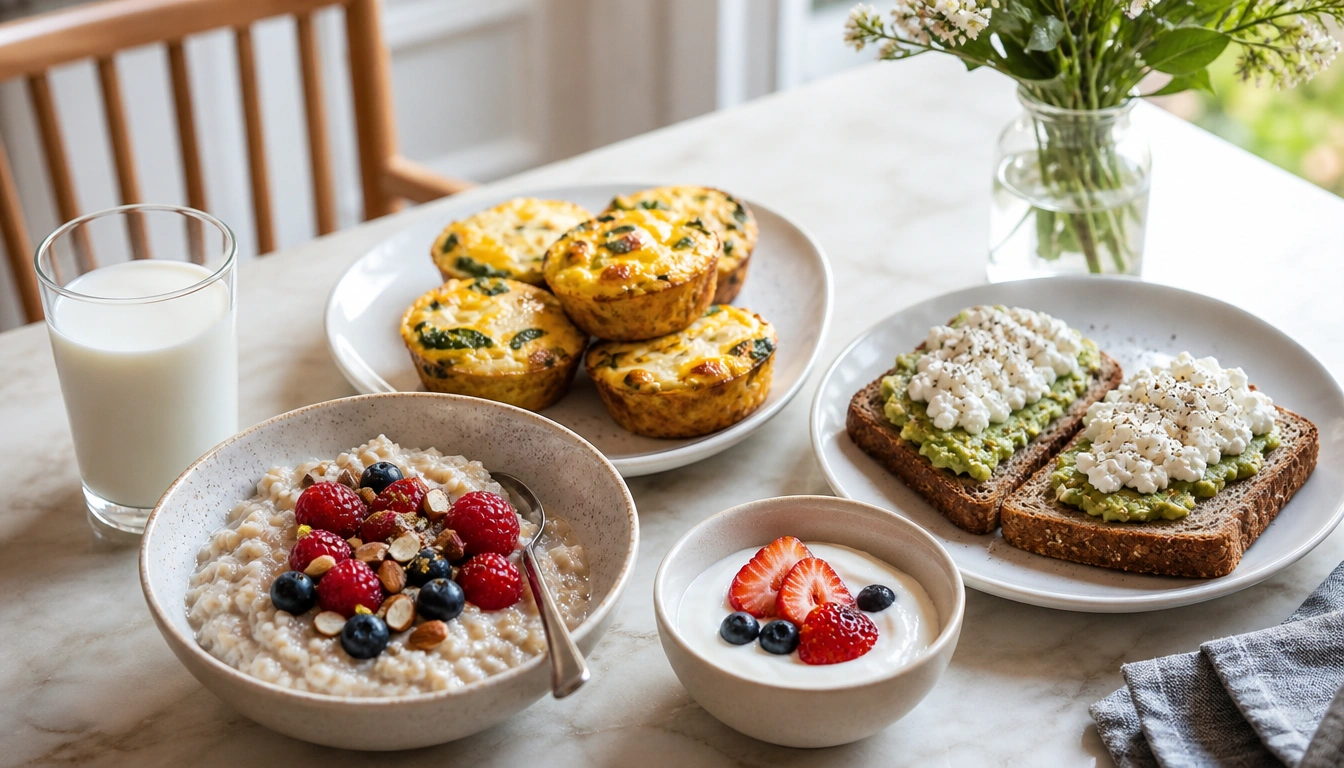
Easy, nutritious breakfast ideas for adults over 50 are simple meals that combine protein, fiber, and healthy fats without much prep. Good choices include overnight oats with yogurt and berries, egg muffins or egg bakes, whole-grain toast with avocado and cottage cheese, and soft options like oatmeal or smoothies. These meals can feed a family, support steady energy, and be adjusted for softer textures or special health needs.
Key Takeaways
- Spreading protein across breakfast and the rest of the day can help support muscle maintenance after 50.
- A balanced breakfast is usually more filling when it includes protein, fiber-rich carbs, and a little healthy fat.
- Make-ahead foods like overnight oats, chia pudding, and egg bakes can reduce morning effort for the whole household.
- Soft-texture breakfasts such as oatmeal, yogurt bowls, and smoothies are useful when appetite or chewing is limited.
- Older adults often need special attention to calcium, vitamin D, B12, and hydration at breakfast.
- Processed breakfast meats and very sugary cereals are usually poor everyday choices, especially for sodium and blood sugar reasons.
Why breakfast matters more after 50
For many adults over 50, breakfast is less about eating a big meal and more about starting the day with something that supports steady energy. As appetite, muscle mass, and recovery needs change with age, breakfast becomes a useful place to include protein early instead of waiting until later in the day.
That matters because older adults tend to need more intentional protein distribution to support muscle protein synthesis. A modest serving at breakfast can be more helpful than saving most protein for lunch or dinner. Morning food also gives a chance to add fluids, which is useful because thirst may be less reliable with age.
Breakfast does not need to be elaborate to be useful. A small, balanced meal can still help reduce midmorning fatigue, make it easier to meet daily nutrient goals, and prevent the pattern of starting the day with only refined carbs or sweets.
Build a breakfast that keeps energy steadier
A practical breakfast usually works best when it includes three things: protein, fiber, and a source of healthy fat. Protein helps with fullness and muscle support. Fiber from fruit, oats, whole grains, or vegetables slows digestion. Healthy fats from foods like avocado, nuts, seeds, or dairy can make the meal more satisfying without needing a lot of volume.
That combination can also help avoid the quick rise and fall in blood sugar that often comes from pastries, sweet cereal, or juice-heavy breakfasts. A simpler way to think about the plate is to pair one protein food with one fiber-rich carbohydrate and one add-on that improves staying power. For example: yogurt plus oats plus berries, or eggs plus whole-grain toast plus avocado.
Hydration matters too. A glass of water, milk, or unsweetened tea at breakfast can help replace fluids after the overnight fast. For adults who do not feel hungry first thing, a drink and a small snack may be a better start than forcing a large meal.
Make-ahead sweet breakfast ideas for busy mornings
Sweet breakfasts can still be nutritious if the sweetness comes mostly from fruit rather than added sugar. Overnight oats are a strong example because they are easy to assemble the night before and can be scaled for one person or a family. Mix rolled oats with milk or a fortified plant milk, then add Greek yogurt, chia seeds, cinnamon, and berries or chopped apple.
Chia pudding works in a similar way and is especially useful when someone wants a softer, spoonable breakfast. It can be topped with fruit, nuts, or a spoonful of yogurt. Both options are easy to personalize: one bowl can be mild and plain for one eater, while another can include extra fruit or nut butter for someone who wants more calories.
Plain yogurt bowls are another low-effort option. Start with plain Greek yogurt or another protein-rich yogurt, then add sliced banana, berries, oats, or ground flaxseed. If the family includes children or adults who prefer sweeter food, serve honey or granola on the side so the base bowl stays lower in sugar.
Simple add-in combinations
- Oats, cinnamon, blueberries, and walnuts
- Greek yogurt, strawberries, and oats
- Chia seeds, milk, peaches, and vanilla
- Applesauce, peanut butter, and a sprinkle of flaxseed
Savory breakfast ideas that feed more than one person
Savory breakfasts are often easier to keep high in protein without much added sugar. Egg muffins and sheet-pan egg bakes are especially useful for families because they can be made ahead, stored, and reheated quickly. Whisk eggs with milk, then stir in vegetables such as spinach, peppers, mushrooms, or zucchini. Add cheese if desired, then bake in a muffin tin or shallow dish.
These meals are flexible enough to suit different family members. A parent over 50 may want a softer egg bake with vegetables and cheese, while another eater can have the same base with toast or salsa. The advantage is that one batch serves several people without requiring separate cooking.
Whole-grain toast combinations also work well. Try avocado with a sliced egg, cottage cheese with tomatoes, or peanut butter with banana. These are quick, familiar, and easy to scale. If someone needs more protein, the toast can be topped with yogurt on the side or paired with a boiled egg.
When possible, choose lower-sodium ingredients such as fresh eggs, plain dairy, and minimally processed cheese. That keeps the meal simple without relying on packaged breakfast meats or heavily salted add-ons.
Soft breakfast ideas for low appetite or chewing discomfort
Some mornings call for softer foods, especially when appetite is low or chewing feels tiring. In those cases, texture matters as much as nutrition. Warm oatmeal is one of the easiest choices because it is soft, filling, and easy to flavor with fruit, cinnamon, or nut butter. It can be made with milk for extra protein and calcium.
Scrambled eggs, egg bakes, and yogurt bowls are also useful because they require little chewing. Smoothies can be a practical option when eating feels difficult, as long as they are built with protein and fiber instead of just fruit juice. A good smoothie might include milk or yogurt, soft fruit, oats, and nut butter or chia seeds.
If someone has a very small appetite, think in smaller portions rather than one large plate. A few spoonfuls of oatmeal, a half smoothie, or a small yogurt bowl may be easier to finish than a full meal. This approach can still deliver useful protein and fluids without creating morning stress.
Easy swaps that make breakfast healthier and cheaper
Small ingredient swaps can make a big difference in both nutrition and budget. Choose plain oats instead of flavored instant packets when possible, since flavored versions often bring more added sugar. Use plain yogurt and add fruit yourself instead of buying sweetened yogurt cups. Pick whole-grain bread when it is affordable, but do not feel locked into expensive specialty products.
For protein, eggs, cottage cheese, plain yogurt, milk, peanut butter, beans, and leftover cooked vegetables are all practical options. Frozen berries, frozen spinach, and frozen vegetables can be just as useful as fresh produce and often cost less. They also reduce prep time because they are already washed and portioned.
If sodium is a concern, limit bacon, sausage links, and similar breakfast meats to occasional use rather than everyday staples. If blood sugar is a concern, keep sweet cereal and pastries as occasional treats and build the meal around protein and fiber first. Simple food swaps do not need to be extreme to be effective.
| Common choice | Better everyday swap | Why it helps |
|---|---|---|
| Sugary cereal | Plain oats with fruit and yogurt | More fiber, less added sugar |
| Bacon or sausage | Eggs or cottage cheese | Usually less sodium and more useful protein |
| Pastry and juice | Toast with nut butter and milk or tea | More staying power and steadier energy |
| Sweet yogurt cup | Plain yogurt with berries | Less added sugar, more flexibility |
How to serve one breakfast to different family members
The easiest family breakfast is often a base meal that can be customized at the table. This keeps cooking simple while letting each person adjust portion size, texture, and flavor. For example, a tray of egg bake can be served with toast, salsa, or avocado on the side. A bowl of oatmeal can be topped with berries, nuts, seeds, or extra milk depending on need.
This approach works especially well when family members have different appetites. Adults over 50 may want a smaller, protein-focused portion, while younger eaters may add fruit, granola, or a second slice of toast. The base stays the same, but the toppings make it more flexible.
It also helps to keep a few ready-to-use extras on hand: sliced fruit, hard-boiled eggs, plain yogurt, nut butter, and whole-grain bread. Those items make breakfast easier to assemble without cooking an entirely separate meal for each person.
When breakfast needs personal adjustments
Most family breakfasts can be adapted with simple swaps, but some health conditions call for individualized planning. Adults with kidney disease may need to adjust protein, potassium, phosphorus, or sodium depending on their stage of disease and lab results. People with diabetes may need more careful attention to carbohydrate portions and meal timing. Those with swallowing problems, also called dysphagia, may need texture-modified foods and liquids rather than standard breakfasts.
If coughing, choking, throat clearing, or food sticking happens during meals, that should be assessed by a healthcare professional. The same is true if appetite drops for no clear reason, weight loss is unplanned, or a person suddenly cannot tolerate foods they used to manage easily. A registered dietitian, doctor, or speech-language pathologist can help tailor breakfast to the person, rather than forcing one universal plan.
For most adults over 50, though, the best breakfast is still a simple one: enough protein to matter, enough fiber to stay satisfied, and enough softness or flexibility to make it easy to eat consistently.
Frequently Asked Questions
What are the best high-protein breakfast ideas for adults over 50?
Eggs, Greek yogurt, cottage cheese, milk-based oatmeal, and chia pudding made with yogurt or milk are all practical choices. The best option is the one that is easy to eat regularly and fits the rest of the day’s meals.
How can breakfast support muscle maintenance and steady energy after 50?
Protein at breakfast helps older adults spread intake through the day, which supports muscle maintenance. Pairing protein with fiber-rich carbs and healthy fats also helps slow digestion and reduce the sharp energy dip that can follow a sugary breakfast.
What are easy make-ahead breakfasts for older adults and families?
Overnight oats, chia pudding, yogurt bowls with fruit, and egg muffins or egg bakes are all easy to prep ahead. They store well, reheat quickly, and can be portioned for one person or a whole household.
What soft breakfast options work for adults over 50 with chewing discomfort?
Soft oatmeal, scrambled eggs, yogurt bowls, applesauce with chia, and smoothies made with milk or yogurt are good choices. If chewing or swallowing is difficult, the texture should be adjusted with professional guidance rather than guessed at home.
How can I make breakfast more filling without adding lots of sugar?
Add protein, fiber, and a little fat before reaching for sweeteners. Plain yogurt, nuts, seeds, oats, eggs, avocado, and nut butter can make breakfast more satisfying without relying on sugary cereal, pastries, or syrup.
The Bottom Line
Simple family breakfast ideas for adults over 50 work best when they are built around protein, fiber, and easy-to-eat textures. That can mean oats with yogurt and fruit, eggs with toast and avocado, or a soft smoothie with milk and chia.
The goal is not a perfect breakfast. It is a repeatable one that supports energy, appetite, muscle maintenance, and the needs of the rest of the household. When health conditions such as kidney disease, diabetes, or swallowing problems are present, the breakfast plan should be individualized.
Medical disclaimer
Medical disclaimer: This content is for educational and informational purposes only and is not a substitute for professional medical advice, diagnosis, or treatment. Dietary needs and supplement suitability vary by individual.
Sources
- National Institutes of Health (NIH) — nih.gov. Accessed November 2026.
- U.S. Government / Health Authority — health.gov. Accessed November 2026.
- U.S. Government / Health Authority — acl.gov. Accessed November 2026.
- U.S. Government / Health Authority — health.gov. Accessed November 2026.
- U.S. Government / Health Authority — dietaryguidelines.gov. Accessed November 2026.
- Academic Research Institution — okstate.edu. Accessed November 2026.
