
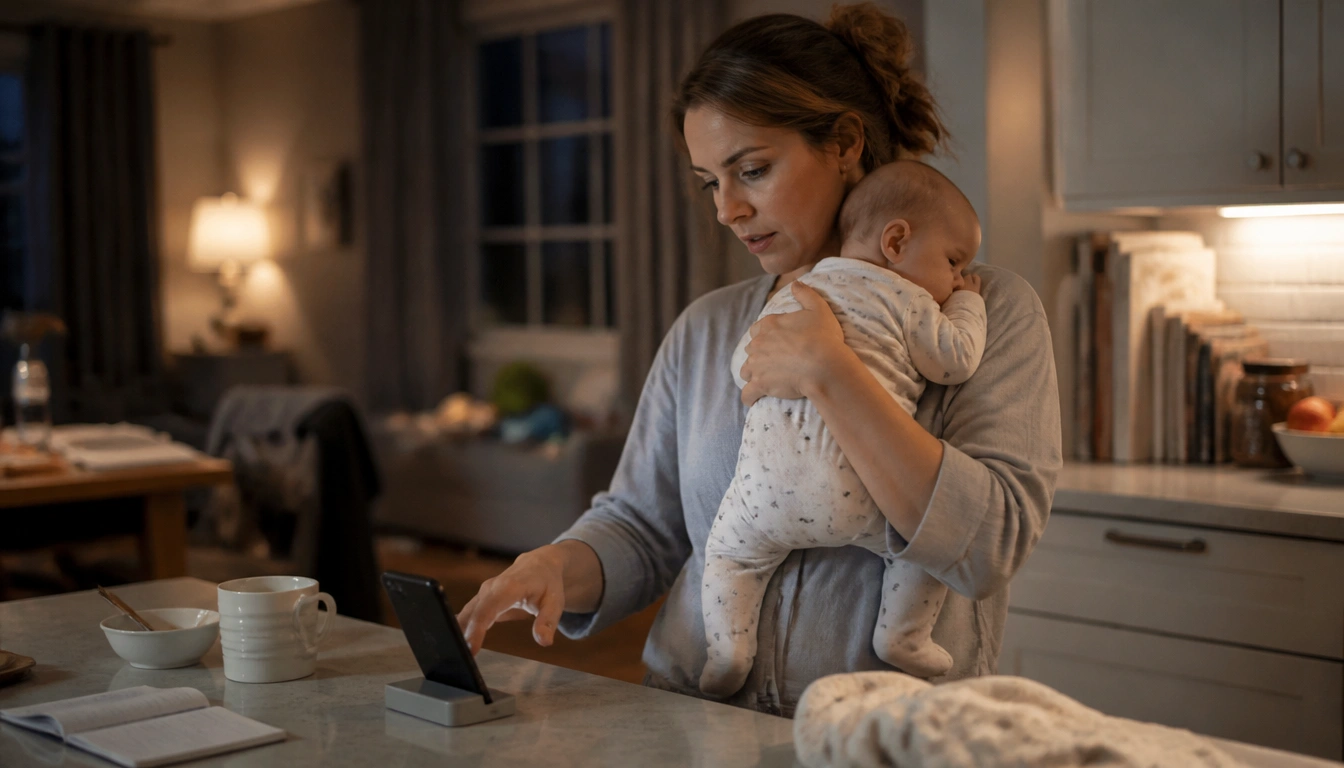
A low-light evening routine can help busy parents sleep better by making it easier for the brain and body to wind down before bed. You do not need perfect darkness or a complicated schedule. A realistic plan is to start dimming the home 60 to 90 minutes before sleep, soften screen and overhead light, and use a short, repeatable routine that still works when children, chores, or night wakings interrupt the evening.
Key Takeaways
- Start with a 60 to 90 minute wind-down window, but make it flexible enough to handle bedtime, chores, and childcare interruptions.
- Use warm, lower-level lighting in the rooms you actually use at night, not just in the bedroom.
- A short brain dump can reduce the mental spin that keeps many parents awake after the house gets quiet.
- If screens are necessary, reduce brightness and warmth, and keep them from becoming the main light source in the room.
- Shift workers and night-owl parents may need a gradual light change and stronger window blocking rather than a perfect early bedtime routine.
- Persistent insomnia, loud snoring, gasping, restless legs, or ongoing daytime grogginess deserve medical evaluation rather than more sleep-hygiene tweaks.
Why evenings are hard for busy parents, and why low light helps
For parents, evening is often the first time the house is quiet, but it is not always restful. There may still be dishes, laundry, snack requests, homework, bedtime negotiations, and one more work email. That mix of vigilance and fatigue is exactly why a low-light evening routine can help. It creates a visible cue that the day is shifting from “keep everything moving” to “power down.”
Light matters because your brain uses it as a time signal. According to the CDC and NHS, light exposure in the evening can make it harder to fall asleep because it tells the body that daytime is still going on. Bright, blue-enriched light is especially alerting. In plain language, more light keeps the brain in a more watchful state, while dimmer, warmer light supports the natural evening rise in melatonin and the calmer nervous-system state that sleep needs.
This does not mean parents need a perfect cave-like house. The practical goal is a household rhythm that is dim enough to help the body downshift, while still bright enough to move around safely, respond to kids, and finish the night without stress.
The realistic 60 to 90 minute wind-down window
A low-light routine works best when it is broken into small steps. Most families do better with a simple sequence than with a long list of rules. Think of the wind-down as three phases: start softening the environment, lower stimulation, and then protect the final stretch before bed.
In the first phase, about 60 to 90 minutes before sleep, reduce the brightest overhead lights and switch to lamps or smaller light sources. This is the time to begin the household transition, not to announce a strict bedtime. If you are still helping with baths, snacks, or cleanup, you can keep moving, just under gentler light.
In the middle phase, pick one or two low-effort cues that you can repeat every night. That might be putting away the most distracting devices, starting the dishwasher, or folding a few items while listening to quiet audio. The point is not a perfect routine; it is a repeatable pattern that tells your nervous system the work of the day is almost over.
In the final phase, the last 15 to 30 minutes before sleep should be as friction-free as possible. Keep the same order most nights: bathroom, pajamas, one short task, then bed. Parents often do better with a “good enough” routine than with a beautiful one they cannot sustain.
How to set up lighting and devices in a real home
The easiest lighting change is often replacing the habit of using bright overhead lights for everything. Use warmer bulbs in lamps in the rooms where your family spends evening time. Warm white bulbs are usually easier to live with than harsh, cool lighting because they are less alerting and less likely to feel like “full daytime” after sunset. A dimmer switch can help, but a lamp with a lower-wattage bulb may be enough.
Placement matters too. A lamp aimed at a wall or corner can create usable light without flooding the room. That can be helpful in kitchens, hallways, or play areas where you still need to see what you are doing. In bathrooms, use the softest practical light for brushing teeth or washing up, because sudden bright bathroom light can feel more wakeful than people expect.
For devices, the goal is not always total avoidance. The goal is to stop screens from acting like the room’s main light source. Create a shared charging dock outside the bedroom if possible, so phones are parked by default instead of carried everywhere. If a device is still necessary for parenting or work, lower brightness, use the warmest display setting available, and keep the screen close to the body rather than lighting up the whole room.
A household screen curfew works best when it is predictable and realistic. If your child is still awake, you may not be able to cut screens completely. In that case, use them deliberately, not continuously, and switch them off again once the task is done.
A five-minute brain dump that reduces bedtime rumination
Many parents are tired enough to sleep but mentally too full to settle. The problem is not only light; it is the unfinished mental loop of tomorrow’s tasks, school forms, appointments, groceries, and work reminders. A short brain dump can help because it moves those thoughts out of active memory and onto paper.
Keep it simple. Use 5 to 10 minutes and write three kinds of items: what must happen tomorrow, what you are afraid of forgetting, and anything that is still unresolved. Do not organize it perfectly. A messy note is fine if it lets your mind stand down. This is especially helpful on nights when you feel productive but wired.
Some parents like a split approach: one note for logistics and one for worries. Others prefer a single page by the bed or kitchen counter. The structure matters less than the repeatability. Over time, the page becomes a signal that the day is being safely handed off.
If your mind keeps circling after the list is done, do not add more tasks. Return to the low-light environment, slow your pace, and move into the next part of the routine instead of trying to think your way into sleep.
Low-stimulation habits that fit around parent life
The best add-ons are low-friction and low-decision. A warm shower or bath can be useful because the body cools afterward, which supports sleepiness. Gentle stretching can help if you spend the day carrying children, sitting at a desk, or standing in the kitchen. Quiet reading works well if it is genuinely calming and not a source of “just one more chapter” momentum.
Low-volume audio can also fit family life. A podcast, audiobook, sleep story, or calm music can be better than bouncing between apps and messages, as long as it does not keep you mentally engaged. If the audio is making you more alert, choose something less interesting or shorten the listening time.
These habits are not magic on their own. They work best when they happen in dimmer light and at a slower pace. A short shower under soft bathroom lighting is more sleep-friendly than a rushed shower followed by bright-screen scrolling. The same is true for stretching, reading, or tidying up. The behavior matters, but the environment matters too.
If you only have a small amount of time, choose one habit and repeat it. Consistency beats variety in a busy household.
Food, caffeine, and hydration timing in the evening
Evening eating and drinking habits can either support or disrupt a low-light routine. Heavy, very spicy, or high-fat meals close to bedtime may keep digestion active when the body should be settling. If dinner runs late, keep the later food lighter when possible. That does not have to mean a perfect meal plan; it can simply mean avoiding the heaviest snack or richest dessert right before sleep.
Caffeine is worth watching because it can stay active longer than many people expect. If you are sensitive, consider an earlier cutoff in the afternoon rather than waiting until late evening to notice the effect. Parents often underestimate caffeine because fatigue can mask it during the day, then the alertness shows up exactly when they are trying to wind down.
Hydration also matters. A little water in the evening is fine, but drinking a large amount right before bed can lead to more bathroom trips and broken sleep. If you tend to wake often, shift more of your fluids earlier in the day and taper off as bedtime approaches.
These are adjustment tools, not strict rules. If your schedule makes meal timing irregular, focus on the pattern that causes the fewest sleep disruptions rather than chasing perfection.
Adapting the routine for newborns, shift work, and night-owl schedules
Parents with newborns, frequent night wakings, or on-call responsibilities cannot always protect one uninterrupted sleep block. In those situations, low light is still useful, but the goal is reduced stimulation rather than a flawless bedtime ritual. Keep the environment dim during feeds, diaper changes, and overnight check-ins so the brain does not get a strong “daytime” signal in the middle of the night.
For shift workers or naturally late chronotypes, an abrupt switch to early dimming may not hold. A gradual shift works better: begin dimming 15 to 30 minutes earlier every few days until the schedule feels manageable. If your schedule regularly pushes sleep later, use light-blocking window coverings to protect your sleep window and make the room feel darker when you need rest.
Parents who need to stay responsive should not aim for total darkness in the whole house. The better target is a practical dimming window that lets you notice a child waking or a household need without staying fully alert yourself. Small, repeatable changes are usually more sustainable than a strict routine that collapses the first time someone cries or the washer beeps.
Night-owl parents may also benefit from the same routine at a slightly later clock time. The principle does not change: lower the light, slow the pace, reduce stimulation, and keep the routine consistent enough that your body learns what comes next.
When low-light habits are not enough
Sleep hygiene helps many people, but it is not a substitute for medical care when a sleep disorder is present. If poor sleep lasts for months, starts interfering with daily life, or comes with mood changes, persistent fatigue, or safety concerns, it is time to talk with a clinician. According to the CDC and NHS, chronic insomnia can need more than behavioral changes alone.
Seek evaluation if you snore loudly, gasp, or have witnessed pauses in breathing during sleep, as those can be signs of sleep apnea. Restless legs syndrome is another reason to ask for help, especially if you have an urge to move your legs that keeps you from settling down at night. Ongoing daytime grogginess, morning headaches, or unrefreshing sleep are also worth discussing, particularly if you are driving, caring for children alone, or working in a safety-sensitive job.
If you are using over-the-counter sleep aids or supplements and still not sleeping well, that is another reason to check in with a professional. For chronic insomnia, cognitive behavioral therapy for insomnia is widely recognized as a first-line treatment, and it can be more effective than repeatedly adding more sleep tips on top of a problem that needs a different approach.
The practical goal is not to “try harder” at sleep. It is to notice when the pattern suggests a treatable issue and get the right support.
Frequently Asked Questions
How long before bed should I start dimming the lights?
A good target is 60 to 90 minutes before sleep, but busy parents can start with whatever portion of that window is realistic. Even a gradual dimming period is useful if it happens most nights. The aim is to create a consistent cue that evening is shifting toward rest.
What type of bulbs or lamps are best for evening light?
Warm, lower-level lighting is usually better than bright overhead light at night. Lamps with warm white bulbs are practical for most homes, especially if they are placed so the light is indirect. A dimmer can help, but a single lamp with a softer bulb is often enough to make evenings feel less alerting.
Can I still use my phone or tablet at night without ruining sleep?
Yes, if you use it carefully and briefly. Lower the brightness, switch to the warmest display setting, and avoid letting it become the main room light. If possible, use it for one task and then put it away rather than scrolling for long stretches.
What if my child wakes up often or I’m on call overnight?
Focus on keeping the environment dim rather than trying for perfect bedtime conditions. Small amounts of low light during overnight care can reduce how much your brain fully wakes up. If your schedule is unpredictable, keep the routine simple so it can survive interruptions.
When should poor sleep become a reason to talk to a doctor?
If sleep problems persist for weeks to months, affect your daytime functioning, or come with loud snoring, gasping, restless legs, or significant grogginess, it is time to get medical advice. Those patterns can point to a sleep disorder that needs evaluation, not just better habits.
The Bottom Line
A low-light evening routine does not have to be elaborate to help. For busy parents, the most useful changes are often the smallest ones: dim the house earlier, soften device light, and repeat a short wind-down that you can actually keep doing on hard nights.
If you need to stay available for children, do not aim for perfection. A practical dimming window, a quick brain dump, and a few low-stimulation habits can still support sleep without making your home feel rigid or unrealistic. When sleep problems persist or suggest a disorder, get medical help instead of relying only on routine changes.
Medical disclaimer
Medical disclaimer: This content is for educational and informational purposes only and is not a substitute for professional medical advice, diagnosis, or treatment. Dietary needs and supplement suitability vary by individual.
Sources
- National Health Service (NHS) — www.nhs.uk. Accessed November 2026.
- Centers for Disease Control and Prevention (CDC) — cdc.gov. Accessed November 2026.
- National Health Service (NHS) — uhs.nhs.uk. Accessed November 2026.
