
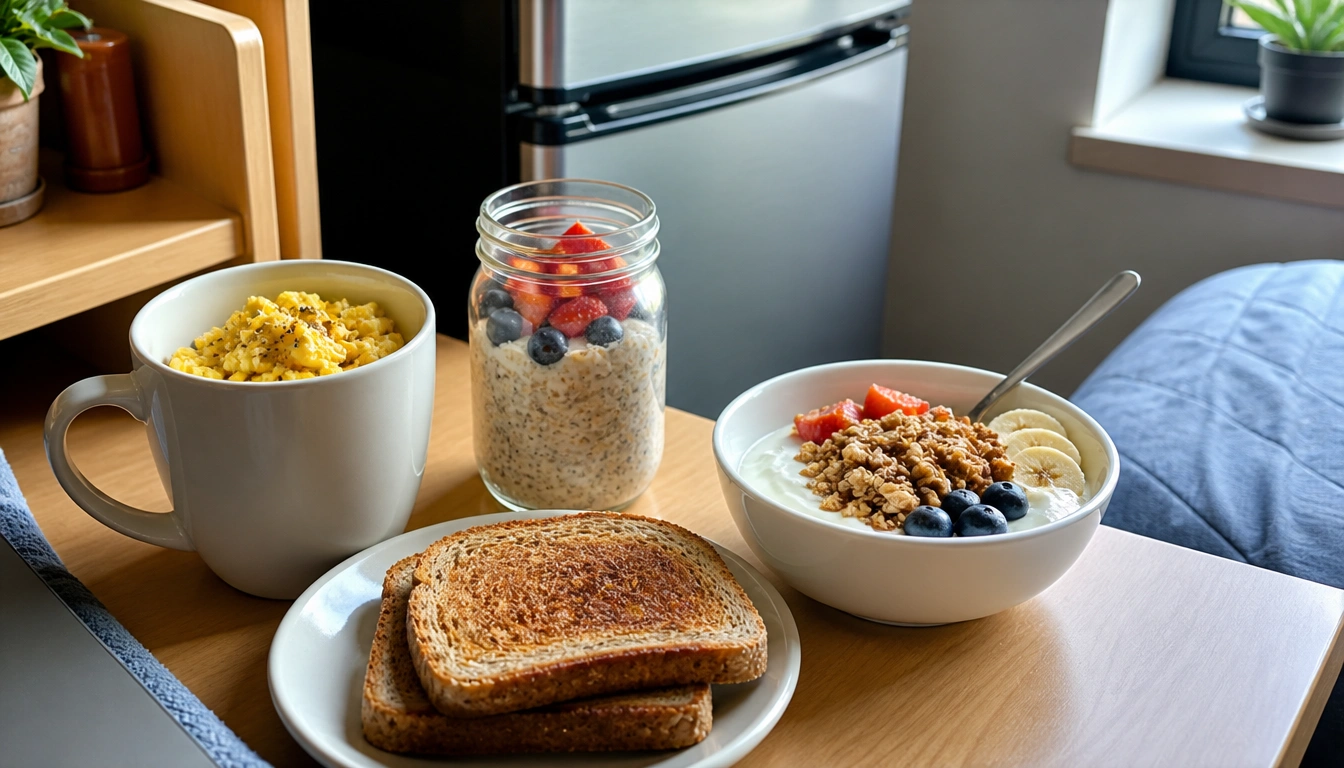
The easiest healthy breakfast ideas for college students are simple combinations you can assemble with a microwave, mini-fridge, bowl, mug, or jar: overnight oats, yogurt parfaits, microwave eggs, peanut butter toast, and make-ahead oat cups. The best choices pair whole grains, protein, fruit or vegetables, and a little healthy fat so you stay fuller longer and avoid a mid-morning crash.
Key Takeaways
- A balanced dorm breakfast is usually easiest when it includes a whole grain, protein, fruit or vegetables, and a small amount of healthy fat.
- No-cook options like yogurt parfaits and overnight oats are often the fastest choices on rushed mornings.
- Microwave meals can still be nourishing; a mug scramble or oat bowl works well with just one dish.
- If you are not hungry early, a smaller breakfast or a delayed morning meal can still fit a healthy pattern.
- Student athletes often need larger portions or more protein, while less active students may want lighter add-ins and fewer calorie-dense toppings.
Dorm-friendly breakfast ideas for college students: the 4-part formula
A practical dorm breakfast does not need a full kitchen. A good starting formula is whole grain + protein + fruit or vegetables + healthy fat. That mix matters because it slows digestion, helps steady blood sugar, and usually keeps you satisfied through long lectures. Public health guidance such as USDA MyPlate and academic nutrition advice from institutions like Harvard emphasize this kind of balance rather than a pastry-and-coffee breakfast that burns off fast.
For college life, this formula should be flexible. If you only have a mini-fridge and microwave, choose foods that can live there safely, require little prep, and do not create much cleanup. Rolled oats, whole-grain bread, Greek yogurt, eggs, cottage cheese, nut or seed butter, frozen fruit, bananas, baby spinach, and salsa all fit the pattern in different ways. The point is not to build a perfect meal every morning; it is to create a reliable one that works before an 8 a.m. class.
If you are starting from scratch, think in templates rather than recipes. One template might be oatmeal plus yogurt plus berries. Another might be toast plus eggs plus fruit. A third could be yogurt, granola, and frozen berries. Once you know the formula, you can swap ingredients based on appetite, budget, or what is actually left in the fridge.
Easy no-cook and microwave breakfast ideas
No-cook option: yogurt parfait. Spoon plain Greek yogurt into a bowl or jar, add berries, and top with granola or chopped nuts if allowed. This takes almost no time and gives you protein, calcium, and fiber-rich fruit. If your morning is rushed, keep the granola separate until you are ready to eat so it stays crunchy.
No-cook option: overnight oats. Mix rolled oats with milk or a fortified plant milk, then add chia seeds, cinnamon, and fruit in a jar the night before. By morning, the oats soften into a ready-to-eat breakfast. This is a strong choice when you need something filling but do not want to cook before class.
Microwave option: mug scramble. Beat eggs with a splash of milk or a spoonful of cottage cheese in a greased mug, then add spinach, tomatoes, or shredded cheese if you have them. Microwave in short bursts, stirring between them, until the eggs are set. Pair with whole-grain toast or a tortilla for more staying power.
Microwave option: oatmeal bowl. Use rolled oats, water or milk, and a bowl large enough to prevent spillover. After microwaving, stir in peanut butter, sliced banana, or berries. The oats bring fiber and slow-release energy; the nut butter or yogurt adds protein and fat for better satiety.
Microwave option: breakfast quesadilla. Scramble eggs in the microwave, then tuck them into a whole-wheat tortilla with cheese and salsa. If you need more vegetables, add spinach or leftover roasted peppers from the dining hall. This works well when you want something savory instead of sweet.
Make-ahead breakfasts that work in a mini-fridge
Make-ahead breakfasts help most when your mornings are unpredictable. They also reduce the chance that you will skip breakfast because you are too tired to think. The best dorm-friendly versions are sturdy enough to hold up overnight without turning soggy or unsafe.
One easy option is a jar of overnight oats with fruit and seeds. Another is a yogurt bowl prepped in a lidded container with fruit stored on top or alongside it. You can also make egg muffins in a shared kitchen when you have access to one, then refrigerate them for quick reheating. If you use this approach, label your food clearly so it does not disappear in a crowded dorm fridge.
Mini-fridge meals work best when they do not rely on delicate textures. Soft fruit, cooked grains, yogurt, cheese, chopped vegetables, and hard-boiled eggs are usually easier than anything that must stay crisp. If you want a colder breakfast with more texture, add crunchy toppings right before eating rather than storing them mixed in overnight.
Budget-friendly staples and shopping shortcuts
Healthy dorm breakfasts do not have to be expensive. Store-brand oats, peanut butter, eggs, whole-grain bread, bananas, apples, plain yogurt, and frozen berries can stretch across several meals. Frozen fruit is especially useful because it lasts longer than fresh fruit and can be stirred into oats or yogurt as it thaws.
Shopping smarter also means choosing ingredients that show up in more than one recipe. For example, eggs can become mug scrambles, breakfast sandwiches, or egg-and-toast meals. Yogurt can work as a breakfast base, a snack, or a topping. Tortillas can turn into breakfast wraps, and oats can become overnight oats or microwave oatmeal.
If your campus dining hall offers breakfast, use it strategically. Grab fruit, plain yogurt, hard-boiled eggs, oatmeal, or whole-grain toast when available. That can save money and make your dorm breakfast easier to assemble later. The goal is to build a simple system that does not depend on expensive convenience foods every morning.
How to choose breakfast by appetite, class schedule, and activity level
Not everyone wakes up hungry. If early appetite is low, a smaller breakfast is completely reasonable. You might start with coffee or tea plus a banana, then eat a larger breakfast later in the morning. You can also split breakfast into two smaller parts: something light before class and something more substantial between lectures.
Class schedule matters too. If you have a long morning with no break, choose a breakfast with more protein and fiber so it lasts longer. If you have a flexible schedule and can eat again soon, a lighter meal may be enough. The right choice is the one that fits your day without leaving you distracted or overly full.
Activity level matters as well. Student athletes often need more total calories and protein to support training and recovery. They may do better with larger portions, extra eggs, another slice of toast, or more yogurt and fruit. Less active students may want the same foods but smaller portions, especially of calorie-dense add-ins like nut butter, cheese, granola, or seeds. That way, the meal matches energy needs instead of overshooting them.
Food-safety tips for dorm rooms and shared kitchens
Food safety becomes more important in dorm life because fridges are crowded and temperatures can fluctuate. Keep perishable foods like yogurt, eggs, milk, cottage cheese, and cooked leftovers chilled promptly and store them in a clean, sealed container. If your fridge is shared, put your food in a labeled bin so it is easier to find and less likely to get mixed up with someone else’s items.
Use leftovers carefully. Anything that has sat out too long should be discarded, and reheated foods should be heated until steaming hot. Hard-boiled eggs, egg dishes, dairy, and cooked grains are all fine to keep for a short time if they are refrigerated quickly, but they should not linger in a warm room or a packed backpack for hours. The National Institutes of Health and university-based nutrition guidance both stress basic refrigeration and clean handling in shared settings.
Cleanliness matters even with simple breakfast prep. Wash hands, wipe down shared surfaces, and keep raw eggs separate from ready-to-eat foods. If your dorm fridge is unreliable or runs warm, buy smaller amounts more often so food does not sit for days past its safe window. When in doubt, throw it out.
Easy swaps for dairy-free, vegetarian, nut-free, and gluten-free needs
Most dorm breakfast ideas can be adapted without changing the whole recipe. For dairy-free breakfasts, use fortified soy milk, oat milk, or coconut yogurt if you tolerate them, and choose a protein source such as tofu, seeds, or eggs if you eat them. For vegetarian breakfasts, eggs, yogurt, cottage cheese, beans, and soy foods all work well.
For nut-free needs, use sunflower seed butter, pumpkin seeds, or dairy-based protein instead of peanut or almond butter. For gluten-free breakfasts, choose certified gluten-free oats, corn tortillas, rice cakes, or naturally gluten-free fruit-and-egg meals. Always check labels if you have celiac disease or a serious allergy, since ingredient lists and shared manufacturing lines can matter.
The easiest strategy is to keep the breakfast structure the same and only change the ingredient. A yogurt parfait can become a dairy-free parfait. Oatmeal can become a gluten-free bowl if the oats are certified. A breakfast wrap can use a corn tortilla instead of wheat. That keeps breakfast simple while still fitting dietary needs.
Portion guidance for student athletes versus lightly active students
Student athletes usually need breakfast to do more work. If training is heavy, the meal may need extra protein and more total calories than a lightly active student would need. That can mean a larger bowl of oats, a second egg, more yogurt, a sandwich with extra fillings, or additional fruit and toast. Breakfast should support recovery, not just stop hunger for an hour.
Students with less activity during the morning often do better with a moderate portion and fewer calorie-dense extras. A small amount of nut butter, granola, or cheese can still make breakfast more satisfying, but oversized portions may be more than they need if they sit in class for several hours afterward. If you are unsure, start with a moderate meal and adjust based on hunger, energy, and how long it takes you to feel ready for lunch.
A good rule is to match the meal to the day, not to a fixed rule. A heavy training day, a long exam block, and a quiet day of lectures will not all call for the same breakfast. Flexible portions help you keep breakfast useful instead of automatic.
Frequently Asked Questions
How can a college student make breakfast if they only have a microwave and mini-fridge?
Use assembly-based meals: overnight oats, yogurt parfaits, microwave oatmeal, mug scrambles, or breakfast wraps. These require little equipment, use fridge-stable ingredients, and can be prepared in a bowl, mug, or jar with minimal cleanup.
What are the best high-protein breakfast options for staying full through morning classes?
Greek yogurt, eggs, cottage cheese, soy yogurt, tofu scrambles, and oats topped with nut or seed butter are all strong options. Pairing protein with whole grains and fruit usually helps breakfast last longer than sweet cereal or pastries.
How do overnight oats compare with yogurt parfaits and microwave eggs for college students?
Overnight oats are the most make-ahead friendly and usually the most filling. Yogurt parfaits are fastest and require no cooking, but they can be lighter unless you add enough protein and fiber. Microwave eggs are best if you want a warm, savory breakfast with more protein.
What are cheap breakfast ideas for students on a tight budget?
Store-brand oats, bananas, peanut butter, eggs, plain yogurt, whole-grain bread, and frozen fruit are usually among the most affordable choices. Buying flexible ingredients that work in several recipes helps you avoid waste and keep costs down.
How should student athletes adjust breakfast portions compared with less active students?
Student athletes often need larger portions and more protein, especially on training days. Less active students usually do better with smaller portions of calorie-dense extras like nut butter, cheese, and granola. The best portion is the one that matches your energy needs and schedule.
The Bottom Line
The best dorm breakfast is usually the simplest one you can repeat: a whole grain, a protein source, fruit or vegetables, and a small amount of healthy fat. That combination is flexible enough for rushed mornings, small appetites, and tight budgets.
If you only have a microwave and mini-fridge, focus on meals you can assemble quickly and safely: overnight oats, yogurt parfaits, mug scrambles, and breakfast wraps. Adjust portions based on how active you are and how long you need breakfast to carry you.
If you have a medical condition, food allergy, or ongoing morning fatigue, personalized advice matters more than any general template. For most students, though, a few reliable dorm breakfast staples can make mornings much easier.
Medical disclaimer
Medical disclaimer: This content is for educational and informational purposes only and is not a substitute for professional medical advice, diagnosis, or treatment. Dietary needs and supplement suitability vary by individual.
Sources
- Academic Research Institution — usu.edu. Accessed November 2026.
- Academic Research Institution — harvard.edu. Accessed November 2026.
- Academic Research Institution — usu.edu. Accessed November 2026.
