
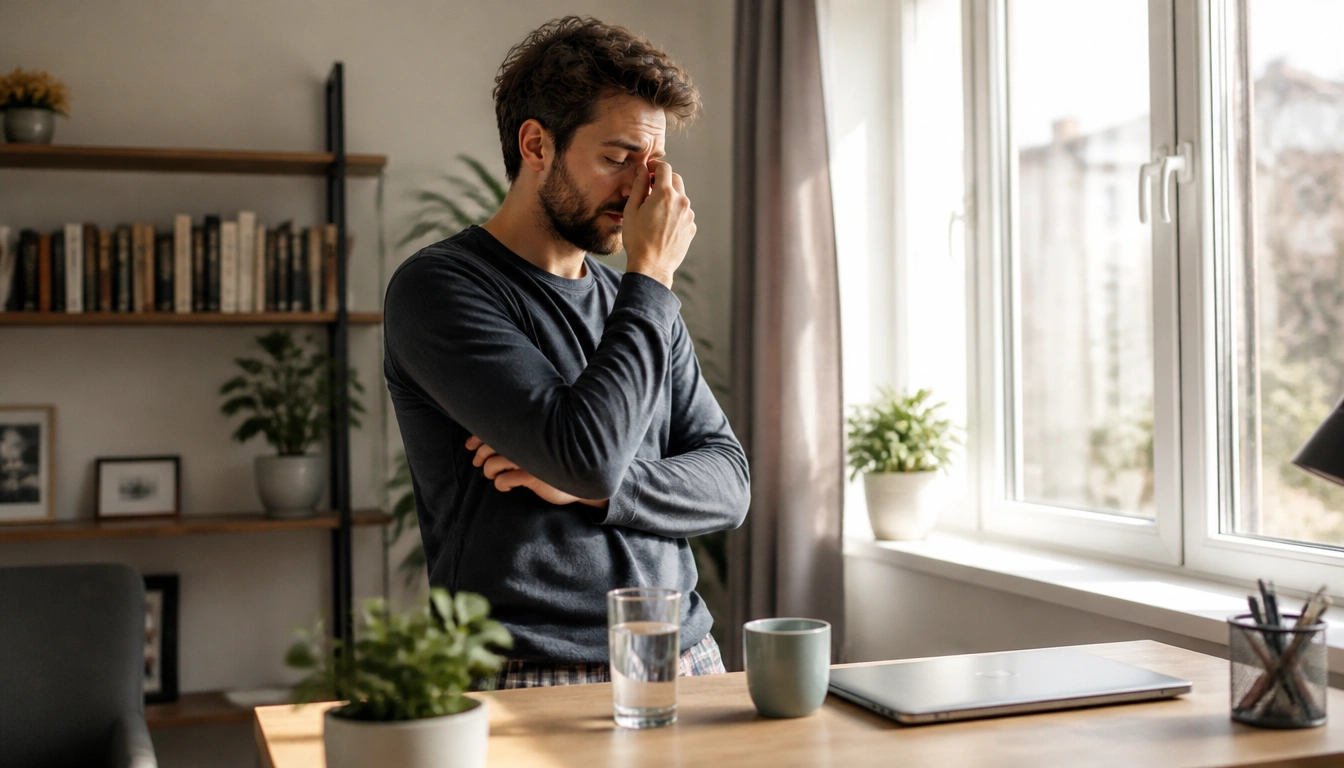
If you slept badly and still need to work from home, start with light and movement, keep your wake time close to normal, drink water before caffeine, and spend the first part of the morning on low-focus tasks. Skip long naps and avoid powering through a risky workload if you feel severely impaired. The goal is to stay functional today without making tonight’s sleep harder.
Key Takeaways
- A bad sleep morning is usually easier to handle when you build a short, intentional transition before opening email or Slack.
- Morning daylight helps anchor your body clock and can reduce the fogginess that comes from waking tired.
- Keep caffeine moderate and early, and pair it with water and food so you do not trade today’s recovery for tonight’s sleep trouble.
- Use the first work block for routine, low-cognitive-load tasks instead of demanding creative or analytical work.
- If you are too sleepy to drive safely, or poor sleep is happening often, treat it as a health issue rather than a productivity problem.
Start with light, air, and a short transition before work
The first useful move in a morning routine after poor sleep is to create a replacement for the commute you no longer have. Working from home makes it easy to go from bed to laptop in minutes, but that often means you absorb stressors before your brain has fully switched on. A better pattern is to get some daylight and a small dose of movement before you open work apps.
Step outside for a few minutes, stand by an open window, or take a brief walk around the block if that is practical. According to the CDC and NHS guidance on healthy sleep habits, morning light helps reinforce your sleep-wake cycle. You do not need a perfect wellness ritual. You need a clear signal that the day has started.
If the weather or schedule makes outdoor time difficult, combine whatever light you can get with a simple transition such as stretching, making your bed, or changing out of sleep clothes. The purpose is not productivity theater. It is to break the mental link between waking up and immediately reacting to messages.
Keep your wake time steady instead of sleeping in
After a rough night, sleeping in feels tempting because the bed still feels like the easiest place to recover. In practice, changing your wake time a lot can blur your body clock and make the next night harder. Public health sleep guidance from the CDC and NHS consistently favors regular wake times over trying to “make up” sleep by staying in bed much longer.
That does not mean you must force yourself into peak performance mode. It means you should choose a wake time that is close to your usual routine and use the rest of the day to lower the strain. Keeping the start of the day stable supports your sleep pressure so you are more likely to feel sleepy at the right time tonight.
Night owls may feel this adjustment more sharply. If you naturally drift later, the morning can feel especially punishing after poor sleep. In that case, it helps to avoid expecting your most demanding work to happen right away. A stable wake time still matters, but your work sequencing can be more flexible.
Hydrate first, then use caffeine strategically
Many people reach for coffee the moment they get up, especially when working from home and trying to “wake up fast.” A more sustainable approach is to drink water first, then use caffeine in a controlled way. Overnight fluid loss can add to fatigue, headache, and the feeling that your brain is not fully online.
Caffeine can help with alertness, but it works best as a tool, not a rescue plan. Use it early enough that it does not linger into the afternoon and affect tonight’s sleep. If you are sensitive to caffeine, anxious, have blood pressure concerns, or notice that coffee makes you shaky or irritable, keep the amount modest and avoid stacking drinks throughout the day.
Food matters too. A simple breakfast with protein and complex carbohydrates can make your energy feel steadier than caffeine alone. That does not require a complicated meal; it just means avoiding the pattern of running on coffee and stress until lunch.
Use a low-energy work triage method for the first part of the day
Bad sleep reduces attention, working memory, and tolerance for friction. That is why the first work block should not be your hardest one if you can avoid it. A practical triage approach is to use the morning for low-cognitive-load tasks: clearing routine email, updating a document, scheduling, admin work, or simple follow-ups that do not require deep problem-solving.
Save complex analysis, heavy writing, strategic decisions, or emotionally loaded conversations for later in the day if your energy improves. This matches the practical advice often given in sleep medicine: match the task to the state of the brain rather than forcing a high-output morning from a tired start.
If you know you are a night owl, the adjustment may be even more helpful. You may function better if you reserve demanding work for later and use the morning for maintenance work. That is not a productivity failure. It is a realistic way to respect your current alertness without adopting an all-or-nothing standard.
Protect the rest of the day so tonight’s sleep is not derailed
The rest of the day matters because a bad-sleep morning can create a chain reaction: too much caffeine, too little movement, skipped meals, and late-night catch-up work. That combination often sets up another short night. A better plan is to keep the day steady rather than trying to “win back” lost energy with extreme measures.
Try to keep meals reasonably regular, step away from the screen occasionally, and avoid turning the afternoon into a second morning of caffeine. If meetings and deadlines are unavoidable, write down the one or two outcomes that matter most and let lower-value tasks wait. That reduces decision fatigue and helps you avoid sprinting all day in a way that backfires at bedtime.
If possible, build a small buffer between work and evening rest. Even a short walk, dinner away from your desk, or a non-screen transition can help your nervous system downshift. That is especially useful when remote work makes the workday feel endless.
Handle meetings, deadlines, and brain fog without overpromising
Brain fog on a poor-sleep day does not mean you cannot work. It does mean you may need to adjust expectations and communicate earlier. If you have meetings, keep notes visible, slow down your speaking pace, and avoid committing to complicated follow-up work unless you are sure you can deliver it safely and accurately.
For deadlines, break the work into the smallest realistic step. Start with what is easiest to complete, not what is most impressive. If you can, tell a teammate that you are working through a rough morning and may need to shift the order of tasks. Remote work often gives people more flexibility than they use. Using that flexibility is a practical response, not a sign of weakness.
Most importantly, do not use stress as a substitute for alertness. A tired brain is more likely to miss details, misunderstand messages, and overreact to small problems. Slower, simpler work is often the safer choice until your energy improves.
When a short nap helps, and when it backfires
A brief nap can help if you are truly depleted, but timing and length matter. Short naps early in the afternoon are less likely to interfere with nighttime sleep than long or late naps. The idea is to restore enough alertness to finish the day, not to replace your whole sleep debt with daytime sleep.
Long naps can leave you groggy and make it harder to fall asleep later. Late naps can also reduce sleep pressure at night, which is the opposite of what you want after a bad sleep. If you are considering a nap, ask whether you are trying to recover from one poor night or from a pattern of persistent sleep loss. For an occasional rough morning, a brief nap may be reasonable. For frequent fatigue, the larger problem needs attention.
If you nap, set an alarm and keep it short. If you wake feeling worse, that is a sign the nap was too long or too late for your situation.
Warning signs that this is more than a one-off bad night
Occasional short or fragmented sleep happens to most adults. But repeated poor sleep, loud snoring, gasping during sleep, restless legs, or ongoing daytime sleepiness can signal a sleep disorder or another health issue. The CDC and NHS both advise seeking help when sleep problems are persistent or are interfering with daily functioning, safety, or mental health.
Safety matters especially when you feel severely impaired. If you are fighting off microsleeps, cannot stay alert, or feel unsafe to drive, do not push through as if this were only a productivity issue. Driving or other safety-critical activities should be ruled out when your sleepiness is profound.
If poor sleep is happening multiple times a week for a month or more, or if the pattern is becoming your new normal, it is reasonable to talk with a healthcare professional or a sleep specialist. That is especially true when the problem keeps returning despite good sleep habits.
The goal is not perfection. It is to handle an occasional bad morning in a way that protects both your day and the next night of sleep.
Frequently Asked Questions
Should I sleep in after a bad night, or keep my normal wake time?
In most cases, keep your wake time close to normal. Sleeping in too long can weaken your body clock and make it harder to feel sleepy at the right time tonight. If you are exhausted, a short recovery nap earlier in the day is usually less disruptive than shifting your whole morning schedule.
How much morning sunlight do I need to help reset my body clock?
You do not need a precise amount for this to help. The practical goal is to get outside or near bright natural light soon after waking, even briefly. A walk, open window, or balcony time can help signal to your brain that the day has started.
Is it better to drink coffee right away or after water and breakfast?
Water first is usually the better bet, then caffeine in moderation. That order helps with overnight dehydration and may make the caffeine feel smoother. A simple breakfast can also help steady your energy so you are not relying on coffee alone.
What work tasks should I do first when I’m tired and working remotely?
Start with routine, low-cognitive-load work such as email cleanup, scheduling, admin tasks, or simple follow-ups. Save heavy analysis, creative work, and difficult decisions for later if possible. If you are especially foggy, use the morning to organize rather than to force deep focus.
Can I take a nap after poor sleep without ruining tonight’s sleep?
Yes, sometimes a short nap can help. Keep it brief and earlier in the day, not late afternoon or evening. Long or late naps can reduce sleep pressure and make it harder to fall asleep tonight.
The Bottom Line
A rough sleep night does not have to ruin your work-from-home day. A short morning routine after poor sleep works best when it is simple: get light, hydrate, use caffeine carefully, and give yourself a gentle transition before opening email.
Then match your work to your energy. Use the early hours for low-stakes tasks, protect the rest of the day from extra sleep disruption, and avoid driving or other safety-critical activities if you feel dangerously sleepy. If the pattern keeps happening, it is worth medical attention rather than trying to outsmart it with more coffee.
Medical disclaimer
Medical disclaimer: This content is for educational and informational purposes only and is not a substitute for professional medical advice, diagnosis, or treatment. Dietary needs and supplement suitability vary by individual.
Sources
- National Health Service (NHS) — kingstonandrichmond.nhs.uk. Accessed November 2026.
- National Health Service (NHS) — www.nhs.uk. Accessed November 2026.
- Centers for Disease Control and Prevention (CDC) — cdc.gov. Accessed November 2026.
- Academic Research Institution — usc.edu. Accessed November 2026.
