
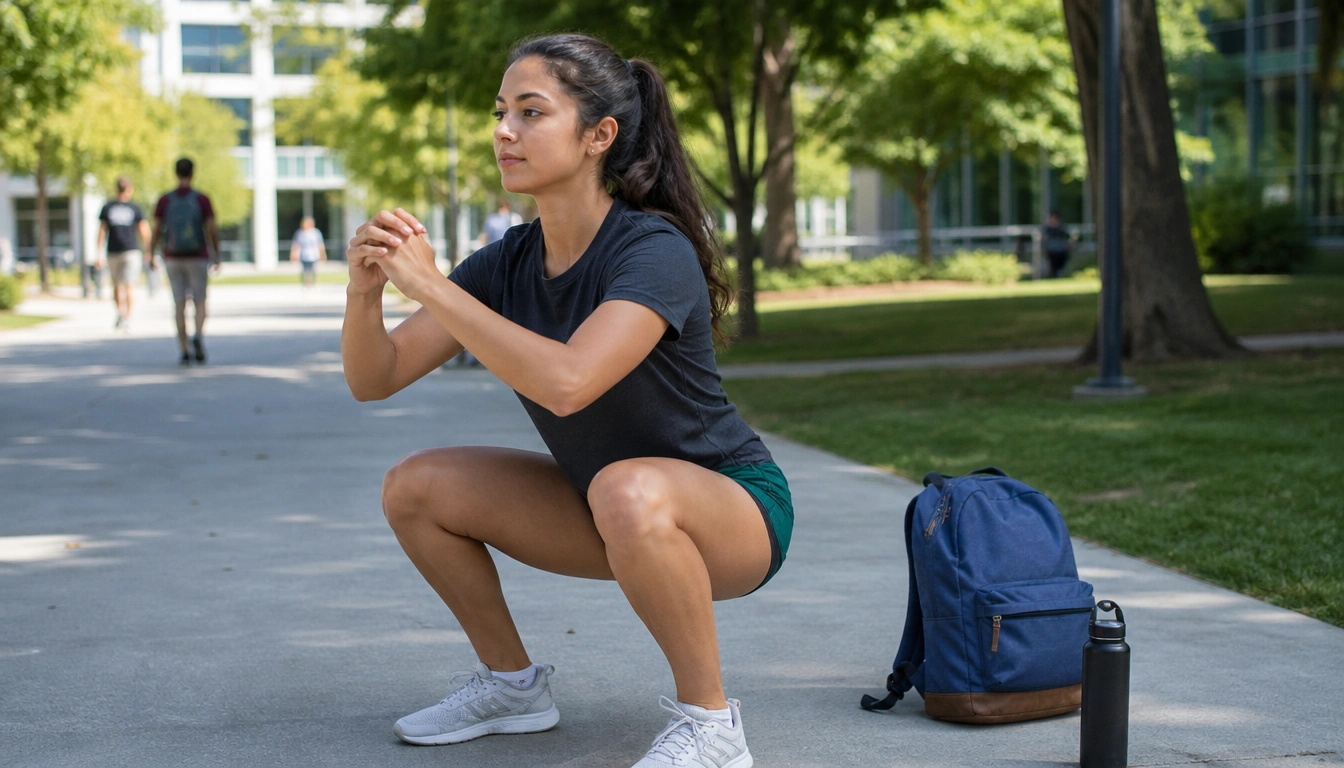
Yes—a 10–20 minute lunch-break workout can count as real exercise if it raises your heart rate, uses your muscles, and fits into your weekly activity pattern. Short bouts still add up toward CDC and ACSM activity goals, and a brief moderate-to-vigorous session can also help with alertness and focus for afternoon classes. The best approach on campus is a simple bodyweight routine with a quick warm-up, manageable intensity, and time built in for transition.
Key Takeaways
- Short bouts of movement still count toward weekly activity goals; you do not need one long gym session to make exercise worthwhile.
- A brief midday workout can help you feel more awake and focused afterward, especially if your afternoon usually starts with more sitting.
- For campus life, the best workouts are low-equipment and low-setup: bodyweight moves, brisk walking, stairs, or a compact circuit.
- If you are new to exercise, start with 10–15 minutes and keep the effort moderate so you do not end up overly sore or drained.
- Plan around lunch, sweat, and travel time: a workout that fits your campus schedule is more sustainable than a perfect routine you never do.
Why a short lunch-break workout works on campus
A short lunch-break workout is designed for the reality of college life: classes back-to-back, long walks across campus, limited privacy, and a clock that is always moving. That is why the goal is not to recreate a full gym session in the middle of the day. The goal is to use a small block of time well enough that it still improves movement, energy, and consistency.
Short bouts count because public health guidance does not require exercise to happen in one uninterrupted session. The CDC and ACSM both support accumulating activity across the week, which means a 10-minute brisk walk, a 15-minute circuit, or a 20-minute stair-and-bodyweight session can all contribute to your total. If the effort is enough to increase breathing and heart rate, it can count toward aerobic activity. If you use resistance moves such as squats, push-ups, or lunges, it can also support strength work.
There is also a practical academic reason to move at midday. Brief moderate-to-vigorous activity can help you feel more alert afterward, which matters if you are heading into a lecture, a lab, or a study block. Many students notice that a short active break is better than scrolling on a phone for 15 minutes because it changes posture, breaks up sitting, and can sharpen attention for the next class.
If your schedule is tight, match the session to the time you actually have. Ten minutes is enough for a focused reset. Fifteen minutes gives room for a warm-up and a circuit. Twenty minutes is ideal if you also need a cool-down and a few minutes to freshen up before class.
Build a campus-proof workout
The most useful campus workout is the one you can do almost anywhere. That usually means low-equipment, low-setup, and low-decision exercise. You should be able to start with little more than your shoes and a small clear space, because waiting around for equipment or a specific room often eats into the lunch break.
Bodyweight movements are especially useful because they are portable and easy to scale. Squats, reverse lunges, incline push-ups on a bench or wall, glute bridges, dead bugs, and planks can be done in a quiet corner, a campus green, an empty hallway area, or a stair landing if that is allowed and safe. Brisk walking is another strong option because it needs no setup and lets you control sweat levels better than a hard cardio burst.
A good campus workout should also minimize transition time. That means using clothes you can move in, choosing a route or spot ahead of time, and avoiding routines that require a lot of equipment setup or cleanup. If you know you only have a short break, the best design is the one that starts fast and ends cleanly.
Think in terms of movement quality rather than novelty. You do not need complicated exercises to get value from a lunch-break workout. You need a repeatable plan that is easy to start between classes and easy to finish before the next one begins.
A simple routine you can finish between classes
A practical lunch-break workout usually has three parts: a brief warm-up, a main circuit, and a cool-down. That structure helps you avoid diving into hard effort too abruptly and makes it easier to leave the session without feeling rushed or stiff.
Warm-up: Spend about 3 to 5 minutes easing into movement. Arm circles, torso twists, marching in place, hip circles, bodyweight squats, and a light brisk walk are good choices. The warm-up should feel easy, but it should raise body temperature and prepare your joints.
Main circuit: Use 8 to 12 minutes for a small set of movements. A simple pattern is squat, push, hinge, core, and cardio. For example: bodyweight squats, incline push-ups, glute bridges, plank holds, and brisk stair climbing or fast walking. Keep rest short enough that your heart rate stays up, but not so short that your form breaks down.
Cool-down: Finish with 2 to 3 minutes of slower walking and gentle stretching. Focus on areas that tighten up from sitting, such as the hip flexors, calves, chest, and upper back. The cool-down helps you shift back toward class mode instead of walking in flustered and winded.
If you only have 10 minutes, shorten the warm-up and main circuit but keep the pattern. If you have 20 minutes, add one more round or extend the cool-down. The routine should bend around your schedule without losing its purpose.
Timing food, hydration, and digestion
One of the most overlooked parts of a lunch-break workout is timing it around eating. A heavy meal right before exercise can leave you feeling sluggish, crampy, or distracted. That is why many students do better either exercising before lunch or waiting a bit after eating before they move hard.
If you plan to work out before lunch, a light snack beforehand may be enough if you feel hungry. Something easy to digest is usually more comfortable than a large meal. If you prefer to eat first, keep the lunch lighter and give yourself a little time before you start a harder circuit. The exact timing depends on the person and the meal, but the principle is simple: the fuller and heavier the meal, the more likely you are to want extra digestion time.
Hydration matters too. Carry water or refill before you leave. You do not need to overthink it, but a little fluid before and after movement can help you feel better, especially if you are walking between buildings or exercising in warm weather. If you are already dehydrated from a long morning, a short cool-down and a few sips of water can make the workout feel more manageable.
If your stomach is sensitive, keep midday exercise lighter and choose walking, mobility work, or an easier circuit after lunch. The goal is not to test your digestive system. It is to fit movement into the day without making your next class miserable.
Manage sweat, space, and changing without a gym
Many campus workouts fail because they ignore the logistics students actually face. Sweat, space, and changing time are not side issues; they determine whether the plan works.
If you need to sit in class right after lunch, choose a workout style that is less likely to leave you drenched. Brisk walking, stair intervals, moderate bodyweight circuits, and controlled strength work often create less sweat than a hard run or sprint session. You can also reduce sweat by lowering the intensity slightly and avoiding extra rounds when the day is already packed.
Space is another constraint. Not every campus has a quiet gym slot or a private studio area. That is why portable workouts matter. A patch of grass, an open corridor, a stairwell that is permitted for exercise, or a small indoor area can be enough. Plan in advance so you are not wasting half your break looking for a place to move.
Changing clothes can also be a barrier. If you do not have locker rooms or showers, wear clothing that works for both sitting and moving, and keep a small towel, deodorant, or a fresh shirt in your backpack if that helps you feel more comfortable afterward. Good planning matters more than fancy gear. When the routine is designed around campus reality, you are more likely to keep doing it.
Start easier if you are new or deconditioned
If you are not currently active, the smartest lunch-break workout is the one that feels doable tomorrow. Starting too hard is one of the fastest ways to get sore, skip the next session, or decide the whole idea is not for you. A beginner-friendly lunch workout should feel like a solid effort, not a punishment.
For a first-timer, 10 to 15 minutes is a good starting point. Use simpler movements, slower pacing, and more rest between exercises. Wall push-ups can replace floor push-ups. Bodyweight squats can be shallow at first. Walking can replace stairs. A plank can be done from knees or held for a shorter time. These changes still count as real exercise because you are moving on purpose and building tolerance.
Watch for signs that the intensity is too high: form breaking down, breathlessness that makes it hard to speak, dizziness, or pain that feels sharp rather than like normal muscle effort. A little fatigue is expected, but you should be able to finish and still get to class on time.
As your body adapts, progress gradually. Add a few minutes, one extra round, or slightly harder variations instead of changing everything at once. That is the easiest way to reduce soreness and keep the habit stable during a busy semester.
How short workouts fit weekly fitness goals
Lunch-break workouts are most useful when you treat them as part of a weekly pattern, not as a one-off fix. The CDC and ACSM recommend at least 150 minutes of moderate-intensity aerobic activity per week, or 75 minutes of vigorous activity, plus muscle-strengthening activity on at least 2 days a week. Short sessions can help you move toward those benchmarks if you repeat them consistently.
That means a 15-minute workout three times a week is not “nothing.” It is a meaningful chunk of movement that can support the larger total. If you combine short lunch sessions with walks to class, recreational sports, weekend exercise, or a campus fitness class, the pieces add up. Strength work can also be built into the same sessions if you include enough lower-body and upper-body loading.
One useful way to think about it is this: the midday workout is the bridge, not the whole bridge. It helps you break up sitting, improve daily energy, and keep your week active even when classwork is heavy. If you already train elsewhere, the lunch session can be a lighter active-recovery day. If you are building fitness from scratch, it can be your main exercise habit.
Consistency matters more than trying to make every session heroic. A realistic plan that you repeat week after week will usually do more for health and fitness than an ambitious plan that collapses after midterms.
Make the habit easy to repeat
Students are more likely to stick with a lunch-break workout when the logistics are automatic. Habit stacking helps: attach the workout to a fixed cue such as finishing your last morning class, leaving the library, or meeting a friend at a specific campus spot. When the cue stays the same, the decision gets easier.
Backpack prep is another small but powerful strategy. Keep what you need ready the night before: shoes, socks, a water bottle, a towel, and any clothing change you might want. If your workout requires searching through a messy bag or detouring back to your room, it becomes less likely to happen.
Route planning also helps. Identify a loop, stair route, or open area before you need it. If you know where to walk, where to warm up, and where to cool down, you waste less of your lunch break making decisions. Some students also do better with accountability: a classmate, lab partner, or friend can make the routine feel more normal and less easy to skip.
The goal is not perfection. The goal is to make the easiest version of the workout obvious enough that you can follow it on a busy day. Once the routine is repeatable, you can adjust intensity, duration, and exercise choices as your schedule and fitness level change.
Frequently Asked Questions
How long should a lunch-break workout be for a college student?
Ten to twenty minutes is a practical range for most students. Ten minutes works for a quick reset, 15 minutes gives room for a warm-up and a short circuit, and 20 minutes allows more time for cooldown and transition. The best length is the one you can repeat consistently without rushing to class.
What exercises work best for a quick campus workout without equipment?
Bodyweight squats, reverse lunges, incline push-ups, glute bridges, planks, marching or brisk walking, and stair climbing are all good options. They are portable, easy to scale, and do not require a gym setup. A small circuit using these moves can give you both strength and cardio benefits.
Should I work out before or after eating lunch?
Either can work. If you want a harder session, many people feel better exercising before lunch or waiting after a meal. If you eat first, keep the meal lighter and allow some digestion time. The main goal is to avoid exercising immediately after a heavy lunch if that tends to bother your stomach.
How can I avoid getting too sweaty if I have class right after?
Choose moderate-intensity movement instead of all-out cardio, and use walking, controlled circuits, or stair intervals rather than a hard sprint session. Bring a towel, wear breathable clothes, and keep a change of shirt if needed. A shorter cool-down can also help you feel less overheated before class.
Can a short workout really help with focus and energy for afternoon classes?
Yes. Brief moderate-to-vigorous activity can help you feel more alert afterward and break up long periods of sitting. Many students notice better energy and attention after moving at midday, especially if the workout is followed by water, a cool-down, and a short transition back to class mode.
The Bottom Line
A short lunch-break workout can be a real workout if it raises your heart rate, uses your muscles, and fits into your weekly activity pattern. You do not need a perfect gym session to make midday movement worthwhile.
For college students, the best plan is simple: a quick warm-up, a compact bodyweight or walking circuit, and enough buffer time to cool down, hydrate, and get to class. If you are new to exercise, start with 10 to 15 minutes and build gradually rather than pushing so hard that you are sore or rushed.
The most sustainable routine is the one that works on a normal campus day, not just on an ideal one. Keep it easy to start, easy to repeat, and flexible enough to fit lunch, digestion, sweat, and your next class.
Medical disclaimer
Medical disclaimer: This content is for educational and informational purposes only and is not a substitute for professional medical advice, diagnosis, or treatment. Dietary needs and supplement suitability vary by individual.
Sources
- Centers for Disease Control and Prevention (CDC) — cdc.gov. Accessed November 2026.
- National Health Service (NHS) — www.nhs.uk. Accessed November 2026.
- American College of Sports Medicine (ACSM) — acsm.org. Accessed November 2026.
