
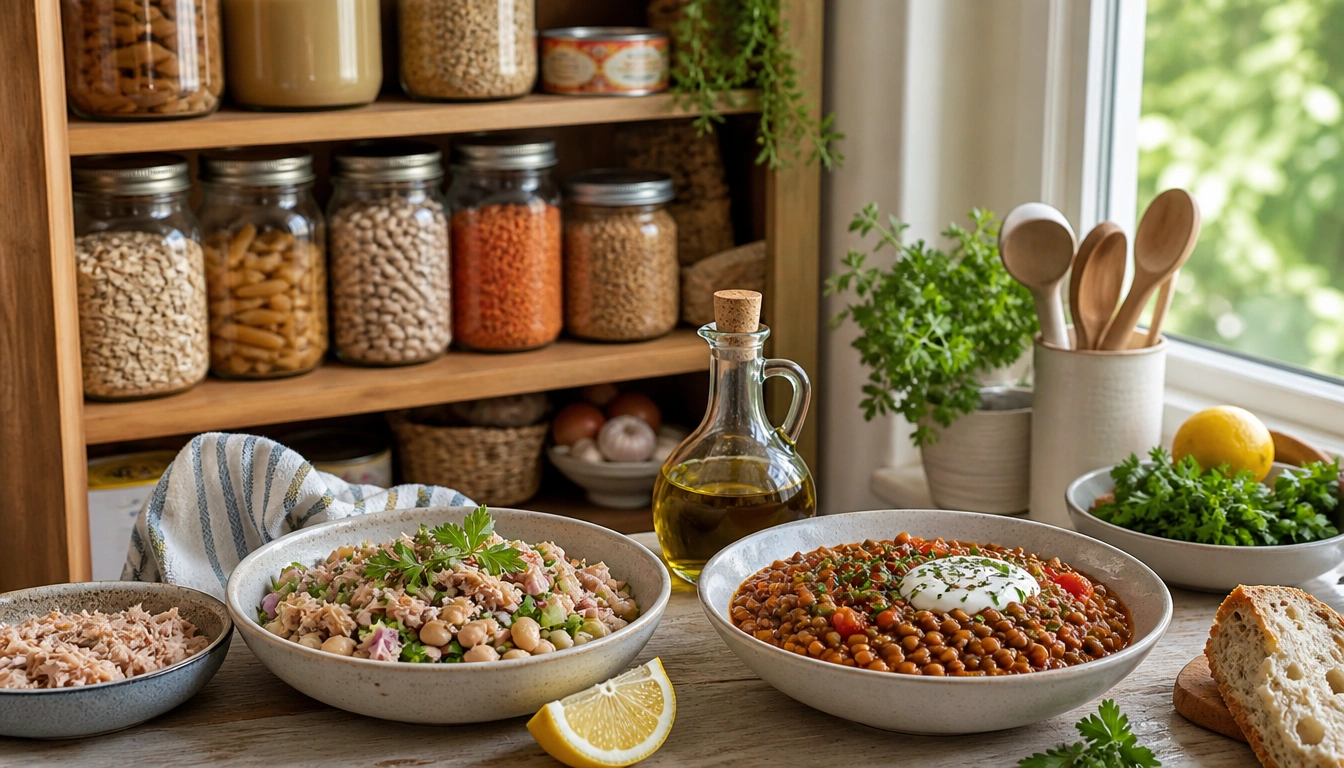
Healthy pantry meals can absolutely work for adults over 50. The best options combine shelf-stable protein, fiber-rich grains or legumes, and low-sodium flavor builders so each meal is nutrient-dense without extra effort. Think tuna and bean salads, lentil bowls, oats with seeds, and salmon pasta made with canned tomatoes, herbs, and olive oil. These meals can help support muscle maintenance, digestion, heart health, and practical cooking on lower-energy days.
Key Takeaways
- After 50, calorie needs often drop while the need for protein, fiber, and key micronutrients stays high or rises.
- Shelf-stable proteins like beans, lentils, tuna, salmon, and sardines can help support muscle maintenance and meal variety.
- A strong pantry for older adults includes whole grains, low-sodium canned goods, olive oil, nuts, seeds, and herbs or spices.
- Low-sodium pantry cooking is easier when you choose no-salt-added products, rinse canned beans, and use lemon, vinegar, garlic, and spices for flavor.
- Pantry meals can support digestion, cholesterol, blood sugar, and heart health when they are built around fiber-rich foods and healthy fats.
- Food safety matters more with age: check cans, refrigerate opened items promptly, and be cautious with foodborne illness risk.
Why pantry meals matter more after 50
Adults over 50 often need fewer calories than they did earlier in life, but they still need plenty of protein, fiber, vitamins, and minerals. That shift is why a pantry built around nutrient-dense foods is so useful. It helps you get more nutrition per bite without requiring a lot of cooking time, standing, chopping, or frequent grocery trips.
According to the National Institute on Aging and U.S. dietary guidance, healthy eating patterns later in life should emphasize vegetables, fruits, whole grains, lean protein, and lower sodium choices. Pantry meals make that easier because many shelf-stable foods are already portioned, quick to combine, and easy to keep on hand for low-energy days. For older adults with smaller appetites, that convenience can be the difference between skipping a meal and eating something balanced.
Pantry cooking is also practical for caregivers and anyone managing mobility limits, budget concerns, or changes in taste and appetite. A good pantry does not replace fresh foods entirely; it gives you reliable backups that still support muscle, digestion, and heart health.
Core pantry building blocks for adults over 50
A useful pantry starts with foods that work in many combinations. For protein, keep canned tuna, salmon, sardines, beans, lentils, and chickpeas on hand. These foods are easy to add to salads, bowls, soups, and pastas, and they help older adults get enough protein without relying on fresh meat every day.
For carbs, choose rolled oats, brown rice, quinoa, whole-wheat pasta, whole-grain crackers, and whole-grain tortillas. These options add staying power and usually bring more fiber than refined grains. For healthy fats, extra-virgin olive oil, avocado oil, walnuts, chia seeds, and ground flaxseed are all useful.
Flavor matters, especially when trying to reduce sodium. Low-sodium broth, no-salt-added tomatoes, garlic powder, onion powder, cumin, paprika, curry powder, dried oregano, black pepper, vinegar, and lemon juice can make simple pantry foods taste fuller and more satisfying. If you like vegetables, keep a few shelf-stable add-ins such as canned tomatoes, artichoke hearts, roasted red peppers, or frozen vegetables if freezer space is available.
How to assemble a balanced pantry meal
A simple pantry meal usually works best when it has four parts: protein, fiber-rich carbohydrate, color, and healthy fat. That pattern helps support muscle maintenance, satiety, digestive health, and blood sugar steadiness. It also keeps meals from becoming either too plain or too heavy.
Here is a practical formula: start with a protein such as beans, lentils, tuna, or salmon. Add a fiber-rich base like oats, whole-wheat pasta, brown rice, or quinoa. Bring in color with tomatoes, spinach, peppers, carrots, or another shelf-stable or frozen produce option. Finish with olive oil, nuts, seeds, herbs, citrus, or vinegar for flavor and texture.
This approach is flexible. A bowl can be warm or cold, savory or lightly seasoned, and it can scale up or down depending on appetite. If you are eating less than usual, smaller meals with concentrated nutrition may be easier than large plates. If you need more energy, add another grain serving or an extra spoonful of olive oil, nuts, or seeds.
Pantry meal ideas that are easy and nutrient-dense
Mediterraean tuna and white bean salad: Combine canned tuna, rinsed cannellini beans, artichoke hearts, olive oil, lemon juice or vinegar, and oregano. This is a no-cook meal with protein, fiber, and heart-friendly fats. Serve it on whole-grain crackers, in a tortilla, or over greens if you have them.
Warm lentil tomato bowl: Simmer lentils with no-salt-added diced tomatoes, low-sodium broth, cumin, and garlic powder, then stir in spinach or another vegetable at the end. Serve over brown rice or quinoa. This meal is filling, high in fiber, and easy to season in different ways.
Salmon pasta with herbs: Toss whole-wheat pasta with canned salmon, no-salt-added tomato sauce, olive oil, and dried Italian herbs. If you have canned mushrooms or spinach, add them too. This is a strong choice for people who want a simple dinner with protein and omega-3 fats.
Oatmeal with nuts and seeds: Cook oats with milk or fortified soy milk, then top with walnuts, chia, or ground flaxseed and cinnamon. A savory version also works: cook oats and stir in a little olive oil, pepper, and a spoonful of beans or an egg if you keep them available. Oats are especially useful for breakfast because they are easy to digest and bring soluble fiber.
Chickpea tomato skillet: Warm canned chickpeas with tomatoes, garlic powder, smoked paprika, and a splash of vinegar. Serve over brown rice, whole-wheat couscous, or toasted whole-grain bread. This is a budget-friendly option that still feels like a complete meal.
Sardine avocado toast or cracker plate: If you like sardines, layer them on whole-grain toast or crackers with a little olive oil, pepper, and lemon. Add canned tomatoes or a simple bean salad on the side. Sardines offer protein and are one of the most compact pantry foods for nutrient density.
Why beans, lentils, oats, fish, and whole grains matter
Bean and lentil meals do more than fill you up. They provide protein plus fiber, which is helpful for digestion, cholesterol management, and blood sugar support. For many adults over 50, that combination is valuable because it helps make meals more satisfying without leaning on refined carbs or heavily processed foods.
Oats and whole grains contribute steady energy and more fiber than many refined grain products. They can also help you build meals around pantry staples instead of convenience snacks. That matters when appetite is lower and you need foods that are easy to eat but still meaningful nutritionally.
Canned fish adds another advantage. Salmon and sardines provide high-quality protein, and they are notable for omega-3 fats. Salmon can also contribute vitamin D, and some canned salmon includes edible bones that add calcium. These foods are especially useful for adults over 50 who want a shelf-stable option that supports heart and bone health.
Nuts and seeds add texture, healthy fats, and extra calories when appetite is low. A small amount can make a meal more satisfying without adding much work. If chewing is difficult, try ground flaxseed, chia in soft foods, or nut butter in oatmeal or sauces.
How to keep pantry meals low in sodium without losing flavor
Lower-sodium cooking does not have to taste bland. Start by choosing no-salt-added or low-sodium canned beans, tomatoes, broths, and fish when possible. Rinse canned beans and chickpeas under water to reduce surface sodium and improve texture. If using canned vegetables, drain and taste before adding any extra salt.
Build flavor with layers instead of salt alone. Garlic, onion, cumin, coriander, rosemary, thyme, paprika, curry powder, red pepper flakes, basil, oregano, and black pepper all work well in pantry meals. Acid also helps brighten flavor, so keep lemon juice, lime juice, red wine vinegar, or apple cider vinegar available.
Another useful habit is to taste near the end of cooking. Sometimes a dish seems flat only because it needs acid, herbs, or a little fat. A spoonful of olive oil, a squeeze of lemon, or a sprinkle of herbs can make a low-sodium meal feel complete without adding much sodium.
Food safety and storage tips for older adults
Food safety deserves special attention as people age because older adults can be more vulnerable to foodborne illness. Before opening any can or jar, check for dents, bulging, rust, leaks, or other damage. If a can looks suspicious, throw it out. Do not taste food from a damaged container to “check” if it is safe.
Once a shelf-stable item is opened, move leftovers to the refrigerator in a clean, covered container. Do this promptly, especially for beans, sauces, fish, and cooked grains. Use clean utensils to avoid contamination, and do not leave opened food sitting out for long periods. If you are unsure how long something has been open, it is safer to discard it than take a chance.
Labeling leftovers with the date can help if you cook in batches or share meals with a caregiver. It also helps reduce waste. For people who have trouble standing for long periods, prepping a few staple foods at once can make the rest of the week easier and safer.
When pantry meals should be individualized
Pantry meals are a good starting point, but some health conditions need more specific guidance. If you have chronic kidney disease, your plan may need adjustments for protein, potassium, phosphorus, and sodium. If you have high blood pressure, you may need a stricter sodium approach. Diabetes, heart failure, swallowing problems, and unintentional weight loss can also change what a good pantry meal looks like.
It is worth asking a doctor or registered dietitian how much protein, sodium, potassium, or fluid is right for you. That is especially important if you take medicines that affect appetite, hydration, blood pressure, or digestion. A dietitian can help you adapt the same pantry style of eating to your needs without making meals complicated.
If you notice poor appetite, trouble chewing, frequent constipation, repeated stomach upset, or unintended weight changes, bring that up as well. Pantry meals can be very useful, but they work best when they match your health goals and your current eating pattern.
Frequently Asked Questions
What pantry staples should adults over 50 keep on hand for quick healthy meals?
A strong starter pantry includes canned beans, lentils, tuna, salmon, sardines, oats, brown rice, quinoa, whole-wheat pasta, no-salt-added tomatoes, low-sodium broth, olive oil, nuts, seeds, and dried herbs and spices. These foods combine easily into balanced meals.
How can pantry meals help older adults get enough protein without relying on fresh ingredients?
Shelf-stable proteins make it easier to include protein at breakfast, lunch, and dinner. Beans, lentils, tuna, salmon, sardines, and even nut and seed additions can help older adults build meals that support muscle maintenance and satiety when fresh foods are limited.
Which pantry foods are best for fiber, heart health, and blood sugar support after 50?
Beans, lentils, oats, whole grains, nuts, and seeds are especially helpful because they provide fiber and healthy fats. That combination can support digestion, cholesterol management, and steadier blood sugar than many refined pantry foods.
How do I make low-sodium pantry meals taste good without adding a lot of salt?
Use layers of flavor: garlic, onion, cumin, paprika, oregano, pepper, lemon, lime, and vinegar. Choosing no-salt-added canned goods and rinsing beans also helps. A little olive oil can make a dish feel fuller and more satisfying.
What should adults over 50 watch for with canned and shelf-stable foods, especially food safety and storage?
Check cans for dents, bulges, rust, or leaks, and discard damaged containers. After opening, refrigerate leftovers promptly in clean containers and use safe food-handling habits. Older adults are more vulnerable to foodborne illness, so storage matters.
The Bottom Line
Healthy pantry meals can be simple, affordable, and strongly supportive of aging well. The most useful combinations usually include a shelf-stable protein, a fiber-rich grain or legume, and flavor from herbs, spices, olive oil, citrus, or vinegar.
For adults over 50, that approach can help cover practical nutrition needs without demanding a lot of energy in the kitchen. It also makes it easier to eat well on days when appetite is lower, schedules are unpredictable, or grocery trips are difficult.
If you have kidney disease, high blood pressure, diabetes, or another condition that changes your diet, ask a clinician or dietitian to tailor these pantry ideas to your needs.
Medical disclaimer
Medical disclaimer: This content is for educational and informational purposes only and is not a substitute for professional medical advice, diagnosis, or treatment. Dietary needs and supplement suitability vary by individual.
Sources
- National Institutes of Health (NIH) — nih.gov. Accessed November 2026.
- U.S. Government / Health Authority — health.gov. Accessed November 2026.
- Centers for Disease Control and Prevention (CDC) — cdc.gov. Accessed November 2026.
