
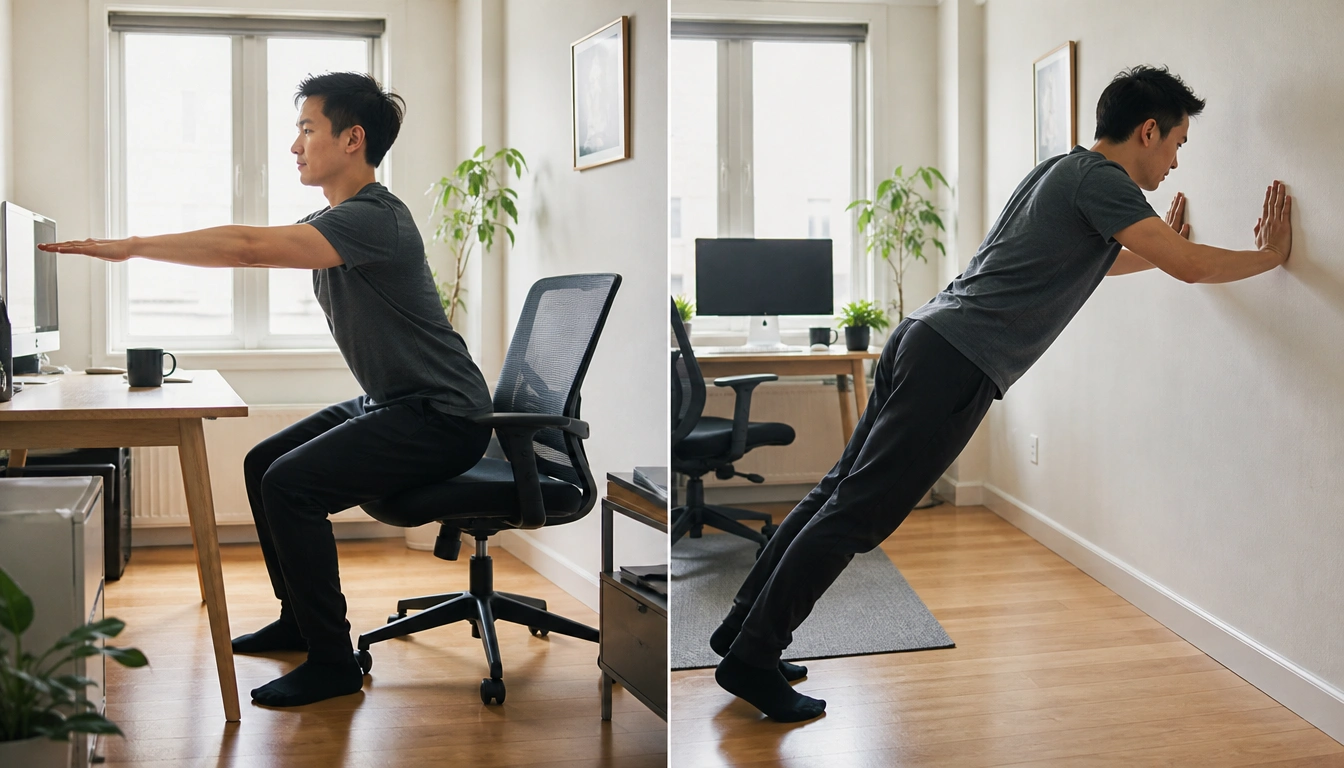
The best short lunch-break workout at home is a realistic 10- to 15-minute routine that combines a few large-muscle movements—such as chair squats, wall push-ups, marching in place, and a core move—done at a pace that fits your current fitness. It can count toward weekly activity goals, help break up sitting, and improve how you feel during the workday without special equipment.
Key Takeaways
- Short bouts of activity still count toward weekly aerobic and strengthening goals; you do not need one long gym session for movement to matter.
- Breaking up sitting during the workday supports blood flow, vascular function, and post-meal blood glucose control, so the benefit is more than calories burned.
- A 10- to 15-minute home routine is often the sweet spot for remote workers: long enough to matter, short enough to return to work on time.
- Beginner-friendly and joint-friendly options such as chair squats, wall push-ups, and marching in place can keep the workout low impact.
- If you ate a heavy lunch, keep the workout gentle or wait a bit before doing anything vigorous to reduce stomach discomfort.
- The best routine is the one you can repeat several days a week with minimal setup, sweat, and friction between meetings.
Why a lunch-break workout works for home exercisers
A lunch-break workout at home solves a problem many remote workers face: long stretches of sitting broken up only by short screen breaks. The health issue is not just whether you exercise once in a while. It is the repeated pattern of being sedentary for much of the day. Public health guidance from the CDC and the American College of Sports Medicine supports reducing sedentary time and adding movement in ways that fit real life.
That is why a midday burst of activity can be useful even if it is brief. Moving your legs and large muscle groups after sitting helps circulate blood, wakes up stiff joints, and can improve how you feel mentally for the rest of the afternoon. Research also shows that interrupting prolonged sitting with movement supports lower-limb blood flow, endothelial function, and post-meal blood glucose control. In plain terms, a short workout does more than burn a few calories; it helps undo some of the strain of staying seated for hours.
For many people, lunch is the easiest time to move because the workday is already interrupted. You do not need a treadmill, dumbbells, or a full change of clothes. You need a routine that is short, repeatable, and easy to start without a long warm-up or a shower afterward.
How short workouts fit into weekly exercise guidelines
Official recommendations for adults focus on weekly totals, not on whether each session is long. The CDC and ACSM state that adults should aim for at least 150 minutes of moderate-intensity aerobic activity per week, or 75 minutes of vigorous activity, plus muscle-strengthening work on 2 or more days each week. Those totals can be accumulated in many smaller sessions.
That means a 10-minute lunch routine absolutely can count. Two 10-minute sessions are still 20 minutes of movement. If one of those sessions includes bodyweight strengthening, such as squats, push-ups, or planks, it can also support your muscle-strengthening target. You do not need to wait for a perfect hour to make progress.
The phrase that matters here is simple: some is better than none. If your current routine is a small midday workout three times a week, that is meaningfully better than sitting through lunch every day and waiting for a future plan you never quite start. Over time, those short sessions can build a real base of fitness.
The best format for a home lunch-break session
For most people, the best lunch-break workout is 10 to 15 minutes long and centered on large movements you can do in a small space. The goal is not to destroy yourself before the next meeting. The goal is to move enough to raise your breathing and heart rate a little, strengthen major muscles, and leave you able to return to work without a long recovery.
A practical format is a short circuit with four to five exercises. Choose one lower-body move, one pushing move, one cardio-style move, one core move, and one posture-focused move if time allows. Do each exercise for a short interval, then move on. You can keep the pace comfortable if you are new to exercise, or slightly more brisk if you already tolerate moderate activity well.
A useful self-check is the talk test. Moderate effort usually means you can speak in short sentences but do not want to hold a long conversation. If your lunch-break workout leaves you too breathless to settle back into work, it may be more intense than you need for a midday session.
A simple no-equipment routine for home
Here is a realistic no-equipment lunch routine that fits into a small room and does not require a mat. Perform each movement for about 40 seconds, then rest for about 20 seconds. Repeat the circuit once if you are short on time, or twice if you want a fuller session.
Easy circuit structure
- March in place or brisk step-touch: Use this as your warm-up and a gentle cardio option.
- Chair squats: Sit back to a chair and stand up again with control.
- Wall push-ups: Stand arm’s length from a wall and push away from it.
- Standing knee raises or reverse lunges: Choose the version that feels stable and comfortable.
- Dead bug or standing core brace: Keep the trunk firm without holding your breath.
If you want a slightly more challenging version, replace marching with fast marching or low-impact knee drives, use a lower surface for push-ups, and move from chair squats to free squats without fully sitting down. If you want a lower-impact version, slow the pace, shorten the range of motion, and use the chair more often.
The most important part is consistency. A routine you can repeat regularly beats a harder workout that makes you dread the next lunch break.
Beginner, joint-friendly, and older-adult modifications
People starting from a low activity level often do better with shorter sessions and gentler movements. If you have not been exercising much, begin with five to eight minutes and a very manageable pace. You can add time later. That approach helps reduce soreness and gives your joints and connective tissues time to adapt.
Chair squats are one of the best beginner options because they train the legs and hips while offering a clear stopping point. Wall push-ups are also useful because they reduce load on the wrists, shoulders, and chest compared with floor push-ups. Marching in place, side steps, and standing calf raises can keep the body moving without impact.
For older adults or people with sore joints, control matters more than speed. Keep each repetition smooth, avoid bouncing, and choose stable footwear or a safe bare-floor setup. If balance is a concern, keep one hand near a counter or sturdy chair. The best adaptation is the one that feels secure enough to repeat on the next workday.
If your knees, hips, or shoulders are sensitive, start with the easiest version and stay there until it feels easy. Then progress by adding a few more repetitions, a slightly longer interval, or one extra circuit rather than jumping to high-impact moves.
Timing and food considerations
Meal timing matters because vigorous exercise right after a heavy lunch can be uncomfortable. A full stomach and fast movement are a poor match for many people, especially if the meal was large, fatty, or very high in fiber. Cramping, reflux, or nausea can make the workout unpleasant and may discourage you from trying again.
If possible, do your lunch-break workout before eating your main meal. That is often the simplest option for remote workers because it avoids the post-meal slump and reduces stomach discomfort. If you prefer to eat first, keep the workout light and wait a little while before anything vigorous. A gentle walk, marching in place, mobility work, or a short easy circuit is usually more comfortable than hard intervals right after lunch.
You do not need to micromanage every meal. The main idea is to avoid forcing intensity when your body is busy digesting. If you know your lunch tends to sit heavily, choose the workout before eating or save the more demanding version for later in the day.
How to fit the routine into real life
The most effective lunch-break workout is the one that survives the ordinary details of remote work. That means planning for the transition, not just the exercise itself. A calendar reminder five minutes before lunch helps you step away from your screen before you are pulled into another task. If possible, set a hard stop so the workout starts rather than becoming another thing you postpone.
Clothing and sweat management matter more than many people expect. If you have a video call afterward, choose a lower-sweat version: marching, chair squats, wall push-ups, and mobility drills are often enough. Keep a small towel nearby, wear breathable clothing, and decide in advance whether you will change shoes or stay in socks. That removes friction.
Space matters too. You do not need a full room. Clear enough room to take two or three steps in each direction and move your arms overhead without hitting furniture. If you share a home office, choose quiet moves that do not create noise or require jumping. The easier the setup, the more likely you are to repeat it tomorrow.
How to know you did enough
You did enough if you moved your body on purpose, raised your effort above resting level, and finished in a way that still lets you return to work. For a short lunch session, the useful question is not whether you are exhausted. It is whether the workout was substantial enough to count and practical enough to repeat.
Use effort cues rather than perfection. If you can feel your breathing increase, your legs work, and your muscles engage, you are probably in the right zone for a midday routine. If the workout feels too easy, add a little more pace, a second round, or a more demanding version of one movement. If it feels too hard, shorten the session, slow down, or switch to chair and wall variations.
Progress can be very small. You might begin with five minutes three times a week, then move to 10 minutes, then to 12 or 15. You might add one extra day of strengthening moves. You might start with wall push-ups and later shift to a lower incline. Those changes are enough to make real progress without disrupting your workday.
Stop and seek medical attention if you develop chest pain, unusual shortness of breath, dizziness, lightheadedness, or sharp joint pain. If you have a diagnosed heart condition, uncontrolled blood pressure, diabetes, or a significant musculoskeletal injury, check with a healthcare professional before starting a new routine.
Frequently Asked Questions
How long should a lunch-break workout be for a beginner?
A beginner often does best with 5 to 10 minutes at first, especially if exercise is new or you are coming back after time off. Once that feels comfortable, you can build toward 10 to 15 minutes. The right length is one you can repeat several times a week without feeling wiped out afterward.
Can a 10-minute workout at home count toward weekly exercise goals?
Yes. Public health guidance counts activity by weekly totals, so a 10-minute session contributes to your aerobic and strengthening goals. If you do it regularly, those short sessions add up and can meaningfully reduce sedentary time during the workday.
What should I do if I just ate lunch before exercising?
If you ate a heavy lunch, avoid vigorous movement right away. Choose a gentle walk, light marching, mobility work, or a short easy circuit, or wait a bit before exercising. Many people feel better doing the workout before lunch rather than immediately after eating.
What are the safest low-impact lunch-break moves for older adults or people with sore joints?
Chair squats, wall push-ups, marching in place, side steps, heel raises, and controlled standing core work are good low-impact options. Keep the pace smooth, use support if balance is limited, and avoid jumping or fast direction changes if joints are irritated.
How can I work out at home without getting too sweaty before a video call?
Choose a lower-sweat routine: marching, chair squats, wall push-ups, and mobility work instead of jumping or fast intervals. Keep the workout short, wear breathable clothing, and stay close to your desk so you can cool down quickly and return to work on time.
The Bottom Line
A short lunch-break workout at home is worth doing if it helps you move regularly, break up sitting, and fit exercise into a real workday. You do not need a perfect setup or a long session for it to matter.
For most remote workers, the best choice is a simple 10- to 15-minute circuit with squats, push-ups, marching, and core work, adjusted for comfort and joint health. Start smaller if needed, and build gradually.
If you can finish the routine, settle back into work, and repeat it later in the week, you have found something useful. Consistency matters more than intensity at midday.
Medical disclaimer
Medical disclaimer: This content is for educational and informational purposes only and is not a substitute for professional medical advice, diagnosis, or treatment. Dietary needs and supplement suitability vary by individual.
