
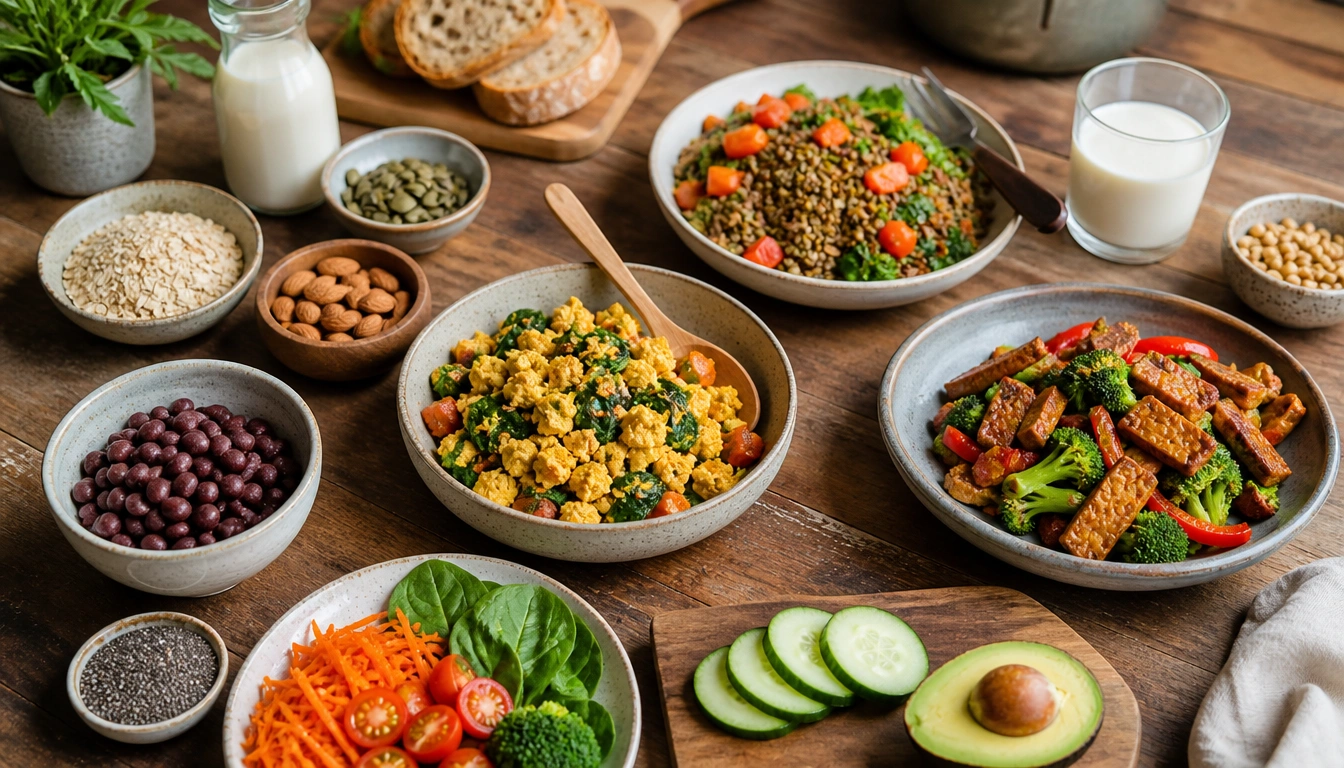
Most vegetarian beginners do not need to combine specific plant proteins at every meal. A varied mix of beans, soy foods, grains, nuts, and seeds across the day is usually enough. For many healthy adults, the baseline protein target is about 0.8 grams per kilogram of body weight daily, with a modest upward adjustment often helpful for plant-based eaters because plant proteins are slightly less digestible.
Key Takeaways
- You can meet protein needs on a vegetarian diet by planning across the whole day, not by making every meal “perfect.”
- A practical starting target is the adult protein RDA of 0.8 g/kg/day, with a small upward buffer often useful for plant-based diets.
- Spreading protein across breakfast, lunch, dinner, and snacks helps support muscle repair and steadier energy.
- A protein anchor at each meal—such as tofu, tempeh, beans, lentils, soy milk, or Greek-style vegetarian options—makes planning easier.
- Beginners often need to ramp up fiber gradually so bloating and fullness do not interfere with getting enough calories and protein.
- Older adults, people who exercise regularly, and those who are pregnant or lactating may need individualized guidance beyond the basic plan.
Why protein planning matters when you first go vegetarian
Protein needs by meal planning for vegetarian beginners can feel complicated at first because plant-based eating changes both the foods you rely on and the way meals are built. The goal is not to chase a perfect protein number at every sitting. The goal is to eat enough total protein across the day, while making meals satisfying enough that you can stick with the pattern.
For healthy adults, the protein RDA is 0.8 grams per kilogram of body weight per day, according to the National Institutes of Health. That is a baseline for avoiding deficiency, not necessarily the best target for every situation. Many vegetarian beginners do well with a modest buffer above that amount because plant proteins are generally a bit less digestible than animal proteins. A small upward adjustment can help cover that difference without turning protein planning into a full-time job.
Think of your daily target as a range that is flexible in real life. On some days you may land near the lower end; on other days you may go higher. What matters most is consistency over time, enough total calories, and a mix of protein-rich foods you actually enjoy.
How plant protein changes the math
Plant proteins are not inferior, but they behave differently. Most plant foods contain all essential amino acids in smaller or less balanced amounts than many animal proteins. Legumes, grains, nuts, and seeds each contribute differently, so variety matters. Soy foods are a notable exception because they are especially protein-dense and provide a strong amino acid profile.
The older rule that vegetarians must combine complementary proteins at every meal is outdated. The body keeps a rolling amino acid pool throughout the day, so amino acids from different meals can be used together over time. In practice, that means beans and rice do not have to appear on the same plate to work. Eating a variety of plant proteins across the day is enough for most people.
Digestibility also matters. Fiber and plant cell walls can slightly reduce how efficiently you absorb amino acids compared with animal sources. That is why some dietitians suggest a modest upward adjustment to protein intake for vegetarians. The point is not to overshoot dramatically. It is simply to account for the reality that plant foods can be less concentrated and more filling.
How to spread protein across the day
Once you know your daily target, the next step is distribution. Many beginners eat a light, low-protein breakfast, a modest lunch, and then try to make up the difference at dinner. That approach can leave you hungrier earlier in the day and makes it harder to support muscle repair consistently.
A steadier pattern is usually easier: include protein at breakfast, lunch, dinner, and, if needed, one snack. You do not need identical amounts at each meal, but you do want each eating occasion to contribute something meaningful. For plant-based eaters, that often means building meals around larger portions than they are used to, especially at breakfast and lunch.
Meal distribution also matters because muscle protein synthesis responds best when meals contain enough leucine, an amino acid that helps trigger the process. Plant proteins are often lower in leucine per gram than some animal proteins, so vegetarian meals may need a larger portion or a more concentrated protein source to do the same job. For active people, that can mean a stronger focus on the protein content of each main meal rather than saving it all for one big dinner.
The protein anchor method for vegetarian meals
A simple way to plan is to build each meal around a protein anchor. Instead of asking, “What side dish should I add for protein?” start with the food that will carry the meal and then build the rest around it. This helps new vegetarians move from vague intentions to repeatable habits.
Good anchors include tofu, tempeh, edamame, lentils, chickpeas, black beans, split peas, soy milk, and textured vegetable protein. Quinoa, hemp seeds, chia seeds, pumpkin seeds, and nut butters can support the total, but they work best when paired with a larger legume or soy source rather than standing alone.
Examples make the idea easier to use:
- Breakfast: tofu scramble with beans and toast, or a smoothie made with soy milk, nut butter, oats, and hemp seeds.
- Lunch: a grain bowl with lentils or chickpeas, quinoa or brown rice, vegetables, and a tahini-based dressing.
- Dinner: tempeh stir-fry, chili with beans, or pasta topped with a lentil or soy-based sauce.
- Snack: roasted edamame, soy yogurt, hummus with whole-grain crackers, or a small handful of seeds plus fruit.
The anchor method works because it removes guesswork. You are no longer trying to “remember protein.” You are choosing one or two reliable protein foods first and letting the rest of the meal follow.
Beginner-friendly staples worth keeping on hand
The easiest vegetarian meal plans use a short list of foods you can repeat often. That reduces decision fatigue and makes grocery shopping simpler. It also helps when appetite is low, because familiar foods are easier to eat regularly.
Keep a mix of shelf-stable and refrigerated staples:
- Legumes: lentils, chickpeas, black beans, split peas, and canned beans for quick meals.
- Soy foods: tofu, tempeh, edamame, soy milk, and soy yogurt.
- Grains and pseudograins: oats, quinoa, brown rice, wild rice, and whole-grain bread.
- Seeds and nuts: hemp seeds, chia seeds, pumpkin seeds, peanut butter, and almond butter.
- Convenience items: frozen edamame, hummus, ready-cooked lentils, and prewashed greens.
These foods are useful because they fit into many meals without much effort. Soy milk can boost breakfast protein. Lentils can turn soup into a full meal. Hemp seeds can be added to oatmeal, smoothies, or yogurt. The best pantry is the one that makes the healthy choice easy on tired days.
How to adjust for exercise, older age, or a smaller appetite
Protein needs are not one-size-fits-all. If you exercise regularly, especially with resistance training, your daily needs are higher than the basic adult RDA. The International Society of Sports Nutrition and other expert guidance commonly place active people in a higher protein range than sedentary adults. For a vegetarian exerciser, the practical issue is not only the total amount but also spreading it across the day so each meal supports recovery.
Older adults may need even more attention to per-meal protein. With age, the body tends to respond less strongly to the same protein dose, a pattern often called anabolic resistance. That means an older vegetarian may benefit from more protein-dense meals, especially at breakfast and lunch, and from choosing lower-volume foods that are easier to chew and digest.
Pregnancy and lactation also change the picture. Protein needs rise to support maternal and infant growth, so vegetarian people in these stages should not rely on guesswork. The safest approach is to review the plan with a registered dietitian or clinician who can account for the full nutrient picture, not just protein alone.
If your appetite is small, do not try to solve protein needs by forcing huge meals. Instead, use concentrated foods and smaller, more frequent eating occasions. Smoothies, soy yogurt, tofu scrambles, bean dips, and lentil soups are often easier to tolerate than bulky plates of high-fiber food.
Common beginner problems and how to work around them
Many new vegetarians run into the same barriers: bloating, feeling too full, low energy, and under-eating overall. These issues are common during the transition because plant foods often bring more fiber and more volume than the meals you are replacing.
If bloating shows up, increase beans, lentils, and high-fiber grains gradually rather than all at once. Drink enough fluids, use smaller servings more often, and choose better-tolerated foods while your digestive system adapts. Canned and well-cooked beans are often easier at first than large servings of dried beans or very fiber-heavy bowls.
If you feel low energy, check whether the issue is really protein or whether you are simply not eating enough calories. Protein cannot do its job well if total intake is too low. Plant foods are filling, so some beginners need to deliberately add calorie-dense foods such as avocado, nut butter, olive oil, or tahini to avoid under-fueling.
Watch for signs that your plan may be too aggressive: persistent fatigue, weakness, poor workout recovery, or ongoing digestive distress. Those are reasons to slow down, simplify meals, and seek individualized guidance if needed.
A simple sample day of vegetarian protein planning
Here is one practical way to think about the day without micromanaging every gram. Breakfast could be soy yogurt with oats, hemp seeds, and fruit, or tofu scramble with whole-grain toast. Lunch could be a lentil or chickpea bowl with quinoa, vegetables, and seeds. Dinner could be tempeh stir-fry with brown rice and a vegetable side. A snack might be edamame, hummus with crackers, or a protein-rich smoothie.
This approach does three things at once. It spreads protein across the day, keeps meals realistic, and uses foods that most beginners can find easily. You are not trying to build a “perfect” vegetarian menu. You are creating a repeatable pattern that covers protein, calories, and comfort.
If you prefer a looser structure, remember the basic formula: choose a protein anchor, add a grain or starchy food for energy, and include fruits or vegetables for variety. Repeat that pattern in a way that fits your appetite, budget, and schedule.
Frequently Asked Questions
Do vegetarians need to combine plant proteins at every meal?
No. The body uses a pool of amino acids across the day, so complementary proteins do not have to be eaten at the same meal. Variety across 24 hours is what matters most for most healthy adults.
How much protein should a vegetarian beginner aim for per meal?
There is no single target that fits everyone, but many beginners do better when each meal includes a clear protein anchor instead of leaving protein for dinner. Active people and older adults often need more per meal than sedentary younger adults.
Which plant foods are the easiest high-protein staples for beginners?
The most beginner-friendly staples are tofu, tempeh, edamame, lentils, beans, soy milk, soy yogurt, hummus, and seeds like hemp or pumpkin. These foods are versatile and easy to repeat in simple meals.
How should protein needs change for older adults who are vegetarian?
Older adults often need more attention to protein density at each meal because the body becomes less responsive to the same dose of protein with age. Smaller, protein-rich meals are often easier than trying to eat very large portions.
What if a vegetarian diet causes bloating or makes it hard to eat enough?
Increase beans and high-fiber foods gradually, use well-cooked or canned legumes, and spread meals through the day. If fullness or bloating keeps you from eating enough calories or protein, simplify the menu and get individualized advice.
The Bottom Line
A vegetarian diet can easily meet protein needs, but beginners usually do better when they plan protein intentionally rather than hoping meals will add up on their own. Start with your daily target, then spread protein across the day instead of saving it all for dinner.
The most practical approach is to build meals around a protein anchor such as tofu, tempeh, beans, lentils, edamame, or soy foods. That makes it easier to reach your needs, handle fullness, and stay consistent as your digestion adapts. If you are older, pregnant, lactating, or exercising regularly, a more individualized plan is worth discussing with a dietitian or clinician.
Medical disclaimer
Medical disclaimer: This content is for educational and informational purposes only and is not a substitute for professional medical advice, diagnosis, or treatment. Dietary needs and supplement suitability vary by individual.
