
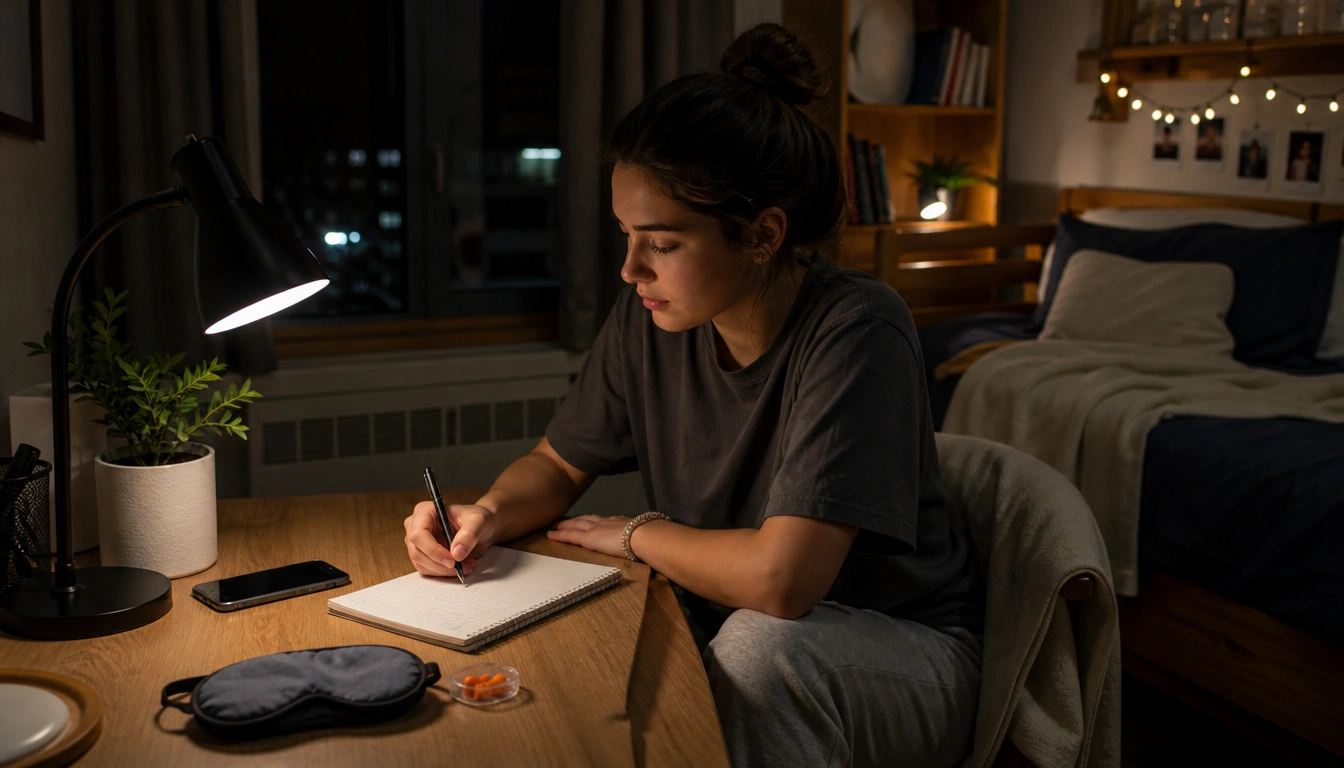
In the last 30 to 60 minutes before bed, college students should dim screens and lights, stop studying, do a short hygiene routine, write down next-day tasks, and keep the room cool, dark, and quiet. Pair that with a consistent bedtime and wake time, including weekends with no more than about an hour of drift, to make sleep more predictable and easier to start.
Key Takeaways
- A good bedtime routine works best when it is consistent, brief, and repeatable, not elaborate or perfect.
- The last half hour before sleep should lower stimulation: less light, less screen time, and less mental multitasking.
- Dorm life often requires practical tools such as earplugs, eye masks, blackout curtains, and white noise.
- Caffeine, heavy meals, and alcohol can all interfere with sleep timing or sleep quality.
- If poor sleep keeps happening despite routine changes, it is worth checking in with student health or a clinician.
Why sleep routine matters for grades, mood, and energy
College sleep problems are not just about feeling tired the next day. Sleep helps with memory, attention, reaction time, and emotional regulation, all of which affect lectures, exams, lab work, driving, and part-time jobs. According to the CDC and NIH, young adults generally need 7 to 9 hours of sleep per night, and regularly missing that target can make it harder to learn efficiently and stay mentally steady.
That matters because student schedules often work against the body clock. Late classes, social plans, stress, and inconsistent wake times can push sleep later and later. Over time, the result is not only short sleep but also more difficulty falling asleep when you finally try. A routine gives your brain a repeated signal that the day is ending and sleep is coming.
College sleep routine for students works best when it supports both performance and recovery. The goal is not to become an early riser overnight. It is to reduce the friction that keeps you awake and to protect enough sleep on school nights.
The three jobs of a good bedtime routine
A useful routine does three things. First, it keeps timing steady so your circadian rhythm gets a predictable cue. Second, it lowers stimulation by reducing bright light, high focus work, and emotional load. Third, it makes sleep onset easier by creating a short bridge from active student life to rest.
Sleep researchers and campus health guidance generally favor consistency over occasional heroic catch-up. Going to bed and waking up at about the same time each day helps stabilize the internal clock. For most students, the wake time matters most. If weekend sleep shifts a lot later, Monday feels like jet lag.
At the same time, not every student can follow an ideal schedule. Early labs, night shifts, and social commitments happen. A workable routine respects real life while still protecting the core pieces that matter: a steady wake time, a wind-down period, and a bedroom setup that feels sleep-friendly.
A realistic 30 to 60 minute bedtime routine
Start with a window that is long enough to slow down but short enough to repeat. For many students, 30 to 60 minutes is enough. If you only have half an hour, focus on the highest-value steps first.
60 minutes before bed
Begin your digital sunset. Put away coursework, close emotionally charged group chats, and step back from anything that reliably ramps you up. If you need to use a device, dim the screen and reduce brightness. The point is to stop feeding your brain new urgency.
30 to 45 minutes before bed
Switch to low-effort activities: showering, brushing your teeth, washing your face, setting out clothes for the next day, or reading something calm. This is also a good time for light stretching or slow breathing if your body feels wound up from sitting all day.
10 to 15 minutes before bed
Do a written brain dump. Put tomorrow’s tasks, reminders, and loose thoughts on paper so you do not have to keep rehearsing them in your head. Then get into bed only when you are ready to sleep, not to study, scroll, or problem-solve. That helps train your brain to connect the bed with sleep rather than alertness.
If you like structure, keep the same order most nights. Repetition matters more than perfection. A short routine that you actually do is better than an ideal routine you only follow once in a while.
How to adapt it for dorms, roommates, night classes, and late studying
Dorms are noisy, bright, and rarely under your full control, so the routine has to include environment changes. Eye masks, earplugs, a fan, and white noise can all help block hallway activity, roommate movement, and campus sounds. Blackout curtains are also useful if your room gets early light or is lit by street lamps.
Temperature matters too. A cooler room is usually easier to sleep in than a warm one, especially after a shower or a stressful day. If you cannot control the thermostat, use lighter bedding or a fan to create a more comfortable sleep environment.
For night classes or late study sessions, shift the routine around the fixed parts of your schedule. You do not need an identical bedtime every single day, but you do need a protected downshift. After a late class, move quickly from “on” mode to “off” mode: finish the minimum needed work, avoid adding a second study block that pushes you into a wired state, then begin the same wind-down steps.
If you share a room, coordinate the parts you can control. Use one reading light instead of overhead lighting, keep your side of the room organized, and give roommates a heads-up when you are trying to sleep. Small agreements often matter more than trying to force silence.
What to do about caffeine, meals, screens, and alcohol
Even a strong routine can be undermined by evening habits. Caffeine is one of the biggest issues for students because coffee, energy drinks, matcha, soda, and some pre-workout products can linger well into the night. A practical rule is to stop caffeine 6 to 8 hours before bed. If you are sensitive, you may need an earlier cutoff.
Heavy meals close to bedtime can also backfire by causing discomfort or reflux. If you are hungry late at night, a light snack is usually easier on sleep than a large meal. Keep it simple and avoid making your stomach work hard right before you lie down.
Screens are trickier because students often use them for homework, social life, and relaxation. The issue is not that every minute on a phone ruins sleep, but that bright light and stimulating content can keep your brain engaged. If you must use a device, make it low-stakes and brief. Avoid starting a stressful assignment, debate, or endless feed scroll right before bed.
Alcohol deserves a clear warning. It may make you feel sleepy at first, but it fragments sleep and can lead to more awakenings later in the night. Using alcohol as a sleep aid usually makes sleep quality worse, not better.
| Habit that helps sleep | Habit that usually backfires |
|---|---|
| Quiet wind-down with dim light | Studying until you are mentally exhausted |
| Written to-do list before bed | Replaying tomorrow’s tasks in your head |
| Consistent wake time | Sleeping much later on weekends |
| Cool, dark, quieter room | Bright room, open laptop, or loud background noise |
| No caffeine late in the day | Energy drinks or coffee close to bedtime |
How weekend sleep and chronotype can help or hurt
Many college students naturally lean toward a later sleep pattern. That is normal, but it does not mean an all-night schedule is harmless. If early classes force you to wake early, a very late bedtime plus early alarm creates sleep debt quickly. Trying to completely reverse your biology usually does not work for long.
Weekend sleep is where many routines break down. Sleeping in too far can feel good in the moment, but it can make Sunday night harder and Monday morning worse. A good target is to keep weekend wake times within about an hour of your weekday wake time. That gives you a little flexibility without knocking your clock too far off course.
If your schedule is inconsistent, anchor the day with the most stable piece you can control. Often that is the wake time. A steadier morning cue helps the evening routine work better later, even if your bedtime shifts somewhat because of class or work demands.
When anxiety or racing thoughts are the real blocker
Sometimes the problem is not sleep hygiene alone. Stress, anxiety, homesickness, relationship conflict, and academic pressure often become louder at night, especially when everything gets quiet. That can create a cycle where you get into bed, feel alert, and then start worrying that you are not sleeping enough.
If your mind races, the goal is not to force sleep. Instead, lower the mental load before bed. A written brain dump, a short list of next steps, and a brief calming activity can help your brain stop treating bedtime like a planning meeting. Breathing exercises or progressive muscle relaxation may also help some students settle down.
If anxiety is frequent, intense, or affecting daytime functioning, treat it as a health issue, not just a bedtime annoyance. Student health services, counseling centers, and primary care clinicians can help sort out whether the problem is stress, insomnia, an anxiety disorder, or a mix of factors.
When to stop treating it as a routine issue
A bedtime routine should make sleep easier over time, but it is not meant to solve every sleep problem. If you consistently spend enough time in bed but still take a long time to fall asleep, wake up often, wake unrefreshed, or feel sleepy during the day, it is time to get help. The NIH and CDC both emphasize that persistent sleep problems deserve medical attention when they do not improve with basic habits.
Student health is a good first stop, especially if poor sleep is affecting classes, driving, mood, or work. It is also worth asking about sleep apnea, chronic insomnia, depression, anxiety, medication effects, or other medical causes if the pattern keeps going. If you are nodding off in lectures, struggling to stay awake while driving, or feeling mentally foggy most days, do not wait and hope it resolves on its own.
Think of the routine as a foundation. If the foundation is there but sleep still is not happening, the next step is evaluation, not more self-blame.
Frequently Asked Questions
How many hours of sleep do college students need?
Most young adults, including college students, need 7 to 9 hours of sleep per night. Some people function best near the middle of that range, while others need a bit more. The more important sign is whether you feel alert, stable, and able to function during the day.
How can a college student fall asleep faster in a dorm room with noise and light?
Use practical barriers: an eye mask, earplugs, a fan or white noise, and blackout curtains if possible. A cooler room also helps. Just as important, stop stimulating activities before bed so your brain is not still in “daytime mode” when you lie down.
What time should college students stop drinking caffeine before bed?
A common rule is to stop caffeine 6 to 8 hours before bedtime. If you are sensitive to caffeine or have trouble sleeping, an earlier cutoff may help. Remember that caffeine can hide in energy drinks, coffee, tea, soda, and some pre-workout products.
Does using a phone or laptop before bed really affect sleep?
It can, especially if the device use is bright, stimulating, or stressful. The main issue is that screens can keep your brain alert and delay your wind-down. If you need to use one, lower brightness, avoid intense content, and try to stop well before you plan to sleep.
What should a student do if anxiety or racing thoughts keep them awake at night?
Try a short brain dump on paper, then switch to a calming routine such as slow breathing, light stretching, or a low-stimulation read. If this happens often, or anxiety is affecting daytime life, contact student health or a counselor. Persistent insomnia is a health issue, not a personal failure.
The Bottom Line
A better bedtime routine for college students is usually simple: steady timing, a short wind-down, less light and stimulation, and a sleep-friendly room. The last 30 to 60 minutes before bed should help your brain shift out of school mode and into rest mode.
If you live in a dorm, study late, or have an irregular schedule, adjust the routine rather than abandoning it. Focus on the habits that matter most: a consistent wake time, a caffeine cutoff, a written brain dump, and enough environmental control to reduce noise and light.
If sleep is still poor despite these changes, especially with daytime sleepiness, frequent awakenings, or persistent anxiety, it is time to talk with student health or a clinician.
Medical disclaimer
Medical disclaimer: This content is for educational and informational purposes only and is not a substitute for professional medical advice, diagnosis, or treatment. Dietary needs and supplement suitability vary by individual.
Sources
- National Institutes of Health (NIH) — nih.gov. Accessed November 2026.
- Centers for Disease Control and Prevention (CDC) — cdc.gov. Accessed November 2026.
- National Institutes of Health (NIH) — nih.gov. Accessed November 2026.
- Academic Research Institution — colostate.edu. Accessed November 2026.
- Academic Research Institution — colorado.edu. Accessed November 2026.
- Academic Research Institution — georgetown.edu. Accessed November 2026.
