
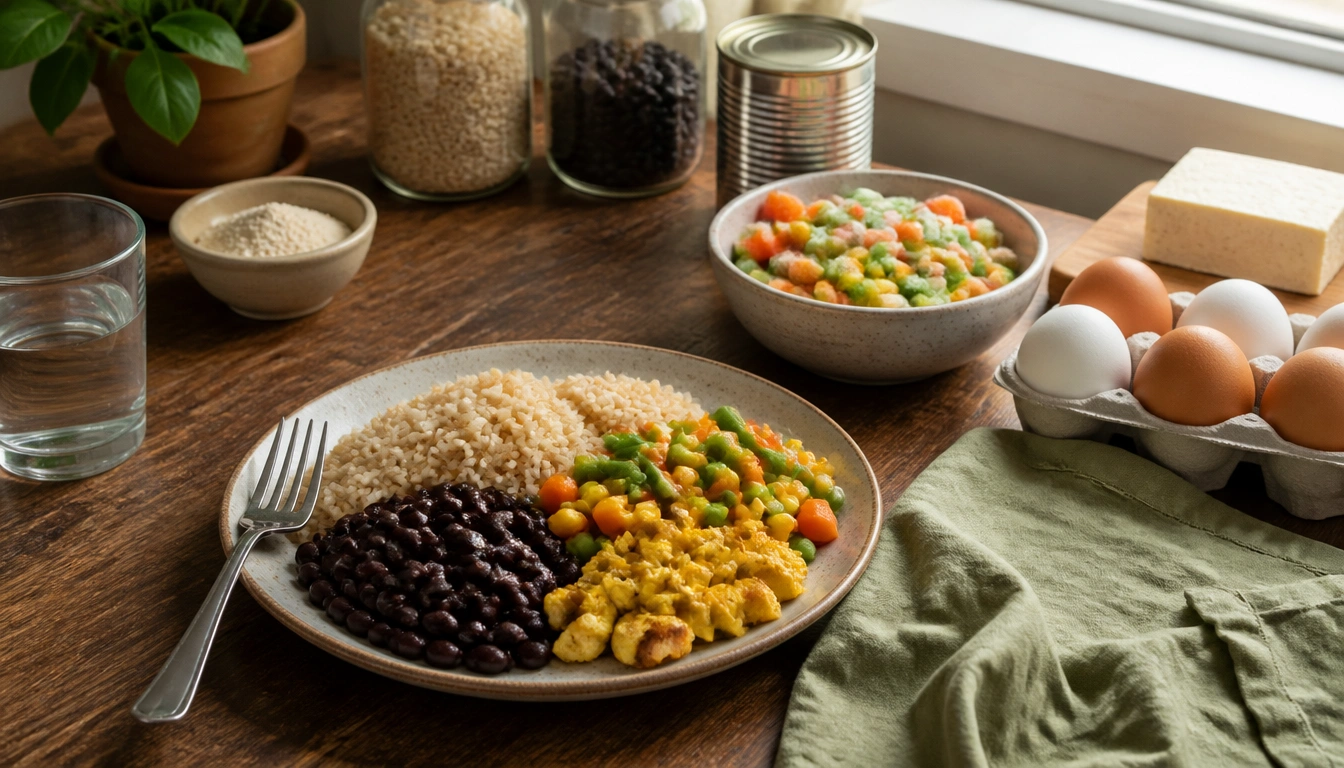
A balanced, nutritious meal on a tight budget usually looks like half vegetables or fruit, one quarter protein, and one quarter grains or starchy foods. Cheap staples like beans, lentils, eggs, oats, rice, frozen vegetables, canned produce, and tofu can fit that pattern well. The best budget meals rely on planning, label reading, and using shelf-stable or frozen foods without added salt or heavy syrup.
Key Takeaways
- Frozen and canned produce can be practical substitutes for fresh produce when you choose versions without added sodium or heavy syrup.
- Beans, lentils, split peas, eggs, and tofu often give better protein value per dollar than many animal proteins.
- Higher-fiber carbs like oats, brown rice, beans, and whole grains can help meals feel more filling and support steadier blood sugar.
- Unit price matters more than package price when you compare sizes, bulk options, and store brands.
- Budget meals can still work for food deserts, busy households, children, teens, and people managing diabetes with a few smart adjustments.
Why a budget-balanced plate works
A tight grocery budget can make meals feel random: whatever is cheapest, whatever is left in the pantry, or whatever fills everyone up fastest. A balanced plate gives those purchases a structure. The USDA MyPlate pattern is a useful guide because it does not depend on expensive specialty foods. It simply helps you divide the plate so you get vegetables or fruit, a source of protein, and a portion of grains or starchy foods.
That structure solves a few common budget problems at once. First, it reduces the chance that a meal is mostly refined starch with little protein or produce. Second, it helps stretch pricier ingredients by pairing them with lower-cost fillers such as beans, rice, oats, or vegetables. Third, it supports a steadier feeling of fullness, which can matter when you are trying to avoid frequent snacking between meals.
Public health guidance from the CDC and USDA also supports the idea that affordable meals can still be nutrient-dense. You do not need trendy superfoods to eat well. You need repeatable meals that use a few versatile ingredients in sensible portions.
The cheapest building blocks of a balanced plate
Some of the most budget-friendly foods are also the easiest to use across many meals. Beans, lentils, and split peas are especially useful because they combine protein, fiber, and slow-digesting carbohydrate in one low-cost package. Oats, brown rice, whole-wheat pasta, corn tortillas, and potatoes can round out meals without a large cost increase.
Eggs are another strong budget staple. They cook quickly, pair with vegetables or toast, and can anchor breakfast, lunch, or dinner. Tofu is often overlooked in budget planning, but it can be one of the least expensive protein options per serving in many stores, especially when compared with more premium meat cuts.
Frozen vegetables are often a better bargain than fresh when produce is out of season or likely to spoil before you use it. Canned vegetables and fruit can also be useful, especially when you choose no added salt or fruit packed in water or 100% juice. According to Harvard’s nutrition guidance, frozen produce is often frozen at peak ripeness, which helps it remain practical and nutrient-rich. Canned foods can be just as useful when the label is chosen well.
Think of these foods as your core toolkit: one or two grains, one or two proteins, and a few frozen or canned produce items. That is enough to build many different meals without starting from scratch each night.
Balanced plate examples for budget shoppers
Here are three simple meal templates that show how cheap staples can come together on one plate.
Bean and rice bowl: Use cooked rice, a scoop of black beans or pinto beans, and a large portion of frozen mixed vegetables or corn. Season with garlic powder, cumin, onion powder, pepper, or a small amount of salsa. The rice gives energy, the beans add protein and fiber, and the vegetables add volume and micronutrients.
Egg and vegetable skillet: Scramble eggs with frozen spinach, peppers, onions, or broccoli. Add a slice of whole-wheat toast or a corn tortilla on the side. This works well for breakfast-for-dinner meals and uses ingredients that are usually inexpensive and fast to cook.
Tuna and white bean plate: Mix canned tuna with rinsed cannellini or navy beans, then serve with a side of salad greens, shredded carrots, or cucumber. Add whole-grain crackers or a small portion of barley. This meal is useful when you want protein without relying only on meat.
These examples are not fancy, but they are complete enough to be useful. The goal is not perfection. The goal is a repeatable plate that delivers protein, fiber, and enough calories to keep you going.
How to stretch proteins without losing balance
Protein is often the most expensive part of a grocery bill, so stretching it wisely makes a real difference. One of the easiest methods is to combine beans and grains. Rice and beans, lentils and pasta, or hummus with whole-grain bread all create a more filling meal than either food alone. The combination also improves the overall quality of the meal by adding fiber and a broader range of amino acids.
Mixed-protein meals are another smart strategy. For example, a small amount of chicken, tuna, or ground turkey can be extended with beans, tofu, or vegetables. That lets you keep the protein quadrant of the plate without buying as much of the costlier ingredient.
Eggs can also stretch a meal well because they work with nearly anything: vegetables, toast, rice, potatoes, or tortillas. For many shoppers, the cheapest protein is the one that gets used fully and often instead of sitting in the fridge unused. Food waste is part of food cost, so stretching protein is also about using what you buy.
Smart shopping rules that lower cost without lowering quality
One of the most useful budget habits is comparing unit price instead of package price. A larger bag is not automatically cheaper per serving, and a store brand is not always the best value unless you check the shelf label. The unit price tells you the real cost per ounce or pound, which makes it easier to compare sizes and brands fairly.
Frozen, canned, and fresh foods each have a place. Fresh produce can be great when it is affordable and likely to be used quickly. Frozen produce is often the better choice when you need less spoilage and more flexibility. Canned fruits and vegetables are especially useful in food deserts or during busy weeks, but look for versions without added salt or heavy syrup.
Pantry-first planning saves money too. Before shopping, check what you already have: rice, oats, pasta, lentils, canned tomatoes, peanut butter, frozen vegetables, or leftover fruit. Build meals around those items first, then shop only for what is missing. That habit reduces duplicate purchases and makes it easier to use what you buy before it expires.
How to make budget meals work for blood sugar and energy
Budget meals do not have to spike blood sugar quickly. Meals built around higher-fiber carbohydrates tend to digest more slowly and keep you full longer than refined starches or sugary packaged foods. That is why beans, lentils, oats, barley, whole grains, and vegetables are such useful staples. They provide energy without relying on a lot of added sugar or refined flour.
If you are trying to keep meals more blood-sugar-friendly, pair carbohydrate foods with protein and vegetables instead of eating them alone. For example, rice is more balanced when it is served with beans and vegetables. Toast is better with eggs or peanut butter than by itself. Oatmeal is more satisfying when paired with nuts, seeds, or yogurt if those fit your budget.
Refined snacks, sweet cereals, pastries, and sugar-heavy drinks are the easiest places to overspend without getting much nutrition back. You do not need to avoid every refined food, but it helps to make them the exception rather than the base of the plate. For people managing diabetes, a steadier carbohydrate pattern can be especially helpful, though individualized medical advice still matters.
When budget shortcuts need extra caution
Some low-cost foods need closer label reading. Canned soups, canned vegetables, frozen meals, and some sauces can be high in sodium. Canned fruit can be packed in heavy syrup or sweetened juice. Rinsing canned beans and vegetables under water can reduce some sodium, and choosing labels such as no added salt or packed in water or juice helps you avoid unnecessary extras.
Food safety matters too. Leftovers should be cooled and refrigerated promptly, and dry goods should be stored in sealed containers to prevent spoilage and pests. Cheap food only stays cheap if you can actually eat it safely.
People with diabetes, chronic kidney disease, or other medical conditions may need more specific guidance. A high-bean, high-fiber plate may be very helpful for one person and too much of a good thing for another, especially if potassium, phosphorus, sodium, or carbohydrate limits are part of treatment. Children and adolescents also have different needs: they may require more calories, calcium, and iron, so affordable add-ons like milk, yogurt, fortified soy beverages, eggs, or peanut butter can help.
Simple batch-cooking and storage workflow for the week
Batch cooking is often the difference between a budget plan that works and one that falls apart midweek. Start with one grain, one protein, and one vegetable batch. For example, cook a pot of rice, a pot of beans or lentils, and a tray or bag of frozen vegetables. Once those are ready, you can mix and match them into bowls, wraps, soups, and skillet meals.
Use containers that portion meals into repeatable servings. Put some portions in the fridge for the next few days and freeze the rest if you will not use them soon. Leftover rice, beans, and cooked vegetables can be combined with eggs, salsa, tofu, or canned fish for quick meals with very little extra effort.
A useful routine is to keep a short list of backup meals: bean bowl, egg scramble, tuna salad plate, and oatmeal with fruit. That keeps you from defaulting to takeout or snack foods when time runs short. The fewer decisions you have to make on a busy day, the more likely you are to eat the food you already paid for.
Frequently Asked Questions
How do I build a balanced plate using cheap staples like beans, rice, eggs, and frozen vegetables?
Use the MyPlate-style pattern: fill half the plate with vegetables or fruit, one quarter with protein, and one quarter with grains or starchy foods. Beans and rice, eggs with frozen vegetables, or lentils with whole grains are simple ways to make that work on a budget.
Are canned and frozen fruits and vegetables as nutritious as fresh when I’m trying to save money?
Often, yes. Frozen produce is commonly picked and frozen quickly, and canned produce can be a practical option when you choose no added salt or fruit packed in water or 100% juice. The best choice depends on price, storage space, and what you will actually use before it spoils.
What are the best low-cost protein foods for a balanced plate?
Beans, lentils, split peas, eggs, tofu, peanut butter, and some canned fish are among the most budget-friendly options. They usually cost less than many meat cuts and can still fit into a balanced plate when paired with vegetables and grains.
How can I keep budget meals from spiking blood sugar too much?
Choose higher-fiber carbs such as beans, lentils, oats, barley, brown rice, and whole grains more often than refined breads or sugary snacks. Pair carbs with protein and vegetables, and keep sweet drinks and desserts as occasional items rather than the base of the meal.
How do I use unit pricing and batch cooking to lower grocery costs without sacrificing nutrition?
Check the shelf label for the unit price instead of only the package price, then compare store brands, sizes, and forms such as frozen, canned, and dry. Batch-cook grains, beans, and vegetables so you can assemble meals quickly during the week and reduce waste.
The Bottom Line
A balanced plate on a tight budget is realistic when you lean on cheap staples that do more than one job. Beans, lentils, eggs, oats, rice, frozen vegetables, canned produce, and tofu can form the base of affordable meals that still provide protein, fiber, and useful nutrients.
The best savings usually come from buying wisely, not buying less food quality. Compare unit prices, use frozen and canned items strategically, and build meals around what is already in the pantry. If you have diabetes, kidney disease, or special nutritional needs, use these ideas as a starting point and get individualized advice when needed.
Medical disclaimer
Medical disclaimer: This content is for educational and informational purposes only and is not a substitute for professional medical advice, diagnosis, or treatment. Dietary needs and supplement suitability vary by individual.
Sources
- Centers for Disease Control and Prevention (CDC) — cdc.gov. Accessed November 2026.
- Academic Research Institution — uic.edu. Accessed November 2026.
- Academic Research Institution — harvard.edu. Accessed November 2026.
