
A healthy work-from-home day after 60 works best when it follows a steady rhythm: wake at a consistent time, get morning light, move often, set up an ergonomic workspace, and end work with a clear shutdown routine. You do not need to hit every fitness target perfectly right away. Frequent short movement breaks, gradual activity, and good sleep habits usually matter more than an all-or-nothing plan.
Key Takeaways
- Prolonged sitting can worsen blood sugar control, slow metabolism, and compound age-related muscle loss, so movement breaks matter more with age.
- A morning walk or even a short “fake commute” can help anchor your body clock and make sleep easier later.
- You can build toward official activity goals gradually; smaller movement blocks are a valid starting point if you are inactive or managing chronic conditions.
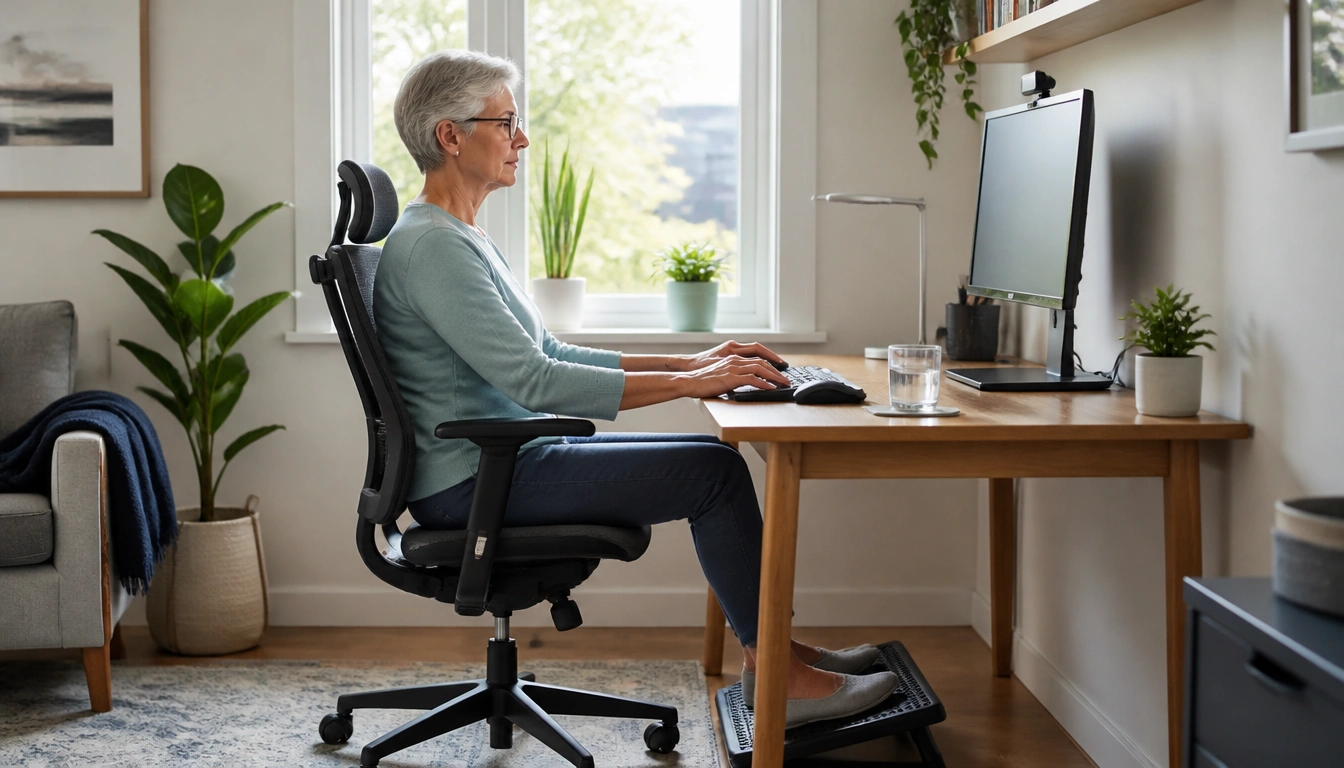
- A good home office for older adults should support neutral posture: screen at eye level, feet supported, and laptop use paired with an external keyboard and mouse.
- Hydration, planned snacks, and scheduled social contact are part of a balanced routine, not extras.
Why a balanced work-from-home routine matters more after 60
Working from home can be a gift later in life, but it can also make it easier to sit for long stretches, eat without noticing, and let work bleed into the rest of the day. After 60, those habits tend to affect more than comfort. Prolonged sitting can work against blood sugar regulation, lower daily energy use, and add to the muscle loss that naturally becomes more common with age. Regular movement breaks help interrupt that pattern and keep joints and circulation working better.
A balanced work-from-home routine is also about timing. The body likes predictability. A regular wake time, a bit of morning light, and a clear start to the day help anchor your circadian rhythm. According to the CDC and the National Institute on Aging, consistent routines support healthy aging, sleep quality, and physical activity habits. You do not need a rigid schedule. You need a rhythm that is easy to repeat.
A realistic daily rhythm
Start with the simplest version of a structured day: wake up around the same time, open curtains or step outside for daylight, get dressed for the day, and spend a few minutes moving before you sit down to work. Many people find that a short morning walk works like a “fake commute.” It signals that the workday has begun and helps separate work time from home time.
Then use the rest of the day in blocks. Work for a while, move briefly, and return to the task. That pattern is easier to sustain than trying to be “on” all day. The goal is not a perfect schedule. The goal is a day that protects energy, posture, and sleep without feeling complicated.
Movement plan for the home office
Movement does not have to mean a full workout in the middle of the day. For many adults over 60, the best plan is a mixture of standing, stretching, walking, balance, and light strength work. Each piece does something a little different. Walking supports circulation and blood sugar. Stretching helps undo stiffness. Balance work supports stability. Strength work helps preserve muscle that supports daily function.
Use the home office itself as a cue to move. Stand during phone calls if possible. Walk to refill water. Stretch after finishing a task. Do a few sit-to-stands from a chair between meetings. These small actions are useful because they break up sedentary time without requiring a big block of exercise every time you move.
How to build up gradually
The CDC recommends at least 150 minutes of moderate-intensity aerobic activity a week for most adults, along with muscle-strengthening activity on at least 2 days a week. If you are not active now, do not treat that target like a starting line you must cross immediately. Begin with what feels realistic, such as 10-minute walks, gentle chair rises, light marching in place, or a short stretch break several times a day. You can add time later as your body adapts.
For balance, try standing near a sturdy counter and shifting weight from one foot to the other, or walking heel to toe along a wall. For strength, simple body-weight moves such as sit-to-stand, wall pushups, or step-ups on a low stair can be enough to begin. If a movement increases pain sharply or makes you feel unsteady, scale it back.
Ergonomic setup essentials for older adults
A chair and desk setup that looks “fine” for a younger worker may still cause neck, shoulder, wrist, or low-back strain over time. Small alignment problems add up when they are repeated for hours. The main goal is to let your joints rest in a neutral position instead of forcing you to hunch, reach, or twist.
Start with your chair. Sit all the way back so your lower back has support. Your feet should rest flat on the floor. If they do not, use a sturdy footrest, a stack of books, or a firm box. Your hips and knees should feel comfortable, usually around a right angle or slightly open. If the chair has armrests, adjust them so your shoulders can stay relaxed.
Screen height matters just as much. Your monitor should be close to eye level so you are not constantly looking down. If you use a laptop, pair it with an external keyboard and mouse, then raise the screen on a stand or a stable stack to reduce neck flexion. This is one of the easiest ways to reduce “tech neck” without buying a full new desk setup. If you work at a kitchen table or small space, focus first on the basics: screen height, seat support, and foot support. Those changes often make the biggest difference.
How to reduce sitting without losing focus
Many people worry that movement breaks will ruin concentration, but the opposite is often true. Brief breaks can help reset attention and reduce physical fatigue. The trick is to make movement automatic instead of relying on motivation in the moment.
Set a timer for every 50 to 60 minutes, or tie movement to a regular event such as finishing an email batch, a meeting, or a phone call. When the cue goes off, stand, stretch, walk to another room, or do a few shoulder rolls. Keep the break short enough that it feels easy to return to work. Two to five minutes is often enough to interrupt sitting without derailing the day.
Task batching and micro-breaks
Task batching can help protect both productivity and movement. Group similar tasks together so you are not sitting motionless through a long string of tiny decisions. Then use the transition between blocks to move. For example, after a writing block, stand up and refill your water before starting the next task.
Micro-breaks matter too. Even brief standing or walking intervals can help reduce the negative effects of long sitting. If you are on a call, pace gently. If you are waiting for a file to load, use the time to stretch your calves or open your chest. These tiny shifts add up over the day.
Food and hydration habits that help prevent mindless snacking
Working from home makes food too easy to reach. That convenience can be helpful, but it can also lead to grazing, especially when attention drifts or the afternoon energy dip hits. A balanced routine makes snacking more intentional, not forbidden.
Keep water within arm’s reach so you do not confuse thirst with hunger. A visible water bottle or glass can also remind you to drink regularly. For snacks, choose foods that bring some staying power, such as fruit, yogurt, nuts, vegetables, or whole-grain options. These tend to be more satisfying than highly processed snacks that disappear quickly and leave you hungry again soon after.
It also helps to decide in advance when and where you will eat. If possible, step away from the computer for meals. That small boundary makes it easier to notice fullness and reduces the chance of eating without thinking. If your schedule is unpredictable, keep a simple snack plan rather than relying on willpower alone.
How to adapt the routine for arthritis, low fitness, or other chronic conditions
For adults over 60 who live with arthritis, heart disease, diabetes, joint replacements, or low fitness, the best routine is the one that fits your real body and medical situation. Public health guidance from the CDC and NIH emphasizes that it is never too late to become more active, but the path in is often gradual. If a full activity target feels unrealistic, start smaller and build from there.
With arthritis or joint pain, choose movements that are smooth and controllable. Gentle walking, cycling if available, water exercise, seated strength work, or chair-based mobility can all be useful depending on your symptoms. Use shorter movement blocks, especially on days when stiffness is worse. A little movement done consistently is usually more useful than occasional hard effort followed by soreness.
For low fitness, the most important step is to reduce the all-or-nothing mindset. Ten minutes counts. Five minutes counts. A few sit-to-stands before lunch counts. If you have a condition that affects balance, breathing, blood pressure, or pain, talk with a healthcare professional before increasing intensity. A personalized plan can help you stay active without overdoing it.
How to protect social and mental well-being when work happens at home
Remote work can quietly shrink your social world. That matters because health is not only physical. Many adults over 60 find that isolation creeps in when work, meals, and downtime all happen in the same rooms every day. Planning social contact is part of a healthy routine, not a luxury.
Try to schedule one regular connection point into the week. That might be a coffee with a friend, a phone call, a walking group, a class, or a virtual meeting that is not work-related. If energy is low, start with a short call. The goal is to keep people in your week on purpose, rather than waiting until you feel lonely enough to reach out.
It also helps to give your day some variety. A morning light ritual, a lunchtime walk, and a scheduled stop time can reduce the feeling that work has swallowed the whole day. That structure protects mood and can make sleep easier at night because the day has clearer edges.
Safety signals: when discomfort is normal vs when to stop and get help
A little muscle fatigue or mild stiffness can be normal when you are changing habits. Sharp pain, worsening joint pain, numbness, dizziness, chest discomfort, or shortness of breath are different. Those are signals to stop and reassess rather than push through.
If your neck, back, shoulders, wrists, or hips hurt most days, review your setup first. Screen height, chair support, and foot position often explain a lot of strain. If pain continues even after those changes, or if it interferes with sleep or daily function, talk with a healthcare professional. The same goes for new symptoms during exercise, such as unusual breathlessness or feeling faint.
Balance work should always be done near a sturdy support such as a counter or heavy desk. Keep the space around you clear so you are less likely to trip. Safety is part of the routine, not something to add later.
When in doubt, make the day easier before you make it harder: shorter work blocks, more frequent breaks, gentler movement, and better support under your body.
Frequently Asked Questions
How often should adults over 60 take movement breaks while working from home?
A good starting point is to interrupt sitting about every 50 to 60 minutes, even if the break is only two to five minutes. Stand, stretch, walk, or change positions. The exact timing can be flexible, but regular breaks help reduce strain and sedentary time.
What ergonomic chair and desk setup is best for older adults working remotely?
Choose a setup that lets you sit back with lower-back support, feet flat on the floor, and knees and hips comfortably bent. Keep the monitor near eye level. If you use a laptop, add an external keyboard and mouse and raise the screen to reduce neck strain.
How can a remote work schedule support sleep and circadian rhythm after 60?
Keep a consistent wake time, get morning light soon after getting up, and use a simple start-of-work ritual such as dressing for the day or taking a short walk. A predictable start and end to the workday can help your body clock and make sleep more regular.
What are simple ways to reduce sedentary time without interrupting productivity?
Use timers, batch similar tasks, and attach movement to transitions such as after a meeting or email block. Even brief standing, walking, or stretching breaks can help without breaking concentration. The goal is to move often enough that sitting does not last for hours at a time.
What should adults over 60 do if arthritis, joint pain, or chronic conditions make standard exercise targets unrealistic?
Start with smaller amounts of movement and choose lower-impact options that fit your symptoms, such as short walks, chair exercises, or gentle strength work. If pain, balance issues, or another condition limits activity, speak with a healthcare professional for individualized guidance rather than forcing a standard target.
The Bottom Line
A balanced work-from-home routine after 60 is built from small habits that repeat: morning light, regular movement, posture-friendly setup, sensible food and hydration, and a clear end to the workday. Those basics can protect energy, reduce stiffness, and support sleep without making the day feel strict.
You do not have to earn health with long workouts or a perfect office. Start with one or two changes that feel realistic, then build gradually. If pain, dizziness, or another health issue gets in the way, get personalized medical advice and adjust the routine to fit your body.
The most sustainable plan is the one you can keep using on ordinary days, not just the ideal ones.
Medical disclaimer
Medical disclaimer: This content is for educational and informational purposes only and is not a substitute for professional medical advice, diagnosis, or treatment. Dietary needs and supplement suitability vary by individual.
Sources
- Centers for Disease Control and Prevention (CDC) — cdc.gov. Accessed October 2026.
- National Institutes of Health (NIH) — nih.gov. Accessed October 2026.
- Centers for Disease Control and Prevention (CDC) — cdc.gov. Accessed October 2026.
- U.S. Government / Health Authority — medlineplus.gov. Accessed October 2026.
