
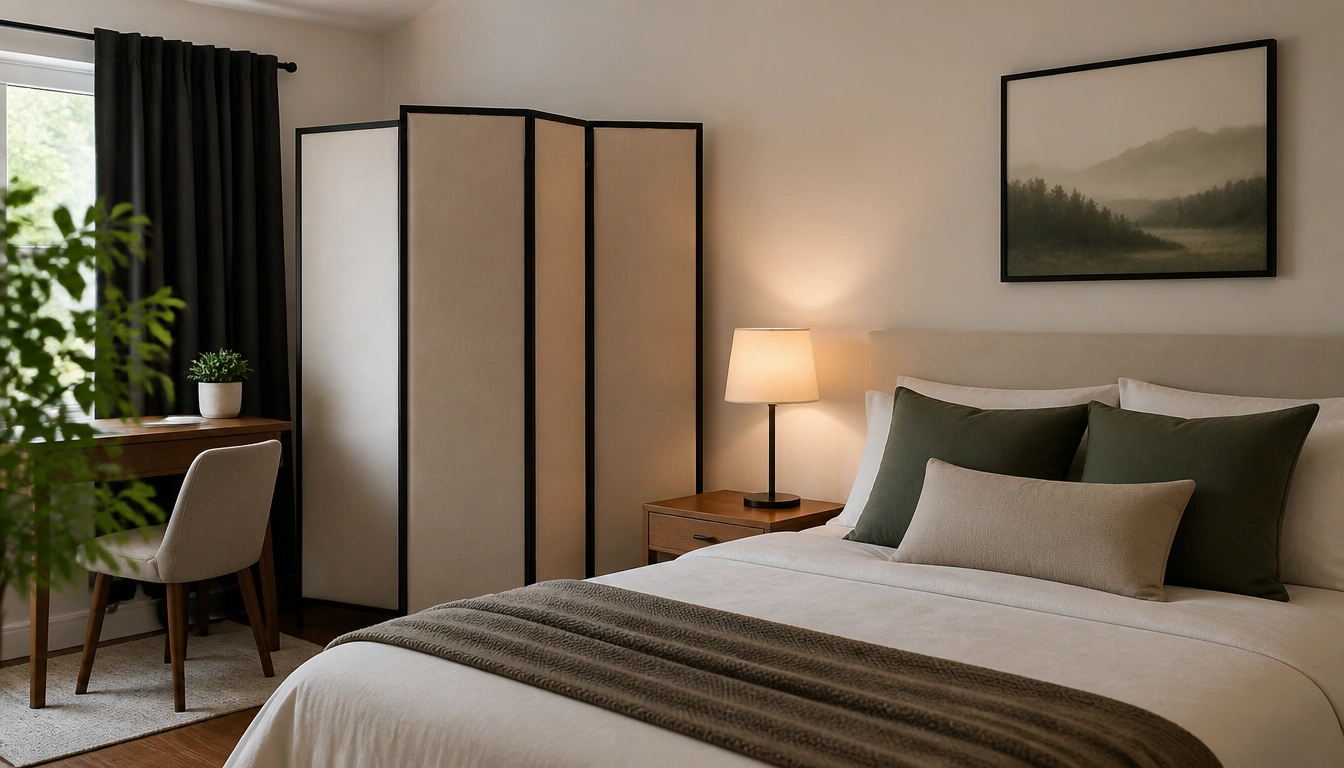
Start by removing work cues from the bedroom: laptops, work papers, charging stations, and anything that makes the room feel like a place for problem-solving. Then reset the visible surfaces, reduce light and noise, and use the bed only for sleep and intimacy. If you can’t separate a desk from the room, use zoning tools and a nightly shutdown ritual so the space shifts from work mode to rest mode.
Key Takeaways
- Take work tools out of the bedroom first; even small items can keep your brain in alert mode.
- Clear nightstands and dressers so the room looks finished, not like an unfinished to-do list.
- Make sleep conditions easier to maintain by reducing light, sound, and visible electronics.
- If your desk must stay in the room, use a screen, curtain, or other zoning cue to separate work from sleep.
- Use the bed only for sleeping and intimacy, and get up after about 20 to 30 minutes if you cannot fall asleep.
Why a work-from-home bedroom can work against sleep
When you work from home, the bedroom can start carrying two very different jobs at once. During the day it may hold your laptop, paperwork, phone chargers, and reminders of unfinished tasks. At night, that same room is supposed to signal safety, quiet, and sleep. Those mixed signals can make it harder to wind down because the brain learns the space as a place for alertness as much as rest.
Sleep medicine uses the idea of stimulus control: the more consistently the bed and bedroom are paired with sleep, the easier it is for the body to recognize those cues. The reverse is also true. If you answer messages in bed, pay bills from the duvet, or keep work materials within reach of the pillow, the bedroom can begin to cue planning and problem-solving instead of sleepiness.
That is why bedroom decluttering for sleep is not just about appearance. It is about reducing the reminders, devices, and visual noise that keep you mentally “on.” According to the CDC and NHS guidance on healthy sleep habits, the sleep environment should support darkness, quiet, and a routine that separates bedtime from wakeful activity.
Remove work artifacts and create a hard end-of-day shutdown
The first reset is simple: take work out of the sleeping zone. Move laptops, monitors, work phones, notebooks, folders, and papers out of the bedroom whenever possible. If your workday ends in the same room where you sleep, do not leave professional items open on the desk, chair, or nightstand. Visible work cues can keep the mind in an unfinished-task loop long after logging off.
A hard shutdown routine helps make that boundary feel real. Close every document, power down devices, put chargers away, and place work materials in one designated spot outside the bedroom. If you live in a home where another room can hold those items, use it. If not, use a closed container or cabinet so work materials are not in sight after hours.
If your desk must stay in the bedroom, treat the end of the workday like a room reset. Shut the laptop, clear the desktop, and cover the work surface so the room no longer looks like an office. A physical transition matters because the brain responds to what it sees, not just to what you intend.
Reset visible surfaces so the room feels finished
Nightstands and dressers are common clutter magnets. They often collect receipts, headphones, half-read work notes, laundry, beauty products, medication bottles, and random chargers. Each item may seem harmless on its own, but together they create low-grade visual friction that can keep the room feeling busy. Research on environmental clutter suggests that unfinished or task-related objects can increase stress and mental load.
Try a surface-by-surface reset rather than a general purge. On the nightstand, keep only items that support sleep or a calm wind-down: a lamp, a book, tissues, water if you need it, or an analog alarm clock. On the dresser, keep the surface mostly clear. If a tray or box helps contain a few essentials, use that rather than spreading items across the top.
Pay attention to what stays in your line of sight from the bed. The goal is not perfection or minimalism for its own sake. The goal is to remove the visual reminders that keep your mind scanning for tasks. When the room looks settled, it becomes easier to settle in it.
Improve light, sound, and temperature, then re-anchor the bed as sleep only
Decluttering helps most when it makes better sleep conditions easier to maintain. Start with light. Clear away anything that blocks access to blackout curtains, shades, or an eye mask if you need one. Reduce visible LEDs from chargers, electronics, and bedside devices. Even small points of light can be distracting in a dark room, and they make the space feel more alert than restful.
Sound and temperature matter too. The CDC and sleep-focused guidance from NHS sources support keeping the room as quiet and cool as practical. If outside noise is a problem, a fan or white noise machine can help soften sudden sounds. If the room runs warm, reduce thermal clutter around the bed, keep heavy items off the sleeping area, and adjust bedding so the room feels cooler and less stuffy.
Once the environment is easier to sleep in, reinforce the bed as a sleep-only zone. Use it for sleep and intimacy, not for work, scrolling, or long stretches of wakeful thinking. If you are still awake after about 20 to 30 minutes, get out of bed and do something quiet in dim light until you feel sleepy again. This helps the bed stay linked with sleep rather than frustration or alertness.
Use functional zoning when the bedroom must also be the office
In a studio apartment or a small bedroom-office overlap, full separation may not be realistic. In that case, create functional zones instead of trying to force a perfect split. A folding screen, curtain, bookcase, or even a distinct rug can help mark a work area apart from the sleep area. The point is to give the room two different identities without needing more square footage.
Visual cues matter here. Place work tools on one side of the room and keep sleep items on the other. At the end of the day, close the screen, pull the curtain, or cover the desk surface so the work zone disappears from view. That simple act can function like a closing ritual, which gives your brain a clear signal that the workday is over.
Small-space zoning also works through behavior. Keep calls, email checks, and planning tasks away from the bed. Use a chair, desk, or even a small standing spot for work rituals so the bed remains associated with rest. If the room cannot be physically divided, make the transition between zones as obvious as possible through routine and layout.
A practical checklist for what to remove, keep, and store elsewhere
A useful bedroom declutter plan for sleep starts with a quick sorting pass. Remove anything that belongs to work, anything that lights up unnecessarily, and anything that makes the room feel unfinished. Store the rest where it does not interfere with sleep.
| Remove from the bedroom | Keep in the bedroom | Store elsewhere |
|---|---|---|
| Laptop, work phone, monitor, papers, meeting notes | Bed, bedding, lamp, sleep mask, book, water if needed | Extra files, cords, office supplies, backup devices, work notebooks |
| Open to-do lists, deadlines, invoices, sticky notes | One alarm method, calm decor, a clear path to the bed | Seasonal items, overflow clothes, nonessential storage bins |
| Multiple chargers, blinking LEDs, screens on standby | Only the charging setup truly needed overnight | Unused electronics and backup cables |
For nightstands, think in terms of essentials rather than convenience. If an item encourages you to start working, keep scrolling, or keep thinking, it probably does not belong there. For dressers and shelves, limit the number of objects that compete for attention. Fewer visible items make it easier to keep the room clean and calmer at the same time.
Common mistakes remote workers make in a multipurpose room
One common mistake is assuming that a tidy desk equals a sleep-friendly room. A laptop closed on the nightstand or a work phone charging by the bed still keeps the work identity active. Another mistake is using the bed as a catchall during the day. Reading reports, taking meetings, or handling messages from bed trains the body to expect action there.
People also underestimate how much visual clutter affects sleep. A stack of files, a basket of cables, or a pile of clothes can create the sense that something still needs attention. Even if the room is technically clean, it may not feel restful if your eyes keep landing on unfinished tasks.
Another frequent error is focusing on products before behavior. Blackout curtains, a fan, or a divider can help, but they work best when paired with a nightly shutdown and a consistent rule about where work belongs. The room does not need to be perfect. It needs to be predictable.
When decluttering is not enough
If your bedroom is calmer but sleep is still not improving, the problem may be more than clutter. Persistent trouble falling asleep, frequent awakenings, early waking, loud snoring, gasping, restless legs, or unrefreshing sleep can point to a sleep disorder or another medical issue. In that case, environmental changes are still useful, but they should not be the only strategy.
According to the CDC and NHS, adults generally need enough sleep on a regular schedule to function well, but difficulty sleeping for several weeks despite good sleep habits is worth discussing with a healthcare professional. Chronic insomnia can respond well to structured treatment such as cognitive behavioral therapy for insomnia, often called CBT-I. A clinician can also check whether anxiety, medication effects, breathing problems, or another condition is part of the picture.
If you are unsure whether your sleep problem is behavioral or medical, start with the bedroom reset, then watch what changes. If sleep remains consistently poor, do not keep assuming the answer is more organization. Ask for an evaluation.
Frequently Asked Questions
What should be removed from the bedroom first to improve sleep?
Remove the items that most strongly signal work: laptop, work phone, papers, chargers, and open task lists. Those are the fastest cues to alertness. After that, clear anything that lights up, makes noise, or keeps your mind on unfinished responsibilities.
How do I keep a bedroom sleep-friendly when I work from home in a small space?
Use zoning instead of trying to force complete separation. A folding screen, curtain, rug, or covered desk can help create a visual boundary. End each workday with a shutdown routine so the room changes role before bedtime.
What bedroom clutter most affects sleep onset and nighttime anxiety?
Work-related clutter tends to be the most disruptive because it suggests unfinished tasks. Papers, devices, visible reminders, and charging stations can all keep the brain in planning mode. General clutter can also add low-grade stress if it stays in sight from bed.
How should I set up a bedroom if my desk has to stay in the same room?
Keep the desk visually separate from the bed as much as possible. Use a screen, curtain, or bookshelf if you can, and cover the work surface at night. Keep work tools out of the sleep area and avoid using the bed for daytime work.
What evening shutdown routine helps separate work from sleep?
Close documents, power down devices, put away paperwork, and clear the desk or cover it. Then switch to a non-work activity, such as showering, stretching, or reading something calm. Repeating the same sequence each night makes the transition easier.
The Bottom Line
A bedroom that doubles as a workspace often needs more than tidying. The most useful changes are the ones that remove work cues, simplify visible surfaces, and make the room easier to keep dark, quiet, and cool.
If you cannot separate the office from the bedroom, build a clear transition instead: close the work zone, keep the bed for sleep, and get out of bed when sleep does not come. If sleep problems continue after the room is reset, it is time to look beyond decluttering and ask a clinician about insomnia or another sleep issue.
Medical disclaimer
Medical disclaimer: This content is for educational and informational purposes only and is not a substitute for professional medical advice, diagnosis, or treatment. Dietary needs and supplement suitability vary by individual.
Sources
- National Health Service (NHS) — uclh.nhs.uk. Accessed November 2026.
- Centers for Disease Control and Prevention (CDC) — cdc.gov. Accessed November 2026.
- National Health Service (NHS) — oxfordhealth.nhs.uk. Accessed November 2026.
- National Health Service (NHS) — scot.nhs.uk. Accessed November 2026.
- Centers for Disease Control and Prevention (CDC) — cdc.gov. Accessed November 2026.
- U.S. Government / Health Authority — wi.gov. Accessed November 2026.
- Academic Research Institution — harvard.edu. Accessed November 2026.
