
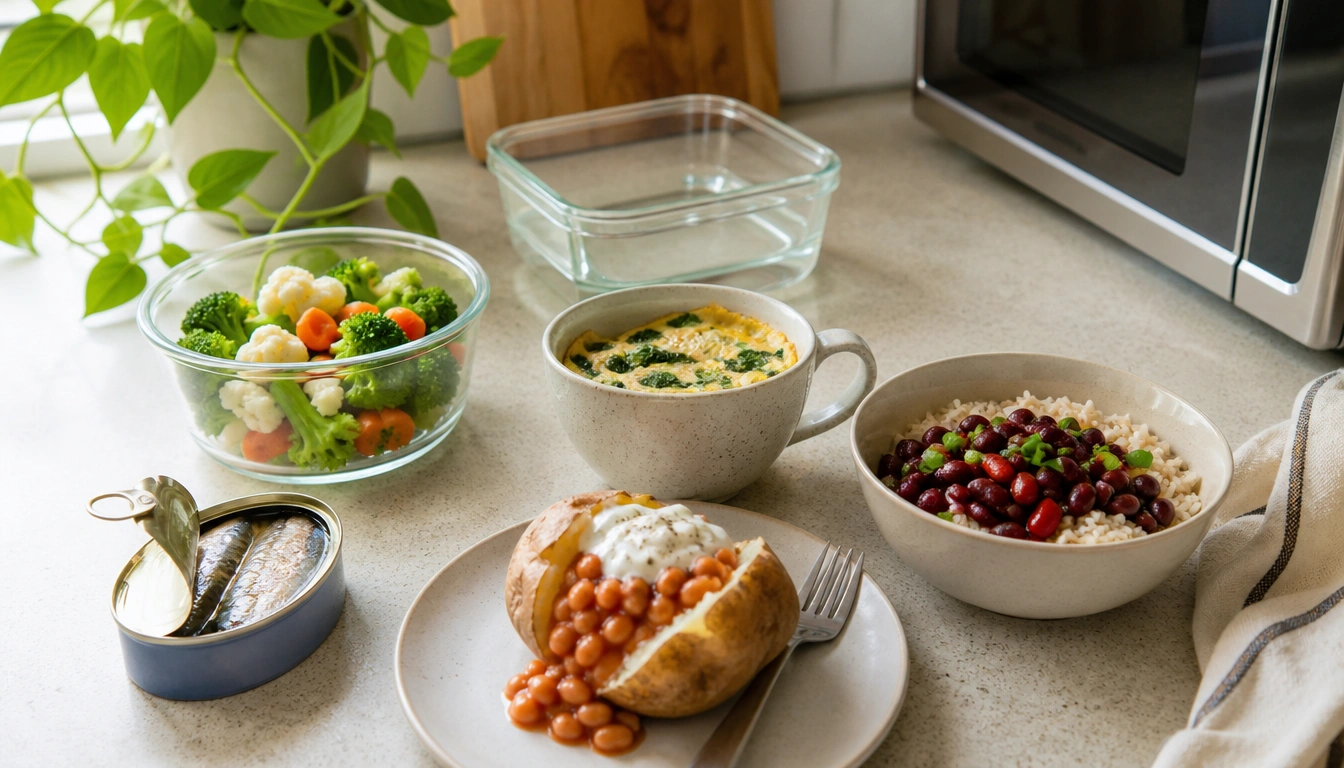
Yes—healthy microwave meal ideas can be cheap, filling, and quick when you build them from simple staples instead of processed frozen dinners. The easiest formula is protein plus fiber plus a complex carbohydrate, such as beans with rice, eggs with greens and toast, or tuna with potatoes and vegetables. Microwave cooking can also preserve nutrients well when you use minimal water and stop overcooking.
Key Takeaways
- Build microwave meals around protein, fiber, and a complex carbohydrate so they stay satisfying and balanced.
- Frozen vegetables, canned beans, and dry grains are nutritious, shelf-stable, and often cheaper than fresh ingredients that spoil quickly.
- Rinsing canned beans and choosing low-sodium or plain ingredients can help keep sodium down.
- Microwaving vegetables with a little water can help preserve heat-sensitive vitamins better than boiling.
- The same base meal can be scaled up for teens or active adults, or simplified for smaller appetites.
Healthy microwave meal ideas for budget shoppers start with a simple food-first budget plan
A microwave can be a real money-saving kitchen tool, not just a way to heat packaged meals. The budget-friendly approach is to keep a few low-cost staples on hand and combine them into meals that are quick, filling, and nutritionally useful. Public health guidance from the CDC and USDA supports this kind of pattern: build meals from vegetables or beans, protein foods, and grains, then add flavor with herbs, spices, salsa, mustard, or a small amount of sauce.
This matters for shoppers who are short on time or kitchen space. A meal built from a potato, canned beans, and a spoonful of yogurt costs less than many convenience options and usually gives more control over sodium, fat, and portion size. It also helps reduce waste. Frozen vegetables stay usable for months, canned beans keep well in the pantry, and dry grains can be cooked in batches or bought in larger bags for a lower per-serving cost.
Think of the microwave as a short-cut method for assembly and heating, not as a limitation. When you plan around staples that are already shelf-stable, you can make real meals instead of relying on a rotating line of ultra-processed dinners.
The microwave meal formula: protein, fiber, and a complex carbohydrate
The easiest way to make a microwave meal filling is to combine three parts: a stable protein, a fiber source, and a complex carbohydrate. Protein helps with satiety and muscle maintenance. Fiber supports digestive health and helps slow digestion. A complex carbohydrate gives steadier energy than a snack made mostly of refined starch or sugar.
That combination can look very different from one meal to the next. A rice and bean bowl works because beans provide protein and fiber while rice supplies the carbohydrate base. A baked potato with beans and yogurt also fits the formula. So does a mug omelet with greens and whole-grain toast. Once you learn the pattern, it becomes easier to shop cheaply because you are choosing ingredients for a job, not a recipe mood.
Microwave meals built this way are also easier to personalize. If you need more energy, add a second egg, more beans, or an extra slice of bread. If you want a lighter meal, keep the same structure but reduce the starch portion and load up on vegetables. That flexibility makes the microwave formula useful for students, busy workers, and anyone trying to eat more consistently without spending more.
Best low-cost staples and easy microwave recipes to keep on repeat
Some of the most useful budget staples are also the most microwave-friendly. Potatoes are inexpensive, filling, and easy to top with almost anything. Beans are a strong source of protein and fiber. Rice and oats are affordable carbohydrates that can anchor a meal. Eggs are quick, versatile, and usually less expensive than many prepared proteins. Frozen vegetables give you convenience without the waste of produce that spoils before you use it.
Canned tuna or salmon can make a fast protein boost, especially when paired with whole-grain bread or tortillas. Plain yogurt can stand in for sour cream or a creamy sauce. Whole-grain bread and tortillas help turn small amounts of protein and vegetables into a fuller meal. If you keep these items around, you can assemble several meal patterns from the same shopping list.
Loaded microwave baked potato: Pierce a russet or sweet potato with a fork and microwave until tender. Split it open, add rinsed canned black or pinto beans, salsa, and a spoonful of plain yogurt. If you have it, add chopped green onion or frozen broccoli heated separately.
Rice and bean bowl: Combine microwave rice, canned beans, and frozen corn or mixed vegetables. Season with cumin, garlic powder, chili powder, or hot sauce. Top with a squeeze of lime, if available. This is one of the cheapest healthy microwave dinner ideas because it uses low-cost ingredients with good staying power.
Mug omelet with greens: Whisk eggs with a splash of milk or water in a microwave-safe mug or bowl. Stir in spinach, chopped frozen broccoli, or leftover vegetables. Heat in short bursts, stirring between rounds, until just set. Serve with toast or a tortilla.
Tuna or salmon melt: Mix drained canned fish with mustard or a little light mayonnaise. Put it on whole-grain bread or a tortilla, add a thin layer of cheese, and microwave briefly until warmed and melted. Add baby carrots or a side salad if you have them.
Microwave oats with extras: Cook oats with water or milk, then stir in peanut butter, sliced banana, or frozen berries. For a savory version, try an egg and a handful of spinach on the side.
Shop smarter with store brands, frozen produce, and shelf-stable ingredients
Stretching your food budget starts in the aisle. Store brands often cost less than name brands and are usually similar in nutritional value. Unit pricing helps you compare which package is truly cheaper, especially with grains, canned beans, oats, and yogurt. A bigger bag is not always the better deal, but often it is.
Frozen vegetables are one of the smartest buys for microwave meals because they are already washed, cut, and ready to heat. Canned beans are equally useful, especially if you rinse them before use. Dry grains can be cheaper per serving than instant versions, though microwave rice pouches are still useful when time matters more than cooking a pot of rice. Fresh produce is still valuable, but if you know you will not use it before it spoils, frozen or canned options can save money and reduce waste.
Pre-made convenience foods are worth limiting when they are mostly refined starch, added fat, and sodium with very little protein or vegetables. A frozen dinner can still fit into a routine sometimes, but if your goal is to eat well on a budget, the better long-term strategy is to buy basic ingredients and assemble your own meals. That gives you more food for the same money and more control over quality.
Lower sodium and steadier blood sugar without making meals complicated
Many microwave-friendly ingredients can be high in sodium if you do not choose carefully. Canned beans, canned vegetables, packaged rice, tuna, and ready-to-heat sauces can all add up. A few simple steps help: choose low-sodium versions when possible, rinse canned beans or vegetables under water, and use herbs, pepper, garlic, cumin, paprika, vinegar, mustard, or citrus to add flavor instead of leaning on salty seasoning blends.
For blood sugar management, the same meal structure helps in a different way. Pairing carbohydrates with protein and fiber can make meals more steady than eating starch alone. That is why a potato works better with beans or yogurt, and why rice is more balanced with vegetables and tuna than by itself. A sweet potato, oats, or beans may also fit better than a highly refined snack because they bring more fiber to the table.
People managing diabetes or another blood sugar concern may still need individualized advice, but the broad food pattern is straightforward: avoid building meals around only one fast-digesting carbohydrate. Add protein, add fiber-rich vegetables or beans, and keep portions realistic for your own needs.
Adjust the same meal for teens, athletes, busy adults, or smaller appetites
One advantage of simple microwave meals is that they are easy to scale. A teenager or athlete may need a bigger plate, more carbohydrate, and extra protein to support appetite and activity. That might mean a larger baked potato plus more beans, a second egg, an extra slice of toast, or a larger bowl of rice with tuna and vegetables. For someone with a higher calorie need, adding peanut butter, cheese, yogurt, or another grain serving can make the meal more substantial without changing the basic structure.
For a lower-energy adult or someone who wants a lighter meal, keep the same pattern but trim the starch portion and lean more on vegetables and protein. A smaller potato with yogurt and beans, a half-bowl of rice with extra frozen vegetables, or one egg with greens and toast can feel satisfying without being oversized. Older adults may also prefer softer textures, so mashed beans, well-cooked vegetables, and moist foods can be easier to eat.
The goal is not a perfect portion. It is a flexible base meal that can be adjusted up or down depending on appetite, schedule, and activity level.
Use the microwave safely and get better texture from everyday ingredients
Microwave safety is mostly about the container and the heating pattern. Use microwave-safe glass or ceramic containers, and avoid heating food in single-use plastic or containers not meant for the microwave. Stirring helps food heat more evenly and reduces the risk of cold spots. For eggs, rice, beans, and mixed vegetables, short cooking bursts with a quick stir in between usually give better results than a long uninterrupted run.
Texture improves when you respect the food. Potatoes should be pierced before microwaving so steam can escape. Vegetables usually need only a small amount of water to cook well. Fish and eggs can dry out if overheated, so it helps to stop when they are just done and let carryover heat finish the job. Leftovers should be heated until steaming throughout, especially when they include proteins.
Food safety also matters with leftovers. Refrigerate cooked food promptly, reheat only what you plan to eat, and discard anything that has been sitting out too long. If you use a microwave as your main cooking tool, those habits matter as much as the recipe itself.
Easy swaps when your pantry, freezer, or fridge looks different
Flexible microwave meals are easier to keep in rotation when you can swap ingredients without starting over. If you do not have rice, use oats, potatoes, or whole-grain bread. If you are out of beans, use eggs, canned fish, or plain yogurt as the protein. If frozen broccoli is gone, try spinach, corn, peas, mixed vegetables, or whatever frozen produce you already have.
A few practical swaps can also cut cost. Use plain frozen vegetables instead of a sauce-covered mix. Use dry beans cooked ahead if you have more time, or canned beans if you need speed. Use tortillas when bread is near the end of the loaf. Use peanut butter or yogurt as a quick add-on when you need more staying power. The best budget meals are usually the ones that adapt to what is already in the kitchen.
If you keep the core formula in mind, you can mix and match ingredients without losing the nutrition balance. That is what makes microwave cooking useful for real life: it is fast, affordable, and forgiving.
Frequently Asked Questions
How can I build a balanced microwave meal on a tight grocery budget?
Use the three-part formula: a protein food, a fiber source, and a complex carbohydrate. For example, beans with rice and frozen vegetables, or eggs with toast and greens. Buy store brands, use unit pricing, and keep a few shelf-stable staples on hand so you can assemble meals quickly.
Are canned, frozen, and shelf-stable ingredients still nutritious enough for healthy meals?
Yes. Frozen vegetables, canned beans, and dry grains can be very useful for healthy meals, and they often reduce waste because they last longer than fresh produce. Choose plain or low-sodium versions when possible, and use them as building blocks rather than depending on highly processed convenience foods.
How do I lower sodium in microwave meals made with beans, vegetables, or rice pouches?
Choose low-sodium products when available, rinse canned beans or vegetables under water, and flavor food with spices, citrus, mustard, or vinegar instead of salty seasoning packets. If you use rice pouches, balance them with plain beans, eggs, or vegetables so the whole meal is less sodium-heavy.
What microwave meal ideas work best for diabetes or blood sugar management?
Meals that combine carbohydrates with protein and fiber are often a better fit than starch alone. Good examples include a baked potato with beans and yogurt, a rice and bean bowl with vegetables, or eggs with whole-grain toast and greens. Portion size still matters, so individual needs can vary.
How can I make microwave meals more filling for teens, athletes, or other higher-calorie needs?
Increase the carbohydrate and protein portions without changing the meal structure. Add another egg, more beans, a larger potato, extra rice, cheese, peanut butter, or yogurt. The same base meal can be scaled up easily for bigger appetites and more active schedules.
The Bottom Line
Healthy microwave meals do not need to come from frozen dinners. A potato, some beans, a few eggs, frozen vegetables, and a couple of grains can cover many cheap, fast meals with better control over sodium and ingredients.
If you keep the protein-fiber-carbohydrate pattern in mind, shopping gets simpler and leftovers get used more efficiently. Frozen, canned, and dry staples are often the most practical choices for budget cooks because they save money, reduce waste, and still support balanced meals.
The best microwave meals are the ones you can repeat. Start with one or two formulas that fit your budget, then adjust portions and ingredients for your own appetite, schedule, and health goals.
Medical disclaimer
Medical disclaimer: This content is for educational and informational purposes only and is not a substitute for professional medical advice, diagnosis, or treatment. Dietary needs and supplement suitability vary by individual.
Sources
- Centers for Disease Control and Prevention (CDC) — cdc.gov. Accessed November 2026.
- Academic Research Institution — uic.edu. Accessed November 2026.
- mayoclinichealthsystem.org — mayoclinichealthsystem.org. Accessed November 2026.
