
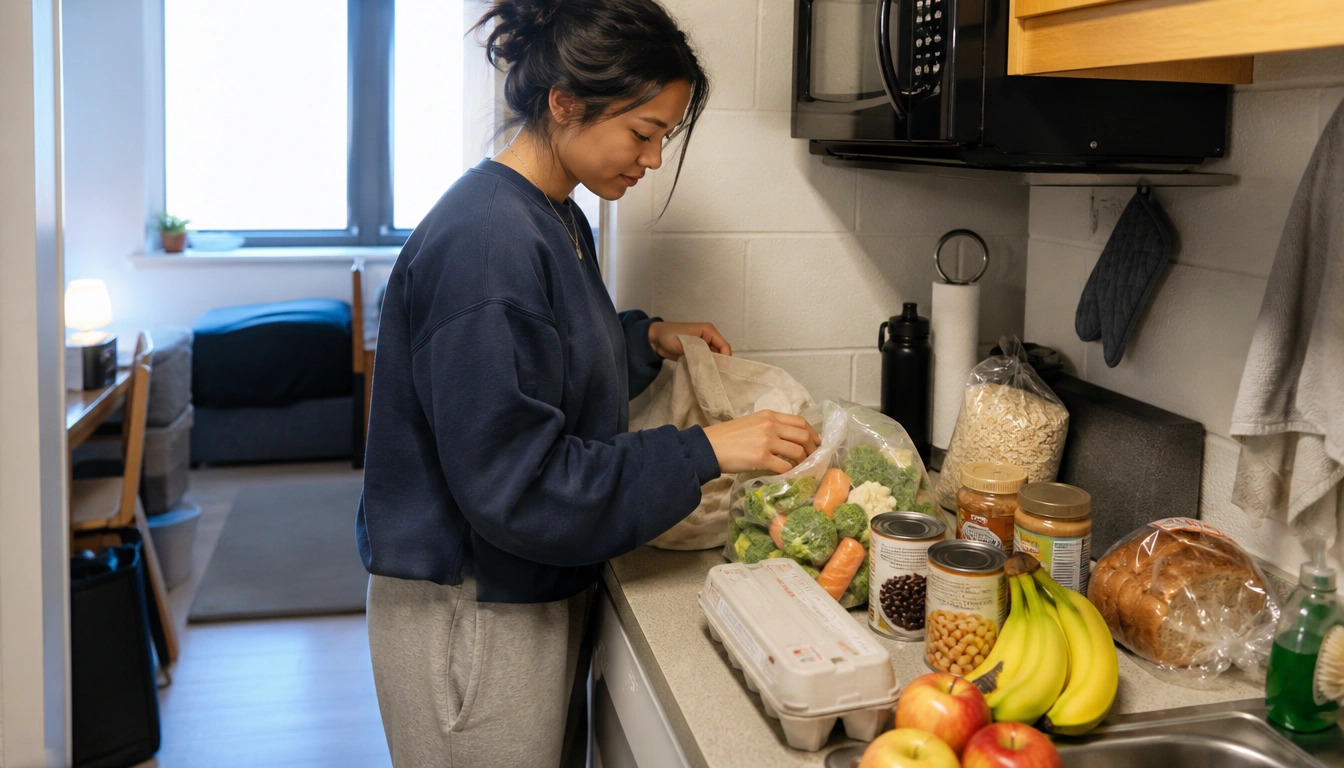
Build your college grocery routine around a few repeatable meals, not a perfect weekly plan. Start with a short list of budget staples that fit your space: frozen produce, canned beans, eggs, oats, whole grains, peanut butter, and a few fresh items you’ll actually use. Shop after checking what you already have, compare unit prices, and lean on campus food resources if money or access is tight.
Key Takeaways
- Use MyPlate as a shopping shortcut: aim for produce, protein, grains, and a few dairy or refrigerated basics instead of trying to buy everything.
- Frozen, canned, and shelf-stable foods are often the smartest college buys because they last longer, cost less per serving, and cut food waste.
- Plan 3 to 4 repeatable meals you can mix and match all week, rather than mapping every breakfast, lunch, and dinner.
- Dorm-friendly foods are usually no-cook or low-cook staples that work with a mini-fridge, microwave, or shared kitchen.
- If food is tight, campus pantries, mobile distributions, and SNAP eligibility checks can be part of your normal routine, not a last resort.
Why a grocery routine matters in college
College schedules can make eating feel random: one day you have time to cook, and the next day you are grabbing whatever is closest between class, work, and studying. A simple grocery routine helps with three things that matter quickly for student life: steady energy, a more predictable budget, and less food waste.
That matters because irregular meals and a heavy reliance on convenience foods can leave you feeling sluggish, distracted, or overly hungry later. Public health guidance from the USDA and nutrition education programs at universities point toward the same general idea: build meals around nutrient-dense foods that give you fiber, protein, and enough carbohydrates to keep you going through the day. For students, that usually means simplifying choices, not making them more complicated.
A routine also helps you avoid the common student trap of buying food with good intentions and letting it spoil. If you shop with a plan, your groceries are more likely to become meals instead of leftovers you forgot about.
Start with a few repeatable meals
Instead of trying to plan 21 separate meals for the week, choose 3 or 4 meals you can repeat and rotate. That is much easier to manage when your class schedule changes and your kitchen access is limited. A repeatable meal system reduces decision fatigue and makes grocery shopping much faster.
Think in templates rather than recipes. For example, a breakfast template might be oatmeal plus peanut butter and fruit. A lunch template might be a grain bowl with beans, frozen vegetables, and salsa. A dinner template might be rice, eggs or tofu, and a vegetable. These are not fancy meals, but they are easy to build, store, and repeat.
The goal is not variety for its own sake. The goal is enough variety to stay interested while keeping your shopping list short. If you can make each meal from the same small set of ingredients, you are less likely to overspend or throw out unused food.
Build your grocery list by category
MyPlate gives you a useful framework, but the college version should be practical. Turn the plate model into a short list of categories you can restock every week: produce, protein, grains, dairy or refrigerated items, pantry staples, and freezer foods. That structure makes shopping easier than wandering the store and hoping inspiration hits.
Produce: choose a few fruits and vegetables you will truly eat. Bananas, apples, baby carrots, spinach, onions, and salad mixes are common starting points. If fresh produce spoils too quickly, frozen vegetables and fruit are often a better fit for student schedules. They are picked and frozen at peak ripeness, and they usually waste less money.
Protein: budget-friendly options include canned beans, eggs, peanut butter, tuna or salmon, tofu, plain yogurt, and rotisserie chicken if you have access to a fridge. These foods can be mixed into bowls, sandwiches, wraps, and pasta without requiring much cooking skill.
Grains: oats, brown rice, whole-wheat bread, tortillas, and whole-grain pasta give you inexpensive meal bases. They pair well with almost anything else in the cart.
Dairy or refrigerated foods: milk, yogurt, cheese, and hummus can help round out meals if you have room and can keep them cold. Choose what you will actually use before it expires.
Pantry and freezer: keep shelf-stable and frozen items on hand for busy weeks. Canned beans, pasta, jarred salsa, soup, broth, frozen vegetables, and microwavable grains make it easier to eat without a full cooking session.
Before you shop, check what is already in your room, fridge, or cabinet. Then compare unit prices, not just sticker prices. The cheapest package is not always the best value if you will not finish it before it goes bad. Shopping after eating also helps, because hunger can push you toward impulse buys and snacks you did not plan for.
| Category | College-friendly examples | Why it helps |
|---|---|---|
| Produce | Bananas, apples, carrots, spinach | Easy to grab, low prep, useful in multiple meals |
| Protein | Beans, eggs, peanut butter, tuna, yogurt | Fills you up and supports simple meals |
| Grains | Oats, rice, tortillas, whole-wheat bread | Cheap meal base with long shelf life |
| Freezer | Frozen vegetables, frozen fruit, steam-in-bag grains | Less waste, faster meals, better for busy weeks |
| Pantry | Pasta, salsa, soup, canned tomatoes | Useful when you cannot cook much |
Make dorm and shared-kitchen food work for you
If you only have a mini-fridge, microwave, or a shared kitchen, your best foods are the ones that do not demand much from you. No-cook and low-cook staples are not a fallback; they are often the smartest way to eat well in college.
No-cook building blocks can include yogurt with fruit and oats, peanut butter toast, wraps with hummus and vegetables, canned beans over salad, and trail mix with fruit. Low-cook options can be as simple as microwaving rice, heating frozen vegetables, scrambling eggs, or warming soup. If you can combine one protein, one grain, and one produce item, you can make a meal with very little effort.
For mini-fridge storage, keep the most perishable foods where you can see them. Put ready-to-eat items in front so they do not get forgotten. Use clear containers if possible. In a shared kitchen, label anything that belongs to you, especially leftovers or prep items. If you are storing raw meat, keep it sealed and placed below ready-to-eat foods so juices cannot drip onto other items.
Shared spaces also work best when you keep your system simple. One container of washed produce, one or two protein sources, and a few shelf-stable backups usually beat a crowded fridge full of ingredients you never use.
Stretch your money and use campus food resources
Student budgets can be tight enough that grocery planning is also a financial planning task. That does not mean eating less than you need. It means using the cheapest reliable foods first, then filling in with extras when your budget allows.
Frozen vegetables, canned beans, oats, peanut butter, eggs, and whole grains are often strong budget choices because they provide multiple meals without quickly spoiling. Store brands and bulk items can help too, especially when you know you will finish them. The most affordable food is often the food you actually use.
It is also smart to treat campus food support as part of your routine, not an emergency-only option. Many colleges offer food pantries, mobile food distributions, or emergency meal resources. If money is tight, checking those options early can reduce stress and help you keep your grocery routine steady. If you may qualify, look into SNAP eligibility as well; many students assume they do not qualify when they actually might, depending on school status, work hours, and other factors.
If food stress starts making you skip meals, panic while shopping, or rely on emergency snacks for long stretches, campus health, student support, or a registered dietitian can help you make a plan that fits your situation.
Keep groceries safe and fresh
Food safety matters more when you are living with other people and your fridge space is limited. Basic habits prevent spoiled food, lost meals, and avoidable stomach bugs.
Label leftovers with the date you made them so you know what needs to be eaten first. Store cooked foods promptly in the fridge, and do not let perishable food sit out too long after you bring it home. The USDA and university extension guidance both emphasize refrigeration, clean handling, and separating raw foods from ready-to-eat items.
In a shared fridge, keep raw meats sealed and away from produce, prepared food, and dairy. Use containers with lids whenever you can. Clean spills quickly. If you are not sure how long something has been in the fridge or whether it smells or looks off, it is safer to discard it than guess. Leftovers are most useful when you plan to eat them within a few days, not when they become a mystery container at the back of the shelf.
Make the routine repeat every week
A grocery routine works best when it has a rhythm. Pick a regular day to check what you have, write your list, and shop. For many students, that might be the same evening each week or the day after a meal plan resets. The exact day matters less than consistency.
Use the same short checklist each time: what do I already have, what meals am I repeating, what fresh foods need to be used first, and what shelf-stable foods will carry me through the week if I get busy? That kind of routine keeps grocery shopping from becoming a full mental project every time.
It also helps to keep a small backup system. For example, you might always keep oats, rice, peanut butter, and frozen vegetables on hand so a missed shopping trip does not leave you with nothing. When you run low, restock before you are completely out. That makes it easier to eat consistently even during exam weeks.
Common mistakes to avoid when starting out
New grocery shoppers often make the same predictable mistakes. The first is buying too much fresh food because it sounds healthier, then not having time to use it. Frozen and canned foods are not “less healthy” by default; they are often more realistic for student life.
The second mistake is shopping without a plan. A vague list like “healthy food” usually leads to overspending or random ingredients that never become meals. Another common problem is buying only snacks and forgetting actual meal ingredients. Snacks are useful, but they should not be your whole grocery system.
It also helps to avoid the idea that you need a perfect kitchen setup before you can eat well. Many students do best with a few reliable foods, a limited number of recipes, and a shopping routine they can repeat. If your needs change because of allergies, religion, culture, budget, or a limited kitchen, adjust the list rather than abandoning the routine. The point is to make food more manageable, not more stressful.
Frequently Asked Questions
What should a college student buy first when starting a grocery list?
Start with a few repeatable basics: a grain, a protein, a produce item, and one or two easy extras. For example, oats, eggs or beans, bananas, frozen vegetables, and peanut butter can cover several meals without requiring advanced cooking skills.
How do I grocery shop on a tight student budget without wasting food?
Plan around foods that keep well and can be used in more than one meal. Frozen produce, canned beans, oats, rice, pasta, and peanut butter usually waste less than highly perishable items. Check what you already have, buy only what fits your next few meals, and compare unit prices before choosing larger packages.
What foods are best for dorms or small kitchens with limited cooking access?
No-cook and low-cook foods tend to work best: yogurt, fruit, hummus, tortillas, canned beans, tuna, microwavable rice, oats, salad greens, frozen vegetables, and eggs if you have a microwave or shared kitchen. Focus on foods that can combine quickly into a meal.
How can I turn MyPlate into an actual college grocery list?
Use MyPlate as a category system: fill half your list with produce, then split the rest between protein and whole grains, with a few dairy or refrigerated items if you use them. That turns a broad nutrition model into a short, repeatable shopping list.
What should I do if I have dietary restrictions, food insecurity, or food panic while shopping?
Adjust the routine to fit your diet and use campus supports early. Many colleges offer food pantries, mobile distributions, or emergency meal help, and some students may qualify for SNAP. If shopping or eating feels overwhelming or triggering, campus health services or a registered dietitian can help you build a safer plan.
The Bottom Line
A good college grocery routine is simple, repeatable, and flexible. Start with a few meals you can make on busy weeks, then buy ingredients that fit your kitchen, your budget, and your actual appetite.
Frozen, canned, and shelf-stable foods are not backup options only; they are often the smartest foundation for student eating because they save money, reduce waste, and make meals possible when time is short. If money is tight, use campus pantry support and check whether SNAP applies to your situation.
The easiest routine is the one you can repeat next week. Keep the list short, restock your basics, and adjust as your schedule changes rather than trying to shop like a full-time chef.
Medical disclaimer
Medical disclaimer: This content is for educational and informational purposes only and is not a substitute for professional medical advice, diagnosis, or treatment. Dietary needs and supplement suitability vary by individual.
Sources
- U.S. Government / Health Authority — usda.gov. Accessed October 2026.
- National Institutes of Health (NIH) — nih.gov. Accessed October 2026.
- Academic Research Institution — ucdavis.edu. Accessed October 2026.
- Academic Research Institution — msu.edu. Accessed October 2026.
- Academic Research Institution — columbia.edu. Accessed October 2026.
- Academic Research Institution — colorado.edu. Accessed October 2026.
