
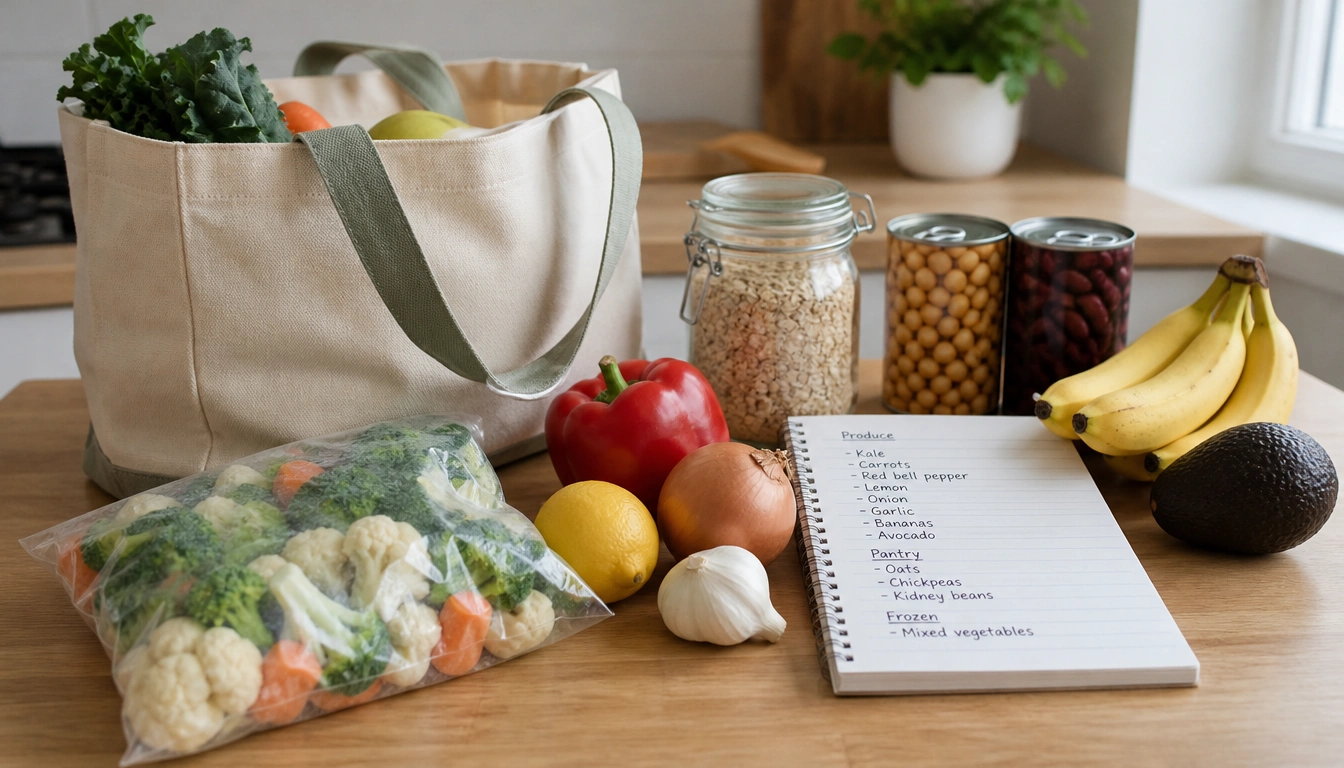
Build a simple grocery routine by repeating the same basic steps each week: check what you already have, choose 3–4 meals, write a categorized list, shop after eating, and keep your cart centered on produce, proteins, whole grains, and a few reliable staples. A sustainable routine is less about perfection and more about making the healthiest choice the easiest one to repeat.
Key Takeaways
- Start with a short plan, not a full menu overhaul. Three or four dinners plus a few repeatable breakfasts or lunches is enough to rebuild momentum.
- Shop after you eat and use a categorized list so hunger and store layout do not drive impulse buys.
- Frozen, canned, dried, and pre-washed foods can be practical healthy options when fresh food is too expensive, too perishable, or too time-consuming.
- When comparing packaged foods, focus on fiber, sodium, added sugars, and whether the ingredient list is mostly recognizable whole foods.
- If you have diabetes, kidney disease, food allergies, or another medical condition, your grocery routine may need personalized adjustments from a clinician or dietitian.
Why a grocery routine matters for rebuilding healthy habits
Healthy eating usually becomes easier when the right foods are already in your kitchen. That is why a grocery routine matters: it shapes what you are likely to eat on busy days, low-energy days, and the days when cooking feels like too much. Public health guidance from the CDC, USDA MyPlate, and the American Heart Association all points in the same direction: stock the home environment with more whole and minimally processed foods so the healthy choice is the convenient choice.
For adults returning to healthy habits, the goal is not a perfect cart or a perfect week. The goal is a repeatable system. Consistency beats intensity here. A routine that works when you are tired, rushed, or budget-conscious is far more useful than a strict plan that falls apart after two trips to the store.
It also helps to think in patterns rather than in rules. A healthier grocery trip usually includes vegetables and fruit, a few protein options, a basic grain or starch, and some easy extras that make meals realistic. That mix supports meals without requiring constant decision-making. It also reduces the chances that hunger, stress, or convenience will push you toward more ultra-processed foods than you intended.
A useful starting point is to ask a simple question: what do I need in my kitchen to make the next week easier? That shifts grocery shopping from a vague health project into a practical planning task.
The simplest way to plan before you shop
The easiest grocery routine starts before you leave home. First, do a quick inventory of the refrigerator, freezer, and pantry. Look for leftovers, unopened staples, produce that needs to be used, and duplicates you do not need to buy again. This step saves money and prevents the common pattern of buying ingredients you already have.
Next, choose just 3 or 4 dinners for the week. You do not need to map every breakfast, lunch, and snack. A short list lowers pressure and makes shopping more focused. Think in flexible meals: one chicken or tofu dinner, one bean-based meal, one pasta or grain bowl, and one simple sheet-pan or stir-fry option. Pair those meals with a couple of repeatable breakfasts or lunches, such as oatmeal, eggs, yogurt, or leftovers.
Then write a categorized list. Group items by store sections: produce, protein, dairy or alternatives, frozen, pantry, and household basics. A categorized list keeps you from wandering the store and getting pulled into random center-aisle browsing. It also makes the trip faster, which matters when you are rebuilding momentum.
Finally, do not shop hungry. Shopping after eating can reduce impulse purchases, especially the high-energy snack foods that are easiest to grab when you are low on fuel. If you need a small buffer before heading out, eat something with protein or fiber first. This is a behavior strategy, not a willpower test.
If you want a starting template, make the cart around familiar building blocks: one or two vegetables you will actually eat, one fruit, one protein for quick meals, one whole grain, one canned or frozen backup, and one or two flavor helpers such as salsa, hummus, or olive oil. That is enough structure to support a week without making the list complicated.
How to build a healthier cart in the store
Store layout matters because most supermarkets are designed to influence choices. The perimeter often holds produce, dairy, eggs, meat, seafood, and many fresh or minimally processed foods, while the center aisles contain more shelf-stable and packaged products. A perimeter-first approach does not mean you should ignore the aisles. It means you start with the foods that usually help anchor meals and then go into the aisles with a plan.
In practice, that looks like this: fill your cart first with fruits and vegetables, then add proteins such as eggs, poultry, fish, tofu, beans, yogurt, or cheese if you use them. After that, move to whole grains and pantry items you specifically planned to buy. The order matters because it helps you spend your attention on the foods that support meals before you spend it on extras.
When you do go into the interior aisles, go with a purpose. Buy the items on your list and skip the rest. That does not mean the center aisles are off-limits. It means they should serve your meal plan, not replace it. Canned beans, oats, brown rice, whole-wheat pasta, nuts, seeds, and tomato products are all useful examples of aisle foods that can support healthier eating.
If budget is a concern, compare unit prices when possible and keep your eyes on store brands. The healthiest cart does not have to be the most expensive one. Many basic staples are inexpensive, filling, and useful across several meals. The habit to build is not “buy everything fresh.” The habit is “buy enough useful food to make cooking easier at home.”
What to buy when you’re short on time or budget
Healthy eating does not require fresh produce every time. Frozen, canned, dried, and pre-prepped foods can be just as useful in a real-life routine, especially when time, money, or energy is limited. The CDC and other public health guidance support using these options because they help people keep nutritious foods on hand longer and with less waste.
Frozen vegetables and fruit are often excellent default options. They are picked and frozen at peak ripeness, keep well in the freezer, and can be added to meals quickly. Frozen steam-in-bag vegetables, frozen berries, and frozen stir-fry blends are especially helpful for busy adults because they remove several steps from dinner prep.
Canned foods can also be smart staples. Beans, lentils, tomatoes, tuna, salmon, and vegetables can all fit into a healthier routine. For vegetables, look for no-salt-added or low-sodium versions when possible. For fruit, choose options packed in water or 100% juice rather than heavy syrup if that choice is available.
Dried foods are useful too. Oats, brown rice, lentils, pasta, beans, nuts, and seeds store well and can stretch meals. They are especially helpful if you want inexpensive ingredients that can become breakfast, lunch, or dinner with minimal effort.
Pre-washed greens, bagged salad kits, chopped vegetables, rotisserie chicken, plain yogurt, hard-boiled eggs, and microwaveable grains can all make the transition back to healthy eating feel more manageable. These are not “cheating” foods. They are convenience foods that support consistency. For many adults, that is what makes the routine sustainable.
A practical rule is to keep a mix of fresh and shelf-stable foods at home. Fresh foods are great when you have time to use them. Frozen and canned foods give you backup. That combination reduces the pressure to buy only perfect produce and makes it less likely that your good intentions spoil in the crisper drawer.
How to read labels without overthinking
Label reading is useful when it stays simple. You do not need to decode every line on the package. The FDA encourages shoppers to use the Nutrition Facts panel to compare products and focus on the nutrients that matter most for the food category you are buying.
A good quick check starts with four things: fiber, sodium, added sugars, and ingredient quality. Fiber matters because it helps make grains, snacks, and packaged foods more filling. Sodium matters because many packaged foods are much higher in salt than people expect. Added sugars matter because they can turn an otherwise useful product into a less balanced choice. Ingredient quality matters because the first ingredients usually tell you what the product is mostly made of.
For grain products, look for words like “whole wheat,” “whole oats,” or another whole grain near the top of the ingredient list. If you are choosing bread, cereal, pasta, or crackers, a whole grain should be prominent, not hidden after several refined ingredients. For packaged sauces, soups, and frozen meals, compare sodium and added sugar across brands rather than trying to judge one product in isolation.
There is no need to chase perfection. If two products are similar, choose the one that better fits your goals or your family’s taste and budget. The point of label reading is to make a better comparison, not to turn grocery shopping into a research project.
One more practical tip: ingredient lists can help you avoid products that are mostly sugar, refined starch, or oils with very little nutritional value. That does not mean every packaged food is a problem. It means the package should support the meal, not silently become the whole meal by default.
How to make healthy choices easier at home after the groceries are put away
Your routine does not end when you get home. What you do in the first 15 to 20 minutes after unpacking can shape the rest of the week. The best next step is to reduce friction. Wash produce. Put grab-and-go items where you can see them. Portion snacks into containers if that helps you avoid grazing from the bag. Cook one staple grain or protein if you know it will save time later.
Visibility matters. Foods that are easy to see and easy to reach tend to be the foods you use first. Put washed fruit at eye level, keep chopped vegetables near the front of the fridge, and place ready-to-eat items where you do not have to dig for them. If you want to eat more of something, make it easier to grab than the alternatives.
It also helps to create a few “default meals” you can assemble without much thought. For example, a bowl might be grain plus protein plus vegetables plus sauce. A breakfast might be yogurt plus fruit plus oats or nuts. A lunch might be leftovers plus a side salad or fruit. Repeating structures makes healthy eating feel less like constant decision-making.
Try to keep your kitchen realistic, not idealized. A healthy routine should work on stressful Tuesdays, not only on well-planned Sundays. If you rely on convenience, choose convenience that still supports your goals: pre-cut vegetables, frozen sides, canned beans, bagged salads, and simple sauces can all belong in a healthy home.
The longer your routine lasts, the less energy it should require. That is the point. A good system becomes ordinary.
When a standard grocery routine needs medical personalization or professional guidance
A general healthy grocery routine works for many adults, but it is not one-size-fits-all. If you have diabetes, kidney disease, food allergies, gastrointestinal disorders, high blood pressure, cardiovascular disease, or a history of disordered eating, your grocery choices may need specific boundaries that go beyond a general healthy pattern.
For example, someone managing diabetes may need help planning carbohydrate distribution across meals and snacks. Someone with kidney disease may need to pay closer attention to sodium, potassium, phosphorus, or protein depending on their care plan. Someone with food allergies must screen labels more carefully and avoid cross-contact risks. These are not situations where a generic “healthy foods” list is enough.
That is where individualized medical nutrition guidance matters. A registered dietitian nutritionist or primary care clinician can help you build a grocery plan that matches your health needs, medications, lab results, and preferences. If you are unsure where your condition fits, ask for a tailored plan rather than guessing.
It is also wise to seek help if you feel stuck in cycles of restriction and overeating, if shopping feels emotionally overwhelming, or if you are unsure how to rebuild habits without triggering stress. A sustainable routine should support health without creating fear around food.
The most useful grocery plan is the one you can repeat safely. For some people, that is a simple list with a few standard meals. For others, it is a customized plan built with professional support. Both can be healthy. The difference is that one is general and the other is designed for your situation.
Frequently Asked Questions
What should I buy first when I’m trying to shop healthier again?
Start with foods that make meals easy to assemble: vegetables, fruit, a few proteins, one or two whole grains, and a couple of backup staples like beans, yogurt, or frozen vegetables. That gives you the basics before you add extras.
How do I grocery shop on a budget while returning to healthy eating habits?
Use a short meal plan, compare unit prices, and lean on low-cost staples such as oats, beans, lentils, rice, eggs, frozen vegetables, and store-brand products. Buying only what you can realistically use also helps reduce waste and save money.
What are the best healthy shortcut foods for busy adults?
Good shortcuts are foods that cut prep time without derailing your goals: pre-washed greens, frozen vegetables, canned beans, rotisserie chicken, plain yogurt, microwaveable grains, and frozen fruit. These make it easier to eat at home instead of relying on takeout.
How can I avoid impulsive unhealthy purchases at the store?
Eat before you shop, bring a categorized list, and start with the perimeter of the store. When you enter center aisles, buy only what is already on your list. That reduces wandering and makes impulse buys less likely.
How should I read food labels when comparing packaged foods?
Focus on a few parts of the label: fiber, sodium, added sugars, and the ingredient list. For grains, look for whole grains near the top. For soups, sauces, and frozen meals, compare sodium and added sugar across brands instead of trying to judge everything at once.
The Bottom Line
A beginner grocery routine works best when it is simple enough to repeat. Check what you already have, choose a few meals, write a categorized list, shop after eating, and anchor your cart with produce, protein, and a few reliable staples.
Frozen, canned, dried, and pre-prepped foods are not backup plans for people who are failing at healthy eating. They are practical tools that make healthy habits easier to maintain when time, money, or energy is limited.
If you have a medical condition that changes what you can eat, or if food rules have started to feel stressful, get personalized guidance. The safest routine is the one that fits both your health needs and your real life.
Medical disclaimer
Medical disclaimer: This content is for educational and informational purposes only and is not a substitute for professional medical advice, diagnosis, or treatment. Dietary needs and supplement suitability vary by individual.
