
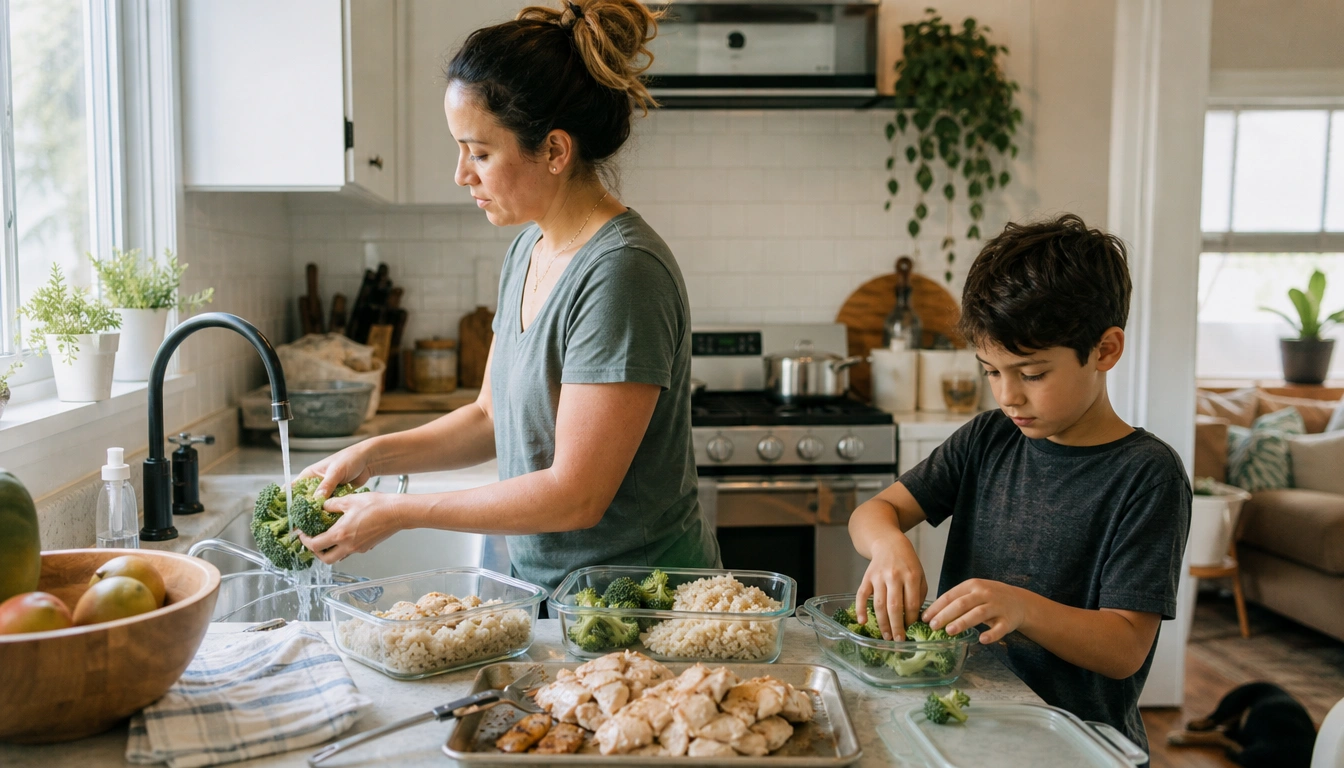
Busy parents usually do best with a weekend meal prep habit that covers just 2 to 3 days, not the whole week. Focus on a short plan, a pantry-and-fridge check, and flexible ingredients instead of elaborate full meals. That approach saves time, lowers decision fatigue, reduces waste, and makes it easier to fit different appetites, picky eaters, and food safety limits into one routine.
Key Takeaways
- Start with two or three busy weekdays, not a full seven-day menu, so prep feels manageable and sustainable.
- Ingredient prep often works better than fully assembled casseroles for picky kids and mixed-age households.
- Build meals from MyPlate-style components so the same prep can be scaled for toddlers, teens, and adults.
- Check the pantry and fridge before shopping to cut impulse purchases, waste, and budget creep.
- Most cooked foods keep about 3 to 4 days in the refrigerator; freeze the rest and reheat to 165°F when needed.
Why weekend meal prep matters for busy parents
A weekend meal prep habit helps because it solves three problems at once: time, energy, and decision fatigue. When weeknights are already packed with work, school pickups, sports, and homework, the question of “what’s for dinner?” can become the hardest part of the day. A little planning shifts that work to a calmer time, which often leads to better food choices and less last-minute takeout.
Public health guidance from the USDA and CDC supports building more meals at home, where it is easier to include vegetables, fruits, whole grains, and lean proteins. You do not need to cook from scratch every night to get that benefit. The goal is to make the next few meals easier to assemble, reheat, or customize.
For many families, the real win is not perfection. It is having a few components ready so dinner can come together with less thinking and fewer separate trips to the store.
Choose a prep style that fits your family
There is no single “right” way to prep. Busy parents usually land on one of three approaches: ingredient prep, batch cooking, or a hybrid system. Ingredient prep means washing produce, chopping vegetables, cooking grains, and portioning proteins separately. Batch cooking means making complete dishes in advance, such as soup, chili, pasta bake, or grain bowls. A hybrid system combines both.
Ingredient prep is often the easiest place to start because it gives you flexibility. It also works well for selective eaters who may accept carrots, chicken, rice, and sauce on the plate better than one mixed casserole. Batch cooking can still be useful for meals that hold well, such as chili or stew, especially if your family likes leftovers.
If you are unsure, begin with the style that matches your hardest weeknight. If dinner usually falls apart because nothing is chopped, ingredient prep is likely the best first step. If it falls apart because nobody wants to cook after work, a couple of ready-to-reheat meals may help more.
A realistic weekend workflow
A useful workflow is plan, inventory, shop, prep, store, and label. Start with a short list of two or three meals plus a few backup options, such as eggs, yogurt, fruit, or sandwiches. Then check the pantry, fridge, and freezer before making the grocery list. This step helps reduce duplicate purchases and keeps food from getting pushed to the back of the refrigerator.
After shopping, prep the items that save the most time later. Wash berries, cut vegetables, cook a grain, roast a tray of chicken or tofu, and portion snacks or lunch add-ons. If time is tight, set a timer and work in one focused block instead of trying to clean the whole kitchen while cooking. Many parents do better with one solid prep block than with an all-day marathon.
Store food in shallow containers so it cools faster, then label the container with the item and date. That small habit makes it easier to know what to use first and what should be frozen for later in the week.
How to build flexible meals with MyPlate-style components
USDA’s MyPlate model gives families a simple structure: fill about half the plate with fruits and vegetables, then include whole grains, lean proteins, and calcium-rich dairy or fortified soy alternatives. For meal prep, that does not mean every container has to look identical. It means your prep can create building blocks that assemble into different plates for different family members.
For example, one prep session might produce roasted broccoli, sliced cucumbers, brown rice, shredded chicken, beans, fruit, and yogurt. A toddler may eat a smaller plate with soft vegetables and fruit. A teen athlete may need a larger serving of rice and protein. An adult may want a lighter portion with extra vegetables. The same foods can serve all three without forcing one rigid meal size.
This flexibility matters because energy needs change by age, growth stage, and activity level. A template is more useful than a strict recipe when the household includes mixed appetites.
How to adapt meal prep for picky eaters and mixed-age households
For many families, the biggest obstacle is not cooking time. It is getting everyone to actually eat the food. That is where ingredient prep usually beats fully assembled meals. Young children often prefer seeing each part separately: rice, chicken, broccoli, sauce on the side. Older kids and adults may be happy to mix everything together, but younger eaters may reject the same food once it is combined.
One way to reduce resistance is to offer a few repeatable “choose-your-parts” meals. For example, prep plain grains, two vegetables, one protein, and one or two sauces. Then let each person build a plate from that set. This approach can also help when family members have allergies or dietary restrictions, because it is easier to keep ingredients separate and avoid cross-contact.
Age-appropriate help can make the habit easier, too. Children can rinse produce, sort pantry items, or pick from a short list of meal options. Those small tasks make them more familiar with the food and can lower mealtime pushback later.
Budget and waste-control strategies that keep prep sustainable
Meal prep becomes much easier to keep up when it saves money instead of increasing food bills. The simplest budget move is to shop from a plan, not from hunger or impulse. If you already have rice, oats, frozen vegetables, or canned beans, build around those first. That keeps the grocery list shorter and lowers the chance that fresh ingredients go unused.
Another useful tactic is to prep only what you can realistically eat within a few days. Waste often happens when families cook too much with no plan for the leftovers. If your household is small or weekends are unpredictable, start with a 2- to 3-day target. That is usually enough to cut stress without filling the fridge with food nobody wants by Wednesday.
Leftovers can also be repurposed. Roasted vegetables can go into wraps, eggs, or grain bowls. Cooked chicken can become tacos, pasta, or soup. A smart prep habit is less about making identical meals all week and more about reusing components in different ways.
Food safety rules for refrigeration, freezing, and reheating
Food safety matters just as much as convenience. According to the CDC and USDA, perishable cooked foods should not sit at room temperature for more than two hours, or one hour if the temperature is above 90°F. After cooling, most cooked proteins, grains, and roasted vegetables keep safely in the refrigerator for about 3 to 4 days in airtight containers.
If you know a meal will not be eaten within that window, freeze it as soon as it has cooled properly. Label containers with the date so it is clear what should be used first. Freezing is especially helpful for the back half of the week, when busy schedules make cooking from scratch less likely.
When reheating leftovers, USDA guidance says to warm them to an internal temperature of 165°F. That applies to family meals that contain meats, casseroles, soups, and mixed dishes. A food thermometer makes that step more reliable than guessing by sight or steam. Safety rules are not meant to make meal prep harder; they are what make it useful for real families.
How to keep the habit going when weekends are already crowded
The best weekend meal prep habit is the one you can repeat during an ordinary week, not the one that only works on an ideal Sunday. If your weekends are packed with sports, errands, church, or family visits, shrink the routine instead of abandoning it. A 30- to 60-minute prep session can still move the week forward if it focuses on the highest-impact tasks.
That may mean washing produce, cooking one grain, making one protein, and stocking a few backup foods. It may also mean prepping only lunches or only dinners. You do not need to prep every meal to see a difference. Many families benefit from a smaller routine they can actually maintain.
If possible, assign one repeating job to each family member. One person checks the pantry, one shops, one washes produce, and one labels containers. Shared responsibility makes the habit less fragile and turns meal prep from a solo burden into a family system.
Over time, the routine becomes easier because the same meals, containers, and shopping list can repeat with small swaps. That is usually what makes meal prep stick: not more effort, but less friction.
Frequently Asked Questions
What is the easiest way to start meal prep if I only have a short amount of time on weekends?
Start with just 2 to 3 days of meals or components. Pick one grain, one protein, and two vegetables, then wash, chop, or cook only what will save the most time later. A short routine is more likely to stick than trying to prep an entire week at once.
Should I batch cook full meals or prep ingredients separately for picky kids?
Ingredient prep is often better for picky eaters because it keeps foods separate and lets children choose what goes on their plate. Batch cooking can still work for family favorites, but a hybrid approach usually gives more flexibility when ages and preferences differ.
How long do cooked foods last in the fridge before they need to be frozen?
Most cooked proteins, grains, and roasted vegetables keep about 3 to 4 days in the refrigerator when stored in airtight containers. If you do not expect to eat them by then, freeze them after they cool properly and label them with the date.
How can I keep meal prep safe while storing and reheating family food?
Do not leave perishable cooked food at room temperature for more than two hours, or one hour if it is very hot outside. Reheat leftovers to 165°F before serving, and use shallow containers so food cools faster before refrigerating or freezing.
How can I adapt meal prep for different ages, appetites, and dietary restrictions?
Use a flexible template instead of fixed portions. Build meals from MyPlate-style components, then scale servings up or down for toddlers, teens, and adults. Keep allergy-sensitive ingredients separate when needed, and use simple add-ons like fruit, yogurt, or extra grains to adjust portions.
The Bottom Line
A weekend meal prep habit does not have to mean spending all day cooking. For most busy parents, the most sustainable version is a short routine built around two or three days of food, a quick pantry check, and flexible ingredients that can be reused in different meals.
If you keep the plan simple, use MyPlate-style balance, and follow basic food safety rules, prep can reduce weekday stress without creating a bigger chore. The goal is not perfect organization. It is making dinner easier, safer, and less dependent on last-minute decisions.
Medical disclaimer
Medical disclaimer: This content is for educational and informational purposes only and is not a substitute for professional medical advice, diagnosis, or treatment. Dietary needs and supplement suitability vary by individual.
Sources
- Centers for Disease Control and Prevention (CDC) — cdc.gov. Accessed October 2026.
- U.S. Government / Health Authority — usda.gov. Accessed October 2026.
- Academic Research Institution — harvard.edu. Accessed October 2026.
