
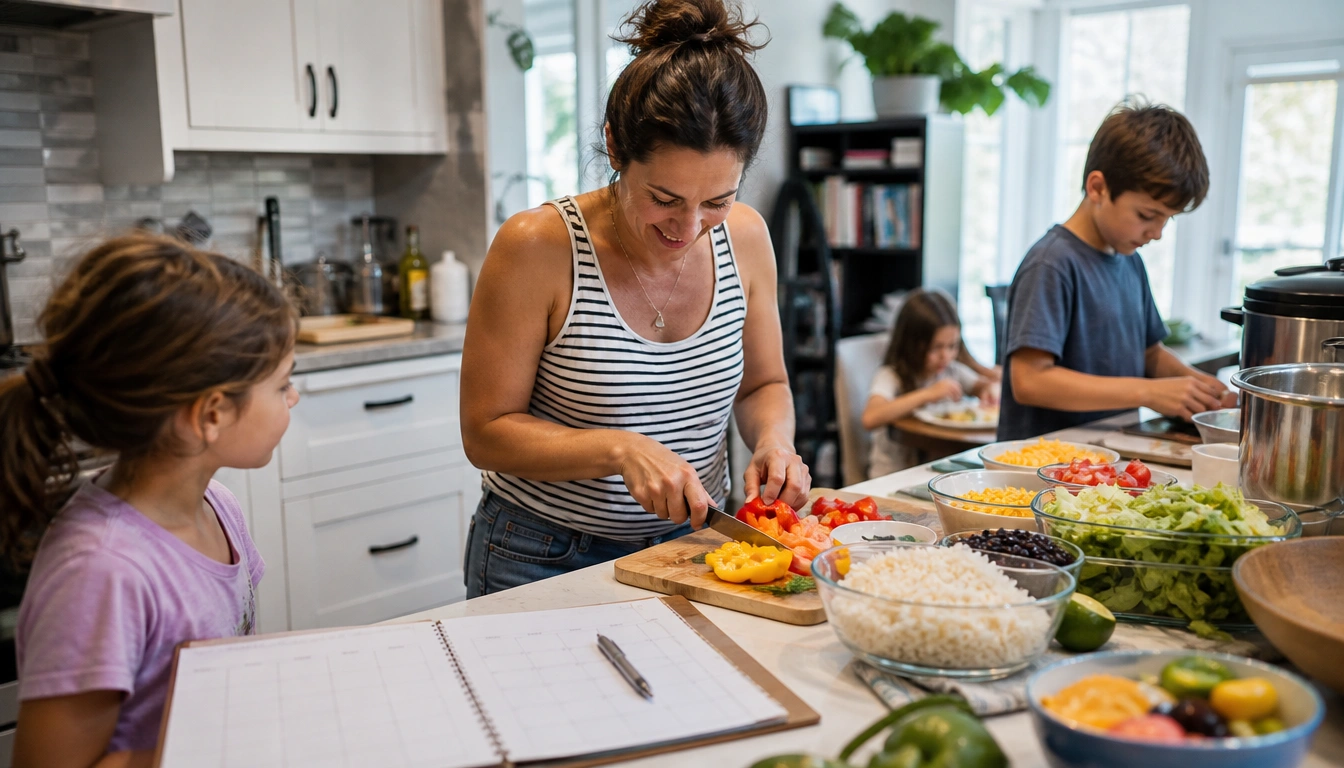
The easiest meal-planning approach for busy parents is to start with the family calendar, plan only 3 to 5 dinners, and build those meals around a simple structure: protein, a fiber-rich carbohydrate, and fruits or vegetables. From there, add backup pantry and freezer meals, prep ingredients instead of full meals, and match tasks to kids’ ages so dinner fits real life instead of fighting it.
Key Takeaways
- Check your week’s schedule first, then choose meals that match your busiest nights instead of forcing every day into the same level of effort.
- Planning just 3 to 5 dinners leaves room for leftovers, takeout emergencies, and schedule changes without making the system collapse.
- Use repeatable meal templates such as taco bars, rice bowls, pasta, or sheet-pan dinners so planning gets easier over time.
- Prep ingredients, not every meal: wash produce, chop vegetables, and cook one grain or starch that can be reused in different dinners.
- Keep a short list of pantry and freezer backups so a healthy dinner is still possible when plans change.
- Let kids help in age-appropriate ways to reduce resistance, build buy-in, and make picky eating less stressful.
Why simple planning works better than perfect planning
Busy-parent meal planning works best when it reduces decisions, not when it creates a second job. By the end of the day, many parents are tired of choosing, shopping, and troubleshooting. That is when dinner becomes whatever is fastest. A basic plan lowers that pressure because you are no longer deciding from scratch at 5:30 p.m.
The goal is not to map out a flawless week of meals. It is to create enough structure that your family can eat at home more often without constant scrambling. The CDC and the Academy of Nutrition and Dietetics both emphasize patterns that support more vegetables, fruits, whole grains, and lean proteins. A simple plan makes those foods easier to repeat during the week.
For beginners, the most useful question is not “What recipes sound exciting?” It is “What will actually fit the week we have?” That shift keeps meal planning practical and prevents burnout after the first attempt.
Start with the calendar, not the cookbook
Before you pick recipes, look at the family calendar. Mark the nights with sports practice, late meetings, commute delays, errands, or activities that shrink the time you have to cook. Those are the nights that need the easiest meals, planned leftovers, or a backup dinner that asks very little of you.
Then assign the most flexible meals to the nights with more room. If Wednesday is packed, that is not the night for a new recipe that needs chopping, simmering, and careful timing. If Friday is calmer, that may be the night for a slightly more involved dinner. This calendar-first method keeps your plan aligned with reality.
A practical way to start is to identify three categories: busy nights, moderate nights, and open nights. Busy nights get the simplest dinner. Moderate nights can use a prepped ingredient or one-pan recipe. Open nights are where you can try something new or make a meal that takes a little more attention. That small amount of sorting can prevent a lot of weeknight friction.
Choose a realistic number of dinners
Many families do better with only 3 to 5 planned dinners per week. That may sound too light at first, but it is often the right balance for households with school, work, practices, appointments, and unpredictable energy levels. Planning every single dinner can create more pressure than it removes.
Leaving a few meals unplanned gives you room for leftovers, pantry meals, eating out, or a night when everyone is simply too tired to follow the original plan. It also creates a buffer when shopping runs short or one ingredient is unavailable. A plan that can bend is more likely to survive the actual week.
This is where many beginners overcomplicate things. They assume planning means rigid control. In practice, a lighter plan often supports healthier eating because it is more likely to be used consistently. Think of it as a weekly framework, not a locked schedule.
You can also reuse meal themes instead of inventing new dinners. For example, one week might include tacos, pasta, a stir-fry, and sheet-pan chicken. Another week can use the same structure with different seasonings or vegetables. Repetition is not failure; it is one of the easiest ways to make dinner predictable and less stressful.
Build meals from a few repeatable parts
A simple family dinner can follow a “big three” pattern: a protein, a fiber-rich carbohydrate or whole grain, and color from vegetables or fruit. You do not need a complicated recipe for every meal. You need a framework that can be assembled quickly from ingredients you actually use.
That might look like chicken, brown rice, and broccoli. Or beans, tortillas, and salsa with sliced peppers. Or eggs, whole-grain toast, and fruit when dinner needs to be very fast. The point is to create meals that are balanced enough to support the family without requiring endless decisions.
For beginner meal planning, it helps to pick a few base meals and mix and match the sides. If Monday is tacos, Tuesday can use the same cooked protein in rice bowls. If you roast vegetables once, they can show up beside chicken one night and inside pasta another night. This “base meal” approach keeps planning manageable because you are not starting from zero each time.
Ingredient prep is usually more sustainable than full-meal prep. Wash and chop vegetables after grocery shopping so they are ready to roast, sauté, or toss into a pan. Cook one grain or starch, such as rice, quinoa, or pasta, so it can be reused later in the week. That kind of prep shortens weeknight work without demanding a marathon Sunday session.
Keep pantry and freezer backups ready
Even a good plan will fail sometimes. That is why backup meals matter. Pantry and freezer anchors make it possible to put dinner together when the schedule changes, the store trip gets skipped, or the planned meal does not sound good anymore.
Reliable backups include canned beans, canned tomatoes, whole-grain pasta, jarred marinara, frozen vegetables, frozen fruit, broth, tortillas, eggs, and shelf-stable grains. In the freezer, keep items that help you assemble a meal quickly, such as frozen vegetables, cooked protein, frozen whole-grain bread, or pre-cooked chicken if your budget and preferences allow it.
These foods are useful because they can be combined in more than one way. Beans and rice can become burrito bowls. Pasta, marinara, and frozen vegetables can become a quick dinner. Eggs and toast can cover an evening when everyone needs something simple. The best backup foods are the ones your family will actually eat without a fight.
It also helps to keep one or two meals in the freezer that are already cooked and portioned. That does not need to mean bulk cooking every weekend. Even a single extra pan of soup, chili, or casserole can make a hard night much easier later in the month.
Make picky-eater meals easier with builder-style options
For many families, picky eating is less about nutrition and more about control, novelty, and texture. A builder-style meal can reduce that tension because children can choose familiar parts while still seeing balanced foods on the table. Taco bars, rice bowls, grain bowls, pasta stations, and DIY wraps are all useful examples.
Instead of serving one mixed dish, place the components separately. A child might take rice, chicken, cheese, and cucumbers from a bowl, then skip the salsa. Another child might add beans but not lettuce. That flexibility lowers resistance while still exposing kids to a range of foods without pressure.
Builder meals also help parents avoid cooking separate dinners. You are preparing one family meal, but the components give everyone some control. That is often enough to reduce arguments and increase the chance that children will try something new over time.
It can help to keep one or two “safe” foods on the table with new or less familiar items. Familiar foods do not make a meal less healthy; they make the meal more usable. Consistency, exposure, and low pressure tend to work better than forcing a child to eat a specific food on command.
Give kids real jobs in the kitchen
Meal planning becomes easier when children are part of the process. Involving them increases buy-in and can reduce last-minute complaints. The task should match the child’s age and ability, and it should be safe enough that it does not create more work for the adult.
Younger children can wash produce, tear lettuce, stir cold ingredients, sort pantry items, or set the table. These jobs take little supervision and make kids feel included. Older children can measure ingredients, assemble simple sides, read recipe steps, or help portion snacks and leftovers. Teens may be able to handle more advanced prep under supervision, including some stovetop cooking or packing lunches for the next day.
These roles do more than save a few minutes. They teach routine, familiarity, and confidence around food. Kids who help choose or prepare a meal are often more willing to eat it because the meal is no longer completely new or imposed. That matters especially in families where mealtime stress comes from resistance rather than lack of ingredients.
Portions should stay flexible across ages. Toddlers generally need much smaller amounts than older kids or adults, and appetite can change from day to day. Instead of trying to force everyone onto the same plate size, build the meal as a base and let each person take more or less as needed. That keeps the plan realistic for the whole family.
Store leftovers and prepped food safely
Food safety matters just as much as convenience. When you cook ahead, chop produce, or save leftovers, the goal is to keep food out of the temperature danger zone as much as possible. A practical rule is to refrigerate perishable food within two hours, then store it in airtight containers so it cools and keeps well.
For most leftovers, the useful window is about 3 to 4 days in the refrigerator, or freeze them sooner if you know you will not use them in time. Labeling containers with the date can help when the week gets busy and you cannot remember what was cooked when. If food smells off, looks questionable, or has been sitting out too long, do not take chances.
Batch-cooked grains, meats, and chopped vegetables should be handled with the same care as any other leftovers. Cool them promptly, refrigerate them quickly, and avoid leaving them on the counter while you finish the rest of the evening routine. Good food safety does not have to be complicated, but it does need to be consistent.
If you are packing lunchboxes or saving food for later in the week, keep raw ingredients separate from ready-to-eat foods. Use clean utensils and containers, especially if anyone in the family has allergies or a medical diet that requires extra caution.
Know when to get extra help
Most busy families do not need a perfect system; they need a simpler one. But some situations deserve more support. If your child has a severe food restriction, a very limited list of accepted foods, strong sensory aversions that affect growth, or a medical condition that changes what they can eat, a registered dietitian can help shape a plan that fits those needs.
Professional support is also useful when food allergies, celiac disease, diabetes, gastrointestinal disorders, or other medical issues make family meals harder to manage. In those cases, the challenge is not just planning dinner. It is protecting health while keeping meals realistic for the household.
Parents often wait until the stress feels unmanageable before asking for help. You do not need to wait that long. A registered dietitian can help you sort out routines, portion needs, school-day snacks, and practical substitutions without making the plan more complicated than it has to be.
If mealtime is becoming a source of daily conflict, fear, or worry about growth and nutrition, getting specialized help can save time and reduce pressure for everyone at the table.
Frequently Asked Questions
How many dinners should a busy parent realistically plan each week?
A realistic starting point is 3 to 5 planned dinners per week. That leaves room for leftovers, busy nights, and backup meals without making the schedule feel rigid. Many families do better with a flexible framework than with a full seven-day plan.
What should I do first when making a meal plan: recipes or the family calendar?
Start with the calendar. Mark the nights that are crowded with work, school, sports, or appointments, then match the easiest meals to those nights. Recipes come second, because the schedule should decide how much cooking energy you actually have.
How can I meal plan for picky eaters without cooking separate meals?
Use builder-style meals like taco bars, rice bowls, wraps, or pasta stations. Serve the components separately so children can choose familiar parts and still see the rest of the meal. That reduces conflict while keeping one family dinner on the table.
What are the easiest pantry and freezer staples for last-minute family dinners?
Good basics include canned beans, pasta, rice, tortillas, canned tomatoes, frozen vegetables, eggs, broth, and jarred sauce. Choose foods that can combine in more than one way so you can make a quick dinner even when the original plan changes.
When should a parent ask a registered dietitian for help with meal planning?
Ask for help if your child has severe food restriction, growth concerns, strong sensory aversions, allergies, celiac disease, diabetes, or another condition that makes family meals harder to manage. A pediatric dietitian can help tailor the plan to your child’s needs.
The Bottom Line
Beginner meal planning works best when it feels small enough to repeat. Start with the family calendar, plan a few dinners, and use simple meal templates that fit your busiest nights instead of chasing perfection.
Keep the system practical: prep ingredients instead of full meals, keep backup pantry and freezer foods on hand, and give children age-appropriate kitchen jobs. Those steps reduce stress without demanding a major lifestyle overhaul.
If food needs are more complex because of allergies, growth concerns, or a medical condition, a registered dietitian can help you build a safer and more workable plan for your family.
Medical disclaimer
Medical disclaimer: This content is for educational and informational purposes only and is not a substitute for professional medical advice, diagnosis, or treatment. Dietary needs and supplement suitability vary by individual.
Sources
- Centers for Disease Control and Prevention (CDC) — cdc.gov. Accessed October 2026.
- Academic Research Institution — wustl.edu. Accessed October 2026.
- eatright.org — eatright.org. Accessed October 2026.
