
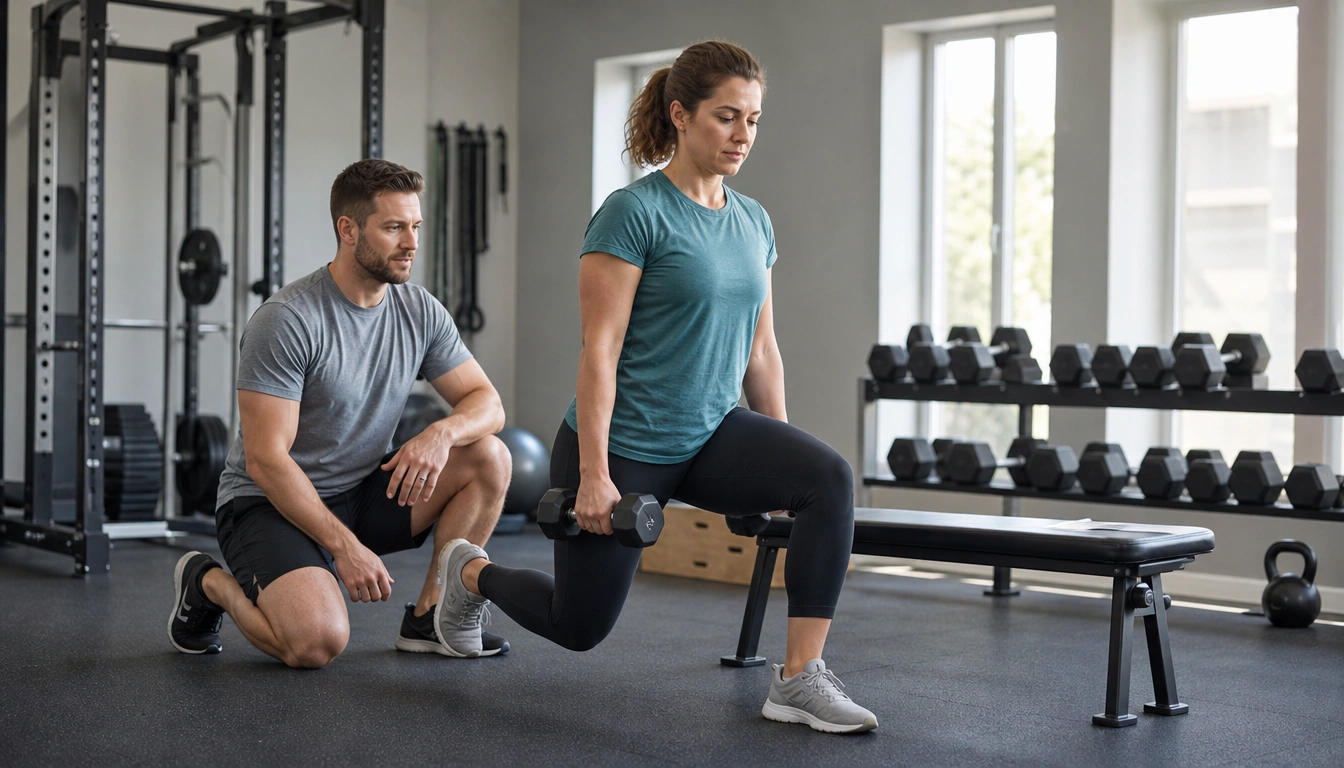
For an absolute beginner, the simplest safe weekly strength schedule is usually two full-body workouts on non-consecutive days, with at least 48 hours between sessions that train the same muscles. Focus on basic movement patterns, start with light effort, and keep the plan simple enough that you can repeat it consistently. That approach builds strength without needing a complicated split or a lot of gym experience.
Key Takeaways
- Two full-body sessions per week is enough for most absolute beginners to start building strength and confidence.
- Early strength gains are often mostly neuromuscular, so consistency matters more than advanced programming.
- Use squatting, hinging, pushing, pulling, carrying, and bracing patterns instead of body-part splits.
- Leave at least 48 hours before training the same muscle groups again.
- Progress by adding reps, load, or a little exercise difficulty only after the current work feels manageable.
- Older adults and frail beginners often do well with machine-based, seated, or lower-load variations.
Why a simple beginner strength schedule works better than a complicated split
If you are new to resistance training, the best beginner strength schedule is usually the one you can actually repeat. That is why a simple full-body plan often works better than a complicated “arm day, leg day, chest day” split. The American College of Sports Medicine and the CDC both support muscle-strengthening activity for all major muscle groups at least twice per week, and that basic structure is enough for most beginners to start improving strength, balance, and everyday function.
For the first few weeks, strength gains are driven mostly by neuromuscular changes. Your body gets better at recruiting muscle fibers, coordinating movement, and producing force with the exercises you practice. In other words, the early win comes from learning the movements, not from creating the fanciest routine. That is good news if you feel intimidated: repeating a few well-chosen exercises is not “too little.” It is often exactly what a beginner needs.
A simple plan also lowers friction. Fewer exercises mean less time deciding what to do, less equipment to learn, and less chance of skipping the workout because it feels overwhelming. Consistency is the main job at the start. Complexity can wait until you have a base.
How often beginners should train each week and why non-consecutive days matter
Most absolute beginners should strength train two days per week, with non-consecutive days such as Monday and Thursday or Tuesday and Friday. That spacing gives you at least 48 hours of recovery between sessions that train the same muscles, which is a standard beginner practice and a practical way to avoid piling new stress on tissue that is still adapting.
Recovery matters because a beginner session creates both training stimulus and fatigue. The goal is not to feel exhausted every time. The goal is to provide enough challenge to trigger adaptation while leaving enough time to recover, learn, and come back ready for the next session. If the schedule is too dense, soreness, fatigue, and scheduling stress often rise faster than fitness.
More days are not automatically better for a beginner. Three sessions per week can work for some people, especially if the workouts are short and the load is light, but two sessions is the easiest place to start. If you are also walking, doing mobility work, or returning after a long break, two carefully spaced strength days are often a solid foundation.
The core movement patterns every beginner schedule should include
A beginner routine should train the major movement patterns rather than chase random exercises. That means including a squat, a hinge, a push, a pull, a carry, and a brace. These patterns cover the main muscles and help you move better in daily life, not just in the gym.
- Squat: sit-to-stand, goblet squat, box squat, or sit-down-and-stand-up from a chair.
- Hinge: hip hinge, glute bridge, Romanian deadlift pattern with light weight, or cable pull-through.
- Push: wall push-up, incline push-up, machine chest press, or dumbbell press.
- Pull: seated row, band row, lat pulldown, or supported dumbbell row.
- Carry: farmer’s carry with light dumbbells, kettlebells, or even loaded grocery-style bags.
- Brace: front plank, dead bug, bird dog, or standing anti-rotation hold.
You do not need multiple exercises for each pattern on day one. One good version of each pattern is enough. The purpose is to build a balanced base, reinforce coordination, and keep the schedule manageable. As your confidence grows, you can add a second variation later if needed, but that is optional rather than required.
A minimalist two-day full-body strength schedule
Here is a straightforward beginner strength schedule that keeps decision-making low. Use a light warm-up, then do a few basic movements in a full-body format. If you are in a gym, machines are perfectly acceptable. If you are at home, bodyweight and bands can do the job.
Day 1
Squat: chair sit-to-stand or goblet squat
Push: wall or incline push-up
Pull: seated row or band row
Brace: front plank or dead bug
This day emphasizes the basic pattern of standing up, pushing, and pulling. If you are very new, keep the movements controlled and focus on learning the setup. A small amount of practice done well is better than rushing through a longer list.
Day 2
Hinge: glute bridge or light Romanian deadlift pattern
Push: machine chest press or dumbbell press
Pull: lat pulldown or supported row
Carry: farmer’s carry or suitcase carry
Brace: bird dog or side plank variation
This second session repeats the same full-body idea with a slightly different emphasis. That variety can keep training interesting without turning the plan into a complicated split. If you prefer even more simplicity, you can repeat the same workout twice per week and still do very well.
A session like this often fits into 20 to 30 minutes, especially if you keep rest periods reasonable and choose only a handful of exercises. For an absolute beginner, short and repeatable usually beats long and ambitious.
How to set sets, reps, and effort level without overthinking it
Beginner programming does not need a lot of precision to be effective. A common starting point is 1 to 3 sets of 8 to 12 repetitions per exercise, with the last few reps feeling moderately challenging but still controlled. For older adults or frail beginners, a slightly higher rep range with lighter load may be more comfortable at first. The exact number matters less than using a level you can recover from and repeat consistently.
If you are unsure how hard to work, aim for a set that feels like you could do a few more reps with good form when you stop. That keeps the workout productive without pushing to failure. Beginners often do better when the first few sessions feel almost “too easy,” because they are still learning setup, range of motion, and breathing.
Progression should be gradual. Do not add weight, reps, and exercise complexity all at once. Pick one change at a time. A practical rule is to keep the same exercise until it feels manageable, your form is stable, and you are recovering normally before the next workout. Then you can add a rep or a small amount of load, or choose a slightly harder variation. Tracking your workouts helps here because it tells you what was actually sustainable, not just what felt ambitious in the moment.
When in doubt, consistency is the first progression. Showing up twice a week for a month with modest effort will usually beat a “perfect” plan that you stop doing after two sessions.
Modifications for older adults, frail beginners, or people returning after a long break
Older adults can benefit greatly from strength training, and that includes people who have been inactive for a long time. The main adjustment is usually not to avoid strength work, but to scale the entry point so the body feels stable and the movements are easy to learn. Machines, benches, wall-supported work, and seated positions can make the first sessions safer and less intimidating.
For example, a seated row may feel better than a bent-over row, and a leg press or sit-to-stand may feel more secure than a free-standing squat. Higher-repetition, lower-load work can be a good starting place if balance, joint comfort, or confidence are concerns. The purpose is to get the stimulus while keeping the movement controlled and predictable.
If you are frail, recovering from a long break, or worried about getting down to the floor, choose exercises that reduce the need for balance and rapid position changes. Start with short sessions, slow tempo, and plenty of rest. You can always make the workout more challenging later. The first target is not high performance; it is safe participation.
If you have a diagnosed medical condition, recent surgery, or ongoing pain, individualized advice from a clinician or qualified exercise professional is more appropriate than a generic plan. A beginner schedule should fit the person, not force the person into the schedule.
How to fit strength sessions into a busy week
The easiest way to stick with strength training is to attach it to something you already do. That is called habit anchoring. For example, you might strength train right after a Tuesday morning walk, before a Friday shower, or immediately after work on two set days. Fixed anchors reduce the mental effort of deciding when to train.
Time limits can help too. Instead of aiming for a long workout, set a minimum session length that feels realistic, such as 20 minutes. If you have more time, you can add a little accessory work, but the core session should still be short enough to survive a busy week. A schedule that is easy to repeat during normal life is the one most likely to produce results.
Food support matters as well. Strength training is easier to recover from when you eat enough protein across the day from foods such as eggs, dairy, fish, poultry, tofu, beans, or lentils. You do not need a complicated nutrition plan to begin, but it helps to avoid training on a completely empty tank every time.
If your week gets chaotic, protect the two main sessions first. Do not replace them with a harder workout that you will not repeat. Long-term progress is built from repeatable weeks, not from one perfect week.
Safety rules, soreness versus warning signs, and when to get medical clearance
Some discomfort is normal when you begin strength training. Mild muscle soreness, especially a day or two after a new workout, is common. That is different from sharp pain, joint pain that worsens during the set, radiating pain, chest discomfort, severe shortness of breath, dizziness, or lightheadedness. Those are warning signs to stop and get medical help if they occur.
Technique should come before load. Start with light resistance, controlled movement, and a range of motion you can manage without compensation. If form breaks down, the set is probably too hard, too long, or too advanced for that moment. Back off, simplify, and build from there.
Some people should speak with a healthcare professional before starting a new resistance program, especially if they have cardiovascular disease, uncontrolled high blood pressure, severe metabolic disease, or an acute musculoskeletal injury. If you are unsure, getting clearance is a sensible step, not a sign of weakness. It is also reasonable to ask for help if a trainer, therapist, or clinician can adapt movements for pain, balance issues, or medical restrictions.
A good beginner schedule should make you feel more capable over time, not scared of the next session. The safest plan is the one that starts conservatively, progresses slowly, and respects pain signals.
Frequently Asked Questions
How many days per week should a beginner lift weights?
For most absolute beginners, two days per week is enough to start. That fits public health guidance and gives you a simple routine that is easier to recover from and stick with. Some people can add a third day later, but starting with two non-consecutive sessions is usually the best low-barrier option.
What exercises should be in an absolute beginner full-body routine?
A basic routine should cover squat, hinge, push, pull, carry, and brace patterns. That can be as simple as a chair sit-to-stand, glute bridge, wall push-up, row, farmer’s carry, and plank or dead bug. You do not need a long list of exercises to get started.
How long should I rest between beginner strength workouts?
Aim for at least 48 hours between sessions that train the same muscle groups. That usually means non-consecutive days such as Monday and Thursday or Tuesday and Friday. The gap helps with recovery, learning, and soreness management.
How many sets and reps should a beginner do?
A practical starting point is 1 to 3 sets of 8 to 12 reps for many exercises. Older adults or frail beginners may prefer lighter load and a slightly higher rep range. The best starting point is one you can complete with good form and recover from before the next workout.
When is it too soon to increase weight or volume?
It is too soon if the current workout still feels sloppy, overly tiring, or hard to recover from. Wait until you can complete the session with stable form and normal recovery, then change just one thing at a time, such as adding a rep or a small amount of resistance.
The Bottom Line
A beginner strength schedule does not need to be complicated to work. Two full-body sessions per week, separated by recovery days, is a strong starting point for adults with little or no lifting experience.
Build around basic movement patterns, keep the load light enough to learn well, and progress slowly. For older adults or deconditioned beginners, machines, seated options, and lighter loads can make the plan safer and more sustainable.
If you can anchor the workouts to a regular part of your week, you are more likely to keep going long enough to get the benefits. Consistency, not complexity, is the real beginner advantage.
Medical disclaimer
Medical disclaimer: This content is for educational and informational purposes only and is not a substitute for professional medical advice, diagnosis, or treatment. Dietary needs and supplement suitability vary by individual.
