
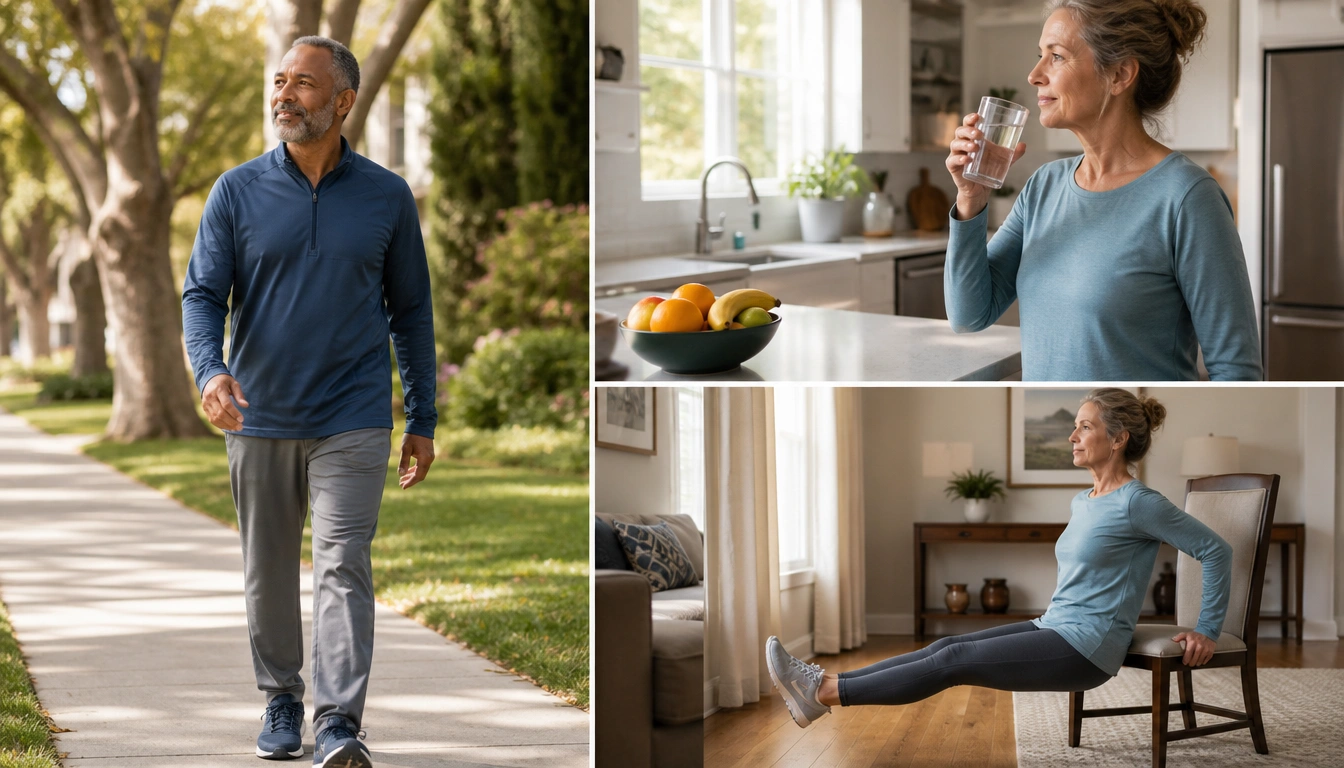
A wellness routine without apps for adults over 50 can work well if you anchor habits to things you already do: after breakfast, after lunch, after brushing your teeth, or at a set morning and evening time. Focus on four basics: regular walking, strength work twice a week, balance practice, and consistent meals and sleep. You do not need a wearable, calorie tracking, or intense workouts to make progress.
Key Takeaways
- Build your routine around daily anchors, not reminders: tie movement, meals, hydration, and bedtime to fixed parts of the day.
- After 50, strength, balance, and fall prevention matter more because muscle and bone loss become more important to function and independence.
- If you are starting from a sedentary baseline, short 5- to 10-minute bouts count and can be expanded gradually.
- Use plate-based meals, protein at each meal, and visible water cues instead of calorie counting or nutrition apps.
- A screen-free wind-down, steady sleep window, and simple paper-based habits can improve recovery without wearables.
- If you have arthritis, low fitness, or a medical condition, adapt the routine and ask for medical guidance when symptoms or risk factors warrant it.
Why a no-app wellness routine works after 50
A wellness routine without apps for adults over 50 works because the most useful habits are the ones you can repeat. Public health guidance from the CDC, the National Institute on Aging, and the NHS all point to the same basics: move regularly, keep muscles strong, eat in a balanced way, sleep well, and keep up with preventive care. None of that requires a screen.
After 50, the focus shifts a little. Muscle loss, sometimes called sarcopenia, becomes more likely if you stay inactive. Bone density can also decline over time, and balance may not feel as automatic as it once did. That does not mean you need extreme exercise. It means the routine should protect strength, steadiness, and independence, not just burn calories.
Think of the goal as staying capable in daily life: carrying groceries, getting up from a chair, climbing stairs, walking with confidence, and recovering from small setbacks. A low-tech routine is often easier to sustain because it relies on memory, timing, and environment rather than device alerts.
The weekly foundation: turning public-health guidelines into a simple analog routine
For most adults, the weekly target is straightforward: aim for about 150 minutes of moderate-intensity aerobic activity, plus muscle-strengthening work on at least two days each week. Balance practice also deserves a place in the week, especially as you get older. You do not need to hit these targets perfectly every day. You need a pattern you can repeat.
A simple analog version might look like this: walk on most days after breakfast or dinner; do strength work on Monday and Thursday after a regular cue, such as the morning coffee or evening news; add a few minutes of balance practice while waiting for water to boil or before brushing your teeth. The point is to attach the habit to something that already happens every day.
Public health goals become easier when they are broken into ordinary pieces. A 30-minute walk can be three 10-minute walks. A strength session does not have to look like a gym workout. Sit-to-stands, wall pushups, step-ups on a low stair, and standing calf raises can all count when they are done with control and good form.
Use the clock, not an app, to make the week feel predictable. For example: morning walk at 8:00, strength on Tuesday and Friday at 10:00, stretching after the evening meal, and a short balance drill before bed. When the time is fixed, the habit feels less optional.
Daily movement without a tracker: walking, strength, balance, and flexibility
Walking is the easiest place to start because it is familiar, low-cost, and easy to adjust. If you are already active, a brisk walk can be your main aerobic exercise. If you are starting from scratch, a slower pace still matters. A walk around the block after meals, an indoor lap around the house, or a few minutes of paced walking during the day can all build momentum.
Strength work matters because muscle supports mobility, joint stability, and everyday tasks. The best exercises are the ones you can do safely and repeat. Examples include chair rises, wall pushups, light resistance-band rows, hip hinges using a countertop, and carrying light bags from room to room. You do not need to lift heavy weights to begin making a difference.
Balance training is worth adding because falls become more serious with age. Try holding onto a counter while standing on one leg, walking heel-to-toe along a hallway, or shifting weight from side to side. Flexibility work can be short and gentle: shoulder rolls, ankle circles, calf stretches, and easy trunk turns after a walk.
If you want a practical rule, place movement in the places where sitting usually takes over. Stand while the kettle boils. March in place during a commercial break. Take the stairs once a day if that feels safe. These small choices add up without requiring a tracker to prove it.
Low-tech nutrition habits: plate-based meals, protein distribution, and visible hydration cues
You do not need calorie counting to eat well after 50. A plate-based approach is often enough: fill about half the plate with vegetables and fruit, then include a source of protein, plus whole grains or other high-fiber carbohydrate foods, and some healthy fats. That general pattern matches the kind of eating style often recommended by major health organizations for long-term health.
Protein matters more with age because it supports muscle maintenance. A useful habit is to include some protein at each meal rather than saving most of it for dinner. Eggs at breakfast, yogurt or cottage cheese at lunch, beans or fish at dinner, or tofu with vegetables are all practical examples. The goal is consistency, not perfection.
Hydration can also be kept simple. Older adults may not feel thirsty as strongly, so visible cues help. Keep a water glass on the counter, place a filled bottle near your chair, or drink a glass when you wake up, with meals, and again in the afternoon. If plain water is hard to remember, broth, milk, sparkling water, or herbal tea can also contribute to fluid intake.
Small environmental cues often work better than apps: a bowl of fruit on the table, protein foods at eye level in the refrigerator, and a pitcher of water in plain sight. The aim is to make the better choice the easier choice.
Sleep and recovery without screens
Sleep and recovery improve when your evenings become predictable. A screen-free wind-down helps signal that the day is ending. About 30 to 60 minutes before bed, lower the lights, put away bright screens, and shift to quieter activities such as reading a physical book, listening to the radio, or writing a few lines in a paper journal.
Try to keep a consistent sleep window, meaning you go to bed and wake up at roughly the same times most days. That steadiness supports your body clock more than occasional catch-up sleep does. If you wake during the night, keep the room dim and avoid turning the bed into a second office or entertainment center.
Recovery is not only about sleep quantity. Gentle stretching, an easy walk, and enough food and fluid during the day can also help you feel better the next morning. If evening exercise makes you feel wired, move the workout earlier. If late-night screen use keeps you alert, replace it with a low-stimulation habit you actually enjoy.
How to adapt the routine for arthritis, low fitness, or limited mobility
If you have arthritis, pain, or a very low fitness baseline, the routine should be easier, not stricter. Low-impact choices are often the right place to start. Walking on flat ground, stationary cycling, water exercise, chair exercises, and gentle mobility work can reduce joint stress while still supporting health.
Progress can begin with just 5 minutes at a time. Two short walks, one brief strength circuit, or a few minutes of balance practice may be enough for the first week. If that feels manageable, add another 5 minutes later in the day or on the next week. The goal is to build tolerance without flaring pain or making the plan feel impossible.
If standing exercises are uncomfortable, use a chair, countertop, or wall for support. If your knees dislike deep bending, shorten the range of motion. If your hands hurt, use lighter resistance or bodyweight movements. For low energy days, a slower version is still a valid version. The routine should fit your body as it is today.
People with chronic conditions may also need extra caution with certain exercises, medications, or hydration needs. That is not a reason to stop. It is a reason to adapt thoughtfully and check in with a clinician when needed.
How to start small and progress safely over time
Start with one or two habits, not all of them at once. For example, choose a daily walk after breakfast and a short stretching routine before bed. Once those feel automatic, add one strength session and one balance habit. A routine sticks better when it feels achievable on an ordinary day, not just on a motivated one.
Progress should be gradual. Increase time before intensity. Add a few minutes to a walk before trying a faster pace. Add one more set before adding heavier resistance. If a new habit causes fatigue that lasts for days, scale back. Sustainable progress usually feels steady, not dramatic.
A written checklist on paper can help without becoming a tracker. Put the week on a calendar and mark each walk, strength session, or early bedtime with a pen. That gives you a visible record of progress without requiring a phone. It can also reveal patterns, like which days tend to get skipped, so you can adjust the routine instead of blaming yourself.
When a wellness routine should include medical check-ins or professional guidance
Self-care should complement, not replace, medical care. Check with a healthcare professional before starting a new vigorous exercise plan or making major diet changes if you have heart disease, uncontrolled high blood pressure, severe osteoporosis, unstable joints, dizziness, or other significant health concerns. The same is true if you are starting from a very deconditioned baseline and are unsure what level is safe.
Stop exercise and seek medical advice if you notice chest pain, pressure, unusual shortness of breath, faintness, or sudden joint pain. If pain keeps returning, if balance feels worse instead of better, or if a condition such as arthritis or diabetes makes daily activity difficult to manage, professional guidance can help you adjust the plan safely.
Routine medical follow-up still matters even when your daily habits are good. Blood pressure checks, medication reviews, and age-appropriate screening can catch problems early and help your routine stay realistic. A good wellness plan is not only about discipline. It is also about knowing when to ask for help.
Frequently Asked Questions
What is a realistic exercise routine for adults over 50 without a fitness app?
A realistic routine is one you can repeat most weeks: regular walking, strength work on two days, and a few minutes of balance practice. You can split activity into short bouts, such as 5 to 10 minutes at a time, and still build toward public-health targets.
How much walking, strength work, and balance training should adults over 50 aim for each week?
Public health guidance generally points to about 150 minutes of moderate aerobic activity per week, plus muscle-strengthening work on at least two days. Balance practice is also helpful, especially for fall prevention. If you are just starting, build up gradually rather than trying to do everything at once.
What are easy food and hydration habits that support healthy aging without calorie tracking?
Use a plate-based pattern: vegetables and fruit, protein, and whole grains or other high-fiber foods. Try to include protein at each meal and keep water visible on the counter or table as a cue to drink regularly. You do not need to count calories to make steady progress.
How can I improve sleep and recovery without using a sleep app or wearable?
Keep a consistent bedtime and wake time, and create a screen-free wind-down before bed. Reading, journaling, listening to the radio, or gentle stretching can replace scrolling. Bright light and late-night stimulation can make sleep harder, so a predictable evening routine helps.
What should I do if I have arthritis, low fitness, or other health conditions that limit exercise?
Choose low-impact options such as walking on flat ground, chair exercises, water exercise, or cycling if they feel comfortable. Start with short sessions and build slowly. If you have a medical condition that affects safety, or if pain, dizziness, or shortness of breath appears, check with a clinician.
The Bottom Line
A healthy routine after 50 does not need apps, wearables, or complicated rules. The most useful plan is the one you can repeat: walk often, strengthen muscles twice a week, practice balance, eat regular meals with protein, hydrate visibly, and keep a steady sleep rhythm.
If you are starting from scratch, begin small. Tie habits to fixed daily cues, use the clock instead of reminders, and progress in short steps. That approach is often easier to sustain than a perfect plan that depends on motivation or technology.
If you have arthritis, chronic conditions, or warning signs like chest pain, faintness, or unusual shortness of breath, get medical guidance before pushing harder. A simple routine works best when it matches your current health, not an idealized version of it.
Medical disclaimer
Medical disclaimer: This content is for educational and informational purposes only and is not a substitute for professional medical advice, diagnosis, or treatment. Dietary needs and supplement suitability vary by individual.
Sources
- National Health Service (NHS) — www.nhs.uk. Accessed November 2026.
- Centers for Disease Control and Prevention (CDC) — cdc.gov. Accessed November 2026.
- National Institutes of Health (NIH) — nih.gov. Accessed November 2026.
- Centers for Disease Control and Prevention (CDC) — cdc.gov. Accessed November 2026.
- National Institutes of Health (NIH) — nih.gov. Accessed November 2026.
- National Institutes of Health (NIH) — nih.gov. Accessed November 2026.
