
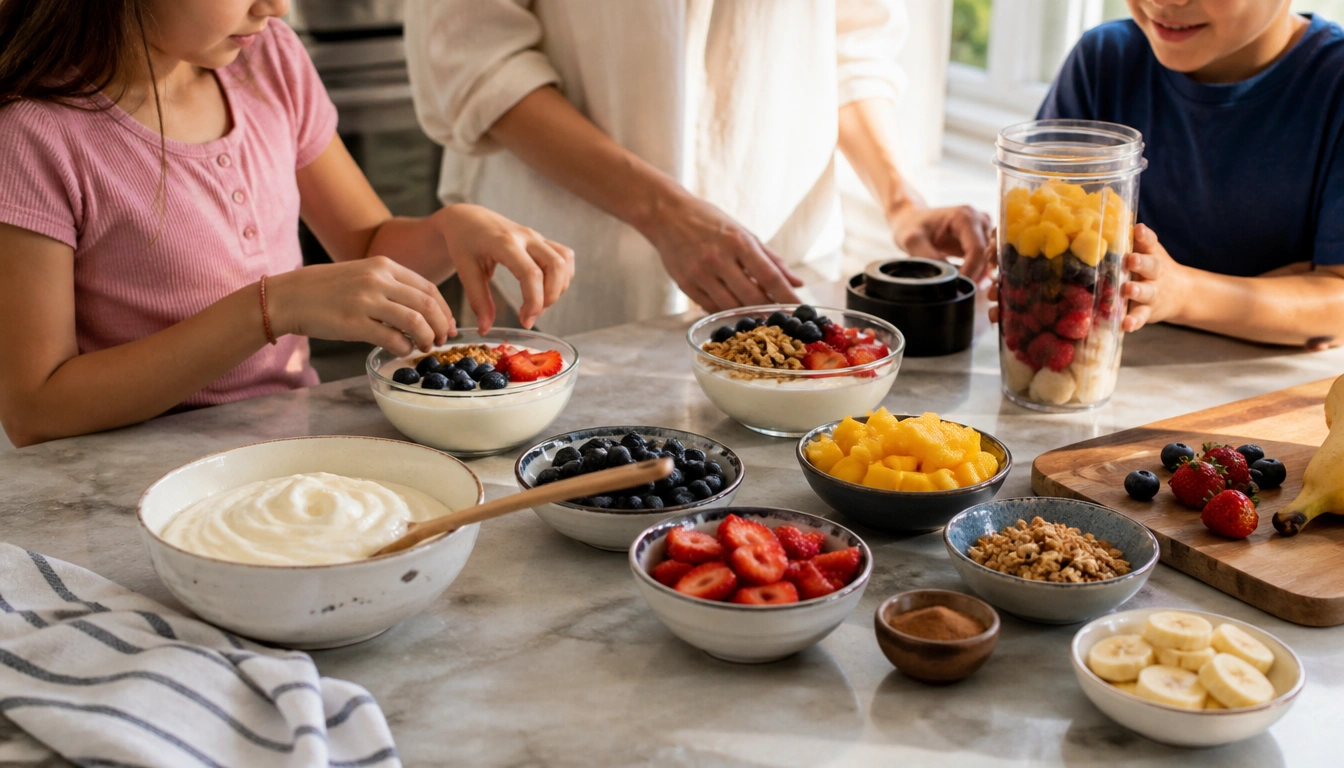
The fastest healthy fruit-and-yogurt desserts are plain Greek yogurt bowls, layered parfaits, blended frozen-fruit bowls, and banana-yogurt mousse. They work well on busy nights because they use simple ingredients, take only a few minutes, and can stay low in added sugar while still feeling dessert-like. Choose plain unsweetened yogurt when possible, then add fruit and optional toppings to match your family’s tastes.
Key Takeaways
- Plain Greek yogurt gives you more protein and less added sugar than many flavored yogurts, which helps desserts feel more filling.
- Fresh fruit brings texture, frozen fruit brings speed, and unsweetened canned fruit can be a useful shelf-stable backup.
- A little honey or maple syrup can be used, but plain yogurt plus ripe fruit often needs no extra sweetener.
- Toddlers need soft fruit pieces and age-appropriate toppings; honey should never be given to infants under 1 year.
- Batch-washing fruit, freezing bananas, and keeping yogurt plus a few toppings on hand makes five-minute desserts realistic on school nights.
Why fruit-and-yogurt desserts work for busy families
Fruit-and-yogurt desserts fit busy evenings because they solve a real problem: you want something sweet enough to feel like dessert, but not so processed or sugary that it feels like a letdown an hour later. Plain yogurt, especially Greek yogurt, adds protein and creaminess. Fruit adds fiber, water, color, and natural sweetness. That combination tends to be more satisfying than a dessert built mostly from refined flour, sugar, or candy-like mix-ins.
Protein matters here. It slows digestion and helps the dessert feel more substantial, which can make a small serving satisfying for both kids and adults. Fruit contributes natural sugars, but the fiber in many fruits changes how quickly those sugars are eaten. That does not make fruit a “low sugar” food, but it does make a fruit-and-yogurt dessert a more balanced choice than a typical ultra-processed sweet snack.
Another advantage is flexibility. You can make the same base work as a bowl, a parfait, a frozen dessert, or a quick mousse. That means one grocery pattern can cover different moods: a child who wants something colorful, an adult who wants something cooling, or a parent who just wants dessert on the table fast with minimal cleanup.
Best ingredient basics for better fruit and yogurt desserts
For the yogurt, plain unsweetened Greek yogurt is often the most practical base because it is thick, tangy, and protein-rich. Regular plain yogurt also works if you prefer a lighter texture. The main reason to choose plain yogurt is control: flavored yogurts can quietly add a lot of sugar before you have even added fruit. According to USDA and general public health guidance, building desserts from plain dairy foods and fruit is a simple way to keep added sugar in check.
Fruit choice depends on the job you need it to do. Fresh fruit is best when you want texture, bright flavor, and a more “assembled” dessert. Frozen fruit is ideal when you need speed, want a chilled bowl, or plan to blend. Unsweetened canned fruit can be useful when the fridge is empty; just look for fruit packed in juice or water rather than syrup. Drain it well if you want a less watery bowl.
Sweeteners are optional, not required. Ripe bananas, berries, peaches, mango, and cherries can provide enough sweetness on their own. If you want a touch more, a small amount of honey or pure maple syrup can work, but it is easy to overdo. For families with infants, honey is never appropriate under 1 year of age. For older children and adults, keep added sweeteners as a finishing touch rather than the main flavor.
Three fast dessert formats that work on a busy night
Layered parfaits are the easiest option when you want the dessert to feel composed. Spoon plain yogurt into a bowl or glass, add fruit, then repeat. Finish with a small sprinkle of granola if you want crunch. Parfaits are especially useful for picky eaters because the layers can be customized in separate cups.
Blended frozen-fruit bowls are the quickest route to something that resembles soft-serve. Blend frozen banana, mango, berries, or a mix with plain yogurt until smooth. Add a splash of milk only if the blender needs help. This style works well when you want a cold dessert fast and do not want to wait for fruit to thaw.
Banana-yogurt mousse is a good choice when you have ripe bananas to use up. Mash or blend the banana with yogurt until creamy. The banana naturally thickens the mixture and makes it taste sweeter without much else added. A little cinnamon can make it feel more dessert-like. These three formats cover most weeknight needs and take very little equipment beyond a spoon, bowl, or blender.
Smart add-ins that improve texture and staying power
Optional add-ins can make fruit-and-yogurt desserts more interesting, but they should support the base rather than hide it. Granola adds crunch and makes a parfait feel like a treat. Choose a version that is not overly sugary if you want the dessert to stay balanced. Chia seeds can thicken the texture and add a little staying power, especially if you let the mixture sit for a few minutes before serving.
Chopped nuts can add healthy fats and crunch, but they are not always appropriate. They are a poor choice for young children who are not ready for that texture, and they should be avoided in families with nut allergies. Cinnamon is an easy flavor booster because it adds warmth without more sugar. A little vanilla, citrus zest, or unsweetened coconut can also change the flavor profile without turning the dessert into a confection.
If you are serving a mixed-age family, keep add-ins separate. That lets adults add nuts or seeds while toddlers get a simpler bowl. It also helps picky eaters try new textures without feeling overwhelmed. A fruit-and-yogurt dessert works best when the base is simple and the extras are truly optional.
How to adapt fruit and yogurt desserts for different family needs
For toddlers, safety matters as much as flavor. Use soft fruit pieces, and cut round foods into age-appropriate shapes to reduce choking risk. Mash berries or banana if needed. Keep nuts, large granola clusters, and other hard mix-ins out of toddler portions unless your child is ready for them and you know they are safe for that stage. Honey should never be offered to infants under 1 year.
If your family uses lactose-free dairy, choose lactose-free yogurt in the same plain style you would normally buy. That usually keeps the same dessert structure with less digestive stress. If you need a dairy-free option, unsweetened plant-based yogurts can work, especially soy-based varieties that usually have more protein than many other plant yogurts. Read labels carefully, because some plant yogurts are low in protein and high in added sugar.
For higher-carb needs, add more fruit, granola, or a larger portion of yogurt. For lower-carb needs, keep fruit portions smaller and emphasize plain yogurt plus a few berries or a handful of chopped fruit. Families managing diabetes or other metabolic conditions may need more individualized guidance, especially if dessert timing affects blood sugar. In those cases, a registered dietitian or clinician can help fit dessert into the overall meal plan.
Make-ahead and budget-friendly prep for weeknight speed
A small prep routine makes these desserts much easier. Wash fruit when you bring it home so it is ready to use. Freeze ripe bananas in chunks once they start getting spotty. Keep berries, mango, cherries, or peach slices in the freezer so you always have blending fruit on hand. That is one of the simplest ways to avoid last-minute grocery runs.
For the fridge, keep a large tub of plain yogurt instead of several flavored single-serve cups. That usually costs less per serving and gives you more control over sweetness. If you like more structure, portion yogurt into small containers ahead of time so dessert assembly is as easy as opening the lid and adding fruit. A small pantry basket with granola, cinnamon, chia seeds, and nuts can cover most topping needs without much clutter.
For canned fruit, choose unsweetened versions and keep a few cans as backup. This is useful for nights when fresh fruit has gone soft or the freezer is empty. The goal is not perfection. The goal is to make dessert possible even on the nights when nobody has time to cook, clean, or think very hard about it.
Simple serving ideas for picky eaters and kids
Build-your-own dessert works well for children who want control. Set out yogurt, two or three fruit choices, and one or two toppings. A child who helps assemble the bowl is often more willing to eat it. Mini portions can also help. A small cup of yogurt with a few berries may be enough when dessert is meant to round out dinner rather than replace it.
Another practical trick is to serve these desserts as part of a routine. If fruit-and-yogurt bowls appear regularly after dinner, they can feel familiar instead of special enough to trigger negotiation. That routine can also help parents avoid reaching for more sugary packaged snacks at the end of a long day.
Keep the focus on simple combinations. Strawberries with yogurt, banana with cinnamon, mango with yogurt, or blueberries with a little granola are all easy starting points. Once a child likes a base flavor, you can vary the fruit, texture, or serving style without making a completely new recipe every night.
| Need | Best option | Why it helps |
|---|---|---|
| Fastest assembly | Plain yogurt plus fresh fruit | No blending, no cooking, minimal cleanup |
| Cold, dessert-like texture | Frozen fruit blended with yogurt | Feels like soft-serve without an ice cream maker |
| Use-up-ripe produce | Banana-yogurt mousse | Uses sweet, soft bananas with little effort |
| Longer shelf life | Unsweetened canned fruit | Helpful backup when fresh fruit runs out |
Frequently Asked Questions
How do I make fruit-and-yogurt desserts without adding much sugar?
Start with plain unsweetened yogurt and ripe fruit. Bananas, berries, mango, and peaches often taste sweet enough on their own. If you want extra sweetness, use a very small amount of honey or maple syrup, or skip sweetener and add cinnamon or vanilla for flavor.
What are the best yogurt types to use for a higher-protein dessert?
Plain Greek yogurt is usually the easiest high-protein choice because it is thick and filling. Plain regular yogurt also works, but it is usually less protein-dense. For dairy-free options, check plant-based yogurts carefully, since protein content varies a lot by brand and base ingredient.
Which fruits work best fresh, frozen, or canned in yogurt desserts?
Fresh fruit is best for texture and a bright, fresh finish. Frozen fruit is best for blending or when you want a chilled dessert fast. Unsweetened canned fruit can be a practical backup; drain it well and choose fruit packed in juice or water rather than syrup.
Can toddlers safely eat fruit-and-yogurt desserts, and what should I avoid?
Yes, with age-appropriate preparation. Use soft fruit pieces or mash fruit for younger toddlers, and avoid hard or large toppings that could be a choking risk. Never give honey to infants under 1 year. Nuts and chunky granola may be inappropriate for some young children.
What are good dairy-free or lactose-free substitutes for yogurt desserts?
Lactose-free yogurt is the closest swap if you want the same flavor and texture. For dairy-free desserts, unsweetened soy yogurt is often the most protein-friendly plant option. Almond, coconut, or oat yogurts can work too, but check labels for added sugar and protein content.
The Bottom Line
Fruit-and-yogurt desserts are one of the easiest ways to make dessert feel satisfying without relying on packaged sweets. Plain yogurt, especially Greek yogurt, gives the dessert structure and protein, while fruit adds flavor and freshness.
The most useful approach for busy parents is to keep a simple base on hand and adjust it to the night: fresh fruit for a quick bowl, frozen fruit for blending, or canned unsweetened fruit as a backup. From there, add optional toppings only if they fit your family’s age and allergy needs.
Medical disclaimer
Medical disclaimer: This content is for educational and informational purposes only and is not a substitute for professional medical advice, diagnosis, or treatment. Dietary needs and supplement suitability vary by individual.
Sources
- U.S. Government / Health Authority — realfood.gov. Accessed November 2026.
- Centers for Disease Control and Prevention (CDC) — cdc.gov. Accessed November 2026.
- U.S. Government / Health Authority — usda.gov. Accessed November 2026.
- diet.mayoclinic.org — mayoclinic.org. Accessed November 2026.
